THE ADVENTURE COLLECTIVE® · Independent discovery and booking for outdoor travel

Float through a jungle canyon on Bali’s Ayung River where accessible Class II–III rapids, waterfalls, and temple‑lined banks make for a perfect half‑day adventure. This family‑friendly trip includes hotel pickup, gear, shower facilities and lunch.
Float through a jungle canyon on Bali’s Ayung River where accessible Class II–III rapids, waterfalls, and temple‑lined banks make for a perfect half‑day adventure. This family‑friendly trip includes hotel pickup, gear, shower facilities and lunch.
The bus pulls up before sunrise and the jungle answers with a chorus of birds. Guides hand out tea and quick briefings under a banana leaf awning while the river, a darker ribbon below the terrace walls, seems to be waiting — slow at the edges, restless in the middle. By the time life vests are clipped and oars are in hand, the Ayung River has moved from backdrop to partner, nudging inflatable hulls through narrow channels and opening into a series of playful rapids.
Verified experiences and guided adventures in the surrounding area.
Operated by Ubud Scooter Hire · Ubud, Bali
The bus pulls up before sunrise and the jungle answers with a chorus of birds. Guides hand out tea and quick briefings under a banana leaf awning while the river, a darker ribbon below the terrace walls, seems to be waiting — slow at the edges, restless in the middle. By the time life vests are clipped and oars are in hand, the Ayung River has moved from backdrop to partner, nudging inflatable hulls through narrow channels and opening into a series of playful rapids.
This half‑day trip runs roughly 9–12 km and takes about 2–2.5 hours on the water, part of a four‑hour door‑to‑door program. The river drops gently but persistently through a volcanic landscape — carved into steep gorges of weathered basalt and andesite — producing Class II–III rapids that are lively but accessible for families and first‑timers. Along the banks, limestone boulders and waterfalls punctuate the route; the current dares you around blind corners while the jungle leans in to watch.
The Ayung has long shaped Balinese life. Historically it fed subak irrigation systems that support the terraces above; today the same water threads through ritual sites and small villages, where temple shrines stand painted and blooming. Rafting outfits operate with crews drawn from local communities, and guides will often weave in cultural notes — the names of nearby cascades, the significance of a riverside shrine, or a quick explanation of traditional irrigation customs.
Geology is part of the show: recent volcanic flows and older coral terraces tell of an island born in fire and sea. Vegetation is equally active — macaque, kingfishers, and Monitor lizards emerge in patches; orchids cling to damp rock. The trip balances adrenaline and scenery: brief surges of rapids, long stretches for spotting waterfalls, and a final run through a green canyon that ends at the launch point.
Practicalities matter. Wear secure water shoes, a swim top or quick‑dry clothing, and leave valuables in a dry bag at the base. Guides provide helmets, lifejackets, and a safety briefing; no prior rafting experience is required. The operator usually includes hotel pickup, a shower, and a buffet lunch — expect to be returned by early afternoon.
Timing is tactical: morning trips avoid the heat and heavier afternoon flows during the wet season. If you’re traveling with children, let the operator know in advance; the crew adapts the pace for mixed groups. For a reliable, memorable stretch of Bali that pairs active fun with cultural texture, Ayung River rafting is hard to beat: the river pushes, the guides steady, and the jungle keeps its secrets just long enough for another run.
easy.
3–4 hours (including pickup & lunch).
Light aerobic fitness—able to paddle for short bursts and climb into/out of a raft
Yes — operators often accept children with adult supervision; age/height minimums vary, so confirm when booking.
Generally Class II–III: fun and occasionally splashy but not technical, suitable for beginners under guide supervision.
Basic swimming skills are helpful but not required; lifejackets are provided and guides are trained for rescues.
Yes — most operators include towels, showers, and changing rooms at the finish as part of the package.
No — the activity is not recommended for pregnant travelers or those with significant cardiovascular problems; disclose medical issues when booking.
Yes — air‑conditioned pickup and return are typically included; give your hotel name and room number at booking.
The Ayung has long supported Bali’s subak irrigation tradition; its water helped shape terraces and ritual life in villages upstream of Ubud.
Operators are increasingly adopting non‑motorized launch points, biodegradable sunscreen policies, and strict disposal rules to keep the river and its ecosystems healthy.
Ubud Scooter Hire operates guided outdoor trips and adventures with an emphasis on safety, stewardship, and memorable experiences.
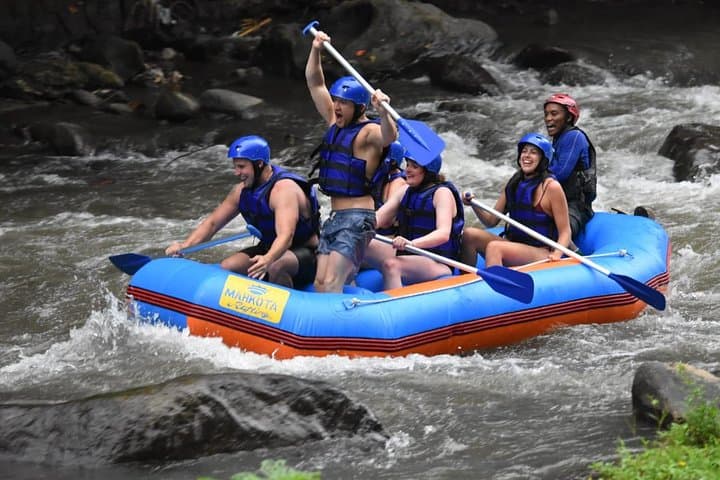
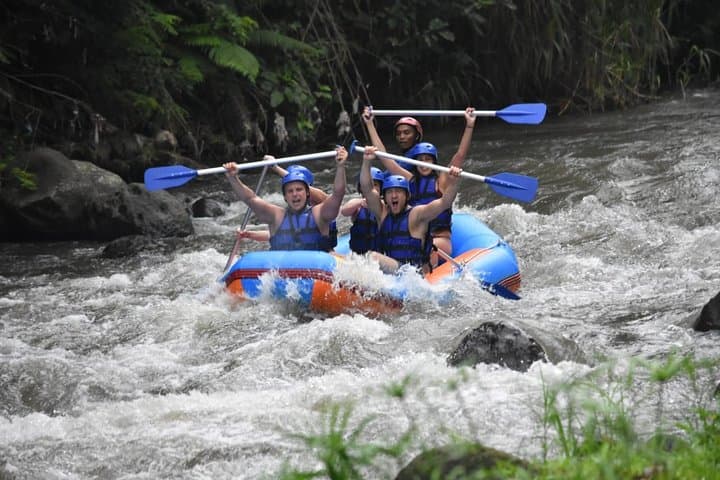
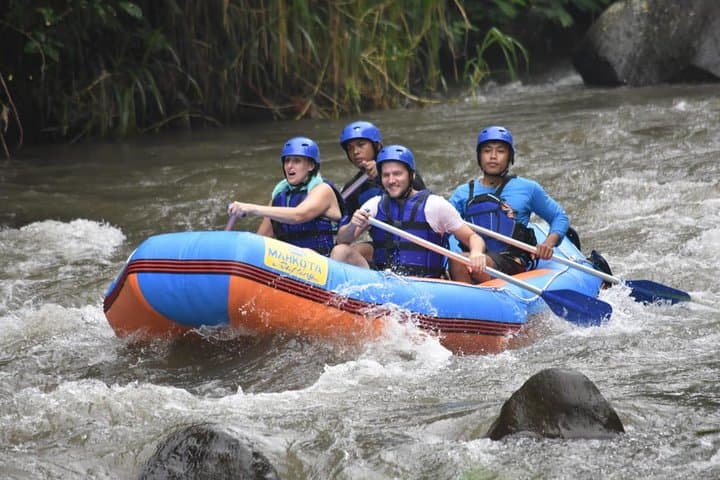
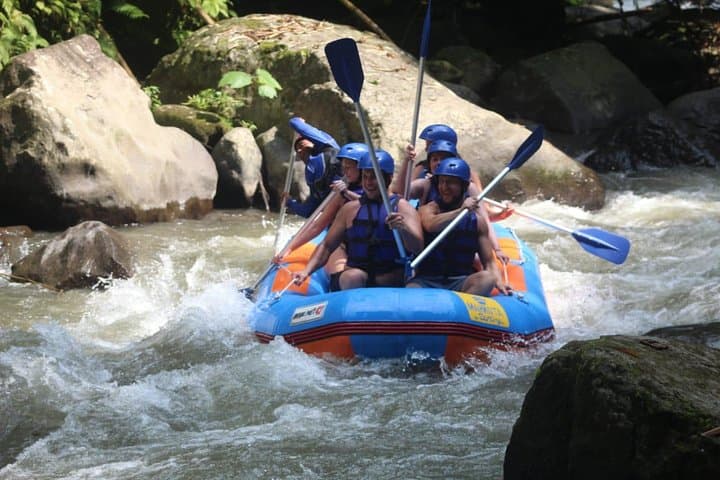
The bus pulls up before sunrise and the jungle answers with a chorus of birds. Guides hand out tea and quick briefings under a banana leaf awning while the river, a darker ribbon below the terrace walls, seems to be waiting — slow at the edges, restless in the middle. By the time life vests are clipped and oars are in hand, the Ayung River has moved from backdrop to partner, nudging inflatable hulls through narrow channels and opening into a series of playful rapids.
The bus pulls up before sunrise and the jungle answers with a chorus of birds. Guides hand out tea and quick briefings under a banana leaf awning while the river, a darker ribbon below the terrace walls, seems to be waiting — slow at the edges, restless in the middle. By the time life vests are clipped and oars are in hand, the Ayung River has moved from backdrop to partner, nudging inflatable hulls through narrow channels and opening into a series of playful rapids.
This half‑day trip runs roughly 9–12 km and takes about 2–2.5 hours on the water, part of a four‑hour door‑to‑door program. The river drops gently but persistently through a volcanic landscape — carved into steep gorges of weathered basalt and andesite — producing Class II–III rapids that are lively but accessible for families and first‑timers. Along the banks, limestone boulders and waterfalls punctuate the route; the current dares you around blind corners while the jungle leans in to watch.
The Ayung has long shaped Balinese life. Historically it fed subak irrigation systems that support the terraces above; today the same water threads through ritual sites and small villages, where temple shrines stand painted and blooming. Rafting outfits operate with crews drawn from local communities, and guides will often weave in cultural notes — the names of nearby cascades, the significance of a riverside shrine, or a quick explanation of traditional irrigation customs.
Geology is part of the show: recent volcanic flows and older coral terraces tell of an island born in fire and sea. Vegetation is equally active — macaque, kingfishers, and Monitor lizards emerge in patches; orchids cling to damp rock. The trip balances adrenaline and scenery: brief surges of rapids, long stretches for spotting waterfalls, and a final run through a green canyon that ends at the launch point.
Practicalities matter. Wear secure water shoes, a swim top or quick‑dry clothing, and leave valuables in a dry bag at the base. Guides provide helmets, lifejackets, and a safety briefing; no prior rafting experience is required. The operator usually includes hotel pickup, a shower, and a buffet lunch — expect to be returned by early afternoon.
Timing is tactical: morning trips avoid the heat and heavier afternoon flows during the wet season. If you’re traveling with children, let the operator know in advance; the crew adapts the pace for mixed groups. For a reliable, memorable stretch of Bali that pairs active fun with cultural texture, Ayung River rafting is hard to beat: the river pushes, the guides steady, and the jungle keeps its secrets just long enough for another run.