THE ADVENTURE COLLECTIVE® · Independent discovery and booking for outdoor travel

Escape the Interlaken crowds for a 6–7 hour day hike to Augstmatthorn. Expect sweeping views over Lake Brienz, close encounters with marmots and ibex, and a steady alpine climb through historic grazing pastures.
Escape the Interlaken crowds for a 6–7 hour day hike to Augstmatthorn. Expect sweeping views over Lake Brienz, close encounters with marmots and ibex, and a steady alpine climb through historic grazing pastures.
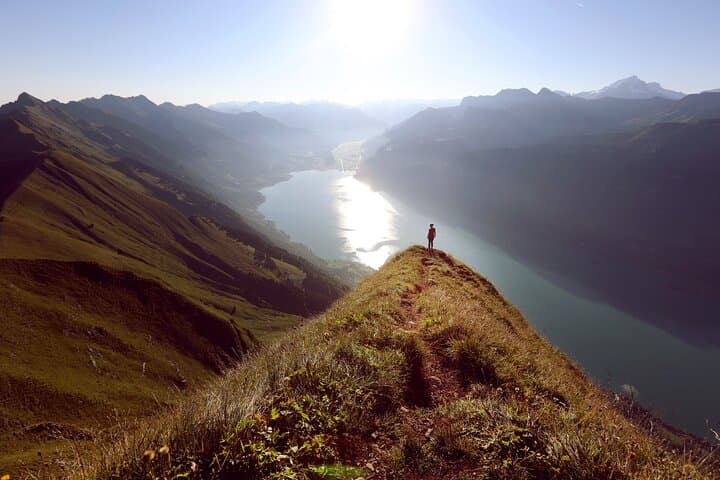
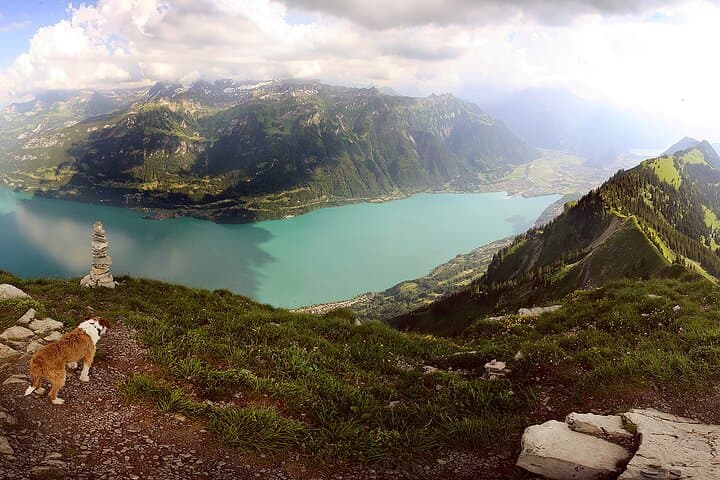
A low cloud breaks over a ridgeline and the air sharpens — the Alps go from a distant silhouette to something tactile, edged with rock and the bright green of late-summer grass. You step out of the van at Lombachalp and the valley exhales behind you: the turquoise glint of Lake Brienz, the knife edges of the Eiger, Mönch and Jungfrau arranged like a classical portrait. The trail climbs by meadows that still smell of hay and alpine herbs, then tightens into a high-country route that opens onto the summit ridge of Augstmatthorn.
Verified experiences and guided adventures in the surrounding area.
Operated by Local Guide · Interlaken, Bern
A low cloud breaks over a ridgeline and the air sharpens — the Alps go from a distant silhouette to something tactile, edged with rock and the bright green of late-summer grass. You step out of the van at Lombachalp and the valley exhales behind you: the turquoise glint of Lake Brienz, the knife edges of the Eiger, Mönch and Jungfrau arranged like a classical portrait. The trail climbs by meadows that still smell of hay and alpine herbs, then tightens into a high-country route that opens onto the summit ridge of Augstmatthorn.
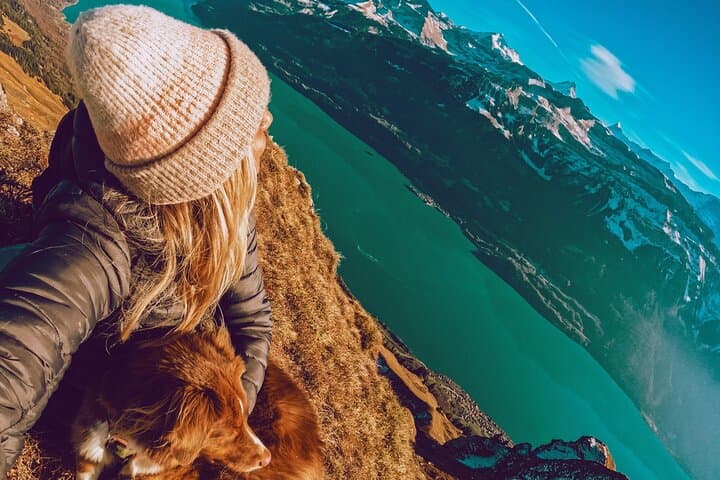
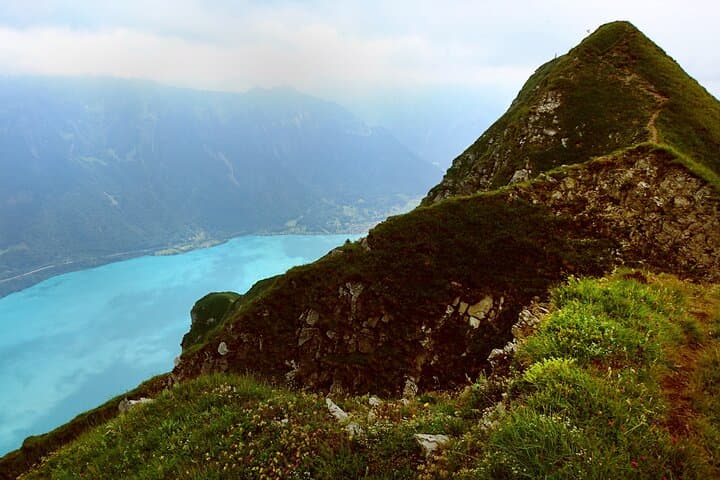
Augstmatthorn sits on the eastern flank of the Bernese Oberland, a geological book of folded sedimentary rock carved by ice. The ridge affords a rare perpendicular view of Lake Brienz’s extraordinary depth and color — its glacial runoff still paints the water a deep blue-green. For centuries these slopes were used for seasonal grazing; you’ll pass old alpine huts and stone walls that recall a culture built around shepherding and transhumance. Wildlife is part of the scenery: marmots whistling from boulders and the occasional ibex picking its way across the scree.
The hike itself is straightforward but uncompromising enough to feel like an alpine day out. Expect roughly 6–7 hours round trip including transfer time, with about 600–750 meters (2,000–2,500 feet) of elevation gain depending on the exact route from Lombachalp. Terrain alternates between packed earth, grassy slopes, and short rocky sections along the ridge; some exposure is possible near the summit so a steady head for heights helps.
Practicalities matter more than romantic notions here. The tour meets at Interlaken Ost — easy to reach by train — and includes transfer to the trailhead in an air-conditioned vehicle. Groups are small, capped at eight, which keeps the pace manageable and leaves room for wildlife stops and views. Carry at least 1.5–2 liters of water, wear high-traction boots, and bring sun protection; the alpine sun is intense and weather changes fast. Poles are provided but useful on steep descents.
Spring can still hold snow patches; summer is the most reliable window for wildflower-studded meadows and clear panoramas. Autumn delivers low-angle light and fewer hikers but colder conditions. The operator will cancel for severe weather; if you have cardiovascular concerns, consult a doctor — the rhythm of the high trail is steady but persistent.
At the top the world feels deliberately arranged: lake, peaks, and human traces laid out like a map you can walk. The reward is not just a photograph but the way the landscape tests your pace and then, at summit silence, lets you read the geology, history and life written into it.
moderate.
6–7 hours (including transfers).
Good steady fitness for sustained uphill hiking; ability to manage 600–750 m elevation gain and uneven terrain.
Meet at Interlaken Ost Train Station by the Coop entrance; the operator will pick you up there and transfer you to Lombachalp.
The route is moderate: about 6–7 hours total with roughly 600–750 m elevation gain; uneven terrain and some exposure require steady footing.
Older children used to mountain trails can manage, but check with the operator; group maximum is eight so pacing is kept conservative.
Common sightings include alpine marmots and sometimes ibex; bring binoculars and give animals space.
The tour can be canceled for rain, low visibility or thunderstorms; full refund is available if canceled at least 24 hours prior.
Yes, poles are listed as included but you may bring your own if you prefer the fit or setup you know.
These high pastures have been used for seasonal grazing for centuries and still show stone walls and huts from traditional transhumance practices.
Stick to established paths and avoid disturbing wildlife; alpine meadows recover slowly and erosion is a local concern.
Local Guide operates guided outdoor trips and adventures with an emphasis on safety, stewardship, and memorable experiences.
A low cloud breaks over a ridgeline and the air sharpens — the Alps go from a distant silhouette to something tactile, edged with rock and the bright green of late-summer grass. You step out of the van at Lombachalp and the valley exhales behind you: the turquoise glint of Lake Brienz, the knife edges of the Eiger, Mönch and Jungfrau arranged like a classical portrait. The trail climbs by meadows that still smell of hay and alpine herbs, then tightens into a high-country route that opens onto the summit ridge of Augstmatthorn.
A low cloud breaks over a ridgeline and the air sharpens — the Alps go from a distant silhouette to something tactile, edged with rock and the bright green of late-summer grass. You step out of the van at Lombachalp and the valley exhales behind you: the turquoise glint of Lake Brienz, the knife edges of the Eiger, Mönch and Jungfrau arranged like a classical portrait. The trail climbs by meadows that still smell of hay and alpine herbs, then tightens into a high-country route that opens onto the summit ridge of Augstmatthorn.
Augstmatthorn sits on the eastern flank of the Bernese Oberland, a geological book of folded sedimentary rock carved by ice. The ridge affords a rare perpendicular view of Lake Brienz’s extraordinary depth and color — its glacial runoff still paints the water a deep blue-green. For centuries these slopes were used for seasonal grazing; you’ll pass old alpine huts and stone walls that recall a culture built around shepherding and transhumance. Wildlife is part of the scenery: marmots whistling from boulders and the occasional ibex picking its way across the scree.
The hike itself is straightforward but uncompromising enough to feel like an alpine day out. Expect roughly 6–7 hours round trip including transfer time, with about 600–750 meters (2,000–2,500 feet) of elevation gain depending on the exact route from Lombachalp. Terrain alternates between packed earth, grassy slopes, and short rocky sections along the ridge; some exposure is possible near the summit so a steady head for heights helps.
Practicalities matter more than romantic notions here. The tour meets at Interlaken Ost — easy to reach by train — and includes transfer to the trailhead in an air-conditioned vehicle. Groups are small, capped at eight, which keeps the pace manageable and leaves room for wildlife stops and views. Carry at least 1.5–2 liters of water, wear high-traction boots, and bring sun protection; the alpine sun is intense and weather changes fast. Poles are provided but useful on steep descents.
Spring can still hold snow patches; summer is the most reliable window for wildflower-studded meadows and clear panoramas. Autumn delivers low-angle light and fewer hikers but colder conditions. The operator will cancel for severe weather; if you have cardiovascular concerns, consult a doctor — the rhythm of the high trail is steady but persistent.
At the top the world feels deliberately arranged: lake, peaks, and human traces laid out like a map you can walk. The reward is not just a photograph but the way the landscape tests your pace and then, at summit silence, lets you read the geology, history and life written into it.