THE ADVENTURE COLLECTIVE® · Independent discovery and booking for outdoor travel

Throttle up on the Atlantis Dunes and trade city streets for wind-shaped sand ridges. This guided quad-biking tour out of Cape Town delivers fast-paced dune runs, local knowledge, and practical logistics for first-time ATV riders.
Throttle up on the Atlantis Dunes and trade city streets for wind-shaped sand ridges. This guided quad-biking tour out of Cape Town delivers fast-paced dune runs, local knowledge, and practical logistics for first-time ATV riders.
The engine clicks to life and the dunes answer—soft sand breathing under tires, wind sketching new ridges every hour. On a bright morning at the Witsand/Aquifer edge, a line of orange-jerseyed guides checks helmets and hands out hair nets while Cape air and distant surf mix into a clean, metallic tang. For the next hour you won't be following a map so much as following momentum: a guided ATV loop that threads crest and bowl, carving tracks where wind would otherwise erase them by night.
Verified experiences and guided adventures in the surrounding area.
Operated by Quad Biking tours and investments (PTY) LTD · Atlantis, Western Cape
The engine clicks to life and the dunes answer—soft sand breathing under tires, wind sketching new ridges every hour. On a bright morning at the Witsand/Aquifer edge, a line of orange-jerseyed guides checks helmets and hands out hair nets while Cape air and distant surf mix into a clean, metallic tang. For the next hour you won't be following a map so much as following momentum: a guided ATV loop that threads crest and bowl, carving tracks where wind would otherwise erase them by night.
The Atlantis Dunes are not a postcard beach but a working coastal system—sand blown inland over millennia from the Atlantic, piled and reworked by seasonal winds. The dunes now front the Witsand Aquifer Nature Reserve, an area with ecological sensitivity and a history tied to the nearby town of Atlantis, a planned industrial settlement from the 1970s. Local operators run compact, safety-first excursions here: helmets and hair nets supplied, a brief on controls, then you’re off with a guide who knows the lines and the fragile places to avoid.
Riding is immediate and tactile. Soft sand asks for steady throttle and subtle steering—throwing the throttle too hard digs you in, easing off lets momentum float you up a face. There’s very little elevation gain, but the landscape feels theatrical: sudden bowls where sand slips away under you, long crests that deliver a stretch of visibility across scrub and shipping channels beyond.
Practicalities matter. Tours run about an hour but factor in a 15–20 minute safety briefing and bike setup. Entrance permits are purchased onsite (cash is slightly cheaper). Transport into the dunes can be tricky—cell signal is patchy, so arrange pickups ahead and expect extra rates from Cape Town. Operators enforce strict no-alcohol rules and limit riders by age; kids 6–15 have guided options and adults ride solo.
For travelers, the ride is an accessible adrenaline hit—no advanced technical skill required, just attention to throttle control and respect for the terrain. Weather shifts fast: mornings and late afternoons bring the best light and cooler winds; midday can be hot and glaring. Bring closed-toe shoes, eye protection, a hydration system and a camera with a secure mount. Follow your guide, stick to prescribed tracks to protect dune vegetation and the aquifer below, and you’ll leave tracks worth remembering—if only the dunes don’t decide to erase them by morning.
easy.
50–60 minutes (total visit ~75–90 minutes including briefing).
Basic fitness—able to mount a quad, sit for an hour, and follow instruction; not strenuous.
Guided riding time is about 50 minutes; allow 15–20 minutes extra for briefing, gear and paperwork.
Yes—secure mounts are recommended; handheld phones can be damaged by sand and vibration.
No—operators provide a safety briefing and basic instruction; riders should be comfortable with throttle and braking.
Kids 6–15 can ride with guides assigned for children; parents cannot ride double with kids—adults ride solo.
Pickups are available for a fee; public transport options exist but cell signal is poor near the dunes so pre-arrange transport if possible.
Tours run in most weather—check operator policy; arriving late may cause forfeiture and there’s a reschedule fee subject to availability.
The dunes are part of a coastal sand system tied to the Witsand Aquifer; the nearby town of Atlantis was developed in the 1970s as an industrial suburb of Cape Town.
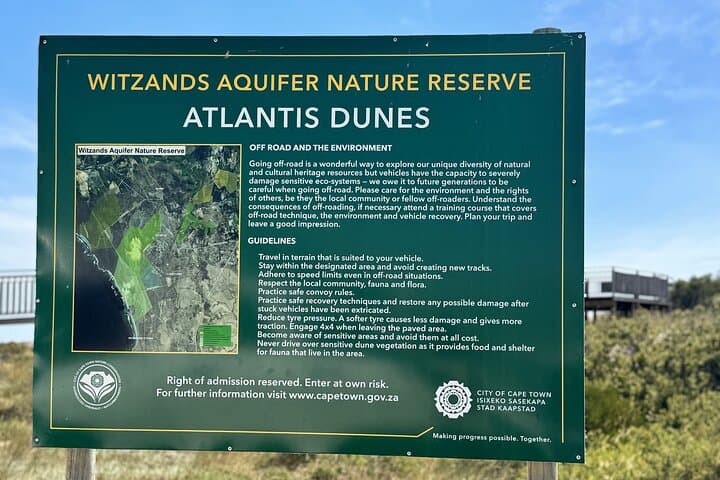
Entrance fees support reserve management; riders are asked to stay on established tracks to protect fragile dune vegetation and the aquifer below.
Quad Biking tours and investments (PTY) LTD operates guided outdoor trips and adventures with an emphasis on safety, stewardship, and memorable experiences.

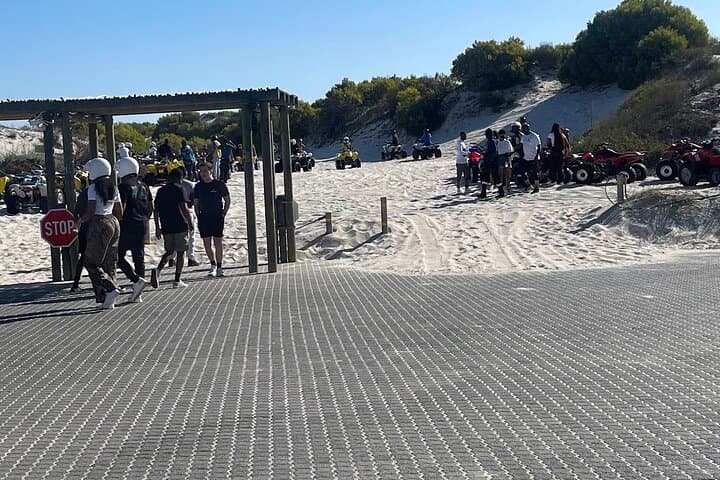
The engine clicks to life and the dunes answer—soft sand breathing under tires, wind sketching new ridges every hour. On a bright morning at the Witsand/Aquifer edge, a line of orange-jerseyed guides checks helmets and hands out hair nets while Cape air and distant surf mix into a clean, metallic tang. For the next hour you won't be following a map so much as following momentum: a guided ATV loop that threads crest and bowl, carving tracks where wind would otherwise erase them by night.
The engine clicks to life and the dunes answer—soft sand breathing under tires, wind sketching new ridges every hour. On a bright morning at the Witsand/Aquifer edge, a line of orange-jerseyed guides checks helmets and hands out hair nets while Cape air and distant surf mix into a clean, metallic tang. For the next hour you won't be following a map so much as following momentum: a guided ATV loop that threads crest and bowl, carving tracks where wind would otherwise erase them by night.
The Atlantis Dunes are not a postcard beach but a working coastal system—sand blown inland over millennia from the Atlantic, piled and reworked by seasonal winds. The dunes now front the Witsand Aquifer Nature Reserve, an area with ecological sensitivity and a history tied to the nearby town of Atlantis, a planned industrial settlement from the 1970s. Local operators run compact, safety-first excursions here: helmets and hair nets supplied, a brief on controls, then you’re off with a guide who knows the lines and the fragile places to avoid.
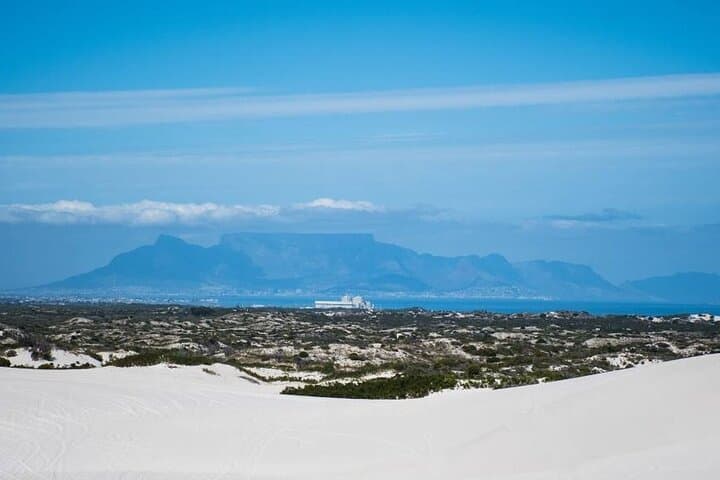
Riding is immediate and tactile. Soft sand asks for steady throttle and subtle steering—throwing the throttle too hard digs you in, easing off lets momentum float you up a face. There’s very little elevation gain, but the landscape feels theatrical: sudden bowls where sand slips away under you, long crests that deliver a stretch of visibility across scrub and shipping channels beyond.
Practicalities matter. Tours run about an hour but factor in a 15–20 minute safety briefing and bike setup. Entrance permits are purchased onsite (cash is slightly cheaper). Transport into the dunes can be tricky—cell signal is patchy, so arrange pickups ahead and expect extra rates from Cape Town. Operators enforce strict no-alcohol rules and limit riders by age; kids 6–15 have guided options and adults ride solo.
For travelers, the ride is an accessible adrenaline hit—no advanced technical skill required, just attention to throttle control and respect for the terrain. Weather shifts fast: mornings and late afternoons bring the best light and cooler winds; midday can be hot and glaring. Bring closed-toe shoes, eye protection, a hydration system and a camera with a secure mount. Follow your guide, stick to prescribed tracks to protect dune vegetation and the aquifer below, and you’ll leave tracks worth remembering—if only the dunes don’t decide to erase them by morning.