THE ADVENTURE COLLECTIVE® · Independent discovery and booking for outdoor travel

Snorkel the clear bays of Arrábida Natural Park, trek coastal limestone paths and finish the day with a Setúbal wine tasting in a historic cellar. This full-day trip from Lisbon pairs active exploration with regional flavors.
Snorkel the clear bays of Arrábida Natural Park, trek coastal limestone paths and finish the day with a Setúbal wine tasting in a historic cellar. This full-day trip from Lisbon pairs active exploration with regional flavors.
The day opens on a blue so clean it seems to have been filtered: sunlight cuts across the Tagus as the van slips out of Lisbon, and by the time you crest the low ridge of Arrábida the Atlantic has stripped itself to cobalt. You step off at a quiet cove—rocks rimmed with green, a small fisherman’s village where nets sag in the sun—and the sea is inviting and sharp. Guides hand out masks and fins; the shoreline hums with tiny life. Underwater, bream and damselfish move like punctuation marks through beds of seagrass. On land, limestone cliffs angle down to hidden beaches and vineyards press into the slopes above, as if the mountain itself were farming the sea.
Verified experiences and guided adventures in the surrounding area.
Operated by Get Stoked · Setúbal, Setúbal District
The day opens on a blue so clean it seems to have been filtered: sunlight cuts across the Tagus as the van slips out of Lisbon, and by the time you crest the low ridge of Arrábida the Atlantic has stripped itself to cobalt. You step off at a quiet cove—rocks rimmed with green, a small fisherman’s village where nets sag in the sun—and the sea is inviting and sharp. Guides hand out masks and fins; the shoreline hums with tiny life. Underwater, bream and damselfish move like punctuation marks through beds of seagrass. On land, limestone cliffs angle down to hidden beaches and vineyards press into the slopes above, as if the mountain itself were farming the sea.
Arrábida’s story is as layered as the rock underfoot. The Serra da Arrábida is Cretaceous limestone folded and faulted, a coastal carbonate range that creates steep cliffs, caves and bays protected from the open ocean. Human history here traces fishing hamlets, Roman-era routes and, more recently, the Setúbal wine tradition—Moscatel and robust reds grown on clay-limestone soils that give the wines their saline mineral edge.
Culturally, the coast is simple and direct: fish grilled outdoors, bread to mop the plate, and wine producers who will tell you exactly which plot a grape came from. The Arrábida Natural Park is a protected area—its kelp forests and seagrass meadows are refuges for juvenile fish and important carbon sinks—so operators follow rules for anchoring, group sizes and no-touch snorkeling to minimize impact.
Practical guidance: the tour runs about eight hours and combines a short coastal trek, two snorkeling sessions and a cellar wine tasting. Expect moderate walking over uneven limestone and dives from shore; you should be a confident swimmer. Wear reef-safe sunscreen, water shoes for rocky entry points, and a thin wetsuit in spring or cooler months. Guides supply masks, snorkels and fins, plus bottled water and transport back to Lisbon.
Timing matters—mornings typically offer the calmest seas and best visibility; afternoons are warmer on shore for the tasting. If you’re prone to seasickness, take a patch the night before: the sheltered bays are generally calm but the approach can rock a little. Bring a dry bag for a light jacket, a camera with an underwater housing if you want photos, and your tasting manners—the Moscatel here is often aged and rich.
This is a one-day blend of movement and savoring: swim with a coastline that seems to hold its breath, climb a few rocky tracks for vistas, then let the region’s salt and wine do the rest. It’s a precise, tactile introduction to a protected part of Portugal where the sea and the vines are in conversation.
moderate.
8 hours.
Moderate fitness—comfortable walking on uneven terrain and repeated snorkeling sessions; stair/short-climb capable.
Basic snorkeling ability and comfort breathing through a snorkel are required; guides brief participants and provide equipment, but the tour is not suitable for non-swimmers.
There are two guided snorkeling sessions totaling roughly 60–90 minutes in the water, split across sheltered bays to maximize visibility and safety.
Yes—masks, fins and snorkels are included; bring your own wetsuit if you prefer a specific fit.
Wear a swimsuit, water shoes for rocky entries and a light layer for after-water comfort; reef-safe sunscreen is recommended.
A local lunch in a fisherman village is included; menus focus on fresh, fish-based dishes and bottled water is provided.
Yes—pickup is offered across Lisbon, Costa da Caparica, Setúbal, Sesimbra and surrounding hotels; confirm pickup details when you book.
Arrábida’s slopes have supported viticulture and fishing for centuries; Setúbal’s Moscatel was a prized export in the 18th and 19th centuries and remains central to the region’s identity.
Arrábida is a protected natural park—stay on marked paths, avoid touching marine life and use shore-based entry to minimize anchor damage.
Get Stoked operates guided outdoor trips and adventures with an emphasis on safety, stewardship, and memorable experiences.
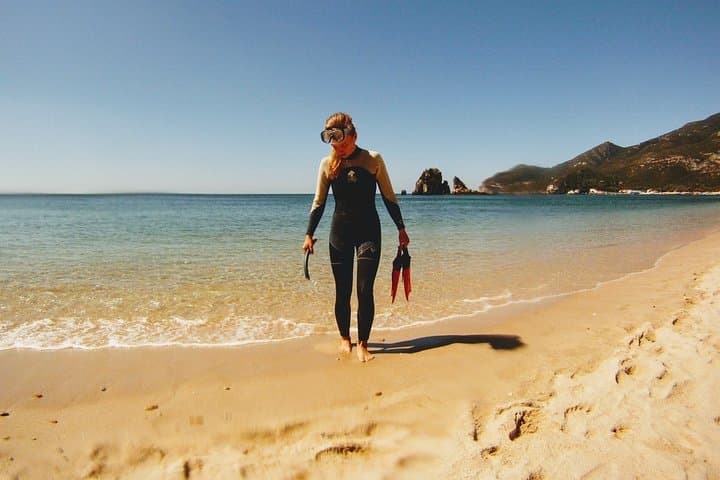
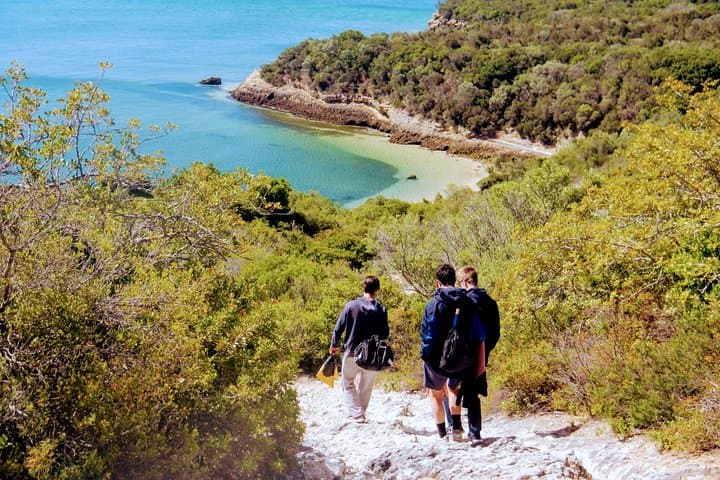
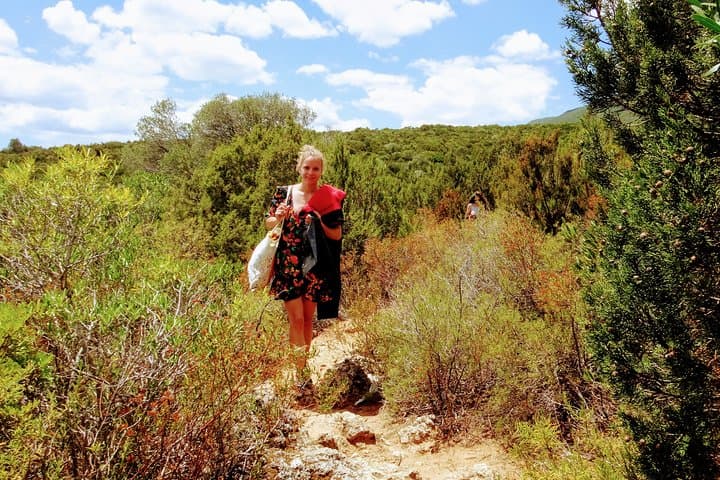
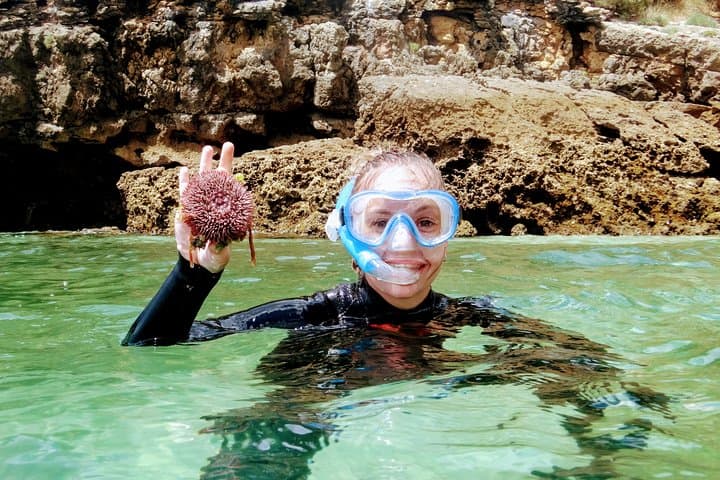
The day opens on a blue so clean it seems to have been filtered: sunlight cuts across the Tagus as the van slips out of Lisbon, and by the time you crest the low ridge of Arrábida the Atlantic has stripped itself to cobalt. You step off at a quiet cove—rocks rimmed with green, a small fisherman’s village where nets sag in the sun—and the sea is inviting and sharp. Guides hand out masks and fins; the shoreline hums with tiny life. Underwater, bream and damselfish move like punctuation marks through beds of seagrass. On land, limestone cliffs angle down to hidden beaches and vineyards press into the slopes above, as if the mountain itself were farming the sea.
The day opens on a blue so clean it seems to have been filtered: sunlight cuts across the Tagus as the van slips out of Lisbon, and by the time you crest the low ridge of Arrábida the Atlantic has stripped itself to cobalt. You step off at a quiet cove—rocks rimmed with green, a small fisherman’s village where nets sag in the sun—and the sea is inviting and sharp. Guides hand out masks and fins; the shoreline hums with tiny life. Underwater, bream and damselfish move like punctuation marks through beds of seagrass. On land, limestone cliffs angle down to hidden beaches and vineyards press into the slopes above, as if the mountain itself were farming the sea.
Arrábida’s story is as layered as the rock underfoot. The Serra da Arrábida is Cretaceous limestone folded and faulted, a coastal carbonate range that creates steep cliffs, caves and bays protected from the open ocean. Human history here traces fishing hamlets, Roman-era routes and, more recently, the Setúbal wine tradition—Moscatel and robust reds grown on clay-limestone soils that give the wines their saline mineral edge.
Culturally, the coast is simple and direct: fish grilled outdoors, bread to mop the plate, and wine producers who will tell you exactly which plot a grape came from. The Arrábida Natural Park is a protected area—its kelp forests and seagrass meadows are refuges for juvenile fish and important carbon sinks—so operators follow rules for anchoring, group sizes and no-touch snorkeling to minimize impact.
Practical guidance: the tour runs about eight hours and combines a short coastal trek, two snorkeling sessions and a cellar wine tasting. Expect moderate walking over uneven limestone and dives from shore; you should be a confident swimmer. Wear reef-safe sunscreen, water shoes for rocky entry points, and a thin wetsuit in spring or cooler months. Guides supply masks, snorkels and fins, plus bottled water and transport back to Lisbon.
Timing matters—mornings typically offer the calmest seas and best visibility; afternoons are warmer on shore for the tasting. If you’re prone to seasickness, take a patch the night before: the sheltered bays are generally calm but the approach can rock a little. Bring a dry bag for a light jacket, a camera with an underwater housing if you want photos, and your tasting manners—the Moscatel here is often aged and rich.
This is a one-day blend of movement and savoring: swim with a coastline that seems to hold its breath, climb a few rocky tracks for vistas, then let the region’s salt and wine do the rest. It’s a precise, tactile introduction to a protected part of Portugal where the sea and the vines are in conversation.