THE ADVENTURE COLLECTIVE® · Independent discovery and booking for outdoor travel

Learn vertical ice under a certified guide in Swedish Lapland. This three-hour intro includes all technical gear and hands-on coaching on a safe icefall near Kiruna.
Learn vertical ice under a certified guide in Swedish Lapland. This three-hour intro includes all technical gear and hands-on coaching on a safe icefall near Kiruna.
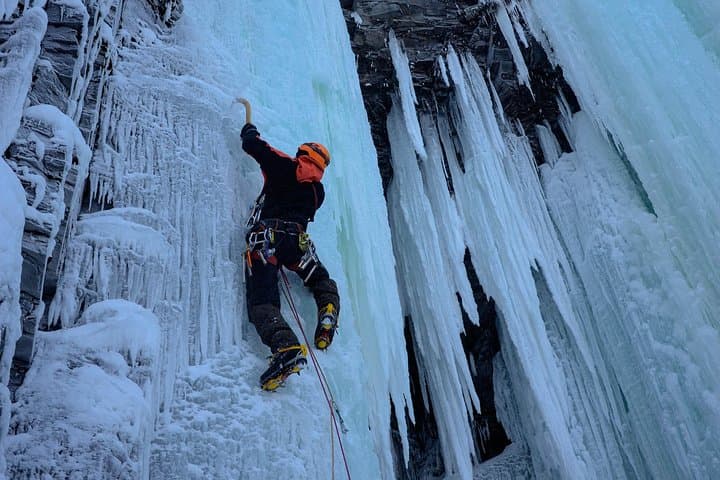
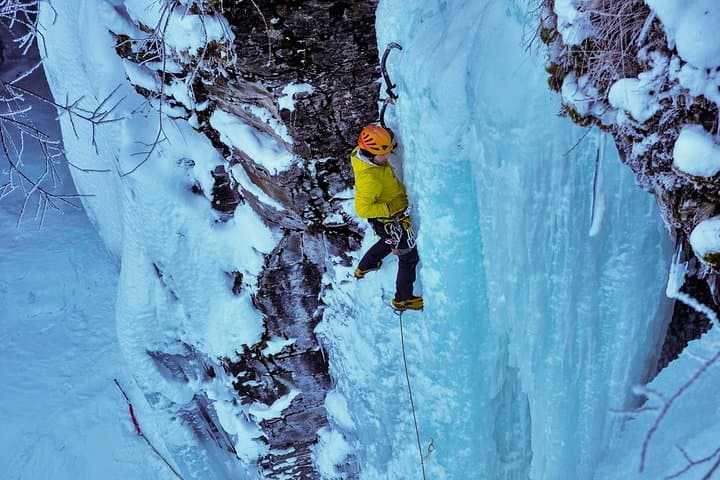
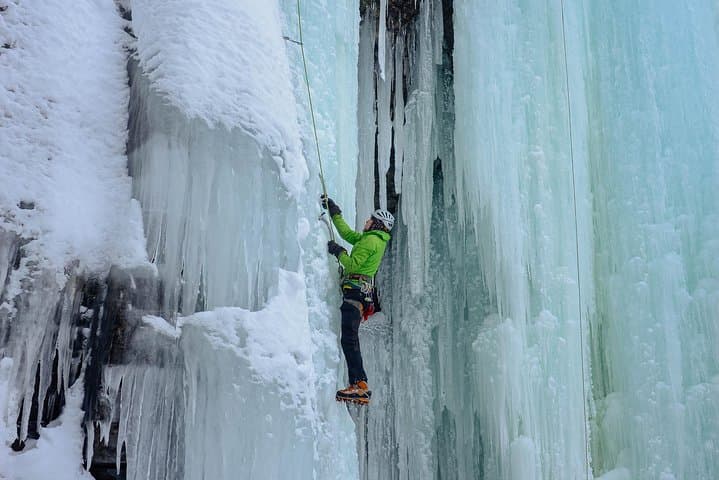
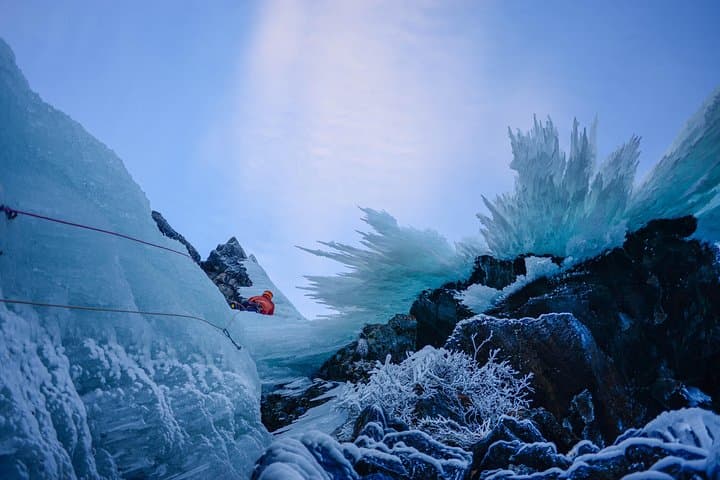
The day begins with a hush: cold light on blue ice, breath steaming as you approach a vertical face that seems to glow from within. Your guide checks your harness while the landscape—glacially carved valleys and rugged bedrock—looms beyond. The ice calls quietly, daring you to move upward.
Verified experiences and guided adventures in the surrounding area.
Operated by Abisko Adventure · Kiruna, Norrbotten County
The day begins with a hush: cold light on blue ice, breath steaming as you approach a vertical face that seems to glow from within. Your guide checks your harness while the landscape—glacially carved valleys and rugged bedrock—looms beyond. The ice calls quietly, daring you to move upward.
This part of northern Sweden is shaped by repeated glaciation; frozen waterfalls and icefalls form every winter where meltwater refreezes on cliff bands. The region also sits within traditional Sami lands and a long history of winter travel and reindeer herding, with modern roads and mining activity threaded through older routes.
On this guided intro you learn basic steps for moving on vertical ice: how to kick secure placements with crampons, swing a pick to set a point, and weight a rope system under a certified guide’s supervision. Expect a short drive from the nearest town, group briefings, gear fitting, and two to three short climbs within a roughly three-hour window. Guides include instruction, helmets, harnesses, alpine boots, crampons, ice tools, and a hot drink to warm hands.
Practical tips: dress in warm, moisture-managing layers and bring windproof outerwear; gloves that allow tool handling are essential. Plan for cold toes even if effort keeps core warm; pack hand warmers if you run cold. Photography works best with fast shutter speeds and a lens hood to cut glare. Listen to your guide: ice conditions change quickly and their decisions keep the line safe. For first-timers this is an accessible but physically engaging way to meet vertical ice in one of Europe’s northern wilds.
challenging.
3 hours.
Moderate aerobic fitness and basic mobility; comfortable with scrambling on uneven, icy terrain and short bursts of upper-body exertion.
No prior ice climbing experience is required; guides provide all technical instruction and safety supervision during this intro course.
Certified guides supply alpine boots, crampons, harness, helmet, ice tools, and rope systems; you should bring appropriate clothing and footwear liners if you prefer your own socks.
Operators usually ask for an age band and require moderate fitness; the tour is not recommended for people with serious heart or spinal conditions—check booking requirements and disclose medical issues.
Tours may be canceled for unsafe ice or severe weather; full refunds are typically available if canceled at least 24 hours prior, but confirm operator terms at booking.
The area lies within traditional Sami territory and bears traces of historic winter travel routes; modern mining and transport have altered some landscapes but seasonal ice features persist.
Operators minimize impact by using established access tracks and instructing groups to avoid trampling fragile vegetation and disturbing wildlife; follow guide directions and pack out all waste.
Abisko Adventure operates guided outdoor trips and adventures with an emphasis on safety, stewardship, and memorable experiences.
The day begins with a hush: cold light on blue ice, breath steaming as you approach a vertical face that seems to glow from within. Your guide checks your harness while the landscape—glacially carved valleys and rugged bedrock—looms beyond. The ice calls quietly, daring you to move upward.
The day begins with a hush: cold light on blue ice, breath steaming as you approach a vertical face that seems to glow from within. Your guide checks your harness while the landscape—glacially carved valleys and rugged bedrock—looms beyond. The ice calls quietly, daring you to move upward.
This part of northern Sweden is shaped by repeated glaciation; frozen waterfalls and icefalls form every winter where meltwater refreezes on cliff bands. The region also sits within traditional Sami lands and a long history of winter travel and reindeer herding, with modern roads and mining activity threaded through older routes.
On this guided intro you learn basic steps for moving on vertical ice: how to kick secure placements with crampons, swing a pick to set a point, and weight a rope system under a certified guide’s supervision. Expect a short drive from the nearest town, group briefings, gear fitting, and two to three short climbs within a roughly three-hour window. Guides include instruction, helmets, harnesses, alpine boots, crampons, ice tools, and a hot drink to warm hands.
Practical tips: dress in warm, moisture-managing layers and bring windproof outerwear; gloves that allow tool handling are essential. Plan for cold toes even if effort keeps core warm; pack hand warmers if you run cold. Photography works best with fast shutter speeds and a lens hood to cut glare. Listen to your guide: ice conditions change quickly and their decisions keep the line safe. For first-timers this is an accessible but physically engaging way to meet vertical ice in one of Europe’s northern wilds.