THE ADVENTURE COLLECTIVE® · Independent discovery and booking for outdoor travel

Drive the historic Apache Trail and take a guided, moderate hike into the Superstition Mountains where legend—like the Lost Dutchman’s mine—meets real desert geology. Perfect for photographers and day-trippers, this 5-hour tour balances local lore, easy trails and a stop at Goldfield Ghost Town.
Drive the historic Apache Trail and take a guided, moderate hike into the Superstition Mountains where legend—like the Lost Dutchman’s mine—meets real desert geology. Perfect for photographers and day-trippers, this 5-hour tour balances local lore, easy trails and a stop at Goldfield Ghost Town.
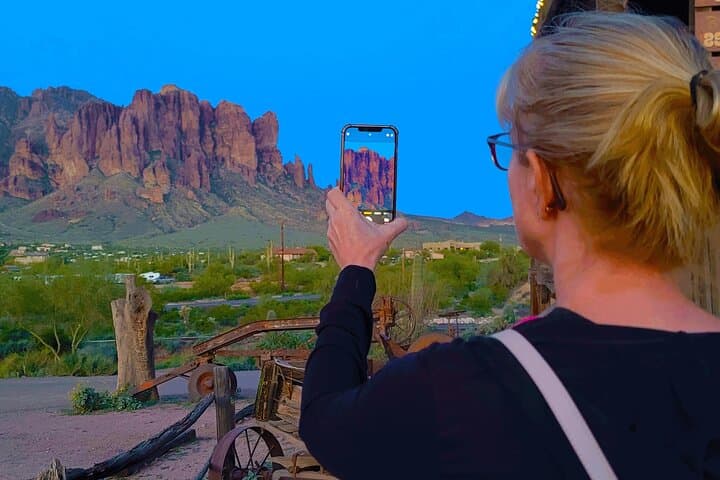
You step out of the van and heat rises off the scrub like a living thing, the Sonoran Desert already set on its afternoon rhythm. The Superstition ridgeline looms ahead—rugged shoulders of volcanic rock that have drawn prospectors, storytellers and photographers for more than a century. Your guide spreads a map across the hood, points to jagged contours and the vague X of local legend: the Lost Dutchman’s Mine.
Verified experiences and guided adventures in the surrounding area.
Operated by PicTours Arizona · Apache Junction, Arizona
You step out of the van and heat rises off the scrub like a living thing, the Sonoran Desert already set on its afternoon rhythm. The Superstition ridgeline looms ahead—rugged shoulders of volcanic rock that have drawn prospectors, storytellers and photographers for more than a century. Your guide spreads a map across the hood, points to jagged contours and the vague X of local legend: the Lost Dutchman’s Mine.
This five-hour loop starts in Scottsdale and follows the historic Apache Trail into tribal farmland and the edge of Tonto National Forest. The road climbs and the views widen: saguaro arms lift like gatekeepers, creosote scents the air, and distant canyons cut shadows across the mesas. The tour’s hike is intentionally mild—roughly 1–2 miles round-trip with 300–600 feet of elevation gain depending on the trail chosen—so you get the mountain without committing to an all-day scramble.
Geologically, the Superstitions are ancient volcanic remnants, lava and ash folded and faulted into broken ridges. That jagged geology made the hills rich with quartz—and with stories. The Lost Dutchman legend grew in the late 1800s as miners hunted an elusive vein of gold; the lore became part ghost story, part treasure hunt. Goldfield Ghost Town, the tour’s stopover, was rebuilt on an original mining claim and offers a literal, theatrical slice of that past: old-timers’ saloons, a working mine shaft tour, and zipline clips from a modern frontier.
Culturally this route crosses land used by local tribal communities; your guide notes that much of the valley you drive through still supports agriculture and ranching, a quiet presence beneath the desert glare.
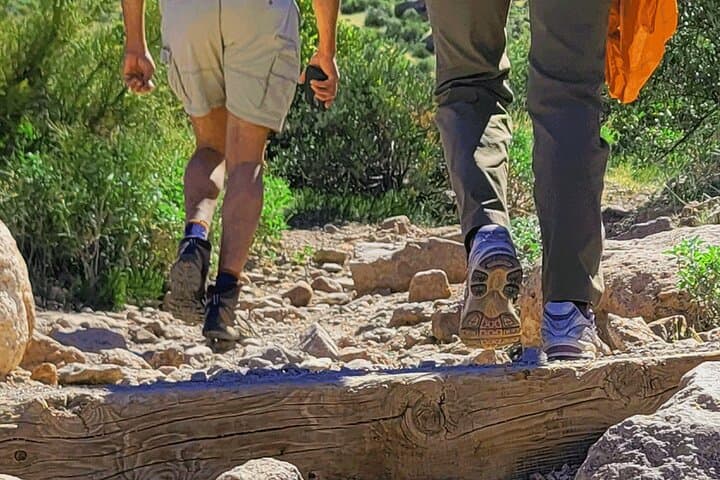
Practicalities: expect rocky singletrack, loose gravel and intermittent shade. The group size is small—max 13—so the hike stays personal. Bring at least 1 liter of water (the guide supplies bottled water), sun protection, and sturdy shoes with good traction. The tour’s pace is conversational; there’s time for photos at canyon overlooks and a stop at Goldfield’s Mammoth Saloon for lunch if you want.
Timing matters—aim for early morning or late afternoon to avoid the hottest sun and flattened midday light. Wildlife is quiet but present: javelina and desert birds often observe from distance, and the geology and legends make every turn feel like an invitation to listen and look closely.
The Happy Cactus tour is for travelers who want a compact day in the Superstitions: easy on mileage, rich in context, and heavy on photo ops. It’s an accessible way to walk into the region’s past and leave with sharp pictures, local stories, and a clearer sense of why those mountains keep drawing people back.
moderate.
5 hours.
You should have moderate fitness: able to walk 2 miles on uneven ground and climb short steep sections without assistance.
The guided hike itself is typically 1–2 miles round-trip with about 300–600 feet of elevation gain; the full tour, including driving and stops, runs about 5 hours.
Yes if they have moderate mobility; the hike is described as mild but contains rocky sections—notify the operator of mobility needs when booking.
Bring sun protection, a small daypack, sturdy shoes, and any personal medications; the tour supplies bottled water.
No one can guarantee the mine’s location—this tour visits the mountain associated with the legend and explains its history and lore.
Yes—there’s a stop at Goldfield Ghost Town where you can buy lunch at the Mammoth Saloon or snack at local vendors.
Full refunds are available if you cancel at least 24 hours before departure; tours may be canceled for bad weather.
The Superstition Mountains were the focus of 19th-century prospecting and the Lost Dutchman legend that grew from real mining searches; Goldfield was a turn-of-the-century boom town later reborn as a tourist ghost town.
The Superstition area is public land with fragile desert soils—stay on designated trails, pack out trash, and avoid disturbing saguaro and wildlife to help preserve the landscape.
PicTours Arizona operates guided outdoor trips and adventures with an emphasis on safety, stewardship, and memorable experiences.

You step out of the van and heat rises off the scrub like a living thing, the Sonoran Desert already set on its afternoon rhythm. The Superstition ridgeline looms ahead—rugged shoulders of volcanic rock that have drawn prospectors, storytellers and photographers for more than a century. Your guide spreads a map across the hood, points to jagged contours and the vague X of local legend: the Lost Dutchman’s Mine.
You step out of the van and heat rises off the scrub like a living thing, the Sonoran Desert already set on its afternoon rhythm. The Superstition ridgeline looms ahead—rugged shoulders of volcanic rock that have drawn prospectors, storytellers and photographers for more than a century. Your guide spreads a map across the hood, points to jagged contours and the vague X of local legend: the Lost Dutchman’s Mine.
This five-hour loop starts in Scottsdale and follows the historic Apache Trail into tribal farmland and the edge of Tonto National Forest. The road climbs and the views widen: saguaro arms lift like gatekeepers, creosote scents the air, and distant canyons cut shadows across the mesas. The tour’s hike is intentionally mild—roughly 1–2 miles round-trip with 300–600 feet of elevation gain depending on the trail chosen—so you get the mountain without committing to an all-day scramble.
Geologically, the Superstitions are ancient volcanic remnants, lava and ash folded and faulted into broken ridges. That jagged geology made the hills rich with quartz—and with stories. The Lost Dutchman legend grew in the late 1800s as miners hunted an elusive vein of gold; the lore became part ghost story, part treasure hunt. Goldfield Ghost Town, the tour’s stopover, was rebuilt on an original mining claim and offers a literal, theatrical slice of that past: old-timers’ saloons, a working mine shaft tour, and zipline clips from a modern frontier.
Culturally this route crosses land used by local tribal communities; your guide notes that much of the valley you drive through still supports agriculture and ranching, a quiet presence beneath the desert glare.
Practicalities: expect rocky singletrack, loose gravel and intermittent shade. The group size is small—max 13—so the hike stays personal. Bring at least 1 liter of water (the guide supplies bottled water), sun protection, and sturdy shoes with good traction. The tour’s pace is conversational; there’s time for photos at canyon overlooks and a stop at Goldfield’s Mammoth Saloon for lunch if you want.
Timing matters—aim for early morning or late afternoon to avoid the hottest sun and flattened midday light. Wildlife is quiet but present: javelina and desert birds often observe from distance, and the geology and legends make every turn feel like an invitation to listen and look closely.
The Happy Cactus tour is for travelers who want a compact day in the Superstitions: easy on mileage, rich in context, and heavy on photo ops. It’s an accessible way to walk into the region’s past and leave with sharp pictures, local stories, and a clearer sense of why those mountains keep drawing people back.