THE ADVENTURE COLLECTIVE® · Independent discovery and booking for outdoor travel

Spend two days living, working and celebrating with Maasai hosts just outside Nairobi. Participate in cattle drives, learn spear-throwing, help build a manyatta and make traditional beadwork while supporting local livelihoods.
Spend two days living, working and celebrating with Maasai hosts just outside Nairobi. Participate in cattle drives, learn spear-throwing, help build a manyatta and make traditional beadwork while supporting local livelihoods.
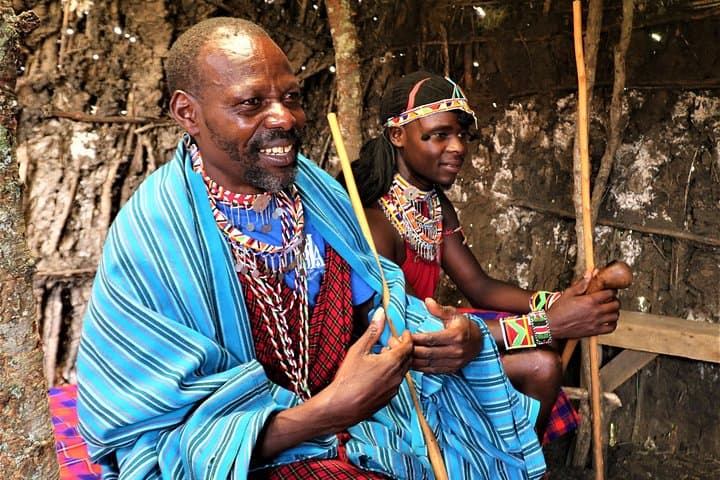
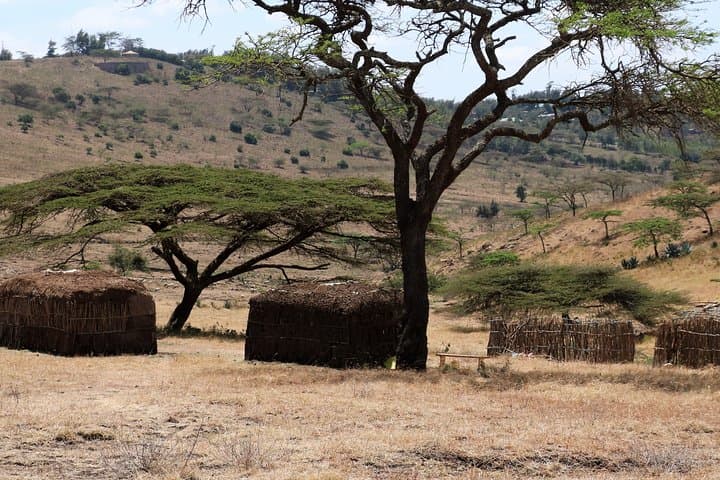
You leave Nairobi before dawn and the city’s glass and concrete give way to wide light and the silhouette of acacia on the horizon. The road eases through red-dust plains; goats scatter like punctuation marks. By mid-morning you arrive at the manyatta — the cluster of reed-and-mud homesteads where the rhythm of life is set by cattle, song, and the slow counting of seasons. The village elders greet you with tea, and the landscape itself seems to lean in: the valley’s low wind dares you to slow down and listen.
Verified experiences and guided adventures in the surrounding area.
Operated by One Horizon Africa · Nairobi, Nairobi County
You leave Nairobi before dawn and the city’s glass and concrete give way to wide light and the silhouette of acacia on the horizon. The road eases through red-dust plains; goats scatter like punctuation marks. By mid-morning you arrive at the manyatta — the cluster of reed-and-mud homesteads where the rhythm of life is set by cattle, song, and the slow counting of seasons. The village elders greet you with tea, and the landscape itself seems to lean in: the valley’s low wind dares you to slow down and listen.
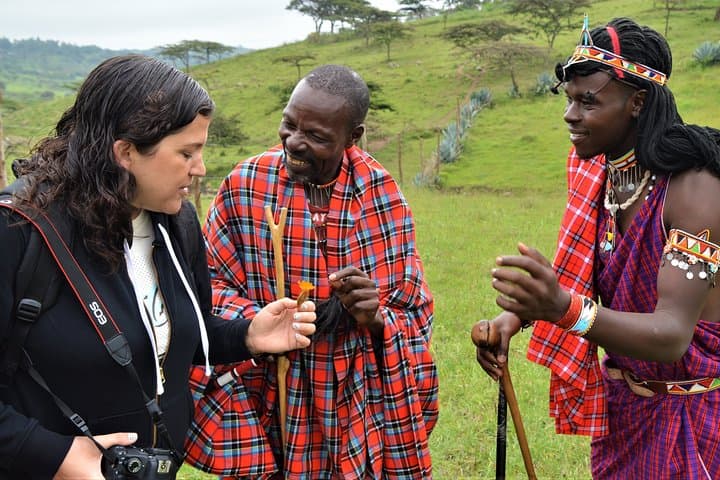
This is Maasai country — a living culture shaped by migration, livestock, and ceremony. The Maasai are Nilotic pastoralists whose age-set system and warrior traditions have structured community life for centuries. The land here is a patchwork of savanna and scrub, carved by seasonal runoff rather than glaciers, dotted with acacia and hardy herbs the elders still use for medicine. Listening to Elder Daniel explain the properties of local plants, you feel geology and culture braided together: the red soil that builds a manyatta also feeds the grasses the cattle graze.
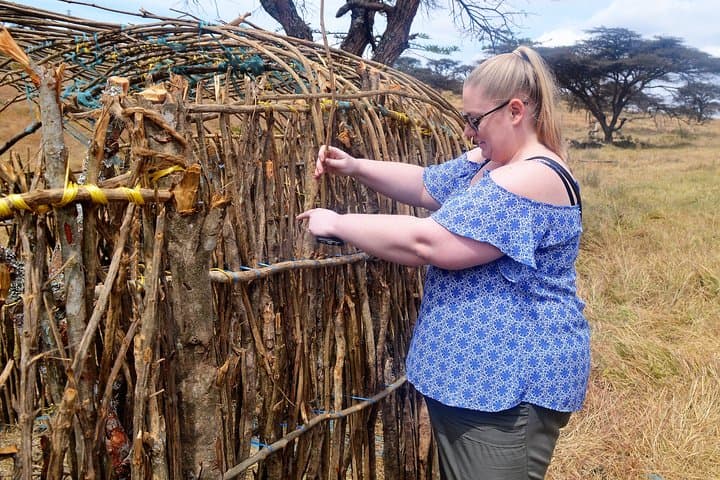
Over two days you join an intimate loop of experiences: a cattle drive at sunrise, spear-throwing lessons from warriors, weaving a manyatta’s frame with women who have done this work since childhood, and a beat-driven dance that tests your knees and your grin. There’s practical learning too — cooking with valley herbs, making beadwork, and the satisfaction of cladding a wall with mud. These are not demonstrations behind glass; they are participation, and they demand attention and respect.
Practical details: most groups depart Nairobi and drive roughly 1.5–2.5 hours each way on a mix of paved and compact dirt roads. Expect dusty tracks and low, sun-exposed walks of short to moderate length across uneven ground. Daily onsite time is extensive — plan for active blocks of 4–7 hours of hands-on activities, with plenty of tea breaks. Wear sturdy closed-toe shoes for manyatta building and climbing acacia, breathable long sleeves for sun and insects, and bring cash for small purchases and gratuities.
Local guides bridge language and custom; ask before photographing people and offer a small token of thanks when a close-up portrait is taken. The experience supports community incomes and cultural preservation — responsible travelers leave behind curiosity, respect, and conversation rather than footprints alone.
If you want connection instead of observation, this is the trip: tactile, noisy, occasionally challenging, and richly human. It’s less about ticking a cultural box and more about standing shoulder-to-shoulder while a new wall is finished and a song starts — then joining in.
easy.
2 days.
Suitable for most fitness levels; you should be comfortable with several hours of standing, light hiking and active cultural participation.
Most bookings include hotel pickup in Nairobi—confirm your pickup point when you book and expect to be ready about 30 minutes before departure.
Yes; the tour notes stroller accessibility and is family-friendly, though some activities require parental discretion for very young children.
Two lunches, one dinner in Nairobi on Day 1 and breakfast at included accommodations are provided; you’ll also share traditional village meals prepared with local herbs.
Routine travel vaccines are recommended; consult your doctor about malaria prophylaxis depending on season and itinerary specifics.
Yes—photographers will find rich portrait and action opportunities; always ask permission first and consider a small payment for posed portraits.
Wear modest, non-revealing clothing and avoid flashy jewelry; neutral tones are appreciated and help in photo opportunities.
The Maasai are a semi-nomadic Nilotic people whose age-set social system and pastoral economy have shaped the rangelands for centuries.
Community tourism funds and conservancy agreements help fund rangeland protection and coexistence programs; respect local rules to minimize impact.
One Horizon Africa operates guided outdoor trips and adventures with an emphasis on safety, stewardship, and memorable experiences.
You leave Nairobi before dawn and the city’s glass and concrete give way to wide light and the silhouette of acacia on the horizon. The road eases through red-dust plains; goats scatter like punctuation marks. By mid-morning you arrive at the manyatta — the cluster of reed-and-mud homesteads where the rhythm of life is set by cattle, song, and the slow counting of seasons. The village elders greet you with tea, and the landscape itself seems to lean in: the valley’s low wind dares you to slow down and listen.
You leave Nairobi before dawn and the city’s glass and concrete give way to wide light and the silhouette of acacia on the horizon. The road eases through red-dust plains; goats scatter like punctuation marks. By mid-morning you arrive at the manyatta — the cluster of reed-and-mud homesteads where the rhythm of life is set by cattle, song, and the slow counting of seasons. The village elders greet you with tea, and the landscape itself seems to lean in: the valley’s low wind dares you to slow down and listen.
This is Maasai country — a living culture shaped by migration, livestock, and ceremony. The Maasai are Nilotic pastoralists whose age-set system and warrior traditions have structured community life for centuries. The land here is a patchwork of savanna and scrub, carved by seasonal runoff rather than glaciers, dotted with acacia and hardy herbs the elders still use for medicine. Listening to Elder Daniel explain the properties of local plants, you feel geology and culture braided together: the red soil that builds a manyatta also feeds the grasses the cattle graze.
Over two days you join an intimate loop of experiences: a cattle drive at sunrise, spear-throwing lessons from warriors, weaving a manyatta’s frame with women who have done this work since childhood, and a beat-driven dance that tests your knees and your grin. There’s practical learning too — cooking with valley herbs, making beadwork, and the satisfaction of cladding a wall with mud. These are not demonstrations behind glass; they are participation, and they demand attention and respect.
Practical details: most groups depart Nairobi and drive roughly 1.5–2.5 hours each way on a mix of paved and compact dirt roads. Expect dusty tracks and low, sun-exposed walks of short to moderate length across uneven ground. Daily onsite time is extensive — plan for active blocks of 4–7 hours of hands-on activities, with plenty of tea breaks. Wear sturdy closed-toe shoes for manyatta building and climbing acacia, breathable long sleeves for sun and insects, and bring cash for small purchases and gratuities.
Local guides bridge language and custom; ask before photographing people and offer a small token of thanks when a close-up portrait is taken. The experience supports community incomes and cultural preservation — responsible travelers leave behind curiosity, respect, and conversation rather than footprints alone.
If you want connection instead of observation, this is the trip: tactile, noisy, occasionally challenging, and richly human. It’s less about ticking a cultural box and more about standing shoulder-to-shoulder while a new wall is finished and a song starts — then joining in.