THE ADVENTURE COLLECTIVE® · Independent discovery and booking for outdoor travel

Travel aboard the Alaska Railroad Aurora Winter Train from Fairbanks to Anchorage for a 12-hour journey through snow-blanketed wilderness. Experience quiet backcountry vistas, possible wildlife sightings, and stunning views of Denali from the comfort of a warm railcar.
Travel aboard the Alaska Railroad Aurora Winter Train from Fairbanks to Anchorage for a 12-hour journey through snow-blanketed wilderness. Experience quiet backcountry vistas, possible wildlife sightings, and stunning views of Denali from the comfort of a warm railcar.
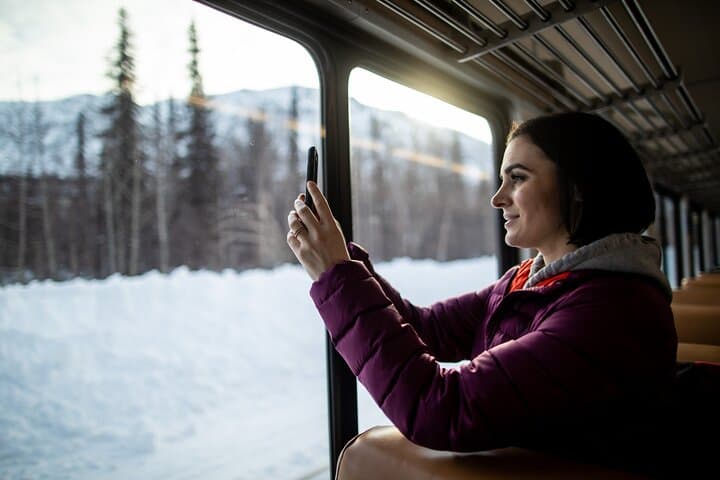
Morning settles over Fairbanks as the Alaska Railroad Aurora Winter Train prepares for departure, its steel rails gleaming beneath the low northern sun. Passengers settle into plush seats inside the warm railcar, large picture windows framing a pristine Alaskan winter that demands more than just a glance—it calls for a deep, quiet gaze. Outside, snow presses against the glass, blanketing a vast wilderness that stretches along a 358-mile corridor between Fairbanks and Anchorage.
Verified experiences and guided adventures in the surrounding area.
Operated by Alaska Railroad Corporation · Fairbanks, Alaska
Morning settles over Fairbanks as the Alaska Railroad Aurora Winter Train prepares for departure, its steel rails gleaming beneath the low northern sun. Passengers settle into plush seats inside the warm railcar, large picture windows framing a pristine Alaskan winter that demands more than just a glance—it calls for a deep, quiet gaze. Outside, snow presses against the glass, blanketing a vast wilderness that stretches along a 358-mile corridor between Fairbanks and Anchorage.
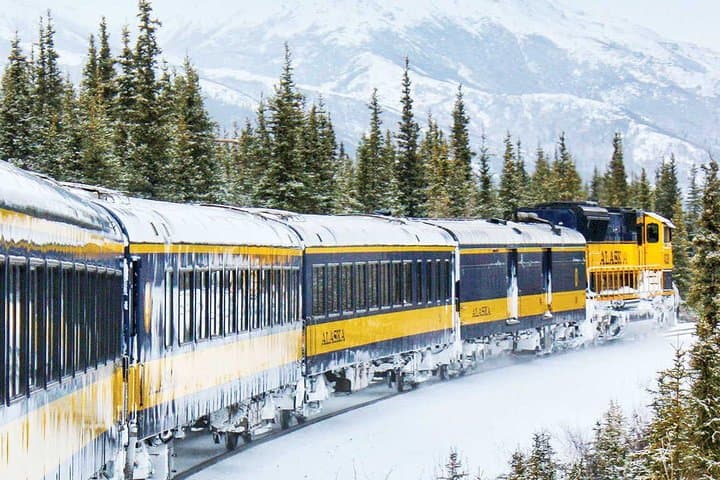
This 12-hour southbound journey traverses two distinct geographic regions—Interior Alaska and Southcentral Alaska—offering a winter experience that differs sharply from the summer rails. The train snakes past frozen rivers and snow-laden forests, daring travelers to spot moose standing like sentries amidst the silent landscape. As it winds along the Nenana River below Healy Canyon, the track curves through a remote backcountry devoid of roads, offering flagstop service along a 50-mile stretch near Hurricane Gulch. Here, the imposing 296-foot Hurricane Gulch Bridge looms, its steel spine witnessing a landscape shaped by glaciers and time.
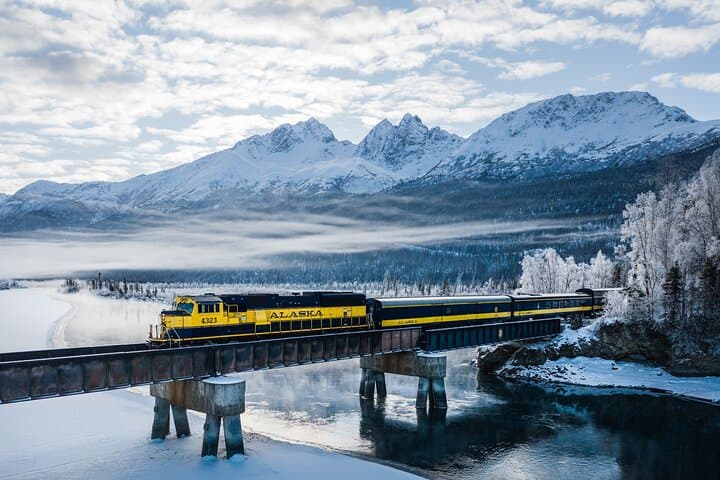
South of Denali National Park, where summer’s vibrant hues retreat under a thick winter mantle, the broad pass opens to expansive views of the Alaska Range. On clear days, Denali towers above the Susitna River valley, massive and stoic against a crisp sky. Further south past Talkeetna, the train crosses the Knik River with the Chugach Mountains forming a rugged backdrop, their snow-capped peaks punctuating the horizon.
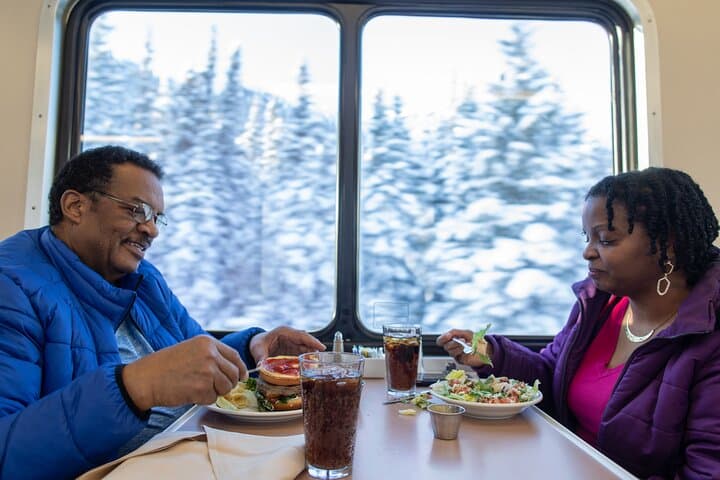
Built on rails that once connected remote Alaskan communities, this journey is more than transport—it’s passage through time and terrain. The train’s elegant interiors, including reserved seating and a snack bar with hot and cold meal options, provide comfort against the biting cold outside. Onboard dining offers a chance to warm up and refuel without missing the spectacle scrolling past the windows.
Travelers planning this winter excursion should check in at least an hour before departure, typically from Fairbanks at 8:30 a.m., arriving in Anchorage at about 8 p.m. The train is wheelchair accessible and welcomes service animals, but travelers should prepare for the long day by dressing in layers and bringing essentials for cold weather, including snacks and hydration. Since schedules can shift with weather, avoid booking tight connections on arrival day.
This route is a gateway to Alaska’s winter heart, where nature holds sway and the stillness insists on presence. It’s a train trip that asks for patience—the slow pace allows the landscape to reveal itself, inviting each traveler into an intimate conversation with Alaska’s enduring winter wilderness.
easy.
12 hours.
Suitable for all fitness levels as the journey requires no physical exertion
The train offers a snack bar and optional dining with hot and cold meal selections available for purchase.
Yes, the Alaska Railroad provides wheelchair lifts at stations and passenger trains comply with ADA guidelines.
Service animals are allowed onboard, but other pets must be transported in kennels in the baggage car.
Passengers may bring two checked bags and one carry-on each weighing up to 50 pounds; fees apply for additional or oversized items.
The railroad will provide alternate transportation if necessary, but schedules can be affected by weather, so plan accordingly.
Infants (0-1 years) can ride as lap children without a paid seat but must be registered at booking and sit on an adult's lap.
The Alaska Railroad was instrumental in opening the rugged interior of Alaska to settlement and resource development in the early 20th century.
The railroad operates with environmental stewardship goals, minimizing impacts on delicate winter ecosystems along its route.
Alaska Railroad Corporation operates guided outdoor trips and adventures with an emphasis on safety, stewardship, and memorable experiences.
Morning settles over Fairbanks as the Alaska Railroad Aurora Winter Train prepares for departure, its steel rails gleaming beneath the low northern sun. Passengers settle into plush seats inside the warm railcar, large picture windows framing a pristine Alaskan winter that demands more than just a glance—it calls for a deep, quiet gaze. Outside, snow presses against the glass, blanketing a vast wilderness that stretches along a 358-mile corridor between Fairbanks and Anchorage.
Morning settles over Fairbanks as the Alaska Railroad Aurora Winter Train prepares for departure, its steel rails gleaming beneath the low northern sun. Passengers settle into plush seats inside the warm railcar, large picture windows framing a pristine Alaskan winter that demands more than just a glance—it calls for a deep, quiet gaze. Outside, snow presses against the glass, blanketing a vast wilderness that stretches along a 358-mile corridor between Fairbanks and Anchorage.
This 12-hour southbound journey traverses two distinct geographic regions—Interior Alaska and Southcentral Alaska—offering a winter experience that differs sharply from the summer rails. The train snakes past frozen rivers and snow-laden forests, daring travelers to spot moose standing like sentries amidst the silent landscape. As it winds along the Nenana River below Healy Canyon, the track curves through a remote backcountry devoid of roads, offering flagstop service along a 50-mile stretch near Hurricane Gulch. Here, the imposing 296-foot Hurricane Gulch Bridge looms, its steel spine witnessing a landscape shaped by glaciers and time.
South of Denali National Park, where summer’s vibrant hues retreat under a thick winter mantle, the broad pass opens to expansive views of the Alaska Range. On clear days, Denali towers above the Susitna River valley, massive and stoic against a crisp sky. Further south past Talkeetna, the train crosses the Knik River with the Chugach Mountains forming a rugged backdrop, their snow-capped peaks punctuating the horizon.
Built on rails that once connected remote Alaskan communities, this journey is more than transport—it’s passage through time and terrain. The train’s elegant interiors, including reserved seating and a snack bar with hot and cold meal options, provide comfort against the biting cold outside. Onboard dining offers a chance to warm up and refuel without missing the spectacle scrolling past the windows.
Travelers planning this winter excursion should check in at least an hour before departure, typically from Fairbanks at 8:30 a.m., arriving in Anchorage at about 8 p.m. The train is wheelchair accessible and welcomes service animals, but travelers should prepare for the long day by dressing in layers and bringing essentials for cold weather, including snacks and hydration. Since schedules can shift with weather, avoid booking tight connections on arrival day.
This route is a gateway to Alaska’s winter heart, where nature holds sway and the stillness insists on presence. It’s a train trip that asks for patience—the slow pace allows the landscape to reveal itself, inviting each traveler into an intimate conversation with Alaska’s enduring winter wilderness.