THE ADVENTURE COLLECTIVE® · Independent discovery and booking for outdoor travel

A one-day escape from Chefchaouen into Talassemtane National Park, this guided hike reaches crystalline pools and the dramatic natural arch known as God’s Bridge. Expect shaded cedar groves, river crossings, and a refreshing dip in summer.
A one-day escape from Chefchaouen into Talassemtane National Park, this guided hike reaches crystalline pools and the dramatic natural arch known as God’s Bridge. Expect shaded cedar groves, river crossings, and a refreshing dip in summer.
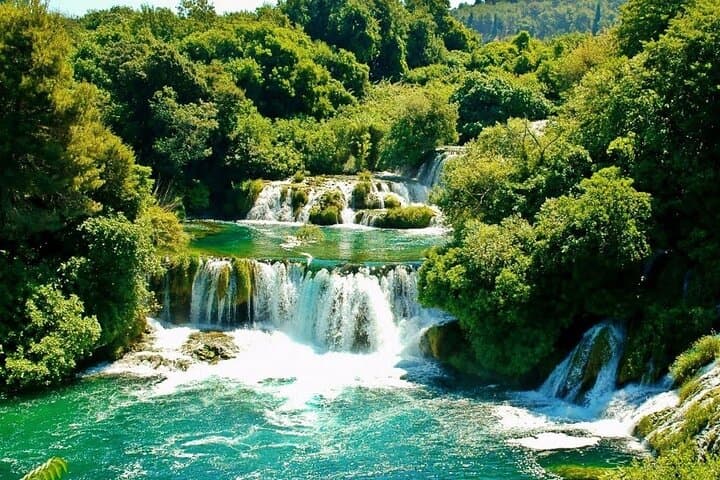
The morning air in Chefchaouen carries a cool, blue-tinted hush as a small minivan winds out of town and into the Rif’s olive-scrubbed ridges. Roads narrow, houses give way to terraced fields, and the pines of Talassemtane National Park press closer until the engine sighs and the guide points to a spray of white water far below. The trail opens like a promise: river voice over stone, cedar trunks leaning in to listen, and the first natural pool reflecting the sky in a precise, electric blue.
Verified experiences and guided adventures in the surrounding area.
Operated by Chefchaouen Adventures · Chefchaouen, Tanger-Tetouan-Al Hoceima
The morning air in Chefchaouen carries a cool, blue-tinted hush as a small minivan winds out of town and into the Rif’s olive-scrubbed ridges. Roads narrow, houses give way to terraced fields, and the pines of Talassemtane National Park press closer until the engine sighs and the guide points to a spray of white water far below. The trail opens like a promise: river voice over stone, cedar trunks leaning in to listen, and the first natural pool reflecting the sky in a precise, electric blue.
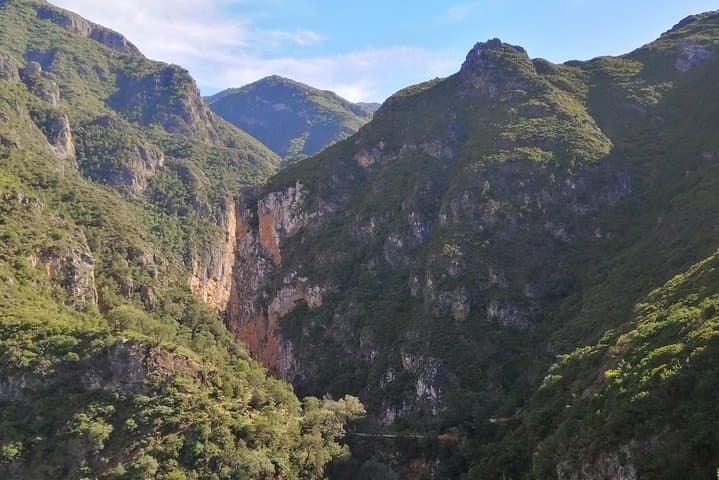
This shared day trip follows ancient mule tracks and modern footpaths that have long connected mountain villages to the valleys below. Talassemtane National Park—created in 2004 to protect the region’s threatened fir forests—frames the route: fractured limestone folded over millions of years, channels carved deep by streams that dare you to cross. Local Berber communities have, for generations, used these rivers for irrigation and refreshment; today riverside cafés offer mint tea and tajine as a welcome counterpoint to the exertion.
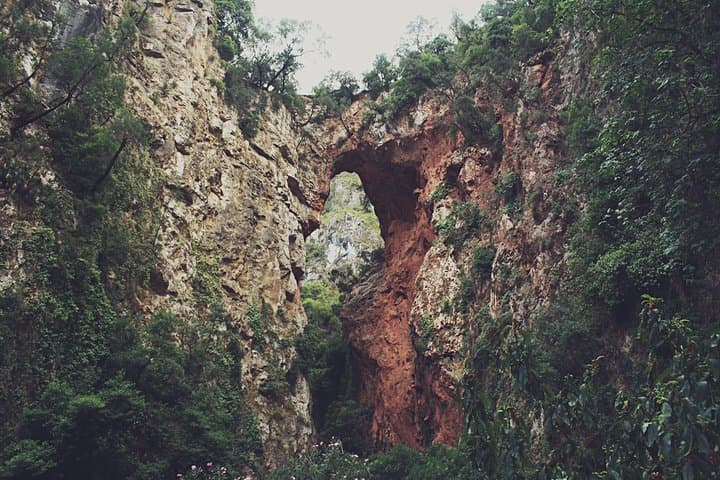
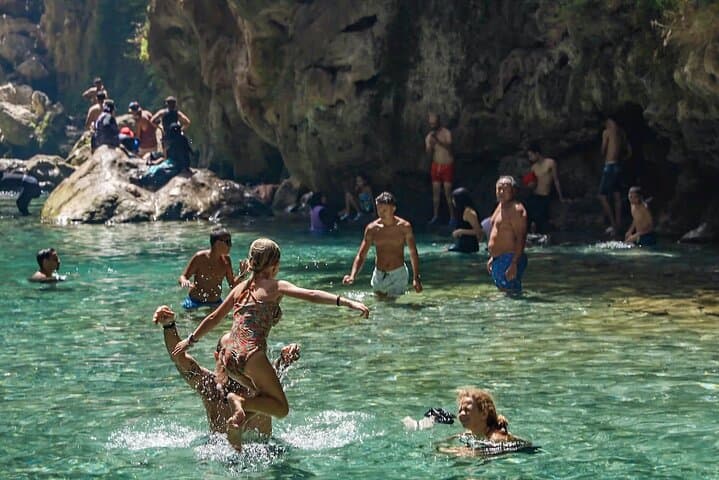
Hiking past small cascades, you’ll pass endemic plants—Atlas cedar and Spanish fir—that give the slopes an almost evergreen cathedral feel. The Bridge of God, a dramatic natural arch spanning a narrow gorge, is the trip’s prize: a stone doorway that frames the river’s plunge and the sky beyond. In summer the pools invite a quick, bracing dip; in shoulder seasons the water is for show, reflective and cold, begging for camera angles rather than swims.
The route is straightforward but honest: expect 6–8 km round-trip on uneven, rocky trails with roughly 200–350 m of elevation gain depending on how far up the falls you go. River crossings are common—stones, small wooden planks, or shallow wades—so steady footing matters. The guide handles logistics and local context, pointing out birdlife, geological folds, and the best cafés for a slow lunch.
Practical guidance: start early to avoid midday heat and crowds, bring a lightweight daypack with water and snacks, and wear shoes with good grip; sandals will fail on slick rocks. If you plan to swim, bring a quick-dry layer and a small towel that can be packed wet. Cash is useful for small cafes and tips; signal can be patchy in the valley.
This is a day meant for sensory contrast—silent fir groves, loud rivers, and the tactile satisfaction of stone underfoot. It’s accessible to anyone with moderate fitness and a curiosity about Morocco’s wild north: the reward is immediate, photogenic, and fundamentally outdoorsy in the best way.
moderate.
4–6 hours.
Moderate fitness—able to walk on uneven terrain for several hours and handle short elevation gains.
From the drop-off point it’s roughly 3–4 km each way to the popular viewpoints, totaling about 6–8 km round-trip depending on stops.
Yes in summer months the lower pools are popular for swimming, but be cautious of cold water, slippery rocks, and local guidance—some deeper pools are off-limits.
The meeting point is the main Post Office (Albarid Bank) on Avenue Hassan II, a short walk from Plaza Uta el-Hammam.
Children with moderate hiking experience can join; older travelers should be comfortable with uneven trails and river crossings—check with the operator if mobility is limited.
Lunch is typically not included; the itinerary stops at riverside cafés where you can buy tajine and tea, so bring cash.
Observe wildlife from a distance, avoid disturbing nesting birds, and don’t remove plants—Talassemtane protects several endemic species.
The Rif’s valleys have hosted Amazigh (Berber) communities for centuries; Talassemtane National Park was designated in 2004 to protect its rare fir forests and unique biodiversity.
Stick to marked trails, avoid leaving trash, and minimize water contamination—local guides emphasize keeping pools and streams clean for communities downstream.
Chefchaouen Adventures operates guided outdoor trips and adventures with an emphasis on safety, stewardship, and memorable experiences.
The morning air in Chefchaouen carries a cool, blue-tinted hush as a small minivan winds out of town and into the Rif’s olive-scrubbed ridges. Roads narrow, houses give way to terraced fields, and the pines of Talassemtane National Park press closer until the engine sighs and the guide points to a spray of white water far below. The trail opens like a promise: river voice over stone, cedar trunks leaning in to listen, and the first natural pool reflecting the sky in a precise, electric blue.
The morning air in Chefchaouen carries a cool, blue-tinted hush as a small minivan winds out of town and into the Rif’s olive-scrubbed ridges. Roads narrow, houses give way to terraced fields, and the pines of Talassemtane National Park press closer until the engine sighs and the guide points to a spray of white water far below. The trail opens like a promise: river voice over stone, cedar trunks leaning in to listen, and the first natural pool reflecting the sky in a precise, electric blue.
This shared day trip follows ancient mule tracks and modern footpaths that have long connected mountain villages to the valleys below. Talassemtane National Park—created in 2004 to protect the region’s threatened fir forests—frames the route: fractured limestone folded over millions of years, channels carved deep by streams that dare you to cross. Local Berber communities have, for generations, used these rivers for irrigation and refreshment; today riverside cafés offer mint tea and tajine as a welcome counterpoint to the exertion.
Hiking past small cascades, you’ll pass endemic plants—Atlas cedar and Spanish fir—that give the slopes an almost evergreen cathedral feel. The Bridge of God, a dramatic natural arch spanning a narrow gorge, is the trip’s prize: a stone doorway that frames the river’s plunge and the sky beyond. In summer the pools invite a quick, bracing dip; in shoulder seasons the water is for show, reflective and cold, begging for camera angles rather than swims.
The route is straightforward but honest: expect 6–8 km round-trip on uneven, rocky trails with roughly 200–350 m of elevation gain depending on how far up the falls you go. River crossings are common—stones, small wooden planks, or shallow wades—so steady footing matters. The guide handles logistics and local context, pointing out birdlife, geological folds, and the best cafés for a slow lunch.
Practical guidance: start early to avoid midday heat and crowds, bring a lightweight daypack with water and snacks, and wear shoes with good grip; sandals will fail on slick rocks. If you plan to swim, bring a quick-dry layer and a small towel that can be packed wet. Cash is useful for small cafes and tips; signal can be patchy in the valley.
This is a day meant for sensory contrast—silent fir groves, loud rivers, and the tactile satisfaction of stone underfoot. It’s accessible to anyone with moderate fitness and a curiosity about Morocco’s wild north: the reward is immediate, photogenic, and fundamentally outdoorsy in the best way.