THE ADVENTURE COLLECTIVE® · Independent discovery and booking for outdoor travel

Set out from Agadir on a two-hour camel or horse ride that moves from eucalyptus copses to wind-sculpted dunes and finishes at the mouth of Oued Souss — a hotspot for wintering birds. Practical tips and local context help you plan a comfortable, low-impact outing.
Set out from Agadir on a two-hour camel or horse ride that moves from eucalyptus copses to wind-sculpted dunes and finishes at the mouth of Oued Souss — a hotspot for wintering birds. Practical tips and local context help you plan a comfortable, low-impact outing.
You climb into the padded saddle as the ranch dogs slacken and the first camel stretches toward the dunes.
The caravan moves out of the ranch six kilometres from Agadir, the animals’ slow sway matching the roll of sand. The route crosses low eucalyptus groves that scent the air, skirts arid scrub and opens onto broad, wind-formed dunes that fall away toward the mouth of Oued Souss — a tidal ribbon where migratory birds gather each winter.
The area sits on the north edge of the Souss-Massa coastal plain, where the river has deposited sand and silt for millennia and helped carve micro-habitats used by Berber communities. The ride threads near small Berber villages; local culture remains visible in low stone houses, small orchards and roadside argan trees. Geologically the terrain is largely sand and coastal alluvium with very little elevation gain — expect flat, undulating dunes and compacted sandy tracks underfoot.
Practical guidance: the experience is a two-hour, guided camel (or horse) ride with hotel pickup in an air-conditioned vehicle. Terrain is sandy and uneven; the activity is rated easy but requires stable seating and basic mobility to mount and dismount. Bring sun protection, at least 1–2 litres of water, closed-toe shoes, and a lightweight layer for coastal breezes. Binoculars and a camera are useful for flamingos, storks and turtles at the river mouth.
Timing: mornings and late afternoons give cooler temperatures and more active birdlife. Respect the animals and local communities — follow guides’ instructions, avoid off-route trampling of dunes and do not feed wildlife.
Verified experiences and guided adventures in the surrounding area.
Operated by Adi Tours · Agadir, Souss-Massa
You climb into the padded saddle as the ranch dogs slacken and the first camel stretches toward the dunes.
The caravan moves out of the ranch six kilometres from Agadir, the animals’ slow sway matching the roll of sand. The route crosses low eucalyptus groves that scent the air, skirts arid scrub and opens onto broad, wind-formed dunes that fall away toward the mouth of Oued Souss — a tidal ribbon where migratory birds gather each winter.
The area sits on the north edge of the Souss-Massa coastal plain, where the river has deposited sand and silt for millennia and helped carve micro-habitats used by Berber communities. The ride threads near small Berber villages; local culture remains visible in low stone houses, small orchards and roadside argan trees. Geologically the terrain is largely sand and coastal alluvium with very little elevation gain — expect flat, undulating dunes and compacted sandy tracks underfoot.
Practical guidance: the experience is a two-hour, guided camel (or horse) ride with hotel pickup in an air-conditioned vehicle. Terrain is sandy and uneven; the activity is rated easy but requires stable seating and basic mobility to mount and dismount. Bring sun protection, at least 1–2 litres of water, closed-toe shoes, and a lightweight layer for coastal breezes. Binoculars and a camera are useful for flamingos, storks and turtles at the river mouth.
Timing: mornings and late afternoons give cooler temperatures and more active birdlife. Respect the animals and local communities — follow guides’ instructions, avoid off-route trampling of dunes and do not feed wildlife.
easy.
2 hours.
Suitable for most fitness levels; you should be able to mount/dismount a camel and remain seated for the ride.
The guided experience is two hours long and the ranch sits about six kilometres from central Agadir with hotel pickup provided.
The activity is listed as suitable for all fitness levels; infants must sit on an adult’s lap and seats for young children may be available—check with the operator at booking.
Common sightings include greater flamingos and various wading birds; turtles and storks are sometimes seen at the mouth of Oued Souss, especially in migratory season.
Wear closed-toe shoes, sun protection, a light layer for coastal breezes and carry water; bring binoculars or a camera if you want to watch birds.
The Souss river and its coastal plain have long supported Berber communities and seasonal agriculture; the nearby Souss-Massa protected area conserves critical migratory bird habitat.
Souss-Massa National Park protects dune, estuary and argan habitats—visitors should stay on routes, avoid disturbing nesting birds and take all litter with them.
Adi Tours operates guided outdoor trips and adventures with an emphasis on safety, stewardship, and memorable experiences.
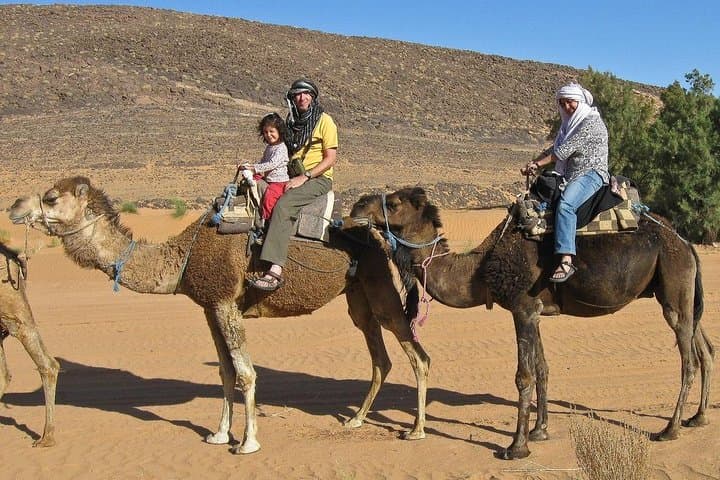
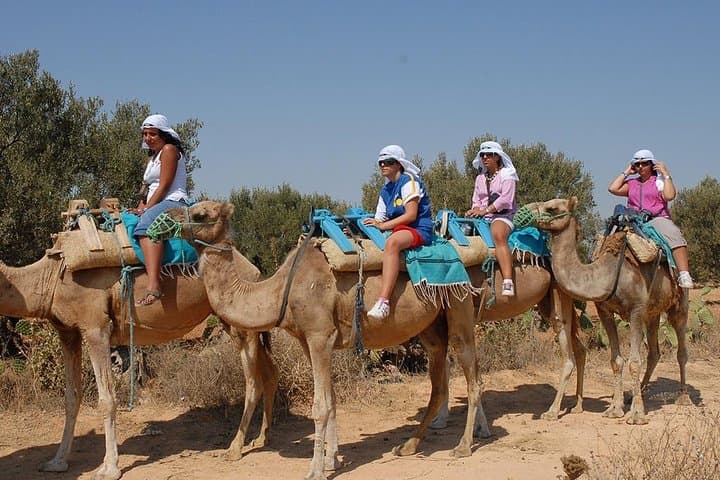
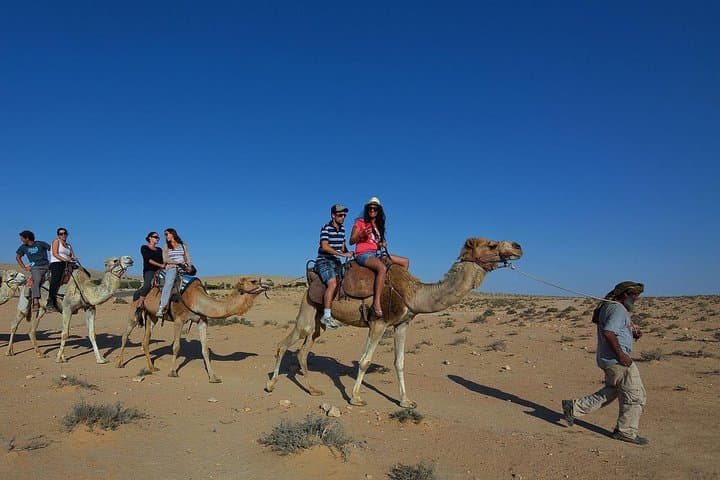
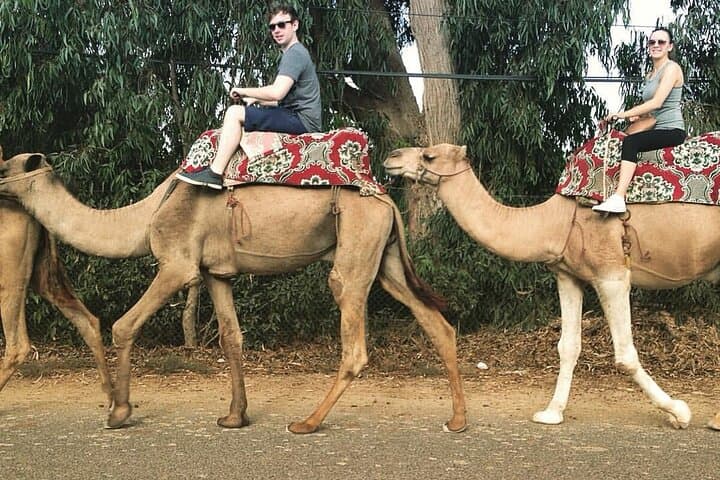
You climb into the padded saddle as the ranch dogs slacken and the first camel stretches toward the dunes.
The caravan moves out of the ranch six kilometres from Agadir, the animals’ slow sway matching the roll of sand. The route crosses low eucalyptus groves that scent the air, skirts arid scrub and opens onto broad, wind-formed dunes that fall away toward the mouth of Oued Souss — a tidal ribbon where migratory birds gather each winter.
The area sits on the north edge of the Souss-Massa coastal plain, where the river has deposited sand and silt for millennia and helped carve micro-habitats used by Berber communities. The ride threads near small Berber villages; local culture remains visible in low stone houses, small orchards and roadside argan trees. Geologically the terrain is largely sand and coastal alluvium with very little elevation gain — expect flat, undulating dunes and compacted sandy tracks underfoot.
Practical guidance: the experience is a two-hour, guided camel (or horse) ride with hotel pickup in an air-conditioned vehicle. Terrain is sandy and uneven; the activity is rated easy but requires stable seating and basic mobility to mount and dismount. Bring sun protection, at least 1–2 litres of water, closed-toe shoes, and a lightweight layer for coastal breezes. Binoculars and a camera are useful for flamingos, storks and turtles at the river mouth.
Timing: mornings and late afternoons give cooler temperatures and more active birdlife. Respect the animals and local communities — follow guides’ instructions, avoid off-route trampling of dunes and do not feed wildlife.
You climb into the padded saddle as the ranch dogs slacken and the first camel stretches toward the dunes.
The caravan moves out of the ranch six kilometres from Agadir, the animals’ slow sway matching the roll of sand. The route crosses low eucalyptus groves that scent the air, skirts arid scrub and opens onto broad, wind-formed dunes that fall away toward the mouth of Oued Souss — a tidal ribbon where migratory birds gather each winter.
The area sits on the north edge of the Souss-Massa coastal plain, where the river has deposited sand and silt for millennia and helped carve micro-habitats used by Berber communities. The ride threads near small Berber villages; local culture remains visible in low stone houses, small orchards and roadside argan trees. Geologically the terrain is largely sand and coastal alluvium with very little elevation gain — expect flat, undulating dunes and compacted sandy tracks underfoot.
Practical guidance: the experience is a two-hour, guided camel (or horse) ride with hotel pickup in an air-conditioned vehicle. Terrain is sandy and uneven; the activity is rated easy but requires stable seating and basic mobility to mount and dismount. Bring sun protection, at least 1–2 litres of water, closed-toe shoes, and a lightweight layer for coastal breezes. Binoculars and a camera are useful for flamingos, storks and turtles at the river mouth.
Timing: mornings and late afternoons give cooler temperatures and more active birdlife. Respect the animals and local communities — follow guides’ instructions, avoid off-route trampling of dunes and do not feed wildlife.