THE ADVENTURE COLLECTIVE® · Independent discovery and booking for outdoor travel

Spend a day trading Zagreb’s city streets for the turquoise tiers of Plitvice Lakes. This guided small-group tour delivers boat crossings, wooden boardwalks, and lesser-known viewpoints with the ease of hotel pickup and a local guide.
Spend a day trading Zagreb’s city streets for the turquoise tiers of Plitvice Lakes. This guided small-group tour delivers boat crossings, wooden boardwalks, and lesser-known viewpoints with the ease of hotel pickup and a local guide.
You step off the air-conditioned minibus and the first thing you hear is water — not the distant rush of a single waterfall but a chorus of streams finding new routes through limestone. The wooden walkways creak underfoot and the lakes answer each footfall with glassy reflections that change color by the minute: jade, turquoise, almost electric blue. For a day, Plitvice feels like a landscape that rearranged itself to test your attention.
Verified experiences and guided adventures in the surrounding area.
Operated by Traveljaz · Plitvička Jezera, Lika-Senj County
You step off the air-conditioned minibus and the first thing you hear is water — not the distant rush of a single waterfall but a chorus of streams finding new routes through limestone. The wooden walkways creak underfoot and the lakes answer each footfall with glassy reflections that change color by the minute: jade, turquoise, almost electric blue. For a day, Plitvice feels like a landscape that rearranged itself to test your attention.
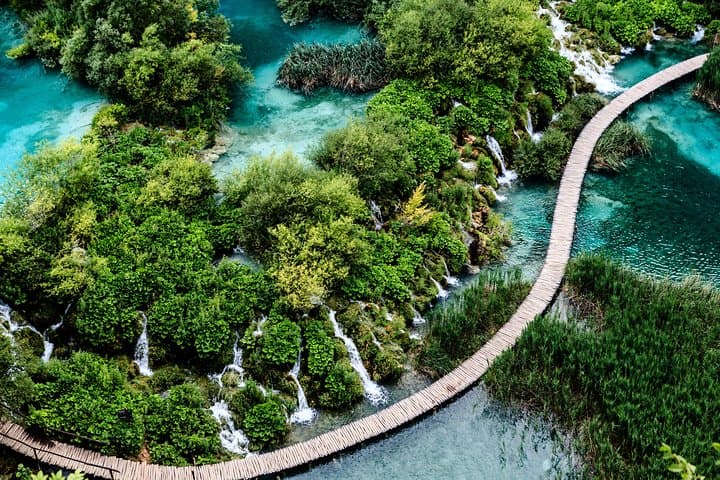
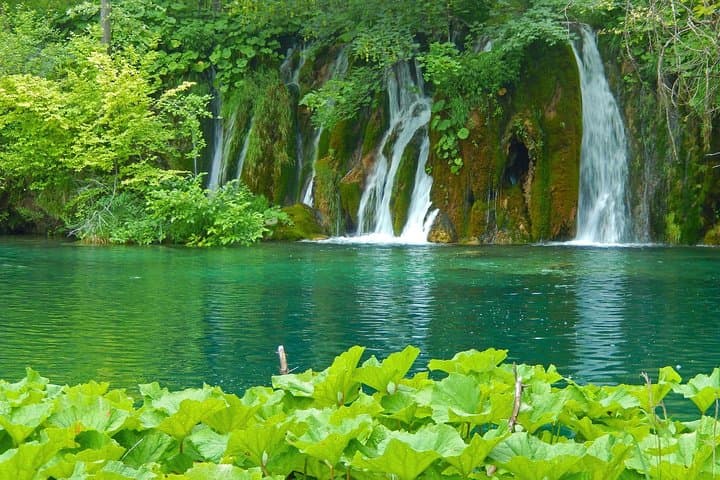
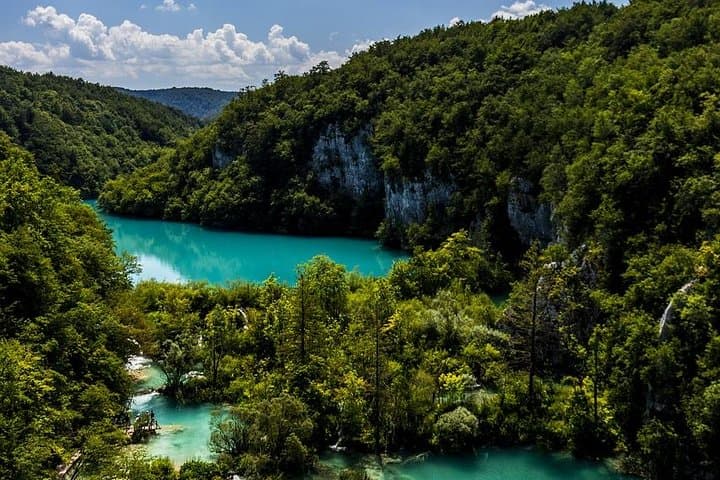
Plitvice Lakes National Park is one of Europe’s oldest protected areas, designated in 1949 and a UNESCO World Heritage Site since 1979. Its drama is geological: travertine (tufa) deposits built by calcium-rich waters have raised natural dams, creating a stair-step series of 16 interconnected lakes and dozens of waterfalls. That process — water depositing rock while shaping channels — is still active, which is why the park’s contours shift subtly every season.
Culture and history press in at the edges. The Lika region around Plitvice carries a history of shepherding and woodcraft; local guides often point out old sawmill remnants and trout pools that once fed remote settlements. During the 1990s conflict the park bore scars, and now its recovery is part of the region’s story: conservation is both a mission and a source of livelihoods.
On the standard day trip from Zagreb, expect a two-hour drive each way, roughly five hours inside the park, an eco-boat across Kozjak Lake, and a navigable train or shuttle on rougher sections. The route balances the big moments — Veliki Slap (Big Waterfall) and the wooden bridges over Upper Lakes — with quieter corridors where the forest presses close and moss claims trunks. Trails climb and descend; at points you’ll encounter up to 300 steps and narrow boardwalks where one wrong footstep risks a wet shoe and an interrupted photo.
Practicalities matter: bring sturdy, treaded footwear, a lightweight rain shell, and at least 1 liter of water for hiking. Timing shifts the experience — mornings are quieter and the light favors the eastern overlooks; late afternoon casts long shadows and opens up warmer tones in the water. Lunch is available at park restaurants, but packing snacks speeds things up.
Respect the park’s rules: stay on marked walkways, don’t feed wildlife, and understand that swimming is prohibited. For travelers based in Zagreb, this trip is a polished, accessible way to encounter one of Europe’s most elastic landscapes — where water keeps building the world under your feet and the boardwalk asks you to pay attention.
moderate.
9 hours.
Moderate fitness required — able to handle several hours of walking, uneven terrain and up to 300 steps in places.
The transfer is about two hours each way depending on traffic, making this a full-day (roughly 9-hour) excursion including park time.
Some areas have boardwalks and shuttle options, but many viewpoints require stairs and uneven paths; contact the operator to discuss specific mobility needs before booking.
Yes — this tour includes park admission and the eco-boat crossing described in the itinerary; check your booking confirmation for details.
Families are welcome and infant seats are available on request, though the walking requires supervision and some sections have steep steps.
No — swimming is strictly prohibited to protect the travertine formations and local ecosystems.
There are park restaurants offering regional dishes and sandwiches; bringing snacks is recommended if you prefer a quicker schedule or dietary-specific food.
Plitvice was declared a national park in 1949 and later a UNESCO World Heritage Site; its management balances tourism with protection of active travertine formation.
Heavy visitation pressures sensitive travertine and habitats — stay on boardwalks, avoid littering, and use designated facilities to minimize impact.
Traveljaz operates guided outdoor trips and adventures with an emphasis on safety, stewardship, and memorable experiences.
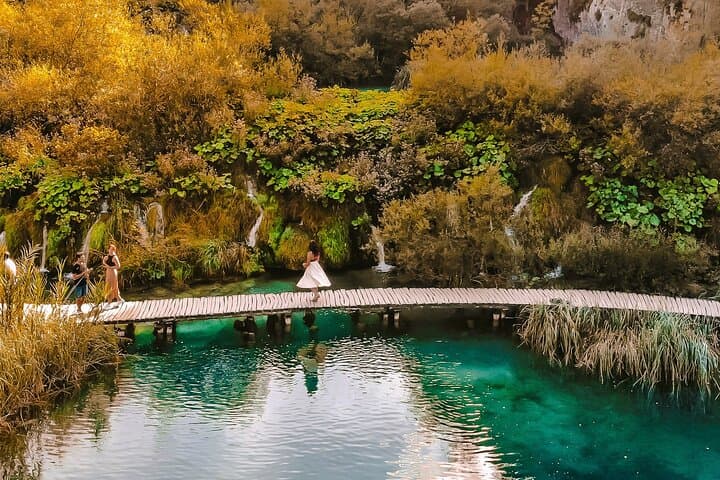
You step off the air-conditioned minibus and the first thing you hear is water — not the distant rush of a single waterfall but a chorus of streams finding new routes through limestone. The wooden walkways creak underfoot and the lakes answer each footfall with glassy reflections that change color by the minute: jade, turquoise, almost electric blue. For a day, Plitvice feels like a landscape that rearranged itself to test your attention.
You step off the air-conditioned minibus and the first thing you hear is water — not the distant rush of a single waterfall but a chorus of streams finding new routes through limestone. The wooden walkways creak underfoot and the lakes answer each footfall with glassy reflections that change color by the minute: jade, turquoise, almost electric blue. For a day, Plitvice feels like a landscape that rearranged itself to test your attention.
Plitvice Lakes National Park is one of Europe’s oldest protected areas, designated in 1949 and a UNESCO World Heritage Site since 1979. Its drama is geological: travertine (tufa) deposits built by calcium-rich waters have raised natural dams, creating a stair-step series of 16 interconnected lakes and dozens of waterfalls. That process — water depositing rock while shaping channels — is still active, which is why the park’s contours shift subtly every season.
Culture and history press in at the edges. The Lika region around Plitvice carries a history of shepherding and woodcraft; local guides often point out old sawmill remnants and trout pools that once fed remote settlements. During the 1990s conflict the park bore scars, and now its recovery is part of the region’s story: conservation is both a mission and a source of livelihoods.
On the standard day trip from Zagreb, expect a two-hour drive each way, roughly five hours inside the park, an eco-boat across Kozjak Lake, and a navigable train or shuttle on rougher sections. The route balances the big moments — Veliki Slap (Big Waterfall) and the wooden bridges over Upper Lakes — with quieter corridors where the forest presses close and moss claims trunks. Trails climb and descend; at points you’ll encounter up to 300 steps and narrow boardwalks where one wrong footstep risks a wet shoe and an interrupted photo.
Practicalities matter: bring sturdy, treaded footwear, a lightweight rain shell, and at least 1 liter of water for hiking. Timing shifts the experience — mornings are quieter and the light favors the eastern overlooks; late afternoon casts long shadows and opens up warmer tones in the water. Lunch is available at park restaurants, but packing snacks speeds things up.
Respect the park’s rules: stay on marked walkways, don’t feed wildlife, and understand that swimming is prohibited. For travelers based in Zagreb, this trip is a polished, accessible way to encounter one of Europe’s most elastic landscapes — where water keeps building the world under your feet and the boardwalk asks you to pay attention.