THE ADVENTURE COLLECTIVE® · Independent discovery and booking for outdoor travel

Trace Nabataean streets in Petra, sleep beneath Wadi Rum’s stars and float at the Dead Sea on this private nine-day Jordan tour. Fully customizable with a private driver-guide, the route pairs deep history with desert and coastal relaxation.
Trace Nabataean streets in Petra, sleep beneath Wadi Rum’s stars and float at the Dead Sea on this private nine-day Jordan tour. Fully customizable with a private driver-guide, the route pairs deep history with desert and coastal relaxation.
You step from the plane into Amman's dry night and the driver holds up a small printed sign with your name — the first quiet proof that this is a private tour, tailored and unhurried. Over nine days the car becomes your observatory: the skyline of Amman gives way to olive-clad hills, grazing goats, then to the ochre plates of Wadi Rum and the rose-red cliffs that hide Petra. The itinerary moves with a measured confidence, alternating full days of archaeological immersion and desert stillness with softer hours at the Dead Sea and Aqaba.
Verified experiences and guided adventures in the surrounding area.
Operated by Elegant Limo Jordan · Amman, Amman Governorate
You step from the plane into Amman's dry night and the driver holds up a small printed sign with your name — the first quiet proof that this is a private tour, tailored and unhurried. Over nine days the car becomes your observatory: the skyline of Amman gives way to olive-clad hills, grazing goats, then to the ochre plates of Wadi Rum and the rose-red cliffs that hide Petra. The itinerary moves with a measured confidence, alternating full days of archaeological immersion and desert stillness with softer hours at the Dead Sea and Aqaba.
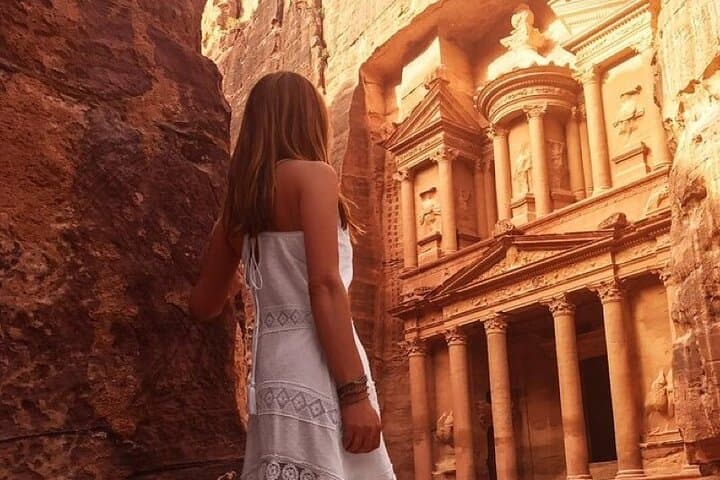
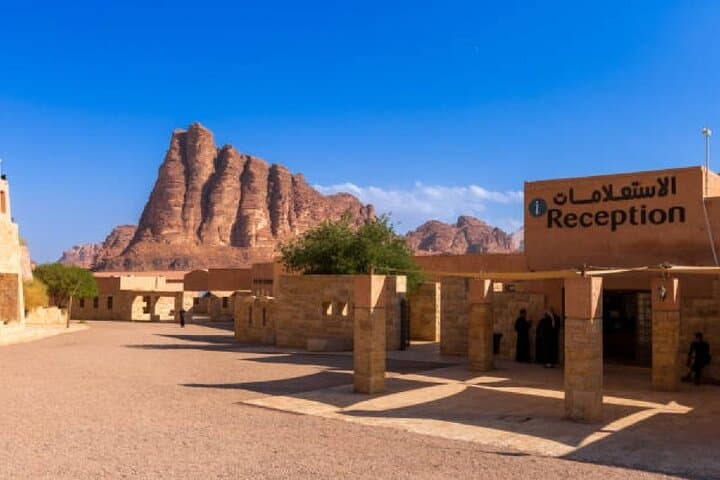
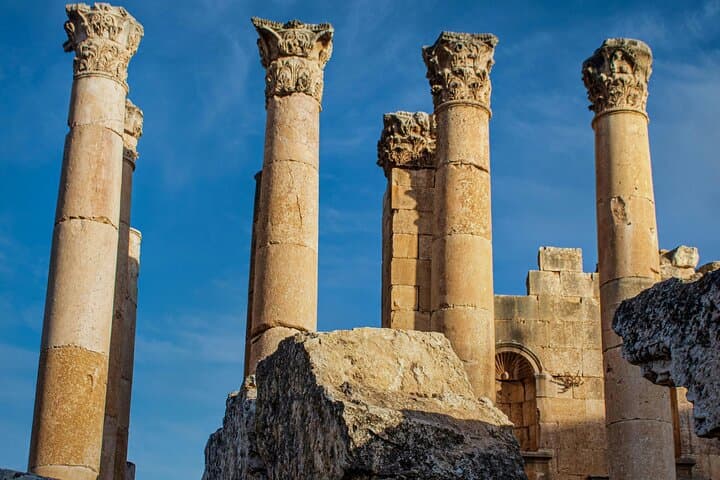
Petra is the spine of the trip: the Siq, a 1.2 km slot canyon, funnels you into the Treasury’s carved façade before the city opens into tombs, colonnades and water channels engineered by the Nabataeans. Expect roughly 4–6 km of walking to see the main monuments, more if you climb to the Monastery (about 800 stone steps and a 200–300 m elevation gain from the lower basin). In Wadi Rum, wind and time have sculpted sandstone and granite into cliffs up to 500 m high; most exploration is by 4x4 or on foot across sand flats and low dunes. Jerash and Umm Qais offer 2–4 km of level, paved ruins where Roman colonnades and theaters remain remarkably intact.
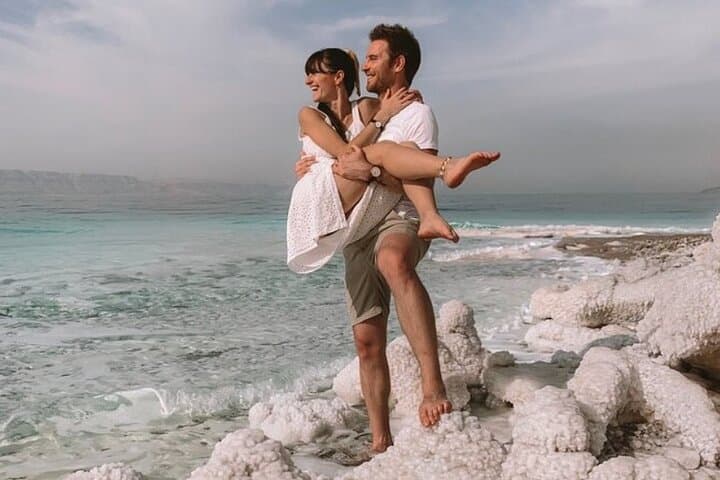
Geology and history collide here. Petra’s rose stone is porous sandstone, carved and then protected by its channels; Wadi Rum’s weathered sandstone records millennia of wind erosion; the Dead Sea, at about −430 m, is a saline basin that does what physics promises — it makes you float. Culturally, you’ll cross Byzantine mosaics in Madaba, tribal Bedouin hospitality in southern deserts, and the layered urban life of Amman where Roman theaters sit beneath modern cafés.
Practical edge: the Jordan Pass saves time and money — it covers visa and major site entries if purchased before arrival. Early starts at Petra (before 08:00) avoid heat and crowds; plan 3–4 liters of water per person on long days, sunscreen, and sturdy, grippy shoes for uneven stone and sand. The tour provides a private, air-conditioned vehicle, English-speaking driver, onboard Wi‑Fi and bottled water; optional extras include hot-air balloon rides in the south and camel treks in Wadi Rum.
Timing matters. Spring and autumn offer the best temperatures; summer can be hot in Petra and oppressive in the Dead Sea basin, while winter nights in Wadi Rum can be cold. Respect local dress norms in towns and religious sites, tip locally for guides and drivers, and leave no trace in fragile desert camps. With a private itinerary, you get the rare luxury in Jordan: time to watch the light change on ancient stone and choose, knowingly, what to linger on.
moderate.
9 days.
Suitable for travelers who can walk 4–6 km on uneven terrain and climb short stone stair sections; not technically demanding.
Many nationalities can get a visa on arrival, but the Jordan Pass (purchased before arrival) covers visa fees for eligible visitors and includes entry to major sites like Petra.
Expect 4–6 km of walking to see primary areas in Petra and 2–4 km in Jerash; some sections involve stone steps and uneven surfaces.
Yes — the tour is private and customizable; pace and activities can be adjusted, but mobility constraints should be discussed in advance.
You can float easily due to high salinity; avoid getting water in eyes or open cuts, rinse off afterward, and use a towel/footwear for the salt crust on shore.
Camps range from simple to luxury; most offer private tents, mattresses and heating; check your chosen accommodation category when booking.
Jordanian dinar (JOD) is used; tipping is customary for guides and drivers (5–10% or small JOD amounts) and appreciated in restaurants and camps.
Jordan’s landscape holds layers from Roman provincial towns like Jerash to Nabataean Petra and Byzantine mosaics in Madaba, reflecting continuous habitation and trade.
Visitor impact is concentrated at fragile sites and desert camps; stick to trails, avoid climbing fragile rock art, and use local guides who support conservation-minded practices.
Elegant Limo Jordan operates guided outdoor trips and adventures with an emphasis on safety, stewardship, and memorable experiences.
You step from the plane into Amman's dry night and the driver holds up a small printed sign with your name — the first quiet proof that this is a private tour, tailored and unhurried. Over nine days the car becomes your observatory: the skyline of Amman gives way to olive-clad hills, grazing goats, then to the ochre plates of Wadi Rum and the rose-red cliffs that hide Petra. The itinerary moves with a measured confidence, alternating full days of archaeological immersion and desert stillness with softer hours at the Dead Sea and Aqaba.
You step from the plane into Amman's dry night and the driver holds up a small printed sign with your name — the first quiet proof that this is a private tour, tailored and unhurried. Over nine days the car becomes your observatory: the skyline of Amman gives way to olive-clad hills, grazing goats, then to the ochre plates of Wadi Rum and the rose-red cliffs that hide Petra. The itinerary moves with a measured confidence, alternating full days of archaeological immersion and desert stillness with softer hours at the Dead Sea and Aqaba.
Petra is the spine of the trip: the Siq, a 1.2 km slot canyon, funnels you into the Treasury’s carved façade before the city opens into tombs, colonnades and water channels engineered by the Nabataeans. Expect roughly 4–6 km of walking to see the main monuments, more if you climb to the Monastery (about 800 stone steps and a 200–300 m elevation gain from the lower basin). In Wadi Rum, wind and time have sculpted sandstone and granite into cliffs up to 500 m high; most exploration is by 4x4 or on foot across sand flats and low dunes. Jerash and Umm Qais offer 2–4 km of level, paved ruins where Roman colonnades and theaters remain remarkably intact.
Geology and history collide here. Petra’s rose stone is porous sandstone, carved and then protected by its channels; Wadi Rum’s weathered sandstone records millennia of wind erosion; the Dead Sea, at about −430 m, is a saline basin that does what physics promises — it makes you float. Culturally, you’ll cross Byzantine mosaics in Madaba, tribal Bedouin hospitality in southern deserts, and the layered urban life of Amman where Roman theaters sit beneath modern cafés.
Practical edge: the Jordan Pass saves time and money — it covers visa and major site entries if purchased before arrival. Early starts at Petra (before 08:00) avoid heat and crowds; plan 3–4 liters of water per person on long days, sunscreen, and sturdy, grippy shoes for uneven stone and sand. The tour provides a private, air-conditioned vehicle, English-speaking driver, onboard Wi‑Fi and bottled water; optional extras include hot-air balloon rides in the south and camel treks in Wadi Rum.
Timing matters. Spring and autumn offer the best temperatures; summer can be hot in Petra and oppressive in the Dead Sea basin, while winter nights in Wadi Rum can be cold. Respect local dress norms in towns and religious sites, tip locally for guides and drivers, and leave no trace in fragile desert camps. With a private itinerary, you get the rare luxury in Jordan: time to watch the light change on ancient stone and choose, knowingly, what to linger on.