THE ADVENTURE COLLECTIVE® · Independent discovery and booking for outdoor travel

This nine-day Lemosho circuit offers gradual acclimatization, wild Shira Plateau walks and a summit push to Uhuru Peak via crater camp. Expect varied terrain, strong logistical support and a demanding final ascent that rewards preparation.
This nine-day Lemosho circuit offers gradual acclimatization, wild Shira Plateau walks and a summit push to Uhuru Peak via crater camp. Expect varied terrain, strong logistical support and a demanding final ascent that rewards preparation.
Dawn on day one throws a cool blue across the rainforest as your group leaves Moshi and drives toward Londorossi Gate. You shoulder a pack and step onto a trail that climbs from dense moss-lashed trees into a rolling moorland where Kibo first reveals itself like a pale, indifferent giant. Over nine days the mountain reshapes time: slow treks that lengthen the lungs, hours of walking that become a steady conversation with altitude, and a summit push at night when the wind seems to push you forward in a rhythm as old as the volcano.
Verified experiences and guided adventures in the surrounding area.
Operated by Kilisa Tours & Safaris · Moshi, Kilimanjaro Region
Dawn on day one throws a cool blue across the rainforest as your group leaves Moshi and drives toward Londorossi Gate. You shoulder a pack and step onto a trail that climbs from dense moss-lashed trees into a rolling moorland where Kibo first reveals itself like a pale, indifferent giant. Over nine days the mountain reshapes time: slow treks that lengthen the lungs, hours of walking that become a steady conversation with altitude, and a summit push at night when the wind seems to push you forward in a rhythm as old as the volcano.
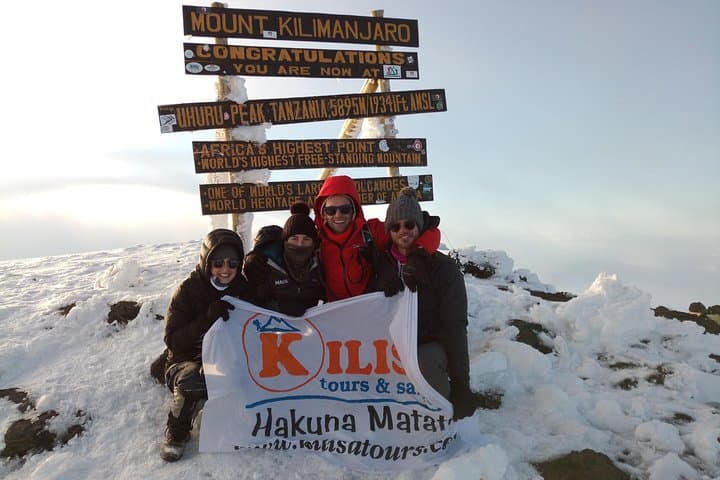
The Lemosho route is one of Kilimanjaro’s longer approaches and earned its popularity for that reason—early forest, a sweeping Shira Plateau, the volcanic landmark Lava Tower, the dramatic Barranco Wall and a final assault across scree to Uhuru Peak at 19,341 ft. Geologically Kilimanjaro is a stratovolcano of three cones: Shira’s eroded plateau on the west, the jagged Mawenzi, and the sleeping ice-capped Kibo where the summit sits. The park became Tanzania’s marquee protected area and a UNESCO World Heritage site in 1987; the mountain has been central to local Chagga farming and myth for centuries.
Culturally the trek is as much about the team you bring as the summit—guides, cooks and porters are central, carrying tents and food and smoothing logistics. This itinerary emphasizes acclimatization: longer days on the Shira Plateau and the benefit of Lava Tower’s high exposure before returning to lower camps. That breathing room improves summit odds—though the crater camp option adds an extra, exposed night near the rim that requires disciplined hydration and monitoring for acute mountain sickness.
Practical details: expect daily distances from 4–12 km, with elevation gains that range from gentle plateau walks to the steep, scree-heavy 5 km summit day (7–8 hours). Tents are four-season, sleeping mats double-layered, and the package includes park fees, treated water, meals on the mountain, portable flush toilets, oxygen tanks and rescue coverage. The summit night starts around midnight from Barafu; pace is slow and steady with frequent short breaks.
Prepare with cardiovascular training, hill repeats and long hikes carrying a loaded pack. Bring quality mountaineering boots, warm layers for the summit (temperatures can drop well below freezing), and trekking poles to protect knees on the long descent. Respect acclimatization—don’t push during the first days and alert guides immediately for symptoms like severe headache, nausea or disorientation. Finally, tip your crew fairly: a Kilimanjaro ascent is a team effort and the porters and guides make the climb possible.
The Lemosho route gives you varied ecosystems, dramatic views of Kibo from multiple angles, and an acclimatized, measured path to Africa’s rooftop—rewarding, demanding, and unforgettable if approached with respect and preparation.
challenging.
9 days.
Requires a high level of cardiovascular fitness, endurance for consecutive days of hiking up to 7–8 hours, and experience with long day hikes and elevation.
Lemosho is longer and provides better acclimatization than several routes; it’s considered challenging due to altitude and the summit night but has a higher success rate when the itinerary includes extra acclimatization days.
No technical mountaineering skills are required—the route is non-technical, though the summit involves steep scree where stamina and good footwear are essential.
This package includes park entry fees, camping fees, three hot meals daily on the mountain, treated drinking water and government taxes as listed in the itinerary.
Dry seasons (January–March and June–October) offer the most stable weather and clearer summit conditions, though Lemosho is climbed year-round with variable weather.
Guides monitor symptoms with pulse oximeters and portable oxygen; if severe AMS develops you will be descended immediately and evacuation procedures are in place under the rescue coverage provided.
Tipping is customary and an important part of crew income; plan to budget accordingly and distribute tips through your lead guide at the end of the trek.
Kilimanjaro has been a cultural landmark for Chagga communities for centuries and was designated a UNESCO World Heritage site in 1987 for its unique ecological zones and geological significance.
Kilimanjaro National Park manages strict waste and camping rules; use treated water and follow guide instructions to minimize erosion and human impact.
Kilisa Tours & Safaris operates guided outdoor trips and adventures with an emphasis on safety, stewardship, and memorable experiences.
Dawn on day one throws a cool blue across the rainforest as your group leaves Moshi and drives toward Londorossi Gate. You shoulder a pack and step onto a trail that climbs from dense moss-lashed trees into a rolling moorland where Kibo first reveals itself like a pale, indifferent giant. Over nine days the mountain reshapes time: slow treks that lengthen the lungs, hours of walking that become a steady conversation with altitude, and a summit push at night when the wind seems to push you forward in a rhythm as old as the volcano.
Dawn on day one throws a cool blue across the rainforest as your group leaves Moshi and drives toward Londorossi Gate. You shoulder a pack and step onto a trail that climbs from dense moss-lashed trees into a rolling moorland where Kibo first reveals itself like a pale, indifferent giant. Over nine days the mountain reshapes time: slow treks that lengthen the lungs, hours of walking that become a steady conversation with altitude, and a summit push at night when the wind seems to push you forward in a rhythm as old as the volcano.
The Lemosho route is one of Kilimanjaro’s longer approaches and earned its popularity for that reason—early forest, a sweeping Shira Plateau, the volcanic landmark Lava Tower, the dramatic Barranco Wall and a final assault across scree to Uhuru Peak at 19,341 ft. Geologically Kilimanjaro is a stratovolcano of three cones: Shira’s eroded plateau on the west, the jagged Mawenzi, and the sleeping ice-capped Kibo where the summit sits. The park became Tanzania’s marquee protected area and a UNESCO World Heritage site in 1987; the mountain has been central to local Chagga farming and myth for centuries.
Culturally the trek is as much about the team you bring as the summit—guides, cooks and porters are central, carrying tents and food and smoothing logistics. This itinerary emphasizes acclimatization: longer days on the Shira Plateau and the benefit of Lava Tower’s high exposure before returning to lower camps. That breathing room improves summit odds—though the crater camp option adds an extra, exposed night near the rim that requires disciplined hydration and monitoring for acute mountain sickness.
Practical details: expect daily distances from 4–12 km, with elevation gains that range from gentle plateau walks to the steep, scree-heavy 5 km summit day (7–8 hours). Tents are four-season, sleeping mats double-layered, and the package includes park fees, treated water, meals on the mountain, portable flush toilets, oxygen tanks and rescue coverage. The summit night starts around midnight from Barafu; pace is slow and steady with frequent short breaks.
Prepare with cardiovascular training, hill repeats and long hikes carrying a loaded pack. Bring quality mountaineering boots, warm layers for the summit (temperatures can drop well below freezing), and trekking poles to protect knees on the long descent. Respect acclimatization—don’t push during the first days and alert guides immediately for symptoms like severe headache, nausea or disorientation. Finally, tip your crew fairly: a Kilimanjaro ascent is a team effort and the porters and guides make the climb possible.
The Lemosho route gives you varied ecosystems, dramatic views of Kibo from multiple angles, and an acclimatized, measured path to Africa’s rooftop—rewarding, demanding, and unforgettable if approached with respect and preparation.