THE ADVENTURE COLLECTIVE® · Independent discovery and booking for outdoor travel

An eight-day sweep across San Cristóbal, Santa Cruz and Isabela that stitches snorkeling, seabird colonies and a hike around Sierra Negra’s vast caldera. Expect boat transfers, daily wildlife encounters, and a balance of easy shoreside visits and a full-day volcano trek.
An eight-day sweep across San Cristóbal, Santa Cruz and Isabela that stitches snorkeling, seabird colonies and a hike around Sierra Negra’s vast caldera. Expect boat transfers, daily wildlife encounters, and a balance of easy shoreside visits and a full-day volcano trek.
Landing in San Cristóbal feels like stepping onto a living gallery: volcanic shorelines pocked with sunbathing sea lions, blue-footed boobies performing awkward courtship steps on black lava, and a breeze that seems to carry ten thousand small salt-stories.
Verified experiences and guided adventures in the surrounding area.
Operated by Live Ecuador Tours · Puerto Baquerizo Moreno, Galápagos
Landing in San Cristóbal feels like stepping onto a living gallery: volcanic shorelines pocked with sunbathing sea lions, blue-footed boobies performing awkward courtship steps on black lava, and a breeze that seems to carry ten thousand small salt-stories.
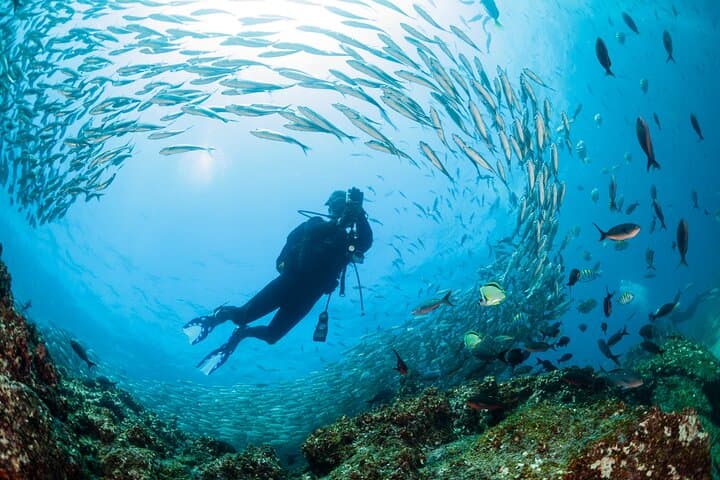
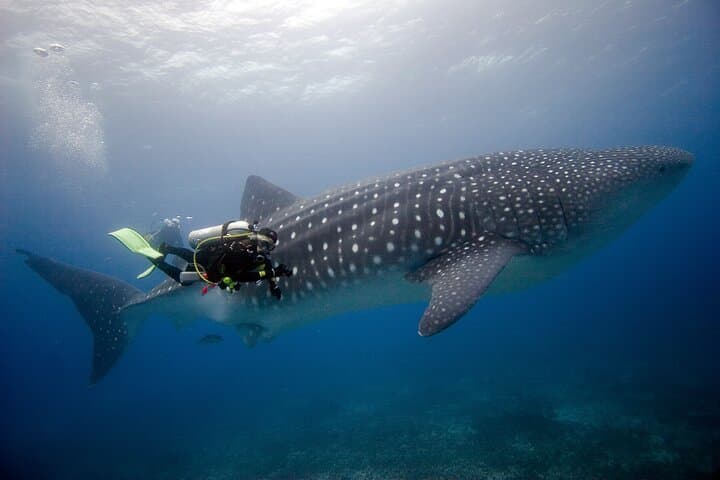
This eight-day multi-sport loop threads together San Cristóbal, Santa Cruz and Isabela—three islands that read like chapters in a naturalist's field notebook. Mornings begin with short boat rides that stitch islands together (expect crossings up to 2½ hours), afternoons are for snorkeling in clear channels around Bartolomé or Tintoreras, and one day is reserved to test your legs and lungs on Sierra Negra, an active shield volcano whose caldera stretches roughly 10 kilometers across and rises above 1,100 meters.
Geology here runs on slow, dramatic scales: lava flows and tuff cones shaped by eruptions give way to tidal channels where nutrient-rich upwellings animate the marine food web. Human history is recent but consequential—the Galápagos became a focal point for Darwin’s ideas and today balances tourism with tight conservation rules: park entrance and transit permits are mandatory, and boat traffic and visitor flows are regulated.
Each island has a distinct personality. San Cristóbal’s La Lobería is noisy, comfortable and unabashedly animal-centric. Santa Cruz offers highland tortoise reserves and the Darwin Research Station, where captive-breeding programs and research projects translate conservation science into visible outcomes. Isabela delivers raw volcanic drama—on Sierra Negra you move across scoria and pumice, the ground crackling with geological memory.
Practical matters are straightforward but important. Inter-island boat crossings and domestic flights are not included—plan buffer time for connections. Snorkeling gear is provided, but sturdy reef-safe sunscreen, a snug mask, and a personal snorkel are worth bringing. Sierra Negra is a day of mixed terrain: expect dusty trails, loose rock, and a moderate climb; pack layers because ocean mornings are humid and crater winds can bite.
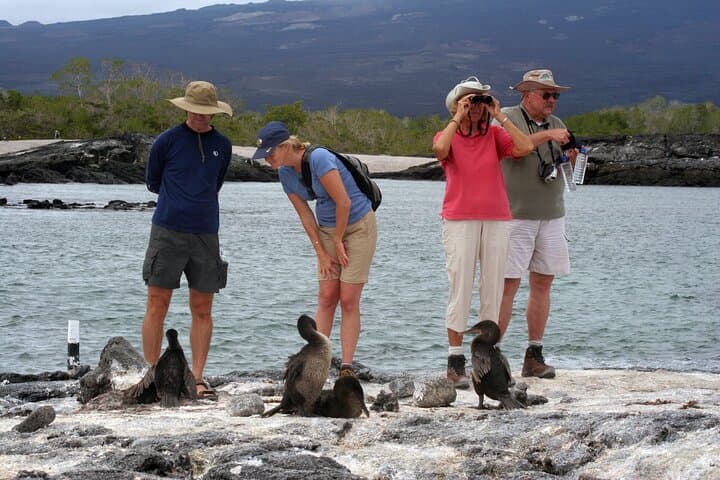
For wildlife viewing, patient silence and slow movements pay dividends—Galápagos species are often indifferent, not shy; they accept your presence and invite close observation. Hydration, reef-friendly sun protection, and reef boots or sandals with good traction will keep you moving comfortably through beaches, lava rock and dusty trails.
In short, this itinerary balances easy coastal wildlife encounters with focused field days—snorkeling pinnacles, watching seabird colonies, and walking a volcano rim. It’s an invitation to engage with landscapes that still shape scientific understanding and to return with real impressions of how fragile and resilient the islands remain.
moderate.
8 days.
Suitable for travelers with basic fitness; must be able to manage several hours of walking (including a moderate volcano hike with uneven terrain) and multiple short boat transfers.
National Park entrance and Transit Control Card are typically not included; visitors should budget for the Galápagos park fee (approx. $100 USD for foreign adults) and the Transit Control Card (approx. $20 USD).
Standard passenger boats run between islands and can take about 2–2.5 hours depending on sea conditions; some excursions use shorter local boat transfers of 10–45 minutes for islets like Tintoreras.
Yes—full-day options (e.g., Kicker Rock, Española, Bartolomé) are subject to availability and may be swapped based on park scheduling and sea conditions.
No—basic swimming ability is sufficient. Guides tailor snorkeling sites to experience levels and provide flotation aids if needed.
Layered clothing, windproof jacket, trekking shoes, water (1–2 L), snacks, sun protection and a small first-aid kit are recommended for Sierra Negra excursions.
Domestic flights to and from the Galápagos mainland are not included in the tour price; inter-island transfers on boats are included as per itinerary.
The islands were a playground for early scientific observation—Darwin’s visits helped form evolutionary theory, and modern research continues at the Charles Darwin Research Station on Santa Cruz.
Strict visitor management and mandatory park fees fund conservation; visitors should use reef-safe products, avoid single-use plastics and follow guide instructions to minimize impact.
Live Ecuador Tours operates guided outdoor trips and adventures with an emphasis on safety, stewardship, and memorable experiences.
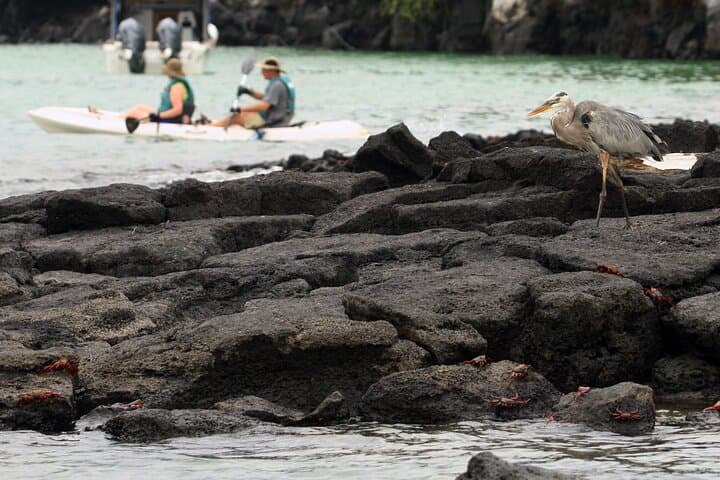
Landing in San Cristóbal feels like stepping onto a living gallery: volcanic shorelines pocked with sunbathing sea lions, blue-footed boobies performing awkward courtship steps on black lava, and a breeze that seems to carry ten thousand small salt-stories.
Landing in San Cristóbal feels like stepping onto a living gallery: volcanic shorelines pocked with sunbathing sea lions, blue-footed boobies performing awkward courtship steps on black lava, and a breeze that seems to carry ten thousand small salt-stories.
This eight-day multi-sport loop threads together San Cristóbal, Santa Cruz and Isabela—three islands that read like chapters in a naturalist's field notebook. Mornings begin with short boat rides that stitch islands together (expect crossings up to 2½ hours), afternoons are for snorkeling in clear channels around Bartolomé or Tintoreras, and one day is reserved to test your legs and lungs on Sierra Negra, an active shield volcano whose caldera stretches roughly 10 kilometers across and rises above 1,100 meters.
Geology here runs on slow, dramatic scales: lava flows and tuff cones shaped by eruptions give way to tidal channels where nutrient-rich upwellings animate the marine food web. Human history is recent but consequential—the Galápagos became a focal point for Darwin’s ideas and today balances tourism with tight conservation rules: park entrance and transit permits are mandatory, and boat traffic and visitor flows are regulated.
Each island has a distinct personality. San Cristóbal’s La Lobería is noisy, comfortable and unabashedly animal-centric. Santa Cruz offers highland tortoise reserves and the Darwin Research Station, where captive-breeding programs and research projects translate conservation science into visible outcomes. Isabela delivers raw volcanic drama—on Sierra Negra you move across scoria and pumice, the ground crackling with geological memory.
Practical matters are straightforward but important. Inter-island boat crossings and domestic flights are not included—plan buffer time for connections. Snorkeling gear is provided, but sturdy reef-safe sunscreen, a snug mask, and a personal snorkel are worth bringing. Sierra Negra is a day of mixed terrain: expect dusty trails, loose rock, and a moderate climb; pack layers because ocean mornings are humid and crater winds can bite.
For wildlife viewing, patient silence and slow movements pay dividends—Galápagos species are often indifferent, not shy; they accept your presence and invite close observation. Hydration, reef-friendly sun protection, and reef boots or sandals with good traction will keep you moving comfortably through beaches, lava rock and dusty trails.
In short, this itinerary balances easy coastal wildlife encounters with focused field days—snorkeling pinnacles, watching seabird colonies, and walking a volcano rim. It’s an invitation to engage with landscapes that still shape scientific understanding and to return with real impressions of how fragile and resilient the islands remain.