THE ADVENTURE COLLECTIVE® · Independent discovery and booking for outdoor travel

Move slowly and breathe deliberately on this seven-day loop from Lhasa to Everest Base Camp. Experience Potala Palace and Jokhang Temple, turquoise Yamdrok Lake, Karola Glacier, and a sunrise at Rongbuk looking up at Everest.
Move slowly and breathe deliberately on this seven-day loop from Lhasa to Everest Base Camp. Experience Potala Palace and Jokhang Temple, turquoise Yamdrok Lake, Karola Glacier, and a sunrise at Rongbuk looking up at Everest.
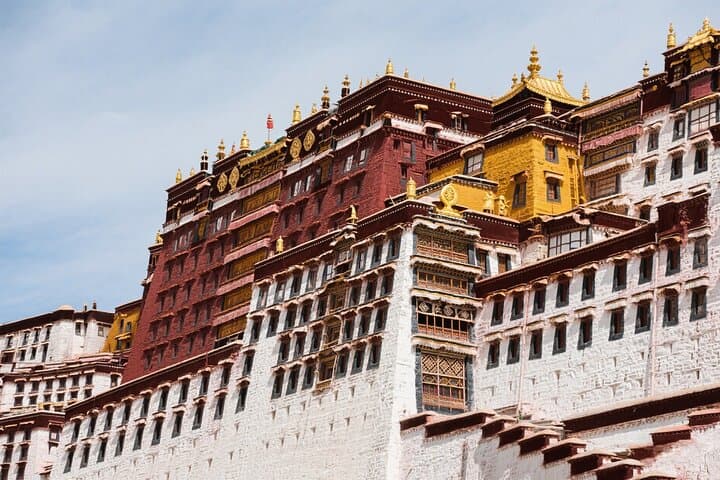
The airplane drops you into a thinner world and the city of Lhasa greets you like a slow inhale — prayer flags stiffen in the breeze and the Potala’s layered white-and-red mass watches over the valley. On day one you learn to move deliberately: shorter steps, deeper breaths, a rhythm that honors altitude as much as itinerary. The tour threads through high plains and knife-edge passes, each landscape asserting itself: lakes that hold the sky like a mirror and glaciers that groan and retreat.
Verified experiences and guided adventures in the surrounding area.
Operated by Xinghe Travel · Lhasa, Tibet Autonomous Region
The airplane drops you into a thinner world and the city of Lhasa greets you like a slow inhale — prayer flags stiffen in the breeze and the Potala’s layered white-and-red mass watches over the valley. On day one you learn to move deliberately: shorter steps, deeper breaths, a rhythm that honors altitude as much as itinerary. The tour threads through high plains and knife-edge passes, each landscape asserting itself: lakes that hold the sky like a mirror and glaciers that groan and retreat.
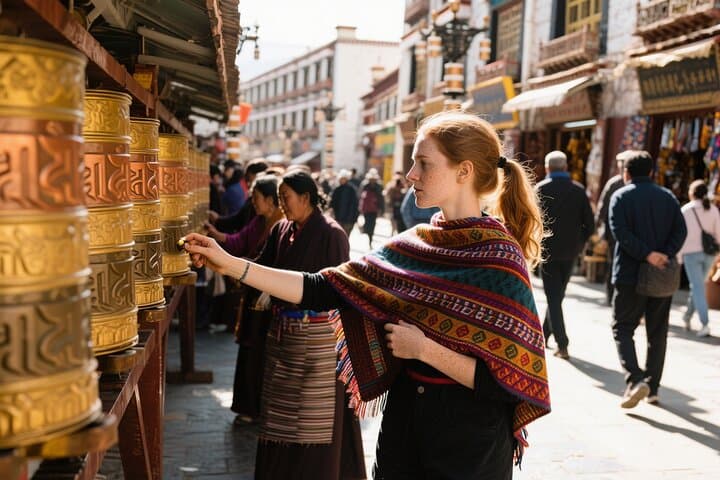
Lhasa is the cultural anchor. Walk the Barkhor around Jokhang Temple and you feel centuries of devotion in the spin of prayer wheels and the cadence of prostrations; the Potala’s compact chambers tell political and spiritual history in carved beams and altars. Geologically, you’re standing on the uplifted Tibetan Plateau — the roof of the world formed by the India-Eurasia collision — and that motion explains the raw, jagged skyline you’ll chase toward Everest.
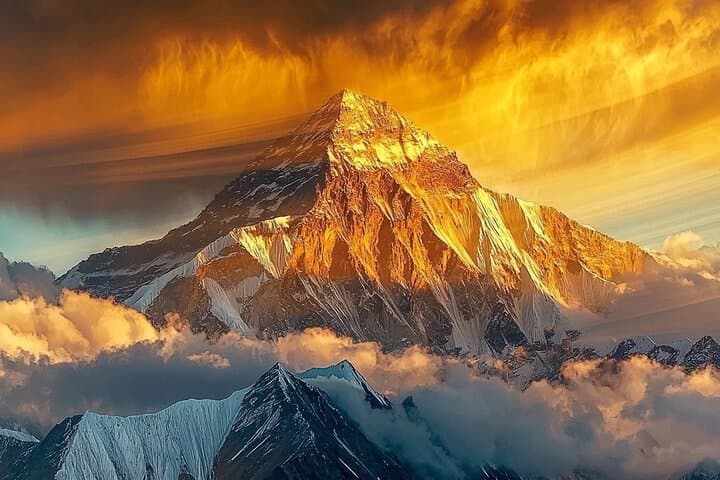
Drive days peel away urban calm: Yamdrok Lake flashes turquoise, its edges scalloped by shallow bays; Karola Glacier hangs like a white shawl from Naiqin Khamsang, plunging to a roadside moraine. Rongbuk Monastery sits with Everest as its roof, a humble compound at the planet’s height where wind and prayer flags argue for attention. At sunrise on the Rongbuk ridge, Everest catches light like a staged reveal — the peak seems to push the light outward, and for a few minutes the mountain commands everything.
Culturally the route is layered — Tibetan Buddhism informs daily life at every stop and monasteries like Tashilhunpo in Shigatse recall centuries of scholastic tradition. Practical realities govern the trip: permits, altitude management, and a logistics thread that makes remote nights at Everest Base Camp possible, though basic.
For travelers: pace your first 48 hours in Lhasa, hydrate carefully, and avoid heavy exertion until your body signals acclimatization. Bring adaptable clothing: high sun during the day, near-freezing nights at altitude. Expect simple guesthouse comforts at the base camp and plan for quiet, early mornings for photography. Respect religious sites: remove hats in temples, follow local customs around circumambulation, and ask before photographing people.
This itinerary is for the traveler who wants both cultural texture and an Everest moment without committing to heavy mountaineering. It rewards those who prepare for altitude, pack pragmatically, and arrive ready to meet a landscape that is as politically and spiritually significant as it is spectacular.
moderate.
7 days.
Should have a moderate level of fitness: able to walk short distances at elevation and tolerate long vehicle transfers.
Yes — a Tibet Travel Permit is required and is handled by the tour operator; carry printed copies at all times.
Altitude illness risk is moderate to high; the itinerary includes acclimatization in Lhasa, but you should monitor symptoms and inform guides immediately.
Accommodation at Everest Base Camp is basic: shared facilities, simple meals and limited heating; bring warm sleeping layers.
Airport pickup and drop-off are included, but international flights to/from Lhasa are arranged by travelers independently.
Not recommended for children under 6, adults over 70, or pregnant travelers due to high altitude and limited medical facilities.
Chinese yuan (CNY) is accepted widely; carry cash for remote areas and small purchases as card acceptance can be limited.
Lhasa has been a spiritual center for Tibetan Buddhism for centuries; Potala Palace served as the winter residence of the Dalai Lama and a seat of governance.
Glacial retreat is visible at Karola and surrounding areas; travelers should minimize waste and use provided water rather than single-use plastics.
Xinghe Travel operates guided outdoor trips and adventures with an emphasis on safety, stewardship, and memorable experiences.
The airplane drops you into a thinner world and the city of Lhasa greets you like a slow inhale — prayer flags stiffen in the breeze and the Potala’s layered white-and-red mass watches over the valley. On day one you learn to move deliberately: shorter steps, deeper breaths, a rhythm that honors altitude as much as itinerary. The tour threads through high plains and knife-edge passes, each landscape asserting itself: lakes that hold the sky like a mirror and glaciers that groan and retreat.
The airplane drops you into a thinner world and the city of Lhasa greets you like a slow inhale — prayer flags stiffen in the breeze and the Potala’s layered white-and-red mass watches over the valley. On day one you learn to move deliberately: shorter steps, deeper breaths, a rhythm that honors altitude as much as itinerary. The tour threads through high plains and knife-edge passes, each landscape asserting itself: lakes that hold the sky like a mirror and glaciers that groan and retreat.
Lhasa is the cultural anchor. Walk the Barkhor around Jokhang Temple and you feel centuries of devotion in the spin of prayer wheels and the cadence of prostrations; the Potala’s compact chambers tell political and spiritual history in carved beams and altars. Geologically, you’re standing on the uplifted Tibetan Plateau — the roof of the world formed by the India-Eurasia collision — and that motion explains the raw, jagged skyline you’ll chase toward Everest.
Drive days peel away urban calm: Yamdrok Lake flashes turquoise, its edges scalloped by shallow bays; Karola Glacier hangs like a white shawl from Naiqin Khamsang, plunging to a roadside moraine. Rongbuk Monastery sits with Everest as its roof, a humble compound at the planet’s height where wind and prayer flags argue for attention. At sunrise on the Rongbuk ridge, Everest catches light like a staged reveal — the peak seems to push the light outward, and for a few minutes the mountain commands everything.
Culturally the route is layered — Tibetan Buddhism informs daily life at every stop and monasteries like Tashilhunpo in Shigatse recall centuries of scholastic tradition. Practical realities govern the trip: permits, altitude management, and a logistics thread that makes remote nights at Everest Base Camp possible, though basic.
For travelers: pace your first 48 hours in Lhasa, hydrate carefully, and avoid heavy exertion until your body signals acclimatization. Bring adaptable clothing: high sun during the day, near-freezing nights at altitude. Expect simple guesthouse comforts at the base camp and plan for quiet, early mornings for photography. Respect religious sites: remove hats in temples, follow local customs around circumambulation, and ask before photographing people.
This itinerary is for the traveler who wants both cultural texture and an Everest moment without committing to heavy mountaineering. It rewards those who prepare for altitude, pack pragmatically, and arrive ready to meet a landscape that is as politically and spiritually significant as it is spectacular.