THE ADVENTURE COLLECTIVE® · Independent discovery and booking for outdoor travel

A seven-day private motorcycle safari that traces Tanzania’s Rift Valley escarpments, mountain passes and semi-arid wildlife corridors. Expect long days on mixed surfaces, village visits with Maasai and Hadza communities, and nights in lodges or camp under wide African skies.
A seven-day private motorcycle safari that traces Tanzania’s Rift Valley escarpments, mountain passes and semi-arid wildlife corridors. Expect long days on mixed surfaces, village visits with Maasai and Hadza communities, and nights in lodges or camp under wide African skies.
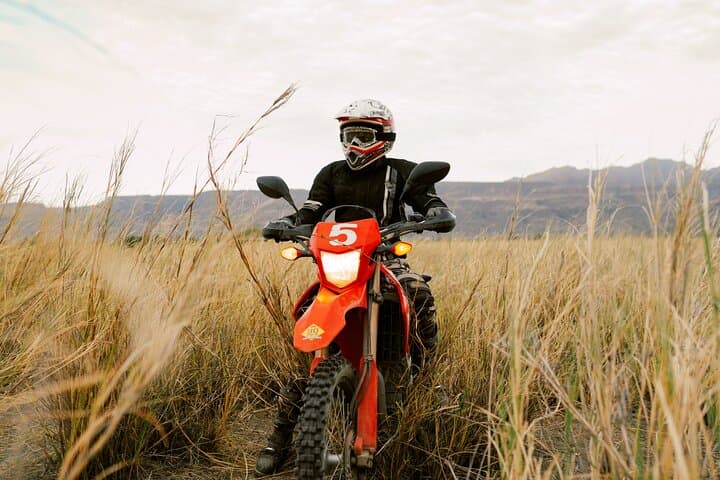
The morning air in Arusha tastes of diesel and dust. Riders mount up beneath acacia shadows as guides check chains and point to a ribbon of tarmac sliding toward the Rift Valley. Within hours the town’s bustle loosens into a corridor of red earth and scrub, and the motorcycles begin their true work—carving a route across escarpments, climbing to cool highlands, and dropping into salt flats so white they seem to push back at the sky.
Verified experiences and guided adventures in the surrounding area.
Operated by Motorbike Safari Tanzania · Arusha, Arusha Region
The morning air in Arusha tastes of diesel and dust. Riders mount up beneath acacia shadows as guides check chains and point to a ribbon of tarmac sliding toward the Rift Valley. Within hours the town’s bustle loosens into a corridor of red earth and scrub, and the motorcycles begin their true work—carving a route across escarpments, climbing to cool highlands, and dropping into salt flats so white they seem to push back at the sky.
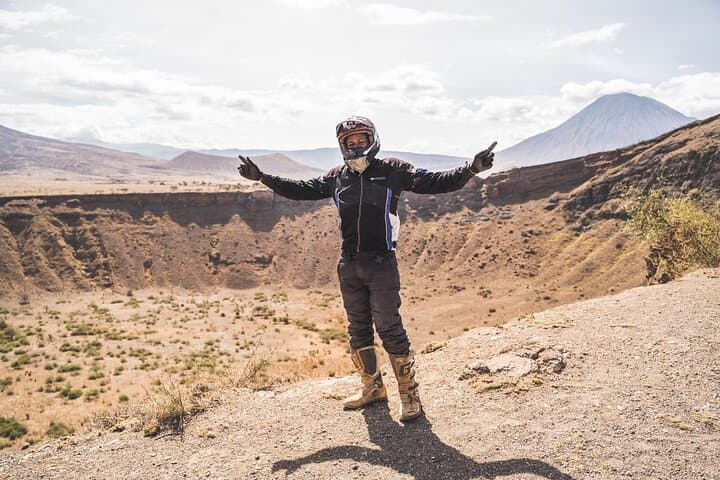
This seven-day private tour stitches together the north’s most dramatic landscapes: crater lakes like Chala, the terraced rice fields around Kalimawe, the forested spine of the Usambara and Pare ranges, and the semi-arid plains of Tarangire and Manyara. Geologically, riders are tracing the East African Rift—a fault line that lifts mountains and opens basins, producing alkaline lakes and dramatic escarpments. Culturally the route passes Maasai grazing cattle, Hadza hunter-gatherers near Eyasi, and small farming villages where bananas and rice are raised on steep slopes.
The trip is equal parts motorcycle expedition and cultural corridor. You’ll crest 2,300m on the Usambara zigzags—where the air is cooler and palms lean like old hands—and descend into broad plains where baobabs stand watch. Lake Natron’s scarlet margins and the steaming, soda-sleek flats tell the story of volcanic chemistry; Lake Chala carries local legends of crocodiles introduced in colonial-era experiments. Guides weave these facts into the ride, offering context for the land and the people who live on its edges.
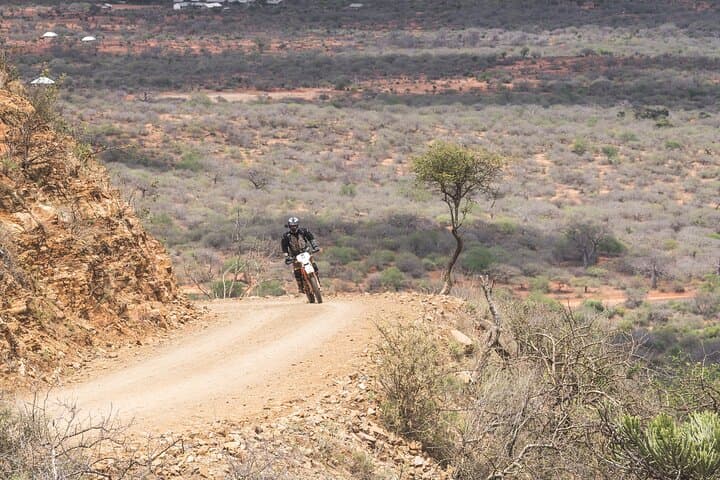
Practicalities shape the route as much as scenery. Expect a mix of surfaces: smooth tarmac, chunky gravel, sandy sections and technical rocky trails—some stretches are long days in the saddle (up to 8–9 hours including stops) and one stage notes 275 km of loose gravel before tarmac relief. The tour is private and supported, with meals and basic camping or lodge accommodations included each night.
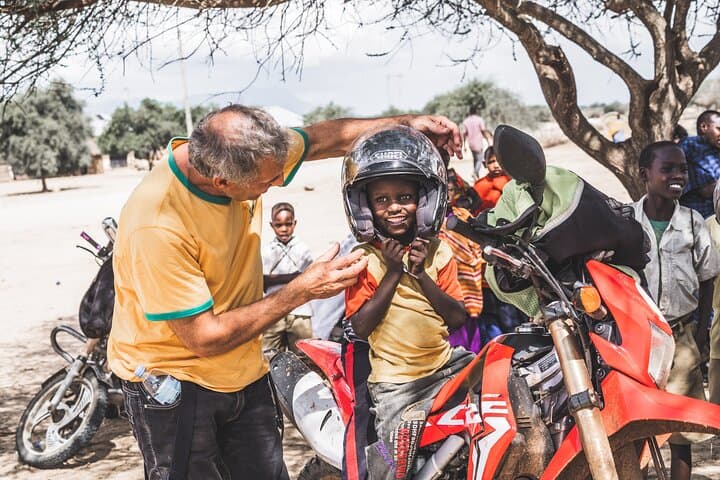
Ride preparation matters: full-face helmet, armored jacket, MX-style boots and layered clothing for big temperature swings between valleys and highlands. Hydration and sun protection are constant needs; carry a hydration bladder and a basic tool kit plus spare tubes—local repair stops are possible but parts aren’t guaranteed. Respect local communities: ask before photographing people, follow your guide’s lead when visiting Hadza territories, and leave no trace in fragile highland forests.
For riders looking to move beyond the obvious, this safari delivers—from gravel-surfaced migratory corridors alive with antelope to the intimate moments hunting with the Hadza. The trip rewards mechanical savvy, stamina, and a willingness to trade comfort for access—because here, the road is the point, and the landscape is always pushing forward.
challenging.
7 days.
Riders should have good endurance for multiple consecutive long riding days and be comfortable on mixed off-road terrain.
Some off-road experience is highly recommended—guides can coach novice riders, but the route includes technical gravel, sand and rocky sections that demand confident handling.
Accommodations vary nightly between basic lodges, glamping tents and one campsite; expect clean but simple facilities in rural areas.
Yes—breakfasts, lunches and dinners are included across the seven days with most meals provided by the operator or scheduled lodges.
Guides carry basic first-aid kits and there’s radio/phone contact where coverage exists; serious evacuations may require travel to the nearest town or Arusha.
The tour is designed for solo riders; passenger seats aren’t typically provided. Contact the operator to discuss bespoke arrangements.
Full refund if cancelled at least 6 days before departure, 50% between 2–6 days, and no refund within 2 days of departure.
The route follows sections of the East African Rift, an ancient tectonic fracture that shaped lakes and escarpments; the area has long been home to Masai pastoralists and hunter-gatherer groups like the Hadza.
Riders move through fragile ecosystems and migratory corridors—stay on established tracks, avoid disturbing wildlife, and support local guides who practice low-impact tourism.
Motorbike Safari Tanzania operates guided outdoor trips and adventures with an emphasis on safety, stewardship, and memorable experiences.
The morning air in Arusha tastes of diesel and dust. Riders mount up beneath acacia shadows as guides check chains and point to a ribbon of tarmac sliding toward the Rift Valley. Within hours the town’s bustle loosens into a corridor of red earth and scrub, and the motorcycles begin their true work—carving a route across escarpments, climbing to cool highlands, and dropping into salt flats so white they seem to push back at the sky.
The morning air in Arusha tastes of diesel and dust. Riders mount up beneath acacia shadows as guides check chains and point to a ribbon of tarmac sliding toward the Rift Valley. Within hours the town’s bustle loosens into a corridor of red earth and scrub, and the motorcycles begin their true work—carving a route across escarpments, climbing to cool highlands, and dropping into salt flats so white they seem to push back at the sky.
This seven-day private tour stitches together the north’s most dramatic landscapes: crater lakes like Chala, the terraced rice fields around Kalimawe, the forested spine of the Usambara and Pare ranges, and the semi-arid plains of Tarangire and Manyara. Geologically, riders are tracing the East African Rift—a fault line that lifts mountains and opens basins, producing alkaline lakes and dramatic escarpments. Culturally the route passes Maasai grazing cattle, Hadza hunter-gatherers near Eyasi, and small farming villages where bananas and rice are raised on steep slopes.
The trip is equal parts motorcycle expedition and cultural corridor. You’ll crest 2,300m on the Usambara zigzags—where the air is cooler and palms lean like old hands—and descend into broad plains where baobabs stand watch. Lake Natron’s scarlet margins and the steaming, soda-sleek flats tell the story of volcanic chemistry; Lake Chala carries local legends of crocodiles introduced in colonial-era experiments. Guides weave these facts into the ride, offering context for the land and the people who live on its edges.
Practicalities shape the route as much as scenery. Expect a mix of surfaces: smooth tarmac, chunky gravel, sandy sections and technical rocky trails—some stretches are long days in the saddle (up to 8–9 hours including stops) and one stage notes 275 km of loose gravel before tarmac relief. The tour is private and supported, with meals and basic camping or lodge accommodations included each night.
Ride preparation matters: full-face helmet, armored jacket, MX-style boots and layered clothing for big temperature swings between valleys and highlands. Hydration and sun protection are constant needs; carry a hydration bladder and a basic tool kit plus spare tubes—local repair stops are possible but parts aren’t guaranteed. Respect local communities: ask before photographing people, follow your guide’s lead when visiting Hadza territories, and leave no trace in fragile highland forests.
For riders looking to move beyond the obvious, this safari delivers—from gravel-surfaced migratory corridors alive with antelope to the intimate moments hunting with the Hadza. The trip rewards mechanical savvy, stamina, and a willingness to trade comfort for access—because here, the road is the point, and the landscape is always pushing forward.