THE ADVENTURE COLLECTIVE® · Independent discovery and booking for outdoor travel

A week-long loop from Alice Springs delivers the Red Centre in sharp focus: Uluru at sunset, the domes of Kata Tjuta, the cool gorges of the West MacDonnell Ranges, and a rare stand of red cabbage palms in Finke Gorge. Practical, guided, and steeped in local history, this tour is an efficient way to experience Central Australia.
A week-long loop from Alice Springs delivers the Red Centre in sharp focus: Uluru at sunset, the domes of Kata Tjuta, the cool gorges of the West MacDonnell Ranges, and a rare stand of red cabbage palms in Finke Gorge. Practical, guided, and steeped in local history, this tour is an efficient way to experience Central Australia.
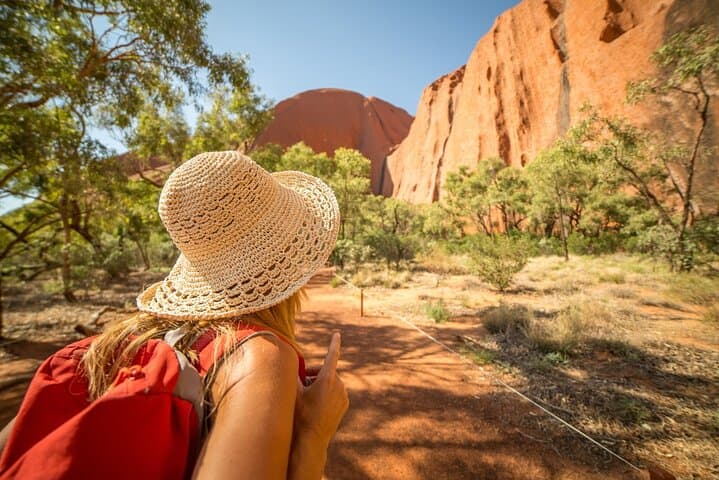
Dusty road, dry heat, a horizon that keeps its distance — arrive in Alice Springs and the landscape announces itself in broad strokes. The tour begins with a short, purposeful walk through town: red dirt underfoot, anthemic gum trees sketching shade, and local guides who move between hard-won fact and lived memory. Over seven days, the coach becomes a slow-moving lens across the Red Centre, pausing for sudden concentrations of history and geology — Simpsons Gap’s cool cleft, the palm pockets of Finke Gorge, and then the great, solitary presence of Uluru.
Verified experiences and guided adventures in the surrounding area.
Operated by Australia & New Zealand Travel Company · Alice Springs, Northern Territory
Dusty road, dry heat, a horizon that keeps its distance — arrive in Alice Springs and the landscape announces itself in broad strokes. The tour begins with a short, purposeful walk through town: red dirt underfoot, anthemic gum trees sketching shade, and local guides who move between hard-won fact and lived memory. Over seven days, the coach becomes a slow-moving lens across the Red Centre, pausing for sudden concentrations of history and geology — Simpsons Gap’s cool cleft, the palm pockets of Finke Gorge, and then the great, solitary presence of Uluru.
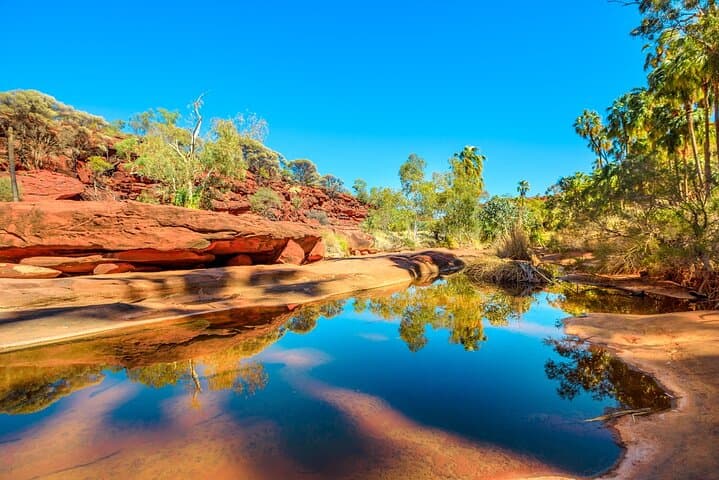
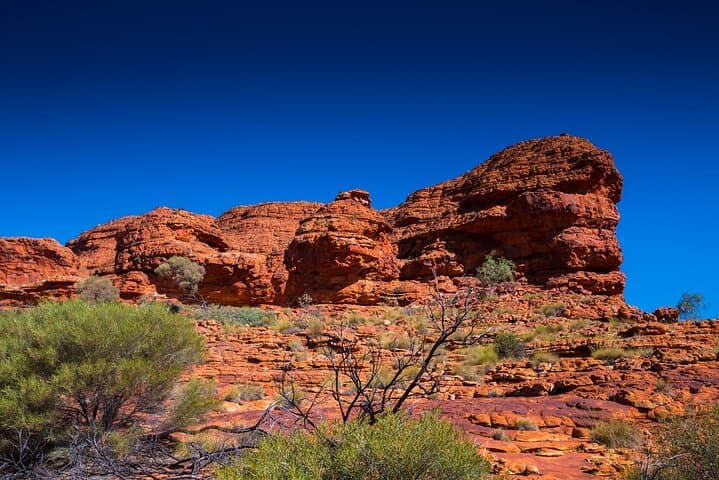
This is country shaped over deep time. The West MacDonnell Ranges run for 161 km, their eroded ridgelines recording ancient sea beds and tectonic lift. The Finke River — some researchers argue one of the oldest rivers on Earth — still carves the gorges that hold the rare red cabbage palm in Palm Valley. And Uluru and Kata Tjuta aren’t just dramatic rock sculptures: they are living cultural places, central to Anangu law and story, and now co-managed as a World Heritage-listed landscape.
Culture threads through the itinerary: guided walks in Alice Springs that explain Arrernte relationships to country, a visit to Hermannsburg where Albert Namatjira’s watercolors first translated desert light, and interpretive time at the Uluru–Kata Tjuta Cultural Centre. The tour balances natural spectacle with cultural context, and the guide’s role is to translate both geology and tradition into immediate understanding.
Practicalities matter out here. Expect long coach stretches — Alice Springs to Uluru is roughly a six-hour drive with stops — and discrete walks: the Walpa Gorge track at Kata Tjuta covers about 2.6 km, while Uluru’s base walk circles roughly 10.6 km if you choose to do it. Temperatures swing: days can be hot and dry; evenings are cooler. The tour includes 3-star accommodation in Alice Springs, most meals, and guided day trips to the West MacDonnells, Palm Valley, and the desert park.
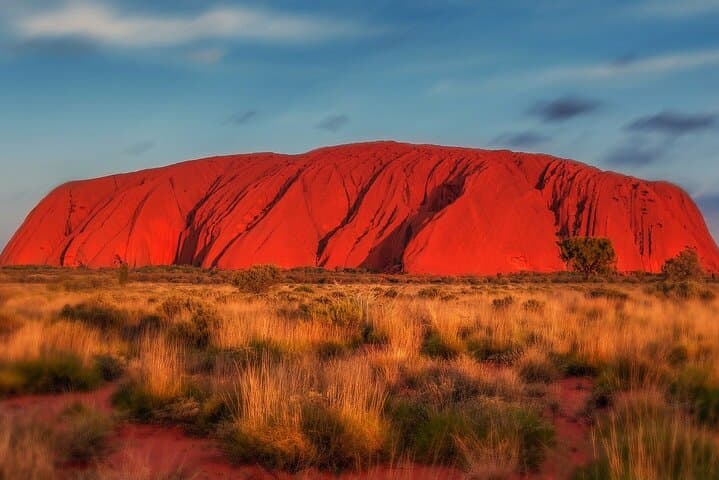
Bring footwear suited to rocky, uneven trails, sun protection for exposed walks, and a 1–2 litre water bottle to refill at stops. Time your photography for sunrise and sunset around Uluru and Kata Tjuta when the forms change color. Respect local guidelines: certain sites are sacred and photographed or accessed with restrictions. With a bit of preparation — good shoes, sun sense, and an openness to stories — this week-long loop through the Red Centre delivers concentrated geology, living culture, and landscapes that demand you slow down and look closely.
moderate.
7 days.
Suitable for travelers with moderate fitness: able to manage multiple short walks and long coach transfers.
The tour includes selected lunches and dinners as listed in the itinerary; specific meals are noted on each day’s schedule.
Expect roughly six hours of driving with rest stops; the operator provides a packed lunch for the final stretch.
Climbing Uluru is culturally sensitive and now officially prohibited; the tour focuses on walks like the Mala Walk and cultural interpretation instead.
The itinerary requires moderate mobility; it’s family-friendly but not recommended for people with serious spinal or heart conditions.
Standard bookings are twin-share; single rooms require a supplement which varies by hotel grade.
Bookings are confirmed within 48 hours; final vouchers and detailed itineraries are sent about 14 days before departure.
The region is the traditional country of Arrernte and Anangu peoples and later drew European explorers and missionaries who recorded its landscapes in painting and text.
Uluru-Kata Tjuta National Park is jointly managed with Anangu owners and Palm Valley palms are highly sensitive to visitor impact — stick to marked paths and guidance.
Australia & New Zealand Travel Company operates guided outdoor trips and adventures with an emphasis on safety, stewardship, and memorable experiences.
Dusty road, dry heat, a horizon that keeps its distance — arrive in Alice Springs and the landscape announces itself in broad strokes. The tour begins with a short, purposeful walk through town: red dirt underfoot, anthemic gum trees sketching shade, and local guides who move between hard-won fact and lived memory. Over seven days, the coach becomes a slow-moving lens across the Red Centre, pausing for sudden concentrations of history and geology — Simpsons Gap’s cool cleft, the palm pockets of Finke Gorge, and then the great, solitary presence of Uluru.
Dusty road, dry heat, a horizon that keeps its distance — arrive in Alice Springs and the landscape announces itself in broad strokes. The tour begins with a short, purposeful walk through town: red dirt underfoot, anthemic gum trees sketching shade, and local guides who move between hard-won fact and lived memory. Over seven days, the coach becomes a slow-moving lens across the Red Centre, pausing for sudden concentrations of history and geology — Simpsons Gap’s cool cleft, the palm pockets of Finke Gorge, and then the great, solitary presence of Uluru.
This is country shaped over deep time. The West MacDonnell Ranges run for 161 km, their eroded ridgelines recording ancient sea beds and tectonic lift. The Finke River — some researchers argue one of the oldest rivers on Earth — still carves the gorges that hold the rare red cabbage palm in Palm Valley. And Uluru and Kata Tjuta aren’t just dramatic rock sculptures: they are living cultural places, central to Anangu law and story, and now co-managed as a World Heritage-listed landscape.
Culture threads through the itinerary: guided walks in Alice Springs that explain Arrernte relationships to country, a visit to Hermannsburg where Albert Namatjira’s watercolors first translated desert light, and interpretive time at the Uluru–Kata Tjuta Cultural Centre. The tour balances natural spectacle with cultural context, and the guide’s role is to translate both geology and tradition into immediate understanding.
Practicalities matter out here. Expect long coach stretches — Alice Springs to Uluru is roughly a six-hour drive with stops — and discrete walks: the Walpa Gorge track at Kata Tjuta covers about 2.6 km, while Uluru’s base walk circles roughly 10.6 km if you choose to do it. Temperatures swing: days can be hot and dry; evenings are cooler. The tour includes 3-star accommodation in Alice Springs, most meals, and guided day trips to the West MacDonnells, Palm Valley, and the desert park.
Bring footwear suited to rocky, uneven trails, sun protection for exposed walks, and a 1–2 litre water bottle to refill at stops. Time your photography for sunrise and sunset around Uluru and Kata Tjuta when the forms change color. Respect local guidelines: certain sites are sacred and photographed or accessed with restrictions. With a bit of preparation — good shoes, sun sense, and an openness to stories — this week-long loop through the Red Centre delivers concentrated geology, living culture, and landscapes that demand you slow down and look closely.