THE ADVENTURE COLLECTIVE® · Independent discovery and booking for outdoor travel

Follow the great wildebeest migration across Ndutu, Ngorongoro Crater and the Seronera plains on a six-day budget camping safari. Expect early-morning game drives, crater descents, and intimate campsite nights close to the action.
Follow the great wildebeest migration across Ndutu, Ngorongoro Crater and the Seronera plains on a six-day budget camping safari. Expect early-morning game drives, crater descents, and intimate campsite nights close to the action.
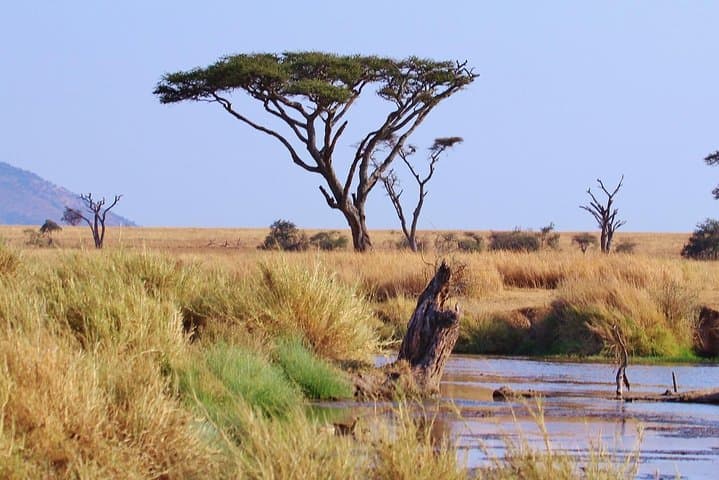
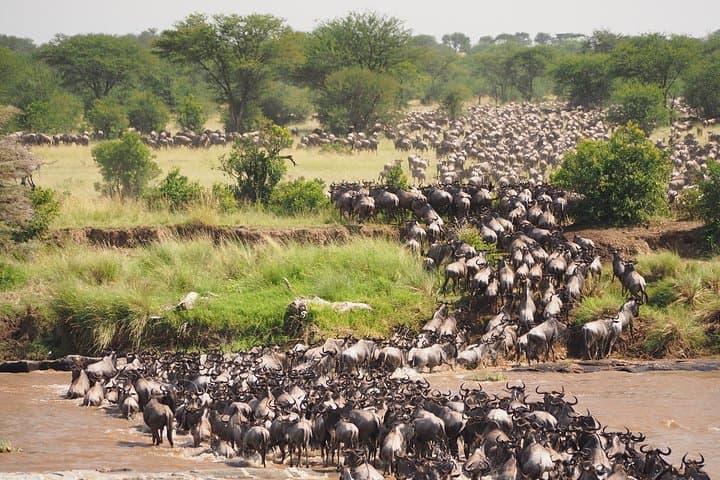
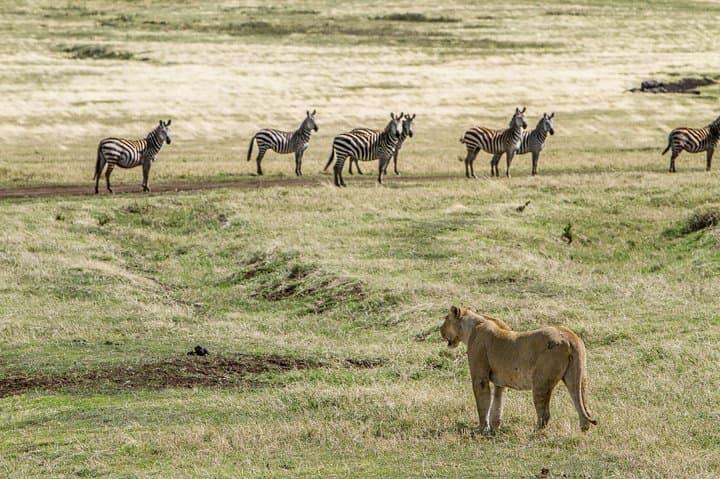
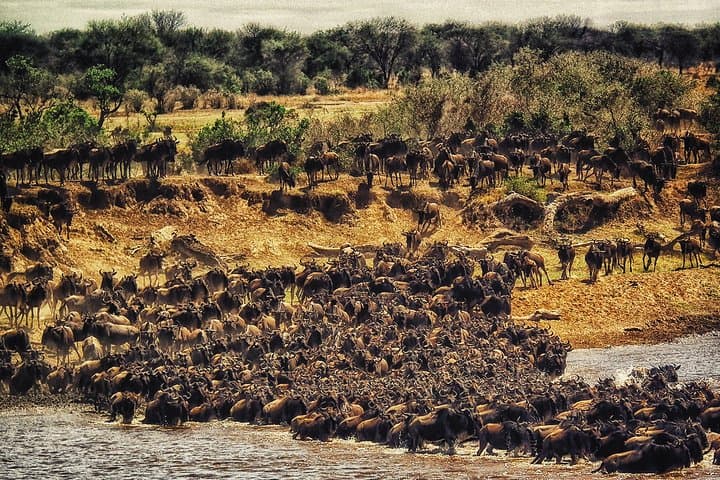
Dawn arrives as a pale wash across the short-grass plains of Ndutu. Dust lifts in slow columns as a thousand hooves punch out the first rhythm of the great migration; a lone vulture silhouettes against a raw pink sky while the guide eases the pop-up roof of the Land Cruiser and hands you a thermos. For six days you follow that rhythm — down into the bowl of Ngorongoro, across alkaline lake edges where flamingos pick at mineral shallows, and into the Seronera heart of the Serengeti where lions plan their next move.
Verified experiences and guided adventures in the surrounding area.
Operated by Yedi Explorers · Arusha, Arusha Region
Dawn arrives as a pale wash across the short-grass plains of Ndutu. Dust lifts in slow columns as a thousand hooves punch out the first rhythm of the great migration; a lone vulture silhouettes against a raw pink sky while the guide eases the pop-up roof of the Land Cruiser and hands you a thermos. For six days you follow that rhythm — down into the bowl of Ngorongoro, across alkaline lake edges where flamingos pick at mineral shallows, and into the Seronera heart of the Serengeti where lions plan their next move.
The ground beneath this itinerary is written by the East African Rift. Ngorongoro’s crater is an inverted caldera — a nearly enclosed ecosystem carved when a volcano collapsed some 2–3 million years ago — and it drops roughly 600 meters from rim to floor, creating permanent water and year-round grazing. The southern Serengeti and Ndutu lie along migration highways: seasonal grass flushes and soda lakes dictate where wildebeest and zebra press each year. Along the way you’ll travel in an extended 4x4 with a pop-up roof for viewing, sleep at budget campsites, and eat simple meals that follow the day’s schedule.
Culturally, the route threads Maasai land and conservation areas. Communities around the crater and Serengeti manage grazing and tourism in ways that directly affect animal movement and local livelihoods — expect to meet locals at market stops or see shepherds along secondary tracks.
Practically, this is a road-based safari designed for wildlife viewing rather than hiking. Daily game drives run from early morning into late afternoon; expect long, bumpy transfers between zones and the occasional washboard road. Pack for variable temperatures: dawns are cold, midday on the plains is hot, and nights at camp cool off. Bring binoculars, a good camera with a zoom lens, sun protection, and a small daypack for scopes, snacks, and water.
Timing is everything: November–April is the best window for southern Serengeti and Ndutu, with calving in February sometimes concentrated into a few intense weeks. Guides read the land — they’ll head to sodden plains after rains and to river bends when the herds swing west.
On a budget camping safari you trade lodge comforts for proximity to wildlife: you’ll fall asleep to hyena calls and wake within minutes of a pride on the hunt. Respect park rules, keep noise low, and let the landscape lead. With patience and a steady lens, this six-day circuit is one of the most direct ways to witness the migration’s push and pull, from crater floor to endless Serengeti horizon.
moderate.
6 days.
Suitable for travelers in average physical condition; involves long vehicle days, short walks at camps, and uneven ground.
November–April is the recommended window for Ndutu and southern Serengeti; calving peaks around February for the greatest predator-prey interactions.
Ngorongoro Crater fees are listed as included; check your booking for park fees for Serengeti and Ndutu which may be covered in the tour price.
This is budget camping: basic campsites with shared facilities, cooked meals, and sleeping in tents provided by the operator.
Not recommended for travelers with spinal or serious cardiovascular issues due to long drives and bumpy roads.
Yes — pickup is offered from Kilimanjaro/Arusha with drivers meeting you at arrivals when selected on booking.
Yes — these are malaria-risk areas; consult your doctor before travel and use mosquito protection at night.
Ngorongoro’s crater formed from a collapsed volcano millions of years ago; the region is traditional Maasai grazing land and modern conservation area management balances tourism with pastoral lifestyles.
Parks and community conservancies work to limit road impacts and over-visitation; follow park rules, avoid off-road driving, and support local guides and community projects.
Yedi Explorers operates guided outdoor trips and adventures with an emphasis on safety, stewardship, and memorable experiences.
Dawn arrives as a pale wash across the short-grass plains of Ndutu. Dust lifts in slow columns as a thousand hooves punch out the first rhythm of the great migration; a lone vulture silhouettes against a raw pink sky while the guide eases the pop-up roof of the Land Cruiser and hands you a thermos. For six days you follow that rhythm — down into the bowl of Ngorongoro, across alkaline lake edges where flamingos pick at mineral shallows, and into the Seronera heart of the Serengeti where lions plan their next move.
Dawn arrives as a pale wash across the short-grass plains of Ndutu. Dust lifts in slow columns as a thousand hooves punch out the first rhythm of the great migration; a lone vulture silhouettes against a raw pink sky while the guide eases the pop-up roof of the Land Cruiser and hands you a thermos. For six days you follow that rhythm — down into the bowl of Ngorongoro, across alkaline lake edges where flamingos pick at mineral shallows, and into the Seronera heart of the Serengeti where lions plan their next move.
The ground beneath this itinerary is written by the East African Rift. Ngorongoro’s crater is an inverted caldera — a nearly enclosed ecosystem carved when a volcano collapsed some 2–3 million years ago — and it drops roughly 600 meters from rim to floor, creating permanent water and year-round grazing. The southern Serengeti and Ndutu lie along migration highways: seasonal grass flushes and soda lakes dictate where wildebeest and zebra press each year. Along the way you’ll travel in an extended 4x4 with a pop-up roof for viewing, sleep at budget campsites, and eat simple meals that follow the day’s schedule.
Culturally, the route threads Maasai land and conservation areas. Communities around the crater and Serengeti manage grazing and tourism in ways that directly affect animal movement and local livelihoods — expect to meet locals at market stops or see shepherds along secondary tracks.
Practically, this is a road-based safari designed for wildlife viewing rather than hiking. Daily game drives run from early morning into late afternoon; expect long, bumpy transfers between zones and the occasional washboard road. Pack for variable temperatures: dawns are cold, midday on the plains is hot, and nights at camp cool off. Bring binoculars, a good camera with a zoom lens, sun protection, and a small daypack for scopes, snacks, and water.
Timing is everything: November–April is the best window for southern Serengeti and Ndutu, with calving in February sometimes concentrated into a few intense weeks. Guides read the land — they’ll head to sodden plains after rains and to river bends when the herds swing west.
On a budget camping safari you trade lodge comforts for proximity to wildlife: you’ll fall asleep to hyena calls and wake within minutes of a pride on the hunt. Respect park rules, keep noise low, and let the landscape lead. With patience and a steady lens, this six-day circuit is one of the most direct ways to witness the migration’s push and pull, from crater floor to endless Serengeti horizon.