THE ADVENTURE COLLECTIVE® · Independent discovery and booking for outdoor travel

A compact six-day safari that links Nairobi with Amboseli, Lake Nakuru and the Maasai Mara—offering private 4x4 access, semi-luxury lodges and local Maasai guides who know where the shy predators hide. Read on for what to expect, when to go and how to pack.
A compact six-day safari that links Nairobi with Amboseli, Lake Nakuru and the Maasai Mara—offering private 4x4 access, semi-luxury lodges and local Maasai guides who know where the shy predators hide. Read on for what to expect, when to go and how to pack.
Early in the morning the city loosens its grip: Nairobi’s skyline recedes and the Land Cruiser hums onto the highway, leaving a trail of dust and the promise of big country. By mid-afternoon the roadside flattens into Amboseli’s salt-swept plains and, on a clear day, Kilimanjaro’s snow crown appears—an immovable presence that seems to watch the herds.
Verified experiences and guided adventures in the surrounding area.
Operated by Brighte Maasai Adventures · Narok, Narok County
Early in the morning the city loosens its grip: Nairobi’s skyline recedes and the Land Cruiser hums onto the highway, leaving a trail of dust and the promise of big country. By mid-afternoon the roadside flattens into Amboseli’s salt-swept plains and, on a clear day, Kilimanjaro’s snow crown appears—an immovable presence that seems to watch the herds.
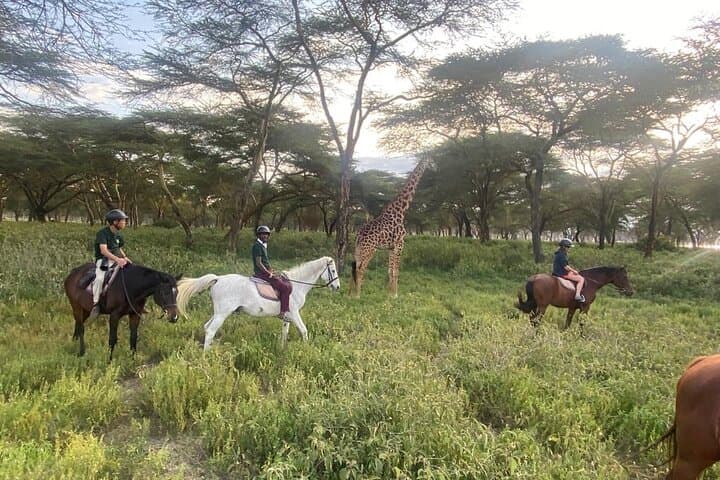
This six-day loop—from Nairobi to Amboseli, through Lake Nakuru and into the Maasai Mara—reads like a compact primer on Kenya’s ecology and human history. Amboseli sits at the floor of an ancient lakebed whose fine silt allows elephants to feed and photographers to capture perfectly scaled silhouettes. Lake Nakuru is the shallow alkaline basin that calls flamingos by the thousands; its pink margins are the product of algae blooms and changing water chemistry. The Maasai Mara, carved from plains and koppies, is shaped by seasonal rivers and the rhythms of the wildebeest migration.
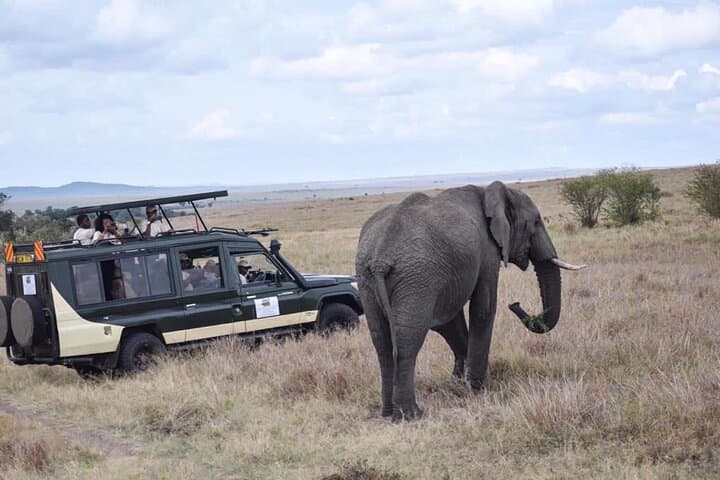
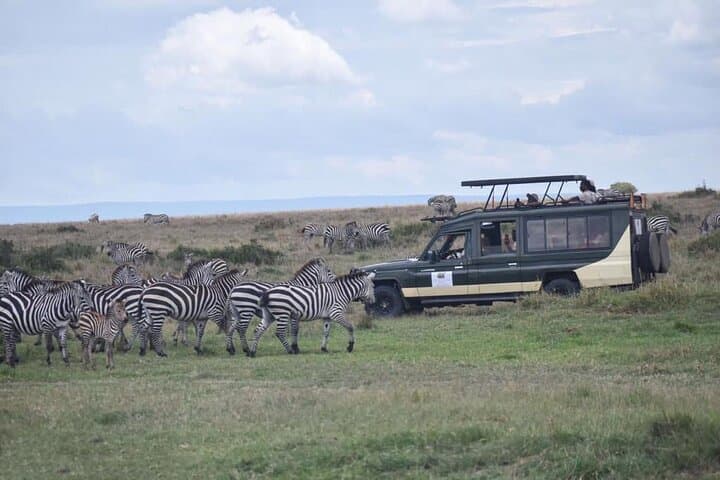
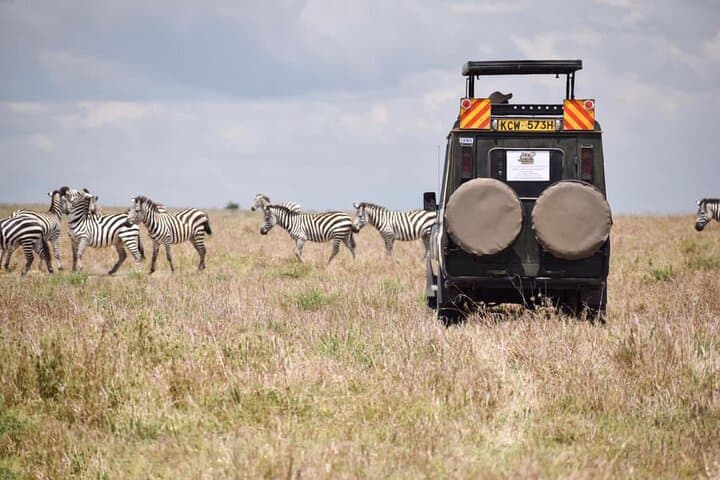
Culture threads through the route. Maasai guides on this trip are more than interpreters of animal tracks: they are living maps, pointing out grazing corridors, ancestral place names and water sites still used by pastoralists. Sarova and Talek lodges referenced on the itinerary offer semi-luxury comforts—rooms with mosquito nets, hot showers and fireplaces—while private Land Cruisers give drivers the freedom to leave the main tracks and seek quieter sightings.
For planning: the trip is vehicle-based with daily game drives—expect full days, early wake-ups and picnic lunches in the Mara. Park fees, private transport and all meals are included; luggage limits for the vehicles are roughly one medium bag per person. Malaria is present in many areas on this route—consult a travel clinic for prophylaxis and bring insect repellent. Visas for Kenya are required for most nationalities and are processed online before arrival.
Timing matters. The long rains (April–June) soften tracks and swell birdsong; the dry season (July–October) brings clearer roads and heightened predator activity—prime viewing for the migration. Bring layered clothing for chilly mornings and hot afternoons, a good pair of binoculars, and a camera with a telephoto lens if you want tight animal portraits. Tipping culture is customary—plan a small daily pool for guides and lodge staff.
Ultimately this tour balances comfort with access: roomy 4x4s, local expertise and an itinerary that threads three of Kenya’s most evocative reserves. It asks little fitness but rewards patient eyes and a readiness to be moved by the landscape’s steady, living mechanics.
moderate.
6 days.
Suitable for most fitness levels; days are long with vehicle transfers and short walks at lodges and viewpoints.
Yes—park fees are included in the tour package as stated in the itinerary inclusions.
On clear days Amboseli provides excellent roadside views of Kilimanjaro; visibility depends on weather.
Routine vaccinations are recommended and a travel clinic can advise on yellow fever and others; malaria prophylaxis is also commonly advised.
This is a semi-luxury tour with 3–4 star lodges and tented camps offering private rooms, hot showers and meals included.
Tipping is customary; most travelers allocate a small daily amount to guides and lodge staff—your operator can advise suggested amounts.
Yes—meals are included and operators can usually accommodate dietary needs if informed at booking.
The landscapes crossed were historically trade and grazing routes for Maasai pastoralists; many place names retain Maasai origins and meaning.
Visitor fees support park management and community programs; choose guides that practice low-impact viewing and respect wildlife distances.
Brighte Maasai Adventures operates guided outdoor trips and adventures with an emphasis on safety, stewardship, and memorable experiences.
Early in the morning the city loosens its grip: Nairobi’s skyline recedes and the Land Cruiser hums onto the highway, leaving a trail of dust and the promise of big country. By mid-afternoon the roadside flattens into Amboseli’s salt-swept plains and, on a clear day, Kilimanjaro’s snow crown appears—an immovable presence that seems to watch the herds.
Early in the morning the city loosens its grip: Nairobi’s skyline recedes and the Land Cruiser hums onto the highway, leaving a trail of dust and the promise of big country. By mid-afternoon the roadside flattens into Amboseli’s salt-swept plains and, on a clear day, Kilimanjaro’s snow crown appears—an immovable presence that seems to watch the herds.
This six-day loop—from Nairobi to Amboseli, through Lake Nakuru and into the Maasai Mara—reads like a compact primer on Kenya’s ecology and human history. Amboseli sits at the floor of an ancient lakebed whose fine silt allows elephants to feed and photographers to capture perfectly scaled silhouettes. Lake Nakuru is the shallow alkaline basin that calls flamingos by the thousands; its pink margins are the product of algae blooms and changing water chemistry. The Maasai Mara, carved from plains and koppies, is shaped by seasonal rivers and the rhythms of the wildebeest migration.
Culture threads through the route. Maasai guides on this trip are more than interpreters of animal tracks: they are living maps, pointing out grazing corridors, ancestral place names and water sites still used by pastoralists. Sarova and Talek lodges referenced on the itinerary offer semi-luxury comforts—rooms with mosquito nets, hot showers and fireplaces—while private Land Cruisers give drivers the freedom to leave the main tracks and seek quieter sightings.
For planning: the trip is vehicle-based with daily game drives—expect full days, early wake-ups and picnic lunches in the Mara. Park fees, private transport and all meals are included; luggage limits for the vehicles are roughly one medium bag per person. Malaria is present in many areas on this route—consult a travel clinic for prophylaxis and bring insect repellent. Visas for Kenya are required for most nationalities and are processed online before arrival.
Timing matters. The long rains (April–June) soften tracks and swell birdsong; the dry season (July–October) brings clearer roads and heightened predator activity—prime viewing for the migration. Bring layered clothing for chilly mornings and hot afternoons, a good pair of binoculars, and a camera with a telephoto lens if you want tight animal portraits. Tipping culture is customary—plan a small daily pool for guides and lodge staff.
Ultimately this tour balances comfort with access: roomy 4x4s, local expertise and an itinerary that threads three of Kenya’s most evocative reserves. It asks little fitness but rewards patient eyes and a readiness to be moved by the landscape’s steady, living mechanics.