
6-Day Marangu Route Kilimanjaro Climb: Hut-to-Hut Ascent to Uhuru Peak
Walk through rainforest, sleep in communal huts, and summit Africa’s highest peak on the classic Marangu Route. This six-day, hut-to-hut itinerary balances gradual gains with essential acclimatization—ideal for hikers seeking structure and support on Kilimanjaro.
An Adventure In Moshi.
Walk through rainforest, sleep in communal huts, and summit Africa’s highest peak on the classic Marangu Route. This six-day, hut-to-hut itinerary balances gradual gains with essential acclimatization—ideal for hikers seeking structure and support on Kilimanjaro.
Read the full experience
The morning air at Marangu Gate has the sharp, honest smell of eucalyptus and damp soil—an easy breath before the mountain tightens its grip. Climbers gather, daypacks loaded, passports stamped; guides tighten straps and hand out simple instructions. The trail climbs into a cathedral of moss-draped trees, then rises through heath and moorland toward the first hut, a patchwork of corrugated roofs and lantern-lit dining halls where the mountain’s tempo begins to set the group’s pace.
The morning air at Marangu Gate has the sharp, honest smell of eucalyptus and damp soil—an easy breath before the mountain tightens its grip. Climbers gather, daypacks loaded, passports stamped; guides tighten straps and hand out simple instructions. The trail climbs into a cathedral of moss-draped trees, then rises through heath and moorland toward the first hut, a patchwork of corrugated roofs and lantern-lit dining halls where the mountain’s tempo begins to set the group’s pace.
The Marangu Route, often called the “Coca-Cola” route, is Kilimanjaro’s oldest and most established path. Unlike the tented circuits on other flanks, Marangu uses communal huts at Mandara (≈2,700 m), Horombo (≈3,720 m) and Kibo (≈4,700 m). Geologically, climbers are moving up an ancient volcanic massif—layers of basalt and ash thin as you approach Kibo’s lunar slopes. Historically the route was the first to attract colonial-era climbers and remains a social climb: dormitory rooms, shared meals, and a steady parade of porters and guides who are the trip’s backbone.
Culturally, the trail threads through habitats cherished by local communities. In the lower rainforest keep an eye out for colobus monkeys and the bright flashes of sunbirds; higher, the landscape opens into heather and giant lobelia—a slow ecological ladder that climbers ascend one habitat at a time. Practical comforts are basic: mattresses are provided, but bring a warm sleeping bag rated to at least -10°C for the Kibo nights, where water can be a bucket and toilets simple long-drops.
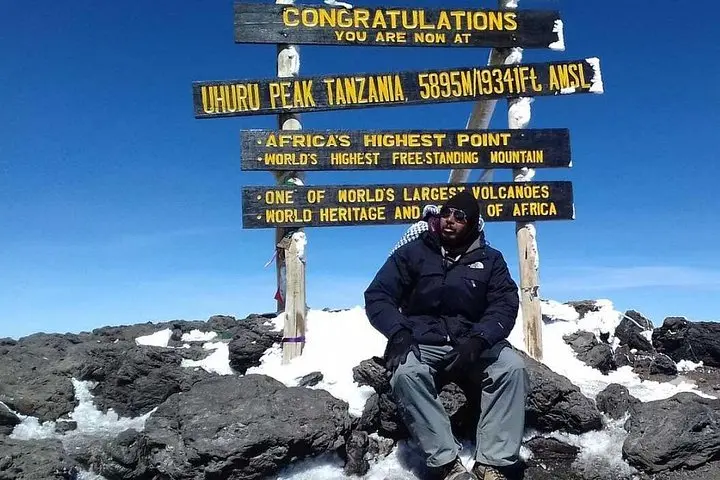
The typical six-day itinerary staggers elevation gain to aid acclimatization: Day 1 climbs ~800 m over 8 km to Mandara; subsequent days move to Horombo and Kibo with summit night rising from ~4,700 m to 5,895 m at Uhuru Peak via Gilman’s and Stella Points. Total hiking time varies by day—expect 3–8 hours daily, with the summit push an alpine-style nocturnal ascent of 6–10 hours.
Altitude is the chief hazard; acclimatization, hydration and a measured pace are non-negotiable. AMREF flying doctor cover and Kilimanjaro Rescue fees are typically included, but make sure your travel insurance covers high-altitude evacuation. Footwear should be sturdy, waterproof hiking boots; poles ease the knees on loose scree between Kibo and the crater rim.
Logistics: Moshi is the common staging town (≈1 hour drive to Marangu Gate). Guides will handle permits and hut reservations; bring cash for tips, and plan on simple hut meals and communal sleeping. For photographers, dawn above Horombo and the crater rim at sunrise repay the night effort.
Marangu’s appeal is practical: gentler slopes, hut comfort, a clear route to the summit—making it an excellent choice for first-time high-altitude climbers who prepare smartly and respect the mountain’s limits.
Frequently asked questions
Yes—hut mattresses are provided but not warm bedding; a high-quality sleeping bag rated to at least -10°C is recommended.
It’s considered the easiest route physically due to gradual slopes and huts, but altitude still makes the climb challenging—proper preparation and acclimatization are essential.
Dormitory-style rooms with bunk beds (Mandara, Horombo, Kibo); expect basic privacy and shared facilities, with running water at lower huts and bucket water/long-drop toilets higher up.
Dry seasons—January–March and June–October—offer the most stable weather and clearer summit conditions; expect wetter trails during the long rains.
Many operators include Kilimanjaro park fees and the mandatory Kilimanjaro Rescue fee and AMREF flying doctor insurance—confirm specifics before booking.
Altitude sickness is common; follow a slow pace, stay hydrated, avoid alcohol, consider acetazolamide if advised by a doctor, and descend immediately if severe symptoms occur.
About This Experience
Tanzania Joy Tours operates guided outdoor trips and adventures with an emphasis on safety, stewardship, and memorable experiences.
Adventure tips
Recommended gear
- Insulated sleeping bag (-10°C rated): Necessary for comfort and safety in unheated mountain huts at high altitude.
- Waterproof, broken-in hiking boots: Support and traction for steep, rocky and muddy trail sections.
- Lightweight down jacket and shell: Layering system for large temperature swings from rainforest to summit.
- Trekking poles: Helps with balance and reduces impact on knees during descent and on scree.
Photos of the experience
Related adventures & guides
Read the full experience
The morning air at Marangu Gate has the sharp, honest smell of eucalyptus and damp soil—an easy breath before the mountain tightens its grip. Climbers gather, daypacks loaded, passports stamped; guides tighten straps and hand out simple instructions. The trail climbs into a cathedral of moss-draped trees, then rises through heath and moorland toward the first hut, a patchwork of corrugated roofs and lantern-lit dining halls where the mountain’s tempo begins to set the group’s pace.
The morning air at Marangu Gate has the sharp, honest smell of eucalyptus and damp soil—an easy breath before the mountain tightens its grip. Climbers gather, daypacks loaded, passports stamped; guides tighten straps and hand out simple instructions. The trail climbs into a cathedral of moss-draped trees, then rises through heath and moorland toward the first hut, a patchwork of corrugated roofs and lantern-lit dining halls where the mountain’s tempo begins to set the group’s pace.
The Marangu Route, often called the “Coca-Cola” route, is Kilimanjaro’s oldest and most established path. Unlike the tented circuits on other flanks, Marangu uses communal huts at Mandara (≈2,700 m), Horombo (≈3,720 m) and Kibo (≈4,700 m). Geologically, climbers are moving up an ancient volcanic massif—layers of basalt and ash thin as you approach Kibo’s lunar slopes. Historically the route was the first to attract colonial-era climbers and remains a social climb: dormitory rooms, shared meals, and a steady parade of porters and guides who are the trip’s backbone.
Culturally, the trail threads through habitats cherished by local communities. In the lower rainforest keep an eye out for colobus monkeys and the bright flashes of sunbirds; higher, the landscape opens into heather and giant lobelia—a slow ecological ladder that climbers ascend one habitat at a time. Practical comforts are basic: mattresses are provided, but bring a warm sleeping bag rated to at least -10°C for the Kibo nights, where water can be a bucket and toilets simple long-drops.
The typical six-day itinerary staggers elevation gain to aid acclimatization: Day 1 climbs ~800 m over 8 km to Mandara; subsequent days move to Horombo and Kibo with summit night rising from ~4,700 m to 5,895 m at Uhuru Peak via Gilman’s and Stella Points. Total hiking time varies by day—expect 3–8 hours daily, with the summit push an alpine-style nocturnal ascent of 6–10 hours.
Altitude is the chief hazard; acclimatization, hydration and a measured pace are non-negotiable. AMREF flying doctor cover and Kilimanjaro Rescue fees are typically included, but make sure your travel insurance covers high-altitude evacuation. Footwear should be sturdy, waterproof hiking boots; poles ease the knees on loose scree between Kibo and the crater rim.
Logistics: Moshi is the common staging town (≈1 hour drive to Marangu Gate). Guides will handle permits and hut reservations; bring cash for tips, and plan on simple hut meals and communal sleeping. For photographers, dawn above Horombo and the crater rim at sunrise repay the night effort.
Marangu’s appeal is practical: gentler slopes, hut comfort, a clear route to the summit—making it an excellent choice for first-time high-altitude climbers who prepare smartly and respect the mountain’s limits.
Make a day of it nearby.
Verified experiences and guided adventures in the surrounding area.