THE ADVENTURE COLLECTIVE® · Independent discovery and booking for outdoor travel

A classic hut-to-hut ascent, the 6-day Marangu Route delivers steady altitude gain, dramatic alpine desert, and a pre-dawn push to Uhuru Peak. This guide outlines what to expect on the trail, from daily distances and elevations to practical gear and local insights.
A classic hut-to-hut ascent, the 6-day Marangu Route delivers steady altitude gain, dramatic alpine desert, and a pre-dawn push to Uhuru Peak. This guide outlines what to expect on the trail, from daily distances and elevations to practical gear and local insights.
The trek begins in the cool dawn fog of Arusha’s outskirts, where porters lash gear to frames and guides check headlamps as if preparing for surgery. By midmorning the road climbs away from town into a patchwork of banana terraces and coffee farms; the air tightens with altitude and the forest closes in, green and humming. The Marangu Route is the classic pathway on Kilimanjaro — a gradual, graded ascent that trades technical exposure for sustained altitude and the old-style comfort of mountain huts.
Verified experiences and guided adventures in the surrounding area.
Operated by Explore Green Africa Safaris · Moshi, Kilimanjaro Region
The trek begins in the cool dawn fog of Arusha’s outskirts, where porters lash gear to frames and guides check headlamps as if preparing for surgery. By midmorning the road climbs away from town into a patchwork of banana terraces and coffee farms; the air tightens with altitude and the forest closes in, green and humming. The Marangu Route is the classic pathway on Kilimanjaro — a gradual, graded ascent that trades technical exposure for sustained altitude and the old-style comfort of mountain huts.
Geologically, Kilimanjaro is a layered volcanic giant: Mawenzi’s ragged buttresses and Kibo’s broad caldera are the result of repeated eruptions and long glacial sculpting. Climbers on this route pass through three clear life zones — montane forest, heath and moorland with giant heather, then the lunar alpine desert of the Saddle before the final scree of the crater wall. Culturally, the trail skirts Chagga villages where coffee drying racks and mud-brick homes speak to centuries of mountain agriculture; guides and porters are often from these communities, carrying local knowledge and a measured pace that’s central to success.
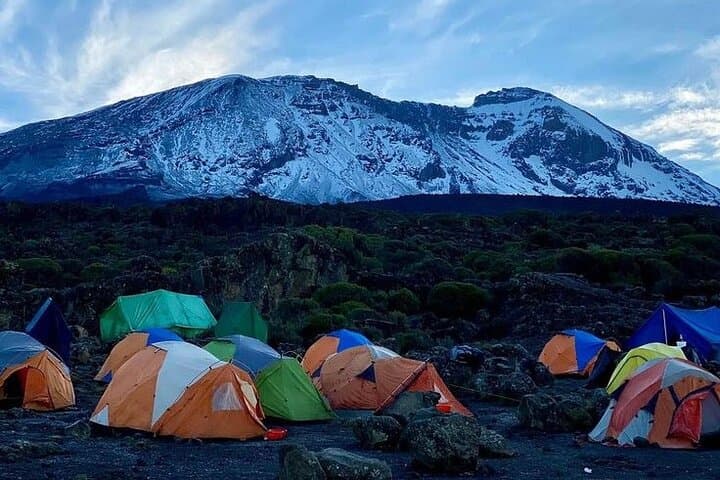
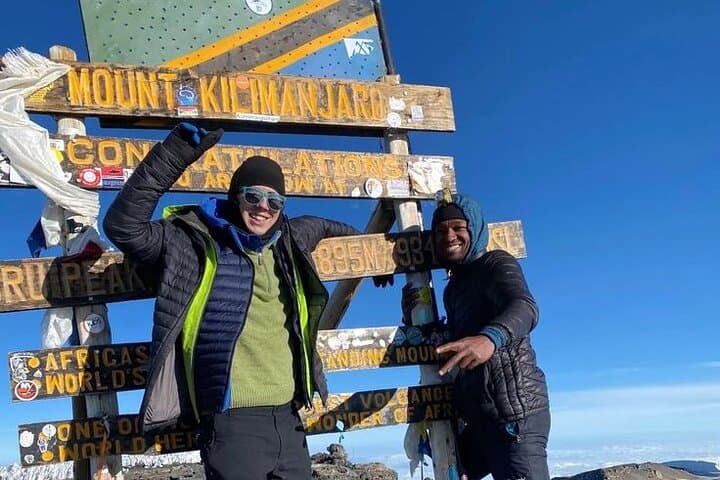
Days two and three move from Marangu Gate (1,870 m) to Mandara Hut (2,740 m) then on to Horombo Hut (3,700 m). Expect 4–8 hours of hiking on dirt tracks, roots and tussocks — distance ranges roughly 7 km then 11 km respectively — with steady elevation gain built into each day to aid acclimatization. Day four crosses the Saddle to Kibo Hut (4,700 m), a stretch of loose scree and wide, exposed ground where wind and sun become constant companions. The summit push starts around midnight: the climb from Kibo Hut to Gillman’s Point (5,685 m) and onward to Uhuru Peak (5,895 m) is a long, slow battle against thin air and cold; after sunrise you descend back to Horombo Hut for rest.
Practically, the Marangu Route is a good choice for hikers who prefer hut accommodation over camping, but it is by no means easy. Plan for long days, cold nights, and a summit window that requires careful hydration and a rhythm of short, deliberate steps. Essentials include a fitted down jacket, sturdy waterproof boots, a reliable headlamp for the summit push, and trekking poles to preserve knees on the steep descent. Respect the mountain: hire registered guides, tip porters fairly, and carry out all non-biodegradable waste. Success on Kilimanjaro is part logistics, part patience, part respect — the mountain will test each, and reward those who come prepared with a sunrise that feels earned.
difficult.
6 days.
You should be in very good aerobic shape with experience on multi-day hikes; prior high-altitude trekking experience is strongly recommended.
No technical rock-climbing skills are required; the route is a strenuous hike, but you should be experienced with long, high-altitude trekking.
Daily gains vary: Day 2 ~870 m, Day 3 ~1,000 m, Day 4 ~1,000 m; the summit day includes a rapid gain from 4,700 m to 5,895 m before descending.
Yes—Marangu uses mountain huts at Mandara, Horombo and Kibo with basic dormitory sleeping, dining huts, and pit/flush toilets where available.
Two main seasons are Jan–Mar and Jun–Oct for more stable weather; conditions can be wetter and cloudier during short rains (Oct–Dec) and long rains (Mar–May).
Park fees are mandatory and listed as included in this departure; confirm the breakdown when booking as rates can change.
Tipping is customary; a common guideline is around 10–20% of the trek cost divided among staff, with an extra tip for outstanding service.
The Marangu Route was the first path described by early explorers and hosts the oldest huts on Kilimanjaro, reflecting a long history of mountain tourism and Chagga hospitality.
Kilimanjaro National Park is a UNESCO Biosphere Reserve; glacial retreat is pronounced, so minimize impact, stick to trails, and support operators who follow porter welfare and waste-management protocols.
Explore Green Africa Safaris operates guided outdoor trips and adventures with an emphasis on safety, stewardship, and memorable experiences.


The trek begins in the cool dawn fog of Arusha’s outskirts, where porters lash gear to frames and guides check headlamps as if preparing for surgery. By midmorning the road climbs away from town into a patchwork of banana terraces and coffee farms; the air tightens with altitude and the forest closes in, green and humming. The Marangu Route is the classic pathway on Kilimanjaro — a gradual, graded ascent that trades technical exposure for sustained altitude and the old-style comfort of mountain huts.
The trek begins in the cool dawn fog of Arusha’s outskirts, where porters lash gear to frames and guides check headlamps as if preparing for surgery. By midmorning the road climbs away from town into a patchwork of banana terraces and coffee farms; the air tightens with altitude and the forest closes in, green and humming. The Marangu Route is the classic pathway on Kilimanjaro — a gradual, graded ascent that trades technical exposure for sustained altitude and the old-style comfort of mountain huts.
Geologically, Kilimanjaro is a layered volcanic giant: Mawenzi’s ragged buttresses and Kibo’s broad caldera are the result of repeated eruptions and long glacial sculpting. Climbers on this route pass through three clear life zones — montane forest, heath and moorland with giant heather, then the lunar alpine desert of the Saddle before the final scree of the crater wall. Culturally, the trail skirts Chagga villages where coffee drying racks and mud-brick homes speak to centuries of mountain agriculture; guides and porters are often from these communities, carrying local knowledge and a measured pace that’s central to success.
Days two and three move from Marangu Gate (1,870 m) to Mandara Hut (2,740 m) then on to Horombo Hut (3,700 m). Expect 4–8 hours of hiking on dirt tracks, roots and tussocks — distance ranges roughly 7 km then 11 km respectively — with steady elevation gain built into each day to aid acclimatization. Day four crosses the Saddle to Kibo Hut (4,700 m), a stretch of loose scree and wide, exposed ground where wind and sun become constant companions. The summit push starts around midnight: the climb from Kibo Hut to Gillman’s Point (5,685 m) and onward to Uhuru Peak (5,895 m) is a long, slow battle against thin air and cold; after sunrise you descend back to Horombo Hut for rest.
Practically, the Marangu Route is a good choice for hikers who prefer hut accommodation over camping, but it is by no means easy. Plan for long days, cold nights, and a summit window that requires careful hydration and a rhythm of short, deliberate steps. Essentials include a fitted down jacket, sturdy waterproof boots, a reliable headlamp for the summit push, and trekking poles to preserve knees on the steep descent. Respect the mountain: hire registered guides, tip porters fairly, and carry out all non-biodegradable waste. Success on Kilimanjaro is part logistics, part patience, part respect — the mountain will test each, and reward those who come prepared with a sunrise that feels earned.