THE ADVENTURE COLLECTIVE® · Independent discovery and booking for outdoor travel

Five days of alpine lakes, granite domes and nightly shows of sunset light: this guided Yosemite backpacking trip links Tuolumne Meadows, May Lake, Polly Dome and Glen Aulin with manageable distances and guided logistics — ideal for families or a first big backcountry trip.
Five days of alpine lakes, granite domes and nightly shows of sunset light: this guided Yosemite backpacking trip links Tuolumne Meadows, May Lake, Polly Dome and Glen Aulin with manageable distances and guided logistics — ideal for families or a first big backcountry trip.
The trail begins where Tioga Road opens onto high country granite and sky — Tuolumne Meadows at late afternoon, air thin and cool, the meadow grasses already leaning toward dusk. Guides meet the group at the Tuolumne Meadows Store, load packs into quiet rhythm and move out beneath a sky that seems to expand with every step. Hikers push up toward May Lake, cross the rim above Tenaya, and by nightfall tents cluster along shorelines while the first sunset throws long, burning edges across the granite.
Verified experiences and guided adventures in the surrounding area.
Operated by Lasting Adventures · Tuolumne Meadows, California
The trail begins where Tioga Road opens onto high country granite and sky — Tuolumne Meadows at late afternoon, air thin and cool, the meadow grasses already leaning toward dusk. Guides meet the group at the Tuolumne Meadows Store, load packs into quiet rhythm and move out beneath a sky that seems to expand with every step. Hikers push up toward May Lake, cross the rim above Tenaya, and by nightfall tents cluster along shorelines while the first sunset throws long, burning edges across the granite.
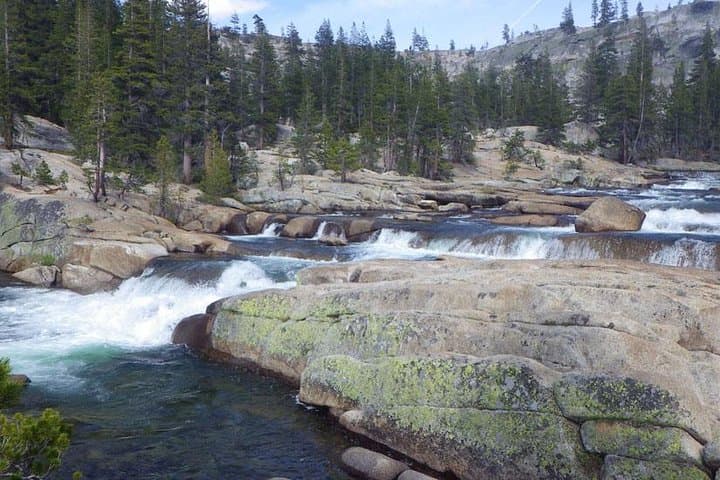
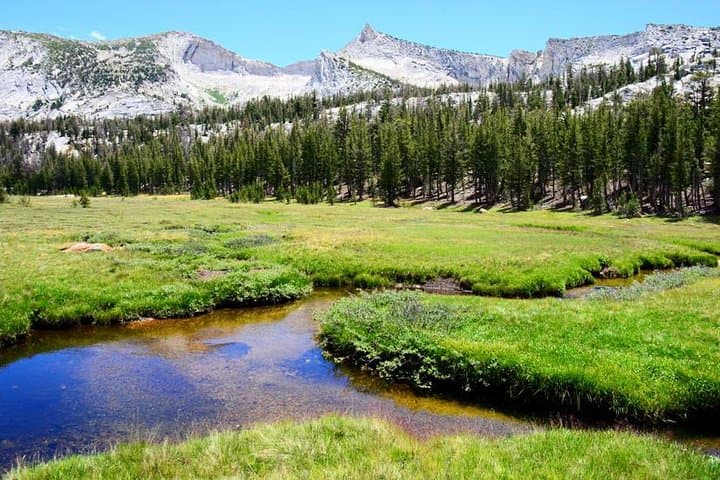
This five-day route threads classic Sierra features: high alpine lakes, domed granite, meadows fed by cold, fast streams and the Tuolumne River’s carved canyon. Geologically, you’re walking on uplifted bedrock shaped by Pleistocene glaciers — smooth granite slabs, polished bowls and steep domes like Polly and Hoffman that were scoured and left bare. Mount Hoffman (10,850') stands as the park’s geographic heart; John Muir prized its viewpoint. Human history here includes Indigenous use by Sierra Miwok and Paiute peoples along seasonal routes, later mapped by explorers and shepherded into the national park system in the late 19th century.
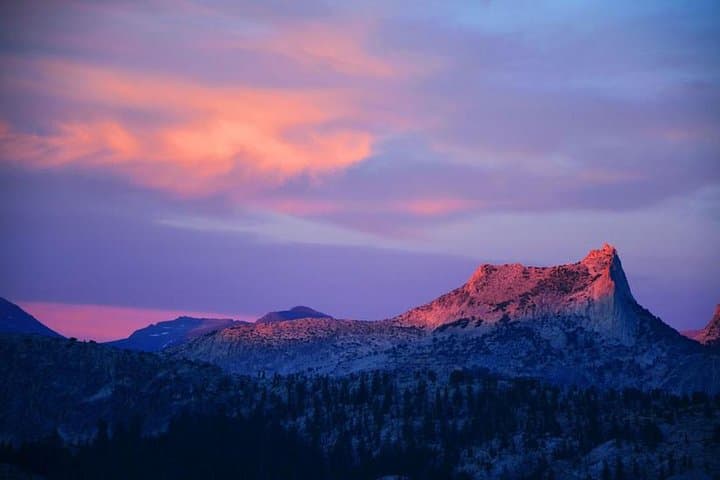
Days are measured by distance and light: roughly 3 miles to May Lake with an optional 4-mile roundtrip scramble to Mount Hoffman’s summit; 4.5 miles to Polly Dome Lake; another 4.5 to Glen Aulin; and a final 6-mile exit along the Tuolumne River. Terrain is typical high-country: firm trail, granite steps, meadow tread and occasional talus. Water is plentiful but cold; river crossings are small and seasonal. Sunsets are a nightly feature — each camp has its own vantage, from May Lake’s quiet mirror to the Glen Aulin overlook above the Grand Canyon of the Tuolumne.
Practically, this trip is moderate: guided, permit-covered and pitched toward families or those seeking a less strenuous backcountry introduction. Expect to carry a day’s clothing and personal items; group gear and some backpacks are provided on request. Bring a bear canister (or use one provided), 2–3 liters of water capacity, sturdy boots with good ankle support and a sleeping bag rated to 20°F or better. Nights are cold at 8,000–10,000 feet; layering matters.
Timing is everything: best travel window is summer when Tioga Road is open and high-country trails are clear. Altitude, daytime sun and afternoon storms can alter a day quickly — start early, hydrate, and rely on guides for route and rhythm. Leave no trace: these are fragile high meadows; treat campsites and water sources with care so the sunsets here keep getting better for the next group.
moderate.
5 days.
Moderately fit: comfortable hiking 3–6 miles per day with a 25–35 lb pack and simple uphill sections at high elevation
Yes — the trip includes required wilderness permits and the operator handles group permit logistics.
The summit is an optional 4-mile roundtrip scramble from May Lake with some exposure; route-finding is easy with a guide but requires basic scrambling comfort.
No — the trip is guided and geared toward participants with moderate fitness; basic camping instruction is provided.
Guides provide bear-safety briefings; food must be stored in canisters and camps are set with wildlife awareness in mind.
Some backpacking gear is available on request through the outfitter—confirm at booking and provide sizing details.
Tioga Road closures can force date changes; check road conditions ahead of travel and confirm your trip dates with the operator.
Mount Hoffman became a favorite viewpoint for early conservationists like John Muir; the Tuolumne corridor has long been used by Sierra Miwok and Paiute peoples for seasonal travel.
This is designated wilderness: group sizes and camp location rules minimize impact. Use provided bear canisters and follow Leave No Trace to protect fragile meadows.
Lasting Adventures operates guided outdoor trips and adventures with an emphasis on safety, stewardship, and memorable experiences.
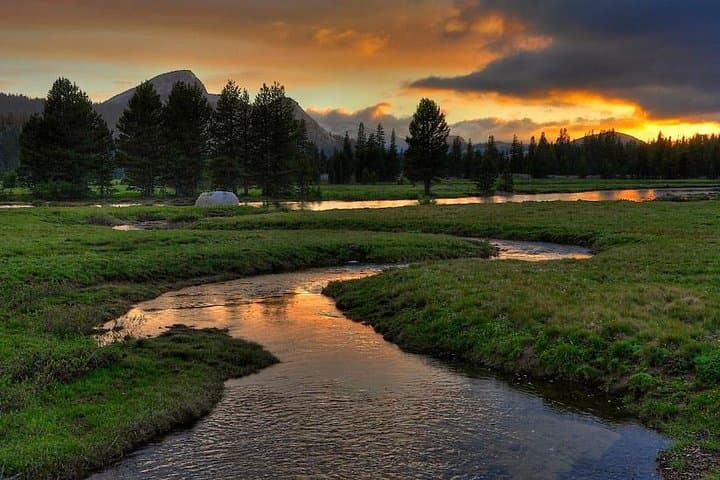
The trail begins where Tioga Road opens onto high country granite and sky — Tuolumne Meadows at late afternoon, air thin and cool, the meadow grasses already leaning toward dusk. Guides meet the group at the Tuolumne Meadows Store, load packs into quiet rhythm and move out beneath a sky that seems to expand with every step. Hikers push up toward May Lake, cross the rim above Tenaya, and by nightfall tents cluster along shorelines while the first sunset throws long, burning edges across the granite.
The trail begins where Tioga Road opens onto high country granite and sky — Tuolumne Meadows at late afternoon, air thin and cool, the meadow grasses already leaning toward dusk. Guides meet the group at the Tuolumne Meadows Store, load packs into quiet rhythm and move out beneath a sky that seems to expand with every step. Hikers push up toward May Lake, cross the rim above Tenaya, and by nightfall tents cluster along shorelines while the first sunset throws long, burning edges across the granite.
This five-day route threads classic Sierra features: high alpine lakes, domed granite, meadows fed by cold, fast streams and the Tuolumne River’s carved canyon. Geologically, you’re walking on uplifted bedrock shaped by Pleistocene glaciers — smooth granite slabs, polished bowls and steep domes like Polly and Hoffman that were scoured and left bare. Mount Hoffman (10,850') stands as the park’s geographic heart; John Muir prized its viewpoint. Human history here includes Indigenous use by Sierra Miwok and Paiute peoples along seasonal routes, later mapped by explorers and shepherded into the national park system in the late 19th century.
Days are measured by distance and light: roughly 3 miles to May Lake with an optional 4-mile roundtrip scramble to Mount Hoffman’s summit; 4.5 miles to Polly Dome Lake; another 4.5 to Glen Aulin; and a final 6-mile exit along the Tuolumne River. Terrain is typical high-country: firm trail, granite steps, meadow tread and occasional talus. Water is plentiful but cold; river crossings are small and seasonal. Sunsets are a nightly feature — each camp has its own vantage, from May Lake’s quiet mirror to the Glen Aulin overlook above the Grand Canyon of the Tuolumne.
Practically, this trip is moderate: guided, permit-covered and pitched toward families or those seeking a less strenuous backcountry introduction. Expect to carry a day’s clothing and personal items; group gear and some backpacks are provided on request. Bring a bear canister (or use one provided), 2–3 liters of water capacity, sturdy boots with good ankle support and a sleeping bag rated to 20°F or better. Nights are cold at 8,000–10,000 feet; layering matters.
Timing is everything: best travel window is summer when Tioga Road is open and high-country trails are clear. Altitude, daytime sun and afternoon storms can alter a day quickly — start early, hydrate, and rely on guides for route and rhythm. Leave no trace: these are fragile high meadows; treat campsites and water sources with care so the sunsets here keep getting better for the next group.