THE ADVENTURE COLLECTIVE® · Independent discovery and booking for outdoor travel

Rise with the desert and ride the light across dunes, salt lagoons, and Etosha's waterholes on a five-day camping loop from Windhoek. This itinerary pairs early-morning hikes in Sossusvlei with coastal birdlife in Walvis Bay and a half-day game drive in Etosha.
Rise with the desert and ride the light across dunes, salt lagoons, and Etosha's waterholes on a five-day camping loop from Windhoek. This itinerary pairs early-morning hikes in Sossusvlei with coastal birdlife in Walvis Bay and a half-day game drive in Etosha.
Before the sun clears the horizon a hush settles over the red ridges of the Namib. You stand on the lip of a dune as the desert yawns light into the valley below; sand slips like slow water under your boots and the world narrows to the curve of the dune and the sky above. This five-day loop from Windhoek threads together the stark sculpted quiet of Sossusvlei, the salt-scented air of Walvis Bay and Swakopmund, and the sudden, raw energy of a game drive in Etosha National Park.
Verified experiences and guided adventures in the surrounding area.
Operated by Discovery Transfer and Tours Namibia · Windhoek, Khomas
Before the sun clears the horizon a hush settles over the red ridges of the Namib. You stand on the lip of a dune as the desert yawns light into the valley below; sand slips like slow water under your boots and the world narrows to the curve of the dune and the sky above. This five-day loop from Windhoek threads together the stark sculpted quiet of Sossusvlei, the salt-scented air of Walvis Bay and Swakopmund, and the sudden, raw energy of a game drive in Etosha National Park.
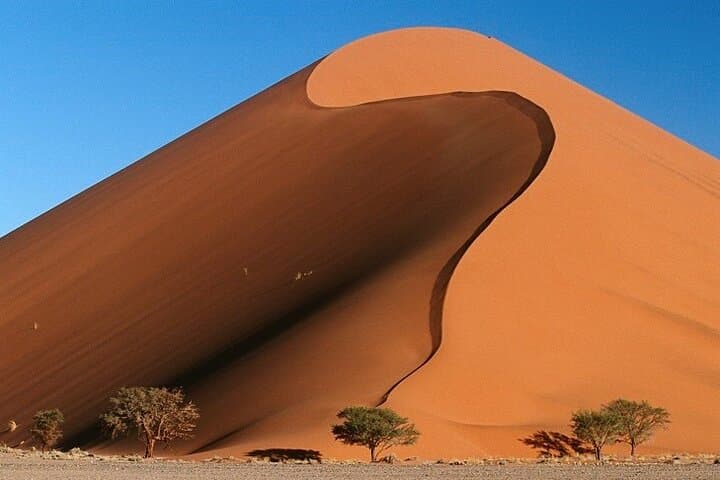
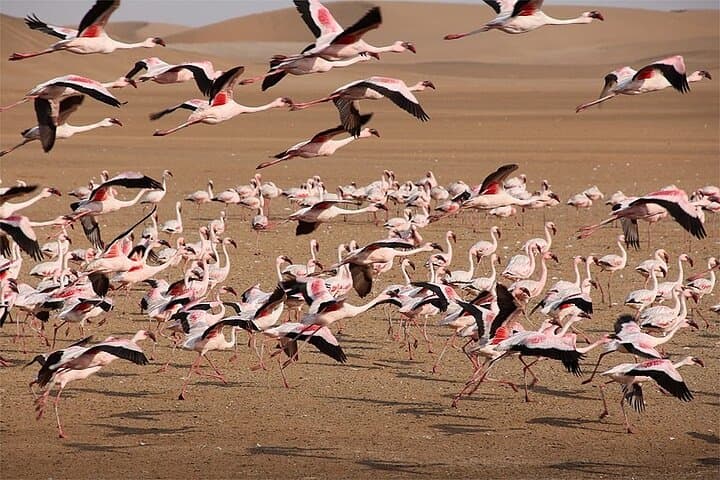
The landscape you cross is ancient. The Namib is one of the world’s oldest deserts, its dunes shaped by a long conversation between Atlantic winds and the Skeleton Coast. Sossusvlei’s clay pans — Dead Vlei and Sossusvlei itself — are white scars where floodwater once pooled between dunes now rising as high as 300 meters in places. Further west, the Atlantic tugs at the shoreline, concentrating flocks of flamingos in Walvis Bay. To the north, Etosha’s salt pan gathers wildlife and concentrates sightlines, where thirsty animals collect like clockwork at waterholes.
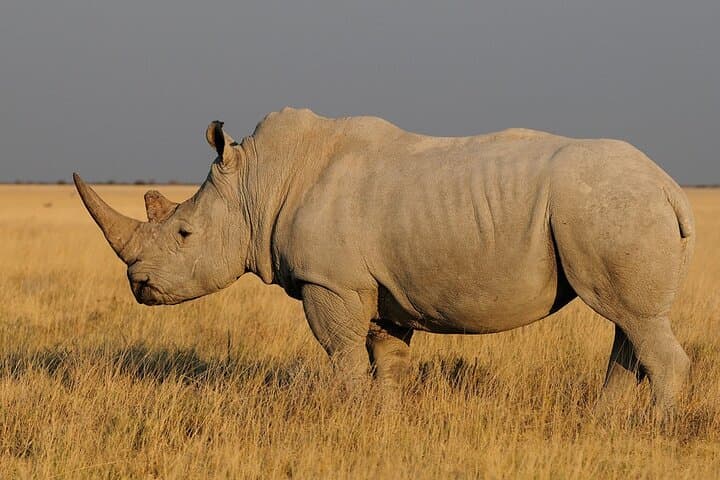
Human history here is layered: from San hunter-gatherer tracks to German colonial towns like Swakopmund, whose architecture still gives the town a different rhythm than the desert. Solitaire — a tiny fuel stop with famous apple pie — and Okahandja woodcarvers provide cultural punctuation on the longer drives. Guides often share stories of local communities and conservation work protecting desert-adapted species and Etosha’s endangered black rhino.
Practicalities shape the experience. Expect long drives — roughly 4–5 hours from Windhoek to Sossusvlei and similar windows between major stops — so pack for comfort in a vehicle and for sudden temperature swings. Days in the dunes can be fierce sun and dry air; mornings are the time to hike Dune 45 or Big Daddy when shadows make route-finding easy. In Etosha, game drives concentrate around waterholes; sightings depend on season and water availability, but early morning and late afternoon are prime.
Camping alternates between basic lodge campsites and more isolated sites near the parks; tents and shared facilities are the norm. Hydration, sun protection, and sturdy boots are non-negotiable: sand is soft and deceptive, and canyon walks may include loose rock. Bring layered clothing for chilly desert mornings and mosquitoes after sundown in the north.
This circuit is ideal for travelers who want contrasting Namibian environments in a short span: towering dunes, a cool coastline, and wildlife-rich savanna. It moves at a steady pace — less backpacking, more immersive travel — and rewards patience, early starts, and an appetite for close encounters with both landscape and wildlife.
moderate.
5 days.
Suitable for travelers in light to moderate fitness — long vehicle days with short to moderate walks and some dune scrambling
Expect 3–6 hour drives between stops; Windhoek to Sossusvlei and Sossusvlei to Swakopmund each take roughly 4–5 hours depending on stops.
Camps are basic to mid-range with shared facilities; nights can be chilly, so bring warm layers and a good sleeping bag.
Admissions for Namib Naukluft and Etosha are often included in guided tour prices, but confirm on booking as policies vary.
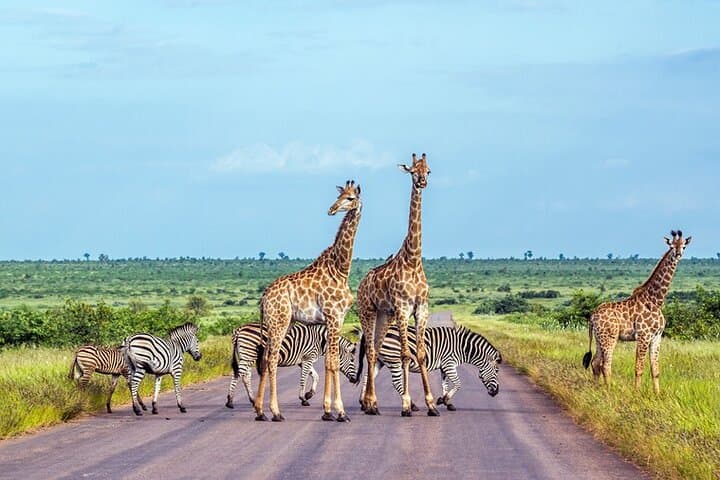
Common sightings include elephants, giraffes, zebras, springbok, and often predators like lions near permanent waterholes.
The itinerary is family-friendly in principle, but long drives and early mornings can be challenging; check age policies with the operator.
Winter (June–August) offers cooler days and better game visibility in Etosha; coastal fog is common year-round and summer brings some rains in the north.
The region bears traces of early San hunter-gatherer movement and later German colonial settlement, visible in Swakopmund's architecture and local place names.
Water is scarce across the itinerary; responsible tours minimize off-road driving, respect wildlife distances, and support community conservation initiatives.
Discovery Transfer and Tours Namibia operates guided outdoor trips and adventures with an emphasis on safety, stewardship, and memorable experiences.
Before the sun clears the horizon a hush settles over the red ridges of the Namib. You stand on the lip of a dune as the desert yawns light into the valley below; sand slips like slow water under your boots and the world narrows to the curve of the dune and the sky above. This five-day loop from Windhoek threads together the stark sculpted quiet of Sossusvlei, the salt-scented air of Walvis Bay and Swakopmund, and the sudden, raw energy of a game drive in Etosha National Park.
Before the sun clears the horizon a hush settles over the red ridges of the Namib. You stand on the lip of a dune as the desert yawns light into the valley below; sand slips like slow water under your boots and the world narrows to the curve of the dune and the sky above. This five-day loop from Windhoek threads together the stark sculpted quiet of Sossusvlei, the salt-scented air of Walvis Bay and Swakopmund, and the sudden, raw energy of a game drive in Etosha National Park.
The landscape you cross is ancient. The Namib is one of the world’s oldest deserts, its dunes shaped by a long conversation between Atlantic winds and the Skeleton Coast. Sossusvlei’s clay pans — Dead Vlei and Sossusvlei itself — are white scars where floodwater once pooled between dunes now rising as high as 300 meters in places. Further west, the Atlantic tugs at the shoreline, concentrating flocks of flamingos in Walvis Bay. To the north, Etosha’s salt pan gathers wildlife and concentrates sightlines, where thirsty animals collect like clockwork at waterholes.
Human history here is layered: from San hunter-gatherer tracks to German colonial towns like Swakopmund, whose architecture still gives the town a different rhythm than the desert. Solitaire — a tiny fuel stop with famous apple pie — and Okahandja woodcarvers provide cultural punctuation on the longer drives. Guides often share stories of local communities and conservation work protecting desert-adapted species and Etosha’s endangered black rhino.
Practicalities shape the experience. Expect long drives — roughly 4–5 hours from Windhoek to Sossusvlei and similar windows between major stops — so pack for comfort in a vehicle and for sudden temperature swings. Days in the dunes can be fierce sun and dry air; mornings are the time to hike Dune 45 or Big Daddy when shadows make route-finding easy. In Etosha, game drives concentrate around waterholes; sightings depend on season and water availability, but early morning and late afternoon are prime.
Camping alternates between basic lodge campsites and more isolated sites near the parks; tents and shared facilities are the norm. Hydration, sun protection, and sturdy boots are non-negotiable: sand is soft and deceptive, and canyon walks may include loose rock. Bring layered clothing for chilly desert mornings and mosquitoes after sundown in the north.
This circuit is ideal for travelers who want contrasting Namibian environments in a short span: towering dunes, a cool coastline, and wildlife-rich savanna. It moves at a steady pace — less backpacking, more immersive travel — and rewards patience, early starts, and an appetite for close encounters with both landscape and wildlife.