THE ADVENTURE COLLECTIVE® · Independent discovery and booking for outdoor travel

Five days across Blue Mountains escarpments, glow-worm tunnels, gold-rush towns and Mudgee wineries, all with a maximum of eight guests. An intimate, well-paced route for hikers, birders and food lovers who want wilderness and history with good wine at the end of the day.
Five days across Blue Mountains escarpments, glow-worm tunnels, gold-rush towns and Mudgee wineries, all with a maximum of eight guests. An intimate, well-paced route for hikers, birders and food lovers who want wilderness and history with good wine at the end of the day.
The bus eases off the highway and the horizon opens — basalt cliffs hollowed by wind, paddocks sliding into gum forest, and a sky that tightens into a canvas of stars by night. In a group no larger than eight, this five-day circuit through the World Heritage-listed Blue Mountains, the Wollemi wilderness and Mudgee’s wine country feels intimate rather than industrial: the kind of trip where the driver becomes a guide, and every roadside stop has a story.
Verified experiences and guided adventures in the surrounding area.
Operated by Dingo Tours · Mudgee, New South Wales
The bus eases off the highway and the horizon opens — basalt cliffs hollowed by wind, paddocks sliding into gum forest, and a sky that tightens into a canvas of stars by night. In a group no larger than eight, this five-day circuit through the World Heritage-listed Blue Mountains, the Wollemi wilderness and Mudgee’s wine country feels intimate rather than industrial: the kind of trip where the driver becomes a guide, and every roadside stop has a story.
Day one lays down the region’s geology: driving Bells Line of Road into Grose Valley you pass horizontal layers of Triassic sandstone and the sculpted pagodas of the Gardens of Stone. The tour threads Hartley Vale and Newnes — once an oil-shale boomtown — where weathered ruins and the Old Newnes Hotel speak to 19th-century industry and the fragile afterlife of extraction. By night the eco-cabins sit beneath an escarpment that seems to inhale the Milky Way.
This is a trip of contrasts. In the Capertee and Wollemi valleys you’ll trade vineyards for volcanic plugs and limestone gorges; birdwatchers will find Capertee’s cliffs a magnet for honeyeaters and rare parrots, while the glow-worm tunnel — an 8 km circuit walk for keen hikers — rewards persistence with a cathedral of bioluminescence. Cultural notes are stitched in: Aboriginal rock stencils in Blackfellows Hand Cave, Henry Lawson’s birthplace in Gulgong, and preserved gold-town streets in Sofala and Glen Davis.
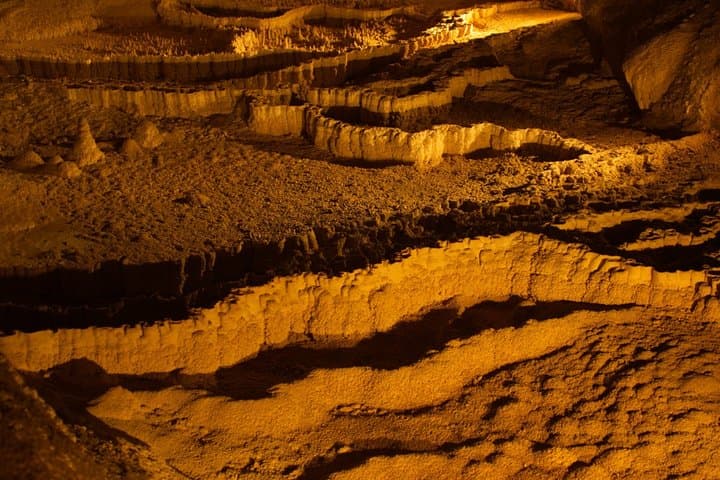
For photographers and naturalists, the program balances easy walks (short ridge strolls, Pulpit Rock outlooks) with a handful of more sustained sections — expect several 3–8 km hikes with modest elevation changes (often under 300–400 m), and a one-hour guided tour through Jenolan’s limestone caverns. Weather dictates pacing; the operator can cancel in poor conditions and keeps groups intentionally small so you actually hear the wildlife.
Practical edge: arrive in comfortable hiking shoes, carry 2–3 litres of water for full days, and plan for variable temperatures — mornings can be crisp even in summer. Accommodation alternates between village pubs, eco cottages and the heritage Jenolan Caves House; most meals are included. If you want to linger at a winery or extend a bushwalk, flag it to the guide — the small size of the group makes flexibility possible.
This is not extreme bushcraft; it’s a curated, layered experience that nudges you into wild country while rooting you in local history, food and conservation. For anyone wanting a condensed primer to the Central Tablelands — from owls and wedge-tail thermals to a glass of Mudgee shiraz — it’s a well-paced way to see why this corner of New South Wales keeps pulling people back.
moderate.
5 days.
Suitable for travellers who do regular short hikes and can manage 3–8 km walks with modest elevation gain; not technically demanding.
Pickup is available from multiple Sydney hotels or selected pickup points; confirm your pickup during booking—overnight stays are in Newnes, Rylstone, Mudgee and Jenolan Caves House.
Most walks are easy to moderate (3–8 km) with short sections of uneven ground; the glow-worm circuit is the longest optional hike at about 8 km.
The tour is family-friendly and infant seats are available, but supervise children on rugged lookout areas and confirm suitability with the operator for very young children.
Yes—breakfasts, lunches and dinners listed in the itinerary are included; there are chances to sample local wines in Mudgee (tasting costs sometimes apply).
The operator may cancel certain outdoor elements or the whole tour if weather makes activities unsafe; full refunds apply if cancelled at least three days prior per the policy.
Yes—travel insurance that covers outdoor activities, cancellations and medical evacuation is recommended for this multi-day regional tour.
The route threads former 19th-century oil-shale and gold-field settlements—Newnes and Glen Davis grew rapidly during mining booms and later declined, leaving ruins and heritage sites.
Parts of the tour pass through World Heritage and national park lands—stick to marked tracks, avoid littering and support local operators who fund conservation and respect Indigenous heritage.
Dingo Tours operates guided outdoor trips and adventures with an emphasis on safety, stewardship, and memorable experiences.
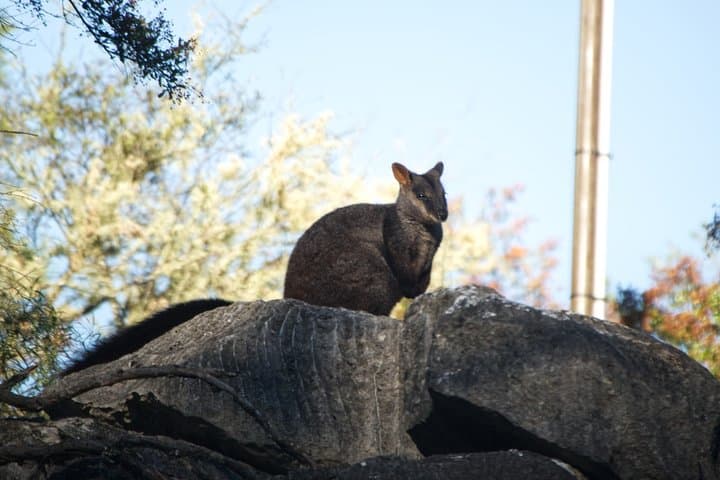
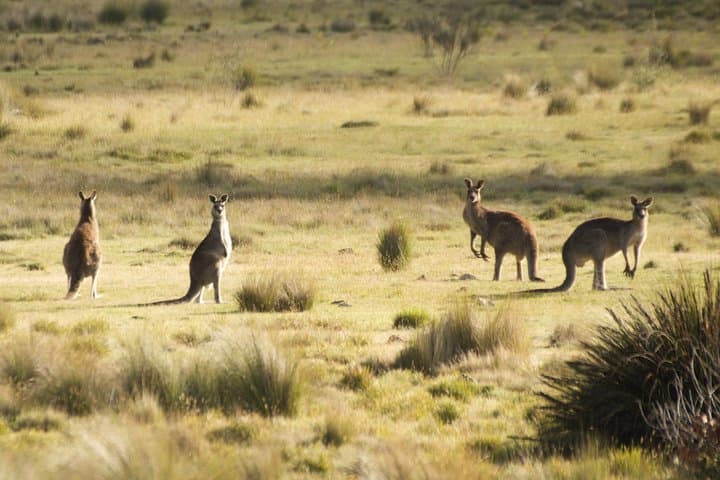
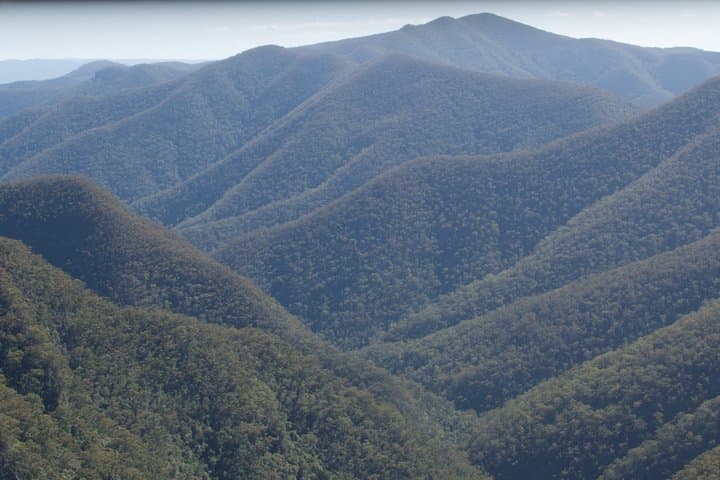
The bus eases off the highway and the horizon opens — basalt cliffs hollowed by wind, paddocks sliding into gum forest, and a sky that tightens into a canvas of stars by night. In a group no larger than eight, this five-day circuit through the World Heritage-listed Blue Mountains, the Wollemi wilderness and Mudgee’s wine country feels intimate rather than industrial: the kind of trip where the driver becomes a guide, and every roadside stop has a story.
The bus eases off the highway and the horizon opens — basalt cliffs hollowed by wind, paddocks sliding into gum forest, and a sky that tightens into a canvas of stars by night. In a group no larger than eight, this five-day circuit through the World Heritage-listed Blue Mountains, the Wollemi wilderness and Mudgee’s wine country feels intimate rather than industrial: the kind of trip where the driver becomes a guide, and every roadside stop has a story.
Day one lays down the region’s geology: driving Bells Line of Road into Grose Valley you pass horizontal layers of Triassic sandstone and the sculpted pagodas of the Gardens of Stone. The tour threads Hartley Vale and Newnes — once an oil-shale boomtown — where weathered ruins and the Old Newnes Hotel speak to 19th-century industry and the fragile afterlife of extraction. By night the eco-cabins sit beneath an escarpment that seems to inhale the Milky Way.
This is a trip of contrasts. In the Capertee and Wollemi valleys you’ll trade vineyards for volcanic plugs and limestone gorges; birdwatchers will find Capertee’s cliffs a magnet for honeyeaters and rare parrots, while the glow-worm tunnel — an 8 km circuit walk for keen hikers — rewards persistence with a cathedral of bioluminescence. Cultural notes are stitched in: Aboriginal rock stencils in Blackfellows Hand Cave, Henry Lawson’s birthplace in Gulgong, and preserved gold-town streets in Sofala and Glen Davis.
For photographers and naturalists, the program balances easy walks (short ridge strolls, Pulpit Rock outlooks) with a handful of more sustained sections — expect several 3–8 km hikes with modest elevation changes (often under 300–400 m), and a one-hour guided tour through Jenolan’s limestone caverns. Weather dictates pacing; the operator can cancel in poor conditions and keeps groups intentionally small so you actually hear the wildlife.
Practical edge: arrive in comfortable hiking shoes, carry 2–3 litres of water for full days, and plan for variable temperatures — mornings can be crisp even in summer. Accommodation alternates between village pubs, eco cottages and the heritage Jenolan Caves House; most meals are included. If you want to linger at a winery or extend a bushwalk, flag it to the guide — the small size of the group makes flexibility possible.
This is not extreme bushcraft; it’s a curated, layered experience that nudges you into wild country while rooting you in local history, food and conservation. For anyone wanting a condensed primer to the Central Tablelands — from owls and wedge-tail thermals to a glass of Mudgee shiraz — it’s a well-paced way to see why this corner of New South Wales keeps pulling people back.