THE ADVENTURE COLLECTIVE® · Independent discovery and booking for outdoor travel

Walk Roman marble in Ephesus, float in Pamukkale’s milky travertines and browse cave workshops in Cappadocia—this five‑day private tour ties Turkey’s geological drama to its human stories. Packed with guided walks, short domestic flights and comfortable hotels, it’s a pragmatic way to see the highlights without missing the details.
Walk Roman marble in Ephesus, float in Pamukkale’s milky travertines and browse cave workshops in Cappadocia—this five‑day private tour ties Turkey’s geological drama to its human stories. Packed with guided walks, short domestic flights and comfortable hotels, it’s a pragmatic way to see the highlights without missing the details.
You step off the bus into a wash of stone and sunlight: Curetes Street in Ephesus is a corridor of history, the white dust of ancient marble rising with each footfall. Column bases gleam like fossils of an empire; the Celsus Library’s façade leans toward the sky, unchanged in silhouette since Roman engineers stacked its books and ambitions. Over five days this private package threads you through Turkey’s most cinematic sites—Ephesus’s marble avenues, Pamukkale’s chalk-white terraces, and the lunar valleys of Cappadocia—each day paced to reveal geology and human story in equal measure.
Verified experiences and guided adventures in the surrounding area.
Operated by Puerto Travel Turkey · Istanbul, Istanbul
You step off the bus into a wash of stone and sunlight: Curetes Street in Ephesus is a corridor of history, the white dust of ancient marble rising with each footfall. Column bases gleam like fossils of an empire; the Celsus Library’s façade leans toward the sky, unchanged in silhouette since Roman engineers stacked its books and ambitions. Over five days this private package threads you through Turkey’s most cinematic sites—Ephesus’s marble avenues, Pamukkale’s chalk-white terraces, and the lunar valleys of Cappadocia—each day paced to reveal geology and human story in equal measure.
Ephesus lays out Roman urban life in tidy blocks—the Great Theatre holding 25,000 spectators, the Terrace Houses offering frescoed interiors once lived in by the city’s elites. The region’s history pivots from Hellenistic port to Roman trade hub to early Christian center: St. Paul, St. John and the Temple of Artemis (one of the ancient world’s wonders) all leave visible traces. Geology tells another chapter—limestone and tectonic uplift shaped the Aegean coast, concentrating the marble and travertine that builders favored.
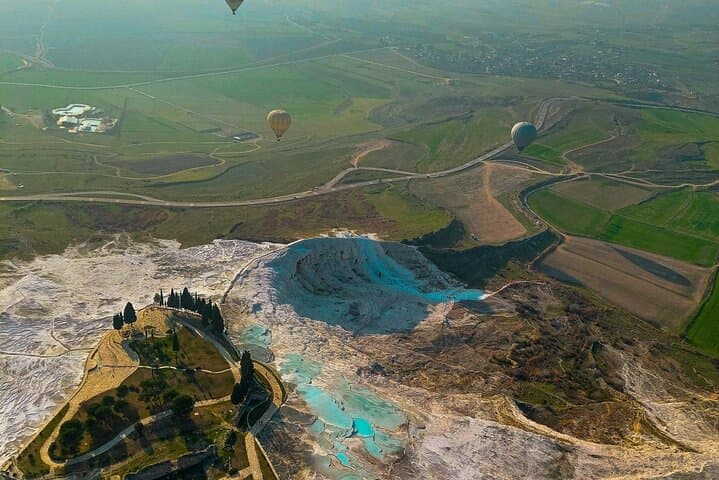
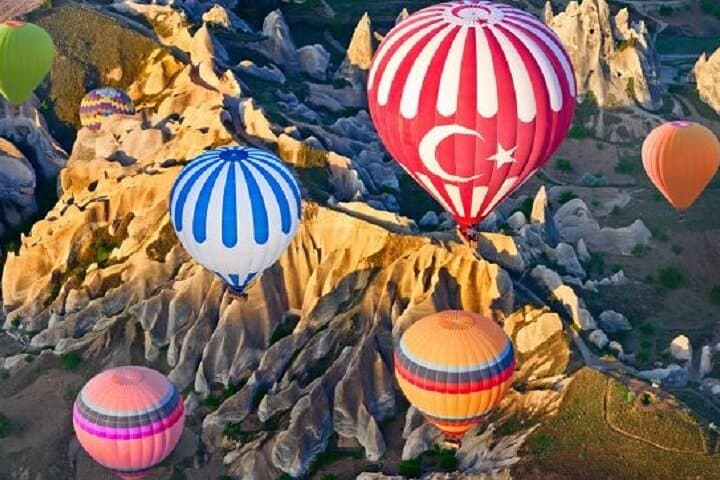
Pamukkale’s calcium‑rich springs have been laying down white travertine for millennia; walking the terraces is like walking on cooled milk, the water daring you to dip a toe. Nearby Hierapolis layers Roman baths, necropolises and a submerged antique pool where fallen columns pin the past beneath the warm surface. In Cappadocia the story shifts to tuff—volcanic ash compacted and then carved into fairy chimneys and underground cities. Uçhisar, Göreme and Avanos reveal how communities adapted—potters working the Kızılırmak clay, hermit monks painting frescoes into soft stone.
Practicalities: the tour is private and paced but active—expect 2–4 hours of guided walking most days (Ephesus alone covers roughly 2–3 km of uneven streets and stairs). Drive times: Kusadasi to Pamukkale ~3 hours; airport transfers and two short domestic flights (Izmir ⇄ Cappadocia) are included. Altitude in Cappadocia averages 1,000–1,200 m; if you’re sensitive to altitude, move slowly on hikes.
Packing and timing matter. Bring sturdy walking shoes with grippy soles for wet travertine, a swimsuit for Pamukkale’s thermal pools, layered clothing for wide diurnal swings in Cappadocia, and a sun hat—midday sun is direct. Early mornings are best for photos and for the hot-air balloons over Göreme; afternoons suit museums and pottery workshops when the light softens.
For travelers who want history, geology and local craft in a compact itinerary, this five-day route delivers deep context with practical comforts—hotels, A/C transfers and a licensed guide—so you see the sites, understand them, and leave with directions for your next return.
moderate.
5 days.
Expect several days of walking on uneven terrain and stairs; suitable for travelers with a moderate fitness level.
Yes—domestic flights and transfers between locations are part of the itinerary (Istanbul→Izmir for Ephesus/Pamukkale and Izmir→Cappadocia as scheduled).
Plan on 2–4 hours of guided walking daily, covering 2–6 km depending on the sites; terrain includes stairs, cobbled streets and soft volcanic trails.
Transport options are wheelchair accessible, but many archaeological sites have uneven surfaces and stairs, which limit full wheelchair access.
Yes—the licensed guide and operator can accommodate most dietary needs if notified in advance through booking questions.
Balloon flights are weather-dependent and usually run at dawn; this tour does not include balloon rides but your hotel can help arrange one subject to availability.
Some attractions are included in the tour price per the supplier; confirm specific site admissions at booking—many ancient sites require separate tickets on arrival.
Ephesus was a major Roman port and early Christian center; Pamukkale/Hierapolis grew around thermal springs valued since antiquity; Cappadocia’s cave settlements were carved from volcanic tuff and shelter centuries of human adaptation.
Pamukkale’s travertine terraces are fragile—visitors must follow designated paths and avoid sunscreen in pools to protect mineral deposition; in Cappadocia respect fragile rock formations and local farm plots.
Puerto Travel Turkey operates guided outdoor trips and adventures with an emphasis on safety, stewardship, and memorable experiences.

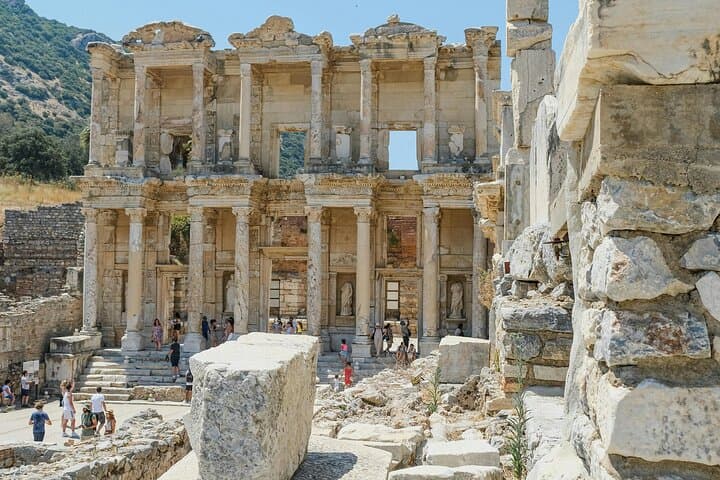
You step off the bus into a wash of stone and sunlight: Curetes Street in Ephesus is a corridor of history, the white dust of ancient marble rising with each footfall. Column bases gleam like fossils of an empire; the Celsus Library’s façade leans toward the sky, unchanged in silhouette since Roman engineers stacked its books and ambitions. Over five days this private package threads you through Turkey’s most cinematic sites—Ephesus’s marble avenues, Pamukkale’s chalk-white terraces, and the lunar valleys of Cappadocia—each day paced to reveal geology and human story in equal measure.
You step off the bus into a wash of stone and sunlight: Curetes Street in Ephesus is a corridor of history, the white dust of ancient marble rising with each footfall. Column bases gleam like fossils of an empire; the Celsus Library’s façade leans toward the sky, unchanged in silhouette since Roman engineers stacked its books and ambitions. Over five days this private package threads you through Turkey’s most cinematic sites—Ephesus’s marble avenues, Pamukkale’s chalk-white terraces, and the lunar valleys of Cappadocia—each day paced to reveal geology and human story in equal measure.
Ephesus lays out Roman urban life in tidy blocks—the Great Theatre holding 25,000 spectators, the Terrace Houses offering frescoed interiors once lived in by the city’s elites. The region’s history pivots from Hellenistic port to Roman trade hub to early Christian center: St. Paul, St. John and the Temple of Artemis (one of the ancient world’s wonders) all leave visible traces. Geology tells another chapter—limestone and tectonic uplift shaped the Aegean coast, concentrating the marble and travertine that builders favored.
Pamukkale’s calcium‑rich springs have been laying down white travertine for millennia; walking the terraces is like walking on cooled milk, the water daring you to dip a toe. Nearby Hierapolis layers Roman baths, necropolises and a submerged antique pool where fallen columns pin the past beneath the warm surface. In Cappadocia the story shifts to tuff—volcanic ash compacted and then carved into fairy chimneys and underground cities. Uçhisar, Göreme and Avanos reveal how communities adapted—potters working the Kızılırmak clay, hermit monks painting frescoes into soft stone.
Practicalities: the tour is private and paced but active—expect 2–4 hours of guided walking most days (Ephesus alone covers roughly 2–3 km of uneven streets and stairs). Drive times: Kusadasi to Pamukkale ~3 hours; airport transfers and two short domestic flights (Izmir ⇄ Cappadocia) are included. Altitude in Cappadocia averages 1,000–1,200 m; if you’re sensitive to altitude, move slowly on hikes.
Packing and timing matter. Bring sturdy walking shoes with grippy soles for wet travertine, a swimsuit for Pamukkale’s thermal pools, layered clothing for wide diurnal swings in Cappadocia, and a sun hat—midday sun is direct. Early mornings are best for photos and for the hot-air balloons over Göreme; afternoons suit museums and pottery workshops when the light softens.
For travelers who want history, geology and local craft in a compact itinerary, this five-day route delivers deep context with practical comforts—hotels, A/C transfers and a licensed guide—so you see the sites, understand them, and leave with directions for your next return.