THE ADVENTURE COLLECTIVE® · Independent discovery and booking for outdoor travel

Move from the glass towers of Baku to bubbling mud volcanoes, Bronze Age petroglyphs and alpine lakes on a compact private 5-day trip that mixes city culture with dramatic geology and mountain air.
Move from the glass towers of Baku to bubbling mud volcanoes, Bronze Age petroglyphs and alpine lakes on a compact private 5-day trip that mixes city culture with dramatic geology and mountain air.
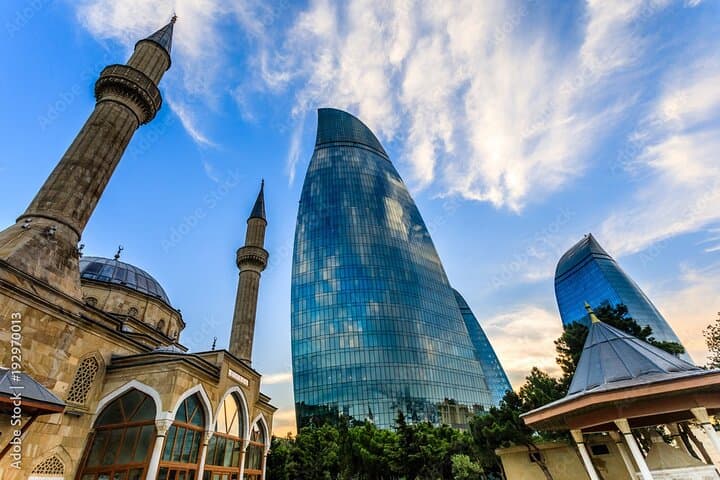
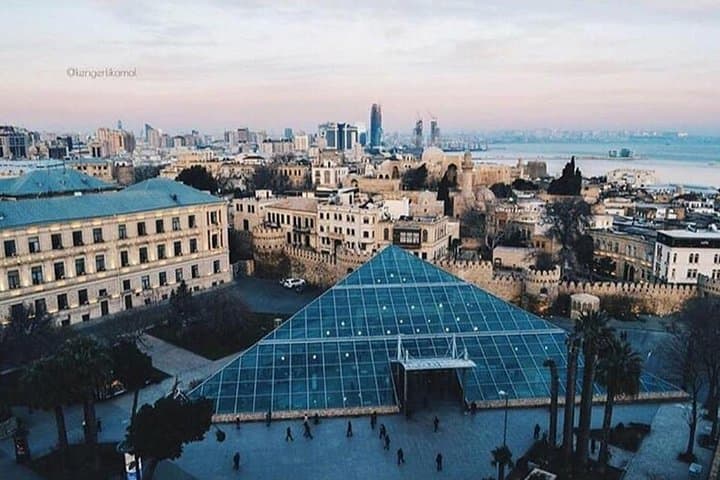
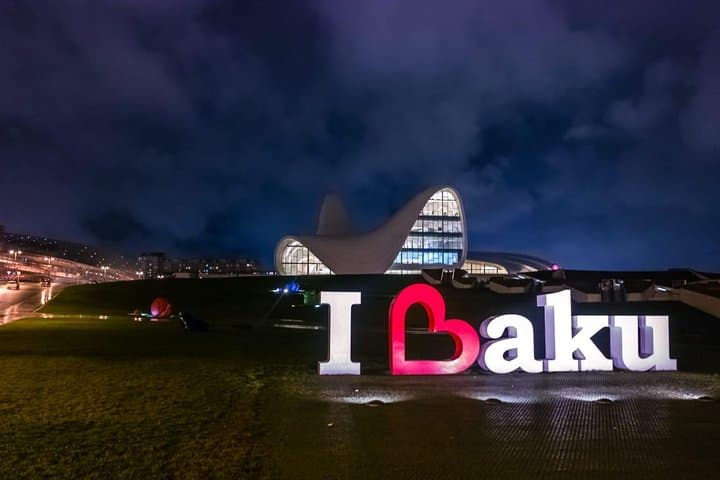
A thin salt wind from the Caspian lifts off the boulevard as you step out beneath Baku’s mirrored Flame Towers, the city’s modern glass skin reflecting an older skyline of crenellated stone. The first morning moves like a rehearsed sequence: carpet museums and Heydar Aliyev’s curving concrete, a lunch of plov, then a walk through Icherisheher where minarets and caravanserai keep time with the sea. Over five days the country pulls you inland and up—onto rocky plateaus and smoking mud cones, along the carved faces of Gobustan’s petroglyphs, and into the alpine hush of Gabala’s forests.
Verified experiences and guided adventures in the surrounding area.
Operated by Caspi Tours · Baku, Baku
A thin salt wind from the Caspian lifts off the boulevard as you step out beneath Baku’s mirrored Flame Towers, the city’s modern glass skin reflecting an older skyline of crenellated stone. The first morning moves like a rehearsed sequence: carpet museums and Heydar Aliyev’s curving concrete, a lunch of plov, then a walk through Icherisheher where minarets and caravanserai keep time with the sea. Over five days the country pulls you inland and up—onto rocky plateaus and smoking mud cones, along the carved faces of Gobustan’s petroglyphs, and into the alpine hush of Gabala’s forests.
Gobustan is geology made legible. Its petroglyphs—ancient hunters, boats and suns—mark human presence on a volcanic escarpment that once stood closer to the shoreline. Nearby, mud volcanoes cough and bubble, expelling cool, oily mud from subterranean chambers; they’re minor eruptions but oddly theatrical. Then there’s Yanardag, the Burning Mountain, a band of gas-fed flames licking a hillside since antiquity, where Zoroastrian priests once tended perpetual fire.
Eastward, Gabala and the Shahdag foothills change the palette: fir-scented air, lakes that mirror the slopes, and the cable cars of Tufandag rising into an alpine moraine. Diri Baba’s tomb clings to a cliffside like a human-made weather vane; Nohur Lake offers a quiet place to row as clouds pass with the slow authority of mountains.
Practicalities: this private tour uses an air-conditioned vehicle with pickup from your Baku lodging, so you unpack once and let a guide organize tickets and logistics. Distances are substantial—expect 60–80 km drives to Gobustan and mud volcanoes, and roughly 220–240 km round trips to Gabala—so bring motion-sickness remedies if you’re prone. Walking at the petroglyph site and on light trails in Gabala is moderate; most sites have short, uneven paths and some stairs.
Visas are required for many nationalities (e-visa available online) and museum and cable car fees are often extra. Meals are usually not included—sample local roadside bakeries and riverside cafes for fresh kebabs and ayran. Dress in layers: coastal days can be warm and windswept, while mountain afternoons cool quickly. Bring a sturdy pair of shoes, sun protection, and an appetite for varied landscapes: modern urbanism, prehistoric rock art, combustible geology, and silent mountain lakes.
By the last morning, as the van hums back toward Baku, the route reads like a condensed atlas—ancient trade, oil history, and natural forces all mapped across five days. It’s an efficient introduction to Azerbaijan that rewards curiosity and a readiness to keep moving.
moderate.
4–5 days.
Comfortable walking for 1–3 miles at a time and tolerance for multi-hour transfers; light hiking fitness recommended for Gabala trails.
Many travelers require an e-visa to enter Azerbaijan—check the government portal and obtain it before arrival.
Some inclusions are provided, but museum admissions, cable car tickets and specific attractions like Tufandag are often extra—confirm with your operator.
Expect 1–2 hour drives to Gobustan and the mud volcanoes and roughly 3–3.5 hours each way for Gabala, depending on traffic.
Infants are allowed but must sit on laps; ensure long transfers are manageable for young children and plan stops.
Guides commonly speak English, Russian and Azerbaijani—confirm language needs when booking.
Yes—notify the tour operator in advance so they can arrange meals or suitable restaurant options during the itinerary.
Azerbaijan’s landscape bridges Bronze Age cultures (Gobustan petroglyphs) and an early oil industry—Baku hosted the world’s first industrial oil wells in the 19th century.
Sites like Gobustan are protected, but fragile; stick to marked paths and avoid touching rock art. Mud volcano areas are ecologically sensitive—do not disturb vents.
Caspi Tours operates guided outdoor trips and adventures with an emphasis on safety, stewardship, and memorable experiences.
A thin salt wind from the Caspian lifts off the boulevard as you step out beneath Baku’s mirrored Flame Towers, the city’s modern glass skin reflecting an older skyline of crenellated stone. The first morning moves like a rehearsed sequence: carpet museums and Heydar Aliyev’s curving concrete, a lunch of plov, then a walk through Icherisheher where minarets and caravanserai keep time with the sea. Over five days the country pulls you inland and up—onto rocky plateaus and smoking mud cones, along the carved faces of Gobustan’s petroglyphs, and into the alpine hush of Gabala’s forests.
A thin salt wind from the Caspian lifts off the boulevard as you step out beneath Baku’s mirrored Flame Towers, the city’s modern glass skin reflecting an older skyline of crenellated stone. The first morning moves like a rehearsed sequence: carpet museums and Heydar Aliyev’s curving concrete, a lunch of plov, then a walk through Icherisheher where minarets and caravanserai keep time with the sea. Over five days the country pulls you inland and up—onto rocky plateaus and smoking mud cones, along the carved faces of Gobustan’s petroglyphs, and into the alpine hush of Gabala’s forests.
Gobustan is geology made legible. Its petroglyphs—ancient hunters, boats and suns—mark human presence on a volcanic escarpment that once stood closer to the shoreline. Nearby, mud volcanoes cough and bubble, expelling cool, oily mud from subterranean chambers; they’re minor eruptions but oddly theatrical. Then there’s Yanardag, the Burning Mountain, a band of gas-fed flames licking a hillside since antiquity, where Zoroastrian priests once tended perpetual fire.
Eastward, Gabala and the Shahdag foothills change the palette: fir-scented air, lakes that mirror the slopes, and the cable cars of Tufandag rising into an alpine moraine. Diri Baba’s tomb clings to a cliffside like a human-made weather vane; Nohur Lake offers a quiet place to row as clouds pass with the slow authority of mountains.
Practicalities: this private tour uses an air-conditioned vehicle with pickup from your Baku lodging, so you unpack once and let a guide organize tickets and logistics. Distances are substantial—expect 60–80 km drives to Gobustan and mud volcanoes, and roughly 220–240 km round trips to Gabala—so bring motion-sickness remedies if you’re prone. Walking at the petroglyph site and on light trails in Gabala is moderate; most sites have short, uneven paths and some stairs.
Visas are required for many nationalities (e-visa available online) and museum and cable car fees are often extra. Meals are usually not included—sample local roadside bakeries and riverside cafes for fresh kebabs and ayran. Dress in layers: coastal days can be warm and windswept, while mountain afternoons cool quickly. Bring a sturdy pair of shoes, sun protection, and an appetite for varied landscapes: modern urbanism, prehistoric rock art, combustible geology, and silent mountain lakes.
By the last morning, as the van hums back toward Baku, the route reads like a condensed atlas—ancient trade, oil history, and natural forces all mapped across five days. It’s an efficient introduction to Azerbaijan that rewards curiosity and a readiness to keep moving.