THE ADVENTURE COLLECTIVE® · Independent discovery and booking for outdoor travel

A 25-day route that threads Ecuador’s four major landscapes—Andean highlands, the Amazon basin, the Galápagos archipelago and the Pacific coast—offering volcano treks, jungle canoeing, island snorkeling and cultural encounters with Kichwa communities.
A 25-day route that threads Ecuador’s four major landscapes—Andean highlands, the Amazon basin, the Galápagos archipelago and the Pacific coast—offering volcano treks, jungle canoeing, island snorkeling and cultural encounters with Kichwa communities.
You step out of Quito's thin, bright air and immediately feel the country changing on a human timescale: street vendors and colonial facades give way to páramo winds and the volcanic silhouette of Cotopaxi cutting the horizon. Over 25 days this itinerary pushes that change into a narrative—an axis from highland plazas to the humid green of the Amazon, then out across turquoise seas to islands where evolution still writes the rules.
Verified experiences and guided adventures in the surrounding area.
Operated by Perfect Destiny · Quito, Pichincha
You step out of Quito's thin, bright air and immediately feel the country changing on a human timescale: street vendors and colonial facades give way to páramo winds and the volcanic silhouette of Cotopaxi cutting the horizon. Over 25 days this itinerary pushes that change into a narrative—an axis from highland plazas to the humid green of the Amazon, then out across turquoise seas to islands where evolution still writes the rules.
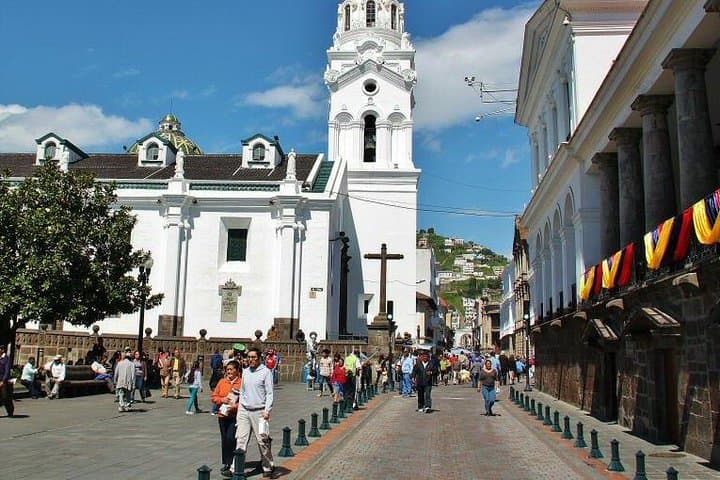
Quito opens the trip with a compact lesson in colonial history and Andean geology. The old city squares and the cable car climb toward the volcanic rim are reminders that Ecuador sits on a seam of tectonic power; Quilotoa’s glassy crater lake is a caldera that holds both weather and memory. Heading east, the Napo Basin around Tena feels like the world lowering its voice: rivers dare you into tube rides and canoe trips while Kichwa families keep ancestral practices—cassava breads, chicha, and storytelling—alive.
The Galápagos section shifts the focus from human culture to deep-time biology. Santa Cruz, Isabela and San Cristóbal present geological chapters—shield volcanoes, lava tunnels and uplifted reefs—where Darwin’s observations took shape. On boat and shore you’ll spot giant tortoises, blue-footed boobies, and sea lions behaving like they own the coastline because, in this place, they do.
Finish along the Pacific coast in Guayaquil, where mangrove channels of Churute and the sandy coves of Ayangue reopen the story to human industry: cacao farms and small fisheries that connect local livelihoods to ecosystems under pressure.
Practical edge: the tour mixes easy to moderate days with a few longer walks—Sierra Negra is a five-hour trekking day that rewards steady hikers with a smoking caldera and warm ground vents. The Galápagos requires an extra entrance fee (US$100 cash, paid on arrival) and strict biosecurity—expect boot and luggage inspections. Altitude in the highlands is real; plan at least 24–48 hours in Quito to acclimatize before strenuous activity.
Gear choices favor versatility: a waterproof shell and layered insulation for Andean mornings; reef-safe sunscreen and snorkel gear for island days; sturdy trail shoes for lava walks and wet trails. Health paperwork and passports must be in order—Galápagos regulations are enforced at check-in.
This is a travel-length experience engineered for variety: volcanic rims that smell of sulfur, rivers that push you downstream, and islands where wildlife approaches on its own terms. For those who want a deep, practical immersion in Ecuador’s four major landscapes, it’s an efficient, demanding and unforgettable route.
moderate.
25 days.
Suitable for travelers in regular fitness who can manage multi-hour walks, boat transfers and occasional uneven terrain; some full-day hikes require stamina.
Yes—passport information is required at booking. Check current vaccination recommendations for yellow fever and routine shots; consult a travel clinic for up-to-date health advice.
The itinerary includes internal flights to/from the Galápagos, land transfers in the highlands and Amazon, and ferries between Galápagos islands; schedules are pre-arranged but subject to weather.
Children can join but must be accompanied by an adult; activities vary by age and may include light hikes and boat travel—confirm suitability when booking.
Ecuador uses the US dollar. Carry small bills for park fees and rural purchases; credit cards are widely accepted in cities.
Yes—several days include selectable options (Mindo vs Papallacta, Otavalo vs Cotopaxi); communicate preferences when booking to tailor the itinerary.
Inter-island ferries typically allow two checked bags plus one handbag; oversized luggage may be refused—travel light for Galápagos segments.
Quito’s colonial core reflects Spanish foundations layered over an Inca and pre-Inca past; the Galápagos remain central to evolutionary science since Darwin’s visit.
Galápagos tourism is tightly regulated with park fees and biosecurity checks; on the mainland, mangrove and Amazon protection depend on responsible tour behavior and local conservation projects.
Perfect Destiny operates guided outdoor trips and adventures with an emphasis on safety, stewardship, and memorable experiences.
You step out of Quito's thin, bright air and immediately feel the country changing on a human timescale: street vendors and colonial facades give way to páramo winds and the volcanic silhouette of Cotopaxi cutting the horizon. Over 25 days this itinerary pushes that change into a narrative—an axis from highland plazas to the humid green of the Amazon, then out across turquoise seas to islands where evolution still writes the rules.
You step out of Quito's thin, bright air and immediately feel the country changing on a human timescale: street vendors and colonial facades give way to páramo winds and the volcanic silhouette of Cotopaxi cutting the horizon. Over 25 days this itinerary pushes that change into a narrative—an axis from highland plazas to the humid green of the Amazon, then out across turquoise seas to islands where evolution still writes the rules.
Quito opens the trip with a compact lesson in colonial history and Andean geology. The old city squares and the cable car climb toward the volcanic rim are reminders that Ecuador sits on a seam of tectonic power; Quilotoa’s glassy crater lake is a caldera that holds both weather and memory. Heading east, the Napo Basin around Tena feels like the world lowering its voice: rivers dare you into tube rides and canoe trips while Kichwa families keep ancestral practices—cassava breads, chicha, and storytelling—alive.
The Galápagos section shifts the focus from human culture to deep-time biology. Santa Cruz, Isabela and San Cristóbal present geological chapters—shield volcanoes, lava tunnels and uplifted reefs—where Darwin’s observations took shape. On boat and shore you’ll spot giant tortoises, blue-footed boobies, and sea lions behaving like they own the coastline because, in this place, they do.
Finish along the Pacific coast in Guayaquil, where mangrove channels of Churute and the sandy coves of Ayangue reopen the story to human industry: cacao farms and small fisheries that connect local livelihoods to ecosystems under pressure.
Practical edge: the tour mixes easy to moderate days with a few longer walks—Sierra Negra is a five-hour trekking day that rewards steady hikers with a smoking caldera and warm ground vents. The Galápagos requires an extra entrance fee (US$100 cash, paid on arrival) and strict biosecurity—expect boot and luggage inspections. Altitude in the highlands is real; plan at least 24–48 hours in Quito to acclimatize before strenuous activity.
Gear choices favor versatility: a waterproof shell and layered insulation for Andean mornings; reef-safe sunscreen and snorkel gear for island days; sturdy trail shoes for lava walks and wet trails. Health paperwork and passports must be in order—Galápagos regulations are enforced at check-in.
This is a travel-length experience engineered for variety: volcanic rims that smell of sulfur, rivers that push you downstream, and islands where wildlife approaches on its own terms. For those who want a deep, practical immersion in Ecuador’s four major landscapes, it’s an efficient, demanding and unforgettable route.