THE ADVENTURE COLLECTIVE® · Independent discovery and booking for outdoor travel

See Pamukkale’s gleaming terraces, walk Ephesus’ marble streets and explore Cappadocia’s fairy chimneys—all in four well-planned days with domestic flights and guided transfers included. This compact tour balances major sights with practical logistics for time-limited travelers.
See Pamukkale’s gleaming terraces, walk Ephesus’ marble streets and explore Cappadocia’s fairy chimneys—all in four well-planned days with domestic flights and guided transfers included. This compact tour balances major sights with practical logistics for time-limited travelers.
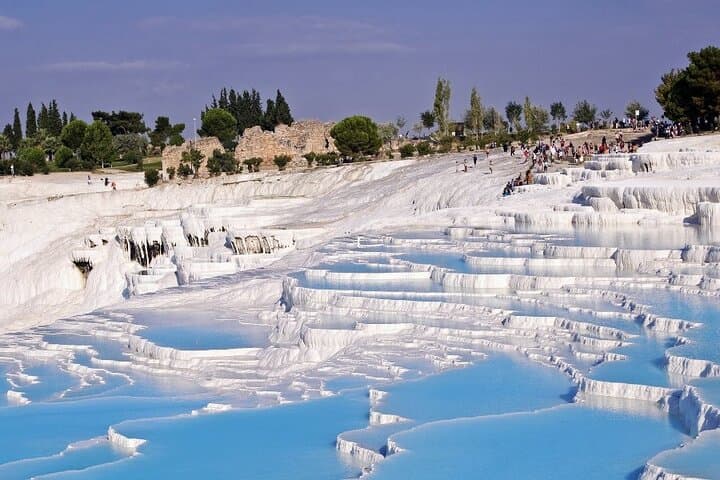
You step onto a coach in the blue hour, Istanbul’s lights receding as the group murmurs about ancient theaters and moonlit chimneys. By midmorning the terraces of Pamukkale appear — a warped, white landscape of mineral terraces that seems to have been frozen mid-flow. Walking barefoot along warm, chalky pools, the water moves with a soft insistence; it has been leaching calcium for millennia and keeps laying down the next thin crust of the “Cotton Castle.”
Verified experiences and guided adventures in the surrounding area.
Operated by One Nation Travel · Göreme, Nevşehir Province
You step onto a coach in the blue hour, Istanbul’s lights receding as the group murmurs about ancient theaters and moonlit chimneys. By midmorning the terraces of Pamukkale appear — a warped, white landscape of mineral terraces that seems to have been frozen mid-flow. Walking barefoot along warm, chalky pools, the water moves with a soft insistence; it has been leaching calcium for millennia and keeps laying down the next thin crust of the “Cotton Castle.”
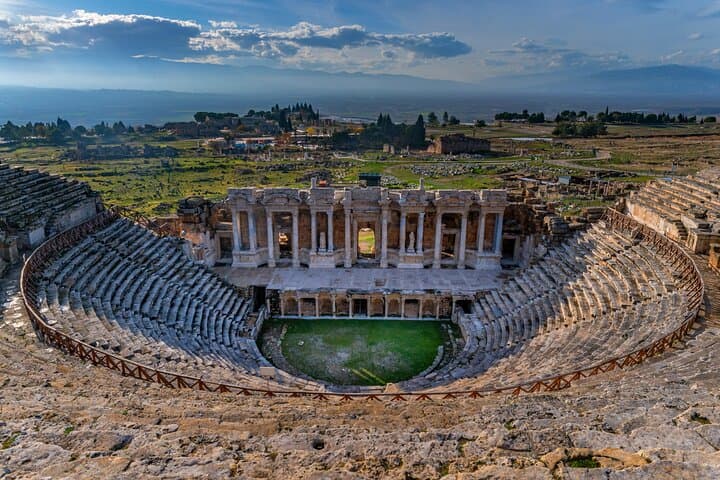
This four-day circuit is compact but deliberately paced: Pamukkale’s thermal travertines and the Roman ruins of Hierapolis; Ephesus’ marble avenues and the Library of Celsus; then the otherworldly spires of Cappadocia. The route threads geology and human history. Pamukkale’s terraces are the slow product of hot springs hitting limestone; Ephesus sits on silted plains that once hugged the Aegean and grew fat on trade; Cappadocia is volcanic tuff sculpted by wind and water, then hollowed by people who carved homes, churches and entire subterranean cities into the soft rock.
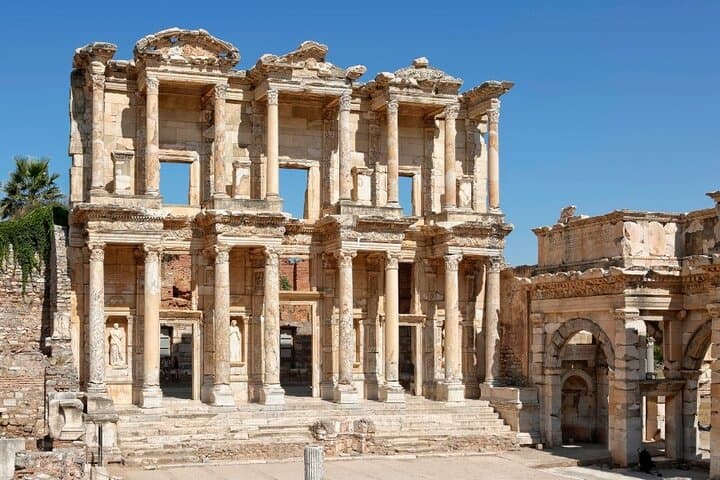
Culturally the tour spans Hittite and Roman echoes, Byzantine mosaics and Ottoman touches: expect a brisk, expert-led interpretation at each site that stitches dates and functions to stone. Small-group guides highlight the practical: how Celsus’ façade functioned as mausoleum and marketing billboard, why thermal springs drove ancient spa economies, and how Cappadocian pigeon houses doubled as fertilizer factories for vineyards below.
Practical realities shape the experience. Domestic flights between legs keep the schedule tight — be ready for early pickups (around 04:00) and late-evening arrivals in Cappadocia. The walking is moderate: uneven ancient stones in Ephesus, some uphill paths to the Virgin Mary shrine, and loose gravel on valley trails in Cappadocia. Pamukkale requires bare feet on terraces; bring a towel and quick-dry sandals for off-terrace walks.
Pacing your body is key. Hydrate on the shuttles, wear supportive shoes for cobbled streets and valley walks, and layer for Cappadocia’s temperature swings (hot days, cool nights). If you want balloon photos, book separately and be prepared for a pre-dawn pickup.
For travelers short on time but hungry for texture — thermal pools, marble colonnades, and rock formations that seem engineered by a patient sculptor — this itinerary delivers the essential highlights of western and central Turkey with logistics handled: hotels, transfers and most entrances included. It’s a practical, fast-moving primer for anyone wanting to sample Turkey’s deep past and surreal landscapes in four consequential days.
moderate.
4 days.
Comfortable with several hours of walking per day on uneven surfaces; able to manage stairs and short climbs.
Yes—domestic flights between Istanbul–Denizli, Izmir–Kayseri and Kayseri–Istanbul are included in the tour price.
Pickup is provided from centrally located hotels on the European side; exact time is confirmed the day before departure.
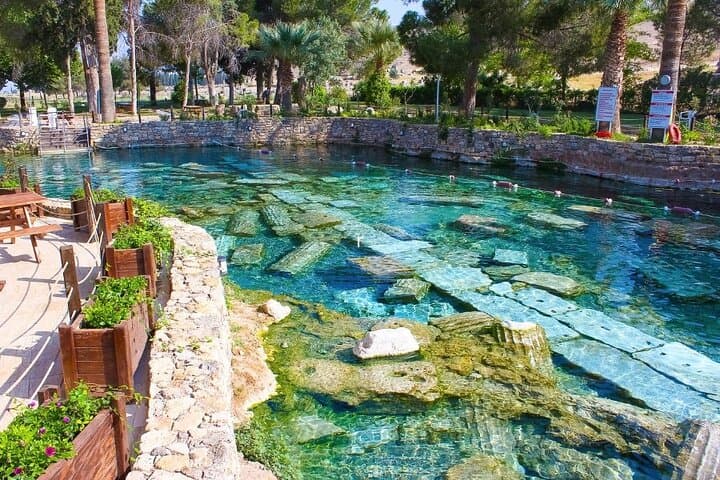
You can swim in the Cleopatra Antique Pool for an extra fee (approx. $10 USD) payable on site; walking on terraces is done barefoot and free.
Expect several hours of moderate walking each day over uneven terrain, cobbles and short climbs—comfortable walking fitness is recommended.
Breakfast and lunch are included as noted (3 breakfasts, 4 lunches); special diets may be accommodated on request but vegan/gluten-free options are limited.
Yes, balloon flights are a popular optional extra and must be booked separately—book early and be prepared for pre-dawn pickups and weather-dependent cancellations.
Ephesus was a major Roman port city and a cultural hub of the eastern Mediterranean; Pamukkale (Hierapolis) flourished as a thermal spa in Hellenistic and Roman times.
Pamukkale’s terraces are protected—walking is restricted to certain paths to reduce erosion; follow site rules and avoid bringing soaps or oils into natural pools.
One Nation Travel operates guided outdoor trips and adventures with an emphasis on safety, stewardship, and memorable experiences.
You step onto a coach in the blue hour, Istanbul’s lights receding as the group murmurs about ancient theaters and moonlit chimneys. By midmorning the terraces of Pamukkale appear — a warped, white landscape of mineral terraces that seems to have been frozen mid-flow. Walking barefoot along warm, chalky pools, the water moves with a soft insistence; it has been leaching calcium for millennia and keeps laying down the next thin crust of the “Cotton Castle.”
You step onto a coach in the blue hour, Istanbul’s lights receding as the group murmurs about ancient theaters and moonlit chimneys. By midmorning the terraces of Pamukkale appear — a warped, white landscape of mineral terraces that seems to have been frozen mid-flow. Walking barefoot along warm, chalky pools, the water moves with a soft insistence; it has been leaching calcium for millennia and keeps laying down the next thin crust of the “Cotton Castle.”
This four-day circuit is compact but deliberately paced: Pamukkale’s thermal travertines and the Roman ruins of Hierapolis; Ephesus’ marble avenues and the Library of Celsus; then the otherworldly spires of Cappadocia. The route threads geology and human history. Pamukkale’s terraces are the slow product of hot springs hitting limestone; Ephesus sits on silted plains that once hugged the Aegean and grew fat on trade; Cappadocia is volcanic tuff sculpted by wind and water, then hollowed by people who carved homes, churches and entire subterranean cities into the soft rock.
Culturally the tour spans Hittite and Roman echoes, Byzantine mosaics and Ottoman touches: expect a brisk, expert-led interpretation at each site that stitches dates and functions to stone. Small-group guides highlight the practical: how Celsus’ façade functioned as mausoleum and marketing billboard, why thermal springs drove ancient spa economies, and how Cappadocian pigeon houses doubled as fertilizer factories for vineyards below.
Practical realities shape the experience. Domestic flights between legs keep the schedule tight — be ready for early pickups (around 04:00) and late-evening arrivals in Cappadocia. The walking is moderate: uneven ancient stones in Ephesus, some uphill paths to the Virgin Mary shrine, and loose gravel on valley trails in Cappadocia. Pamukkale requires bare feet on terraces; bring a towel and quick-dry sandals for off-terrace walks.
Pacing your body is key. Hydrate on the shuttles, wear supportive shoes for cobbled streets and valley walks, and layer for Cappadocia’s temperature swings (hot days, cool nights). If you want balloon photos, book separately and be prepared for a pre-dawn pickup.
For travelers short on time but hungry for texture — thermal pools, marble colonnades, and rock formations that seem engineered by a patient sculptor — this itinerary delivers the essential highlights of western and central Turkey with logistics handled: hotels, transfers and most entrances included. It’s a practical, fast-moving primer for anyone wanting to sample Turkey’s deep past and surreal landscapes in four consequential days.