THE ADVENTURE COLLECTIVE® · Independent discovery and booking for outdoor travel

A four-day private trek from Momela Gate to Socialist Peak offers dramatic altitude gains, rainforest to alpine terrain, and a midnight summit push. Read a fieldwise guide to what to expect, when to go, and how to prepare.
A four-day private trek from Momela Gate to Socialist Peak offers dramatic altitude gains, rainforest to alpine terrain, and a midnight summit push. Read a fieldwise guide to what to expect, when to go, and how to prepare.
Dawn on day one feels like the trek itself has been waiting. You lift a damp tent flap to a cool, high-air hush and the profile of Mount Meru cuts the horizon — a hulking cone whose crags seem to test your resolve. From Momela Gate the trail moves through tall grass where giraffes graze casually, then ducks beneath a rainforest canopy that holds fog like a secret. By the time you reach Miriakamba Huts the air is thinner and quieter; the mountain has begun to claim your breath.
Verified experiences and guided adventures in the surrounding area.
Operated by Eretoto Adventures · Arusha, Arusha Region
Dawn on day one feels like the trek itself has been waiting. You lift a damp tent flap to a cool, high-air hush and the profile of Mount Meru cuts the horizon — a hulking cone whose crags seem to test your resolve. From Momela Gate the trail moves through tall grass where giraffes graze casually, then ducks beneath a rainforest canopy that holds fog like a secret. By the time you reach Miriakamba Huts the air is thinner and quieter; the mountain has begun to claim your breath.
Meru is older than the rhythms of Arusha town below. A volcanic neighbor to Kilimanjaro, it’s a breached stratovolcano with a jagged crater and an ash cone that gives the summit its raw, lunar feel. The route you’ll take—Momela Gate to Miriakamba, then Saddle Hut and a midnight push to Socialist Peak—threads ecological zones: savanna, montane rainforest, heather moor, alpine desert. Each step is a change in texture and temperature; the forest seems to lean in, then the moor opens its wind-buffed arms.
Locally the mountain is woven into Maasai and Meru agricultural life; its slopes feed rivers and pastures, and park rangers, often armed, patrol both for safety and conservation. Guides here are part pathfinder, part naturalist: they’ll point out fig-arch tunnels, Maio Falls, and the Mgongo wa Tembo (elephant’s back) viewpoint where the crater comes into sudden view.
Practical edge: The summit day is long and steep—expect a 10–12 hour round-trip from Saddle Hut with sunrise at the top and biting alpine wind. Altitude is the real challenge; the itinerary spaces acclimatization into day two, but monitor headaches, nausea, or exhaustion and move deliberately. You’ll use headlamps for the midnight start, and crampons are not required in normal conditions, though weather can force heavier gear.
Accommodation is basic but warm at the huts; hot meals and porterage are usually included, but pack essentials in a daypack. Water treatment and layered clothing are non-negotiable; temperatures swing from humid jungles to near-freezing on the crater rim. Mobile service is intermittent—bring a paper map or offline GPS route.
Timing matters: the dry season (June–October) gives firmer trails and clearer summit views; short rains (November, March–May) make sections slippery and increase summit difficulty. Whether you go for wildlife on the descent or the sunrise over Kilimanjaro from Socialist Peak, this is a climb that asks for respect—and rewards steady pacing with one of northern Tanzania’s most immediate mountain experiences.
challenging.
4 days.
Requires high aerobic fitness and experience with multi-day hiking at altitude; ability to walk 6–10 hours on steep terrain.
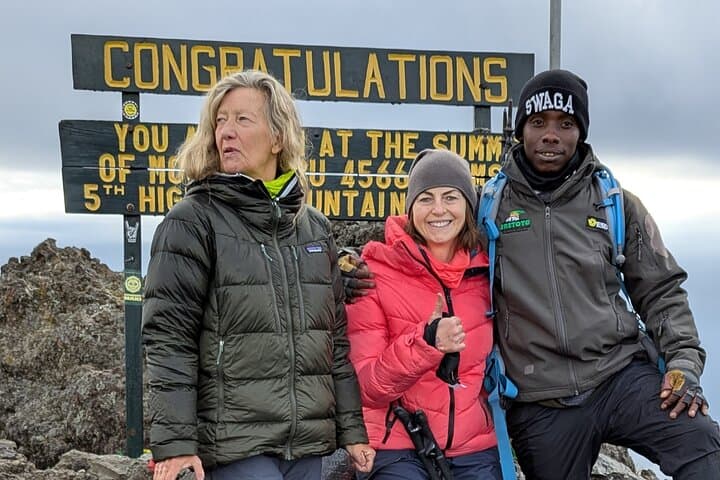
You should have strong cardiovascular fitness and experience with day hikes of 6–8 hours; the itinerary includes steep, sustained climbs and altitude gain to 4,565m.
No technical climbing gear is needed in normal conditions—this is a strenuous hike rather than a climb—but weather can make sections more difficult.
Dry months (June–October) offer firmer trails and clearer summit visibility; avoid heavy rains (March–May) if possible.
Most operators include entrance and government fees in the price; confirm with the provider and carry ID for registration.
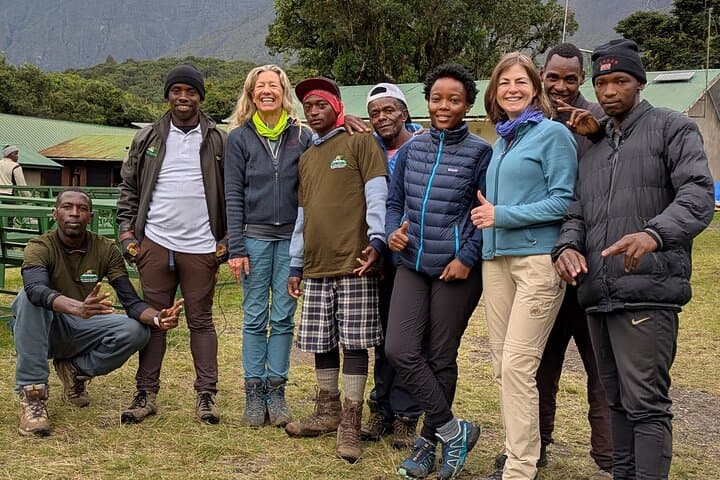
Yes—local guides, porters, and an armed park ranger are standard for safety and logistics; they should be arranged through your tour operator.
Acute mountain sickness can occur; the itinerary builds acclimatization time, but monitor symptoms, ascend slowly, hydrate, and descend if symptoms worsen.
Mount Meru has been a landmark for local Maasai and Meru communities and was mapped by early German explorers in the colonial era.
Arusha National Park balances tourism with habitat protection—sticking to trails and minimizing waste helps preserve fragile montane ecosystems.
Eretoto Adventures operates guided outdoor trips and adventures with an emphasis on safety, stewardship, and memorable experiences.
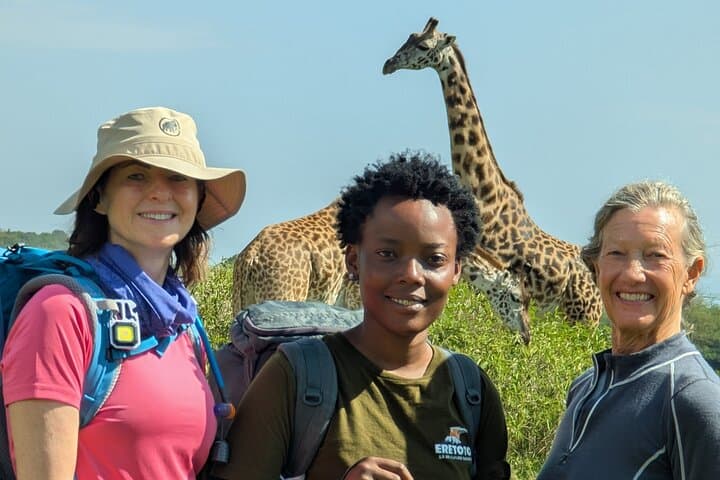
Dawn on day one feels like the trek itself has been waiting. You lift a damp tent flap to a cool, high-air hush and the profile of Mount Meru cuts the horizon — a hulking cone whose crags seem to test your resolve. From Momela Gate the trail moves through tall grass where giraffes graze casually, then ducks beneath a rainforest canopy that holds fog like a secret. By the time you reach Miriakamba Huts the air is thinner and quieter; the mountain has begun to claim your breath.
Dawn on day one feels like the trek itself has been waiting. You lift a damp tent flap to a cool, high-air hush and the profile of Mount Meru cuts the horizon — a hulking cone whose crags seem to test your resolve. From Momela Gate the trail moves through tall grass where giraffes graze casually, then ducks beneath a rainforest canopy that holds fog like a secret. By the time you reach Miriakamba Huts the air is thinner and quieter; the mountain has begun to claim your breath.
Meru is older than the rhythms of Arusha town below. A volcanic neighbor to Kilimanjaro, it’s a breached stratovolcano with a jagged crater and an ash cone that gives the summit its raw, lunar feel. The route you’ll take—Momela Gate to Miriakamba, then Saddle Hut and a midnight push to Socialist Peak—threads ecological zones: savanna, montane rainforest, heather moor, alpine desert. Each step is a change in texture and temperature; the forest seems to lean in, then the moor opens its wind-buffed arms.
Locally the mountain is woven into Maasai and Meru agricultural life; its slopes feed rivers and pastures, and park rangers, often armed, patrol both for safety and conservation. Guides here are part pathfinder, part naturalist: they’ll point out fig-arch tunnels, Maio Falls, and the Mgongo wa Tembo (elephant’s back) viewpoint where the crater comes into sudden view.
Practical edge: The summit day is long and steep—expect a 10–12 hour round-trip from Saddle Hut with sunrise at the top and biting alpine wind. Altitude is the real challenge; the itinerary spaces acclimatization into day two, but monitor headaches, nausea, or exhaustion and move deliberately. You’ll use headlamps for the midnight start, and crampons are not required in normal conditions, though weather can force heavier gear.
Accommodation is basic but warm at the huts; hot meals and porterage are usually included, but pack essentials in a daypack. Water treatment and layered clothing are non-negotiable; temperatures swing from humid jungles to near-freezing on the crater rim. Mobile service is intermittent—bring a paper map or offline GPS route.
Timing matters: the dry season (June–October) gives firmer trails and clearer summit views; short rains (November, March–May) make sections slippery and increase summit difficulty. Whether you go for wildlife on the descent or the sunrise over Kilimanjaro from Socialist Peak, this is a climb that asks for respect—and rewards steady pacing with one of northern Tanzania’s most immediate mountain experiences.