THE ADVENTURE COLLECTIVE® · Independent discovery and booking for outdoor travel

Four days across Australia’s Red Centre—sunrise at Uluru, a walk through Kata Tjuta, and the Kings Canyon rim—this escorted tour balances deep cultural context with managed comfort. Expect early starts, big skies, and challenging hikes rewarded by some of the country’s most unforgettable views.
Four days across Australia’s Red Centre—sunrise at Uluru, a walk through Kata Tjuta, and the Kings Canyon rim—this escorted tour balances deep cultural context with managed comfort. Expect early starts, big skies, and challenging hikes rewarded by some of the country’s most unforgettable views.
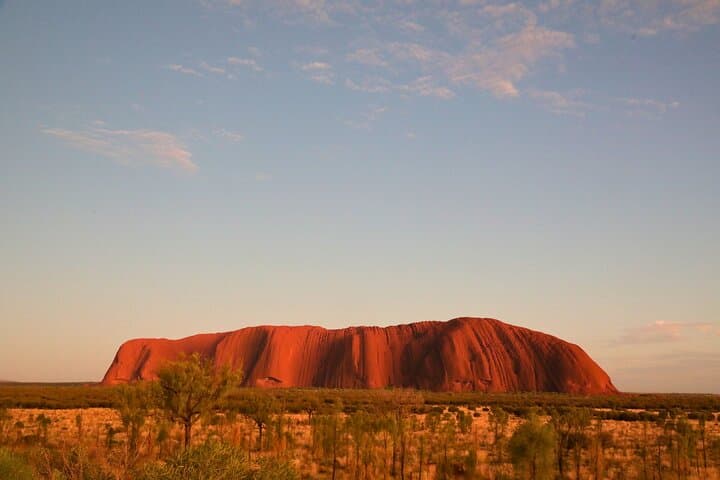
The bus leaves Alice Springs before dawn, tires whispering over red dust as the landscape unfolds into the outback’s hard, beautiful geometry. By mid-afternoon the silhouette of Uluru rises on the horizon—an enormous, weathered monolith that ignores the clock and watches the sun move across a wide, uncompromising sky. Over four days you trade city lights for starfields, roadside roadhouses for campfire conversations, and short walks for the kind of horizons that reshape how you measure distance.
Verified experiences and guided adventures in the surrounding area.
Operated by Emu Run Experience · Alice Springs, Northern Territory
The bus leaves Alice Springs before dawn, tires whispering over red dust as the landscape unfolds into the outback’s hard, beautiful geometry. By mid-afternoon the silhouette of Uluru rises on the horizon—an enormous, weathered monolith that ignores the clock and watches the sun move across a wide, uncompromising sky. Over four days you trade city lights for starfields, roadside roadhouses for campfire conversations, and short walks for the kind of horizons that reshape how you measure distance.
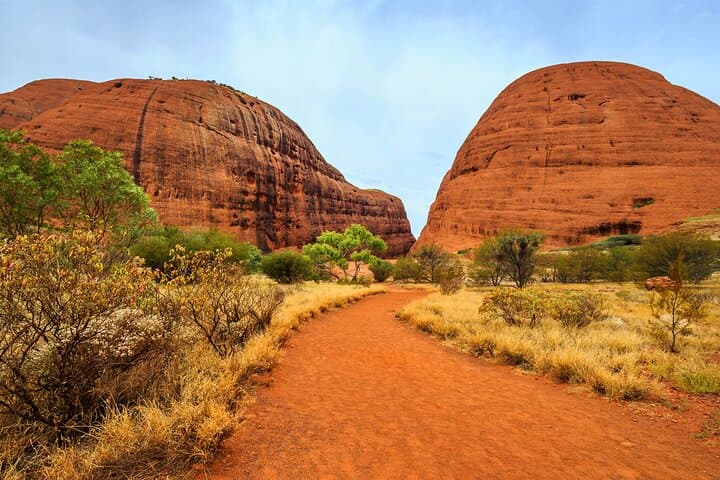
This loop travels one of Australia’s most iconic corridors: Alice Springs to Uluru (Ayers Rock), on to Kata Tjuta (the Olgas), and into the sandstone amphitheatre of Kings Canyon in Watarrka National Park. Geologically, these formations are ancient sea floors and sedimentary deposits folded and baked over hundreds of millions of years; Uluru’s iron-rich surface has oxidised to that unmistakable red while Kata Tjuta’s conglomerate domes read like a different chapter in the same story.
Culturally the trip is anchored by Anangu law and storytelling. Guides introduce the creation stories (Tjukurpa) tied to specific rock features and walks—these are living traditions and park etiquette requires respect and quiet at sacred sites. Practicalities are straightforward: Uluru-Kata Tjuta National Park entry is included, transfers are in an air‑conditioned coach, and nights are spent at Ayers Rock Resort and Kings Canyon Resort, giving you creature comforts after long days on the trail.
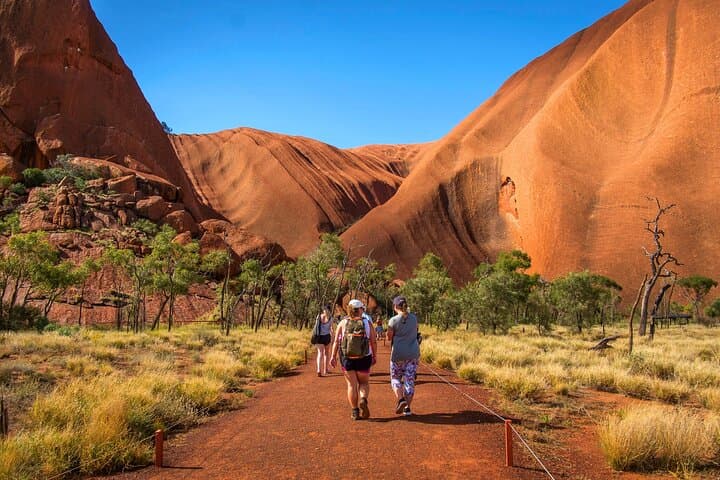
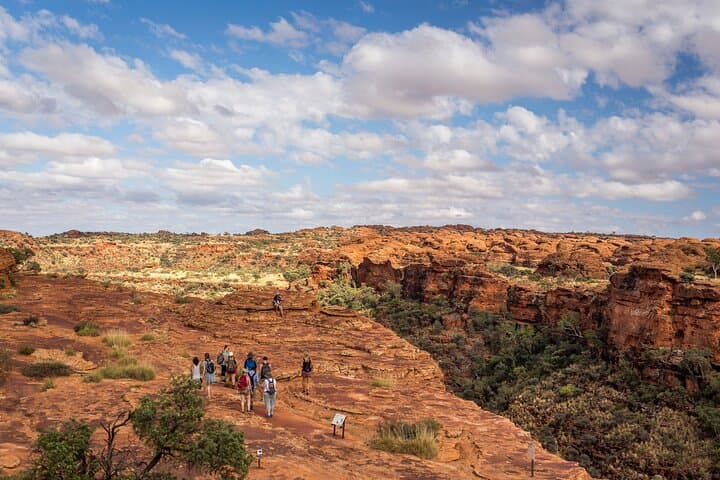
On the ground expect early mornings and late afternoons; sunrise at Uluru and the rim walk at Kings Canyon are the highlights. The Kings Canyon Rim Walk is ~6 km and usually takes 3–4 hours with a steep 300 m scramble at the start, rewarding you with the Lost City domes and the lush Garden of Eden. Kata Tjuta’s Walpa Gorge is gentler—roughly 2–3 km—while base walks around Uluru can be up to 10 km if you choose the full circuit.
For planning: carry at least 3–4 litres of water per person for longer walks, wear sturdy boots with good tread for sandstone and loose scree, and time hikes for morning or late afternoon to avoid the desert heat. Pack layers—temperatures swing dramatically—and a wide-brim hat, sunscreen and sunglasses are non-negotiable. If you want photographs, arrive early for soft light and stay for sunset to see the rock change color; a telephoto helps isolate textures on the domes.
This itinerary is both immersive and managed: small-group transport, guided walks, and included park fees mean you can focus on the land and its stories. But don’t underestimate the desert—respect the weather, be honest about fitness, and the Red Centre will return the favor with some of the clearest skies and most elemental landscapes Australia offers.
challenging.
4 days (multiple walking segments 2–4 hours each).
Good cardiovascular fitness and comfort with steep, sometimes exposed sections; ability to walk 6–10 km in a day.
You should be in good physical condition; core highlights include a 6 km Kings Canyon rim walk with steep sections—participants should be comfortable with 3–4 hour hikes and uneven terrain.
Yes—Uluru-Kata Tjuta National Park entry and Kings Canyon park fees are included in the tour price.
Some days include short guided walks; if you want the full 10.6 km base circuit, check with the operator in advance—options are often available depending on timing and group fitness.
Desert conditions: hot days and cool nights, with summer heat extremes and winter frost in the mornings—pack layers and sun protection.
Photography is allowed in many park areas, but some specific sites and cultural practices are restricted—follow your guide’s instructions out of respect.
This tour involves uneven terrain and stairs; it's not recommended for travelers with serious mobility limitations—contact the operator to discuss alternatives or assistance.
This country is traditional Anangu land; rock features around Uluru and Kata Tjuta are integral to Tjukurpa (creation stories) and guided interpretation links landscape features to those stories.
Uluru-Kata Tjuta and Watarrka National Parks manage visitor access to protect fragile desert ecosystems—stick to trails, carry out waste, and respect culturally sensitive areas.
Emu Run Experience operates guided outdoor trips and adventures with an emphasis on safety, stewardship, and memorable experiences.
The bus leaves Alice Springs before dawn, tires whispering over red dust as the landscape unfolds into the outback’s hard, beautiful geometry. By mid-afternoon the silhouette of Uluru rises on the horizon—an enormous, weathered monolith that ignores the clock and watches the sun move across a wide, uncompromising sky. Over four days you trade city lights for starfields, roadside roadhouses for campfire conversations, and short walks for the kind of horizons that reshape how you measure distance.
The bus leaves Alice Springs before dawn, tires whispering over red dust as the landscape unfolds into the outback’s hard, beautiful geometry. By mid-afternoon the silhouette of Uluru rises on the horizon—an enormous, weathered monolith that ignores the clock and watches the sun move across a wide, uncompromising sky. Over four days you trade city lights for starfields, roadside roadhouses for campfire conversations, and short walks for the kind of horizons that reshape how you measure distance.
This loop travels one of Australia’s most iconic corridors: Alice Springs to Uluru (Ayers Rock), on to Kata Tjuta (the Olgas), and into the sandstone amphitheatre of Kings Canyon in Watarrka National Park. Geologically, these formations are ancient sea floors and sedimentary deposits folded and baked over hundreds of millions of years; Uluru’s iron-rich surface has oxidised to that unmistakable red while Kata Tjuta’s conglomerate domes read like a different chapter in the same story.
Culturally the trip is anchored by Anangu law and storytelling. Guides introduce the creation stories (Tjukurpa) tied to specific rock features and walks—these are living traditions and park etiquette requires respect and quiet at sacred sites. Practicalities are straightforward: Uluru-Kata Tjuta National Park entry is included, transfers are in an air‑conditioned coach, and nights are spent at Ayers Rock Resort and Kings Canyon Resort, giving you creature comforts after long days on the trail.
On the ground expect early mornings and late afternoons; sunrise at Uluru and the rim walk at Kings Canyon are the highlights. The Kings Canyon Rim Walk is ~6 km and usually takes 3–4 hours with a steep 300 m scramble at the start, rewarding you with the Lost City domes and the lush Garden of Eden. Kata Tjuta’s Walpa Gorge is gentler—roughly 2–3 km—while base walks around Uluru can be up to 10 km if you choose the full circuit.
For planning: carry at least 3–4 litres of water per person for longer walks, wear sturdy boots with good tread for sandstone and loose scree, and time hikes for morning or late afternoon to avoid the desert heat. Pack layers—temperatures swing dramatically—and a wide-brim hat, sunscreen and sunglasses are non-negotiable. If you want photographs, arrive early for soft light and stay for sunset to see the rock change color; a telephoto helps isolate textures on the domes.
This itinerary is both immersive and managed: small-group transport, guided walks, and included park fees mean you can focus on the land and its stories. But don’t underestimate the desert—respect the weather, be honest about fitness, and the Red Centre will return the favor with some of the clearest skies and most elemental landscapes Australia offers.