THE ADVENTURE COLLECTIVE® · Independent discovery and booking for outdoor travel

Four days on Mount Meru condense high-altitude scenery, wildlife and a serious summit push into a short, intense climb. This guide explains the route, wildlife encounters, and practical tips to summit Socialist Peak at 4,566 meters.
Four days on Mount Meru condense high-altitude scenery, wildlife and a serious summit push into a short, intense climb. This guide explains the route, wildlife encounters, and practical tips to summit Socialist Peak at 4,566 meters.
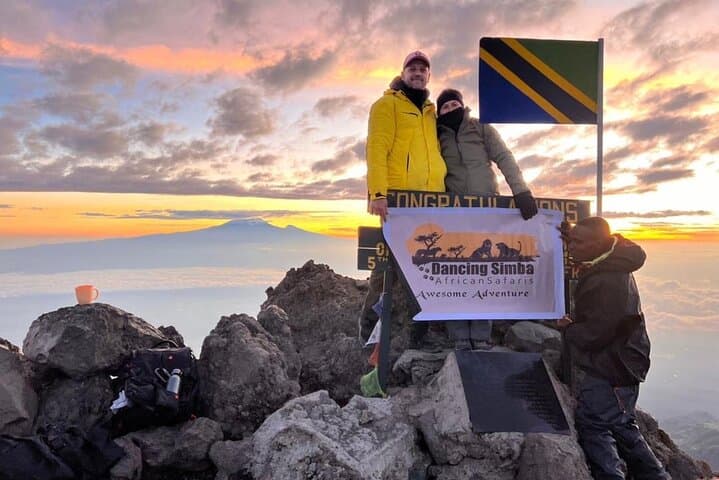
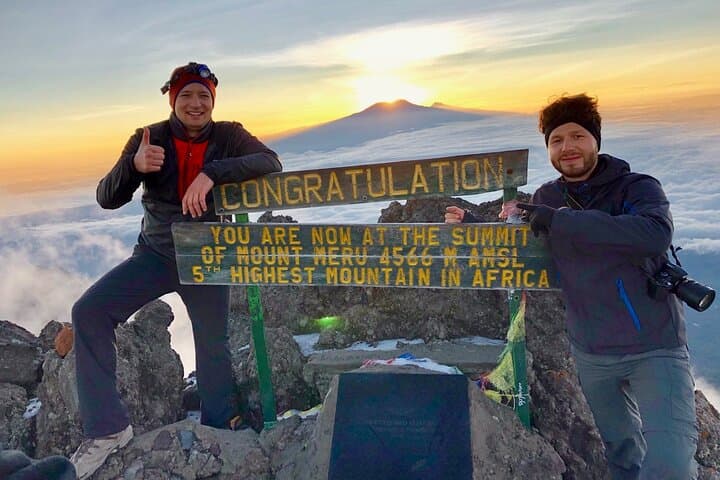
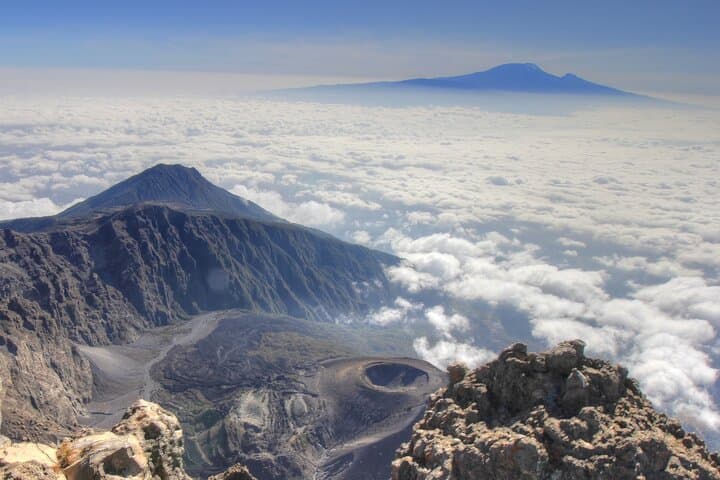
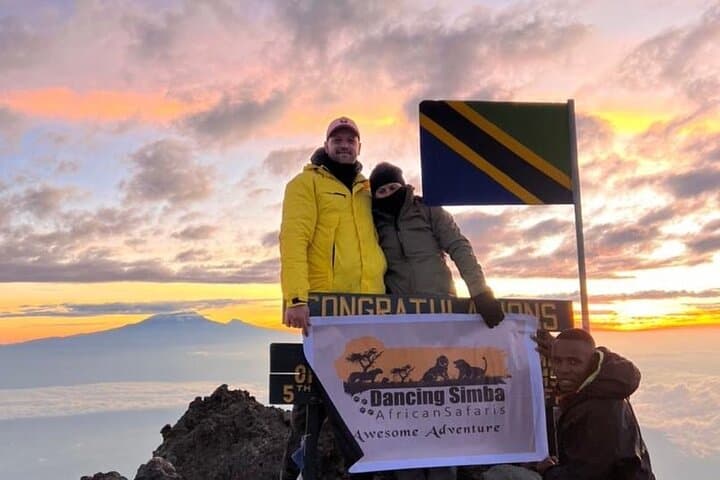
The headlamp beam cuts a narrow tunnel through the dark as your group files out of Saddle Hut at 01:30. Cold air bites the cheeks; the mountain is awake and watching. By the time the sky lightens you are trading steep switchbacks and volcanic scree toward Socialist Peak at 4,566 meters, the crater rim yawning to one side and Kilimanjaro rising like a distant promise to the east. This is Mount Meru: a compact, sharp-edged volcano that delivers big-mountain views without the logistical theater of Kilimanjaro.
Verified experiences and guided adventures in the surrounding area.
Operated by Dancing Simba Safaris · Arusha, Arusha Region
The headlamp beam cuts a narrow tunnel through the dark as your group files out of Saddle Hut at 01:30. Cold air bites the cheeks; the mountain is awake and watching. By the time the sky lightens you are trading steep switchbacks and volcanic scree toward Socialist Peak at 4,566 meters, the crater rim yawning to one side and Kilimanjaro rising like a distant promise to the east. This is Mount Meru: a compact, sharp-edged volcano that delivers big-mountain views without the logistical theater of Kilimanjaro.
Meru sits inside Arusha National Park, roughly 20 kilometers from town. Geologically it is a stratovolcano whose crater and inner cliffs were shaped by eruptions long before the modern park wards charted the trails. For decades climbers have used Meru as an acclimatization climb for Kilimanjaro; its combination of forested lower slopes, alpine desert and exposed ridgelines gives a compressed taste of East African mountain ecology.
Culturally, Meru passes through Maasai grazing lands at lower elevations and sits in a corridor where migratory wildlife moves between plains and forest. The Arusha National Park rangers escort parties with armed protection—both for park safety and to manage encounters with buffalo or elephant. Porters, a cook and an experienced mountain guide are standard; the itinerary also includes park fees, rescue oxygen and group equipment.
The four-day route balances time for acclimatization with a committed summit push. Day 1 walks from Momella Gate (approx. 1,500 m) to Miriakamba Hut at 2,500 m—5–7 hours of walking that feels more like a walking safari, with chances to spot giraffe, zebra and colobus monkeys. Day 2 climbs to Saddle Hut (3,500 m) through forest to alpine desert and offers an optional side trip to Little Meru (3,820 m) for views. Day 3 is the summit day: a 10–12 hour round trip from Saddle Hut via Rhino Point and Cobra Point to Socialist Peak at dawn, then back down. Day 4 is a gentle descent to the gate and a return to Arusha.
Practical guidance: prioritize slow ascent and hydration—day 3 is the test, expect cold, wind and steep scree. Bring layered insulation for the pre-dawn hours, and warm gloves and headwear. Gaiters and sturdy ankle-supporting boots are useful on loose volcanic rock. Allow time in Arusha to confirm park paperwork and equipment, and budget for tips to guides and porters. If you have any cardiovascular concerns, consult a physician—this is high-altitude trekking with sustained effort.
Mount Meru rewards with sunrise from the summit, intimate wildlife encounters, and a compact classic climb that teaches you mountain rhythm: steady steps, measured breathing and the quiet satisfaction of gaining altitude with purpose.
challenging.
4 days.
Good aerobic fitness; able to hike 5–12 hours in a day with sustained elevation gain and carry a daypack
Yes; climbs are inside Arusha National Park and parties are escorted by TANAPA rangers. Permits, park fees and a ranger escort are included when booked through operators.
Day 3 is the longest and hardest—expect a 10–12 hour round trip with steep, loose sections; good fitness and pacing are critical.
Fit beginners with trekking experience can do it if they follow the four-day itinerary and listen to guides; it is not technical but is high altitude.
Lower slope walking-safari habitat can produce sightings of giraffe, zebra, African buffalo and black-and-white colobus monkeys.
Cell service is sporadic; operators include rescue oxygen in fees and rangers coordinate rescues—confirm emergency procedures before climbing.
The clearest conditions are during the drier months, June–October and late January–February, though the route is climbable year-round with variable weather.
Mount Meru is a dormant stratovolcano inside Arusha National Park and has long been used for acclimatization and training by climbers heading to Kilimanjaro.
Climbers must follow TANAPA rules; staying on trails, minimizing campfire use and respecting wildlife helps protect fragile alpine and forest zones.
Dancing Simba Safaris operates guided outdoor trips and adventures with an emphasis on safety, stewardship, and memorable experiences.
The headlamp beam cuts a narrow tunnel through the dark as your group files out of Saddle Hut at 01:30. Cold air bites the cheeks; the mountain is awake and watching. By the time the sky lightens you are trading steep switchbacks and volcanic scree toward Socialist Peak at 4,566 meters, the crater rim yawning to one side and Kilimanjaro rising like a distant promise to the east. This is Mount Meru: a compact, sharp-edged volcano that delivers big-mountain views without the logistical theater of Kilimanjaro.
The headlamp beam cuts a narrow tunnel through the dark as your group files out of Saddle Hut at 01:30. Cold air bites the cheeks; the mountain is awake and watching. By the time the sky lightens you are trading steep switchbacks and volcanic scree toward Socialist Peak at 4,566 meters, the crater rim yawning to one side and Kilimanjaro rising like a distant promise to the east. This is Mount Meru: a compact, sharp-edged volcano that delivers big-mountain views without the logistical theater of Kilimanjaro.
Meru sits inside Arusha National Park, roughly 20 kilometers from town. Geologically it is a stratovolcano whose crater and inner cliffs were shaped by eruptions long before the modern park wards charted the trails. For decades climbers have used Meru as an acclimatization climb for Kilimanjaro; its combination of forested lower slopes, alpine desert and exposed ridgelines gives a compressed taste of East African mountain ecology.
Culturally, Meru passes through Maasai grazing lands at lower elevations and sits in a corridor where migratory wildlife moves between plains and forest. The Arusha National Park rangers escort parties with armed protection—both for park safety and to manage encounters with buffalo or elephant. Porters, a cook and an experienced mountain guide are standard; the itinerary also includes park fees, rescue oxygen and group equipment.
The four-day route balances time for acclimatization with a committed summit push. Day 1 walks from Momella Gate (approx. 1,500 m) to Miriakamba Hut at 2,500 m—5–7 hours of walking that feels more like a walking safari, with chances to spot giraffe, zebra and colobus monkeys. Day 2 climbs to Saddle Hut (3,500 m) through forest to alpine desert and offers an optional side trip to Little Meru (3,820 m) for views. Day 3 is the summit day: a 10–12 hour round trip from Saddle Hut via Rhino Point and Cobra Point to Socialist Peak at dawn, then back down. Day 4 is a gentle descent to the gate and a return to Arusha.
Practical guidance: prioritize slow ascent and hydration—day 3 is the test, expect cold, wind and steep scree. Bring layered insulation for the pre-dawn hours, and warm gloves and headwear. Gaiters and sturdy ankle-supporting boots are useful on loose volcanic rock. Allow time in Arusha to confirm park paperwork and equipment, and budget for tips to guides and porters. If you have any cardiovascular concerns, consult a physician—this is high-altitude trekking with sustained effort.
Mount Meru rewards with sunrise from the summit, intimate wildlife encounters, and a compact classic climb that teaches you mountain rhythm: steady steps, measured breathing and the quiet satisfaction of gaining altitude with purpose.