THE ADVENTURE COLLECTIVE® · Independent discovery and booking for outdoor travel

A four-day, private trek that climbs from Arusha through wildlife-rich Arusha National Park to Mount Meru’s 4,566 m summit. Expect walking-safari sections, steep ridge scrambling at altitude, and a midnight summit push for sunrise views of Kilimanjaro.
A four-day, private trek that climbs from Arusha through wildlife-rich Arusha National Park to Mount Meru’s 4,566 m summit. Expect walking-safari sections, steep ridge scrambling at altitude, and a midnight summit push for sunrise views of Kilimanjaro.
You step out of the vehicle at Momella Gate while the air still tastes of coffee and eucalyptus; ahead, Mount Meru rises in broken layers — forested lower slopes, a sheer crater rim and the ash cone like a second summit within its belly. The trail begins as a walking safari: giraffes lift their heads across grasslands, buffalo wallow in muddy pools and the path follows a river that dares you to slow down long enough to look for the next herd.
Verified experiences and guided adventures in the surrounding area.
Operated by Serengeti Camping Safari · Arusha, Arusha Region
You step out of the vehicle at Momella Gate while the air still tastes of coffee and eucalyptus; ahead, Mount Meru rises in broken layers — forested lower slopes, a sheer crater rim and the ash cone like a second summit within its belly. The trail begins as a walking safari: giraffes lift their heads across grasslands, buffalo wallow in muddy pools and the path follows a river that dares you to slow down long enough to look for the next herd.
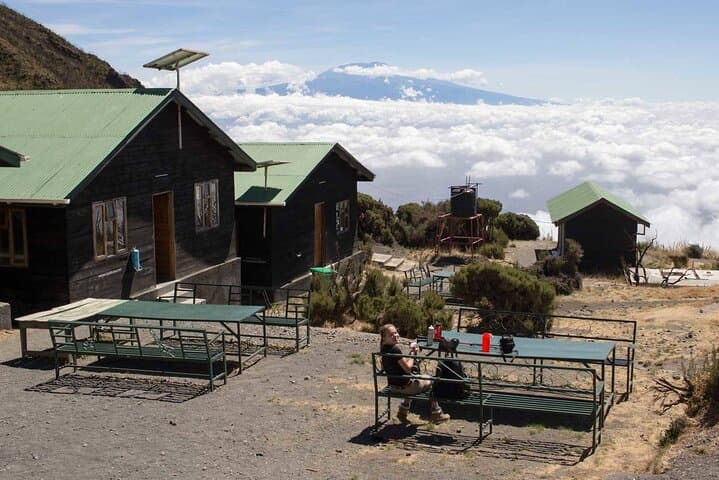
By the end of day one you’re at Miriakamba Hut (2,500 m), tents pitched on a shelf of moorland under a sky that grows cold and clear. The route to Saddle Hut climbs through moss-clad forest and heath, a legitimate acclimatization cathedral where the ridgeline exposes the crater and the inner cliffs — geology that reads like a recent chapter of fire and collapse. Many climbers treat Meru as a rehearsal for Kilimanjaro: less crowded, quicker to attempt, and with sharper volcanic features. Local guides will point out the Ash Cone — Meru’s younger vent — and tell stories of the mountain’s place in Chagga and Maasai cultural landscapes, where high places are both resource and reverence.
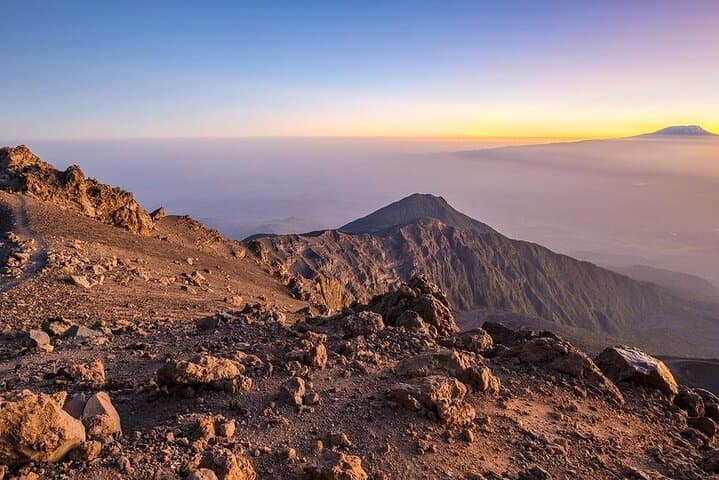
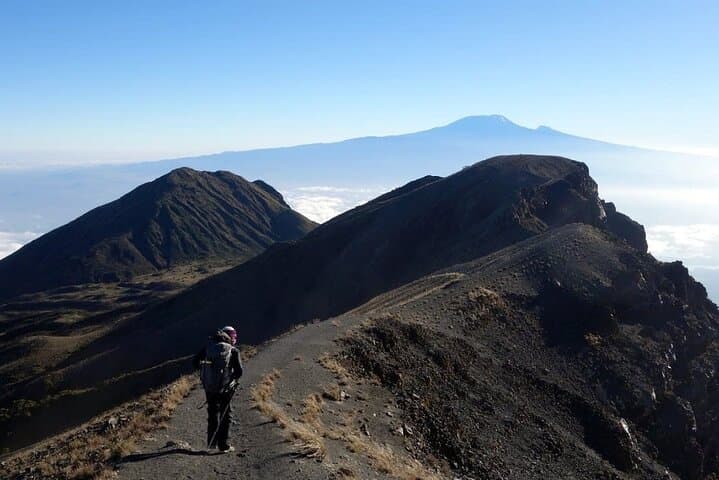
Summit night begins around 01:30. The trail from Rhino Point pushes hard to Cobra Point, then becomes a rocky scramble along a knife-edge that opens to sunrise views of Kilimanjaro across rolling plains. The descent back to Miriakamba is long but merciful: the legs remember slope more than stillness. Staff — cook, guide and porters — manage camp and food; an armed ranger from Arusha National Park accompanies the group because wildlife here does not read map lines.
Practical side: the itinerary is four days with 5–12 hour hiking days, maximum altitude ~4,566 m. Tents, meals and park fees are included in typical packages; you’ll need a sleeping bag rated to at least -5°C, sturdy boots, and a headlamp for the summit push. Train your legs with long uphill days and practice hiking on scree and rocky ridgelines. Altitude is the real variable: slow and steady, hydrate, and communicate any symptoms to guides immediately.
This climb balances technical but non-technical scrambling with real-wildlife moments and local hospitality — a compact highland mountaineering experience that leaves you with crater-shelf sunsets and a sunrise summit that feels earned rather than photographed.
challenging.
4 days.
Good aerobic fitness with experience in long uphill days; able to hike 6–10 hours with pack at altitude.
Physically challenging due to altitude and long summit day (10–12 hours); the trail requires fitness and comfortable hiking experience but no technical climbing skills.
Yes—standard packages include meals (breakfast, lunch, dinner), tents, sleeping platforms, and services of a cook, guide and porters.
Yes—Arusha National Park manages access and requires registration; an armed ranger accompanies the group for safety and wildlife encounters.
Altitude risk increases above 3,000 m; symptoms include headache, nausea and fatigue—pace your ascent, hydrate, and report symptoms early to your guide.
No technical experience is required, but prior multi-hour uphill hiking will make acclimatization and the summit push far more manageable.
Dry months (June–October and January–February) offer more stable weather and clearer summit views; short rains in November and long rains in March–May make trails slippery.
Mount Meru is a stratovolcano whose ash cone and crater reflect a complex volcanic history; it’s been a landmark for local Maasai and Chagga communities for generations.
Arusha National Park manages visitor impact with ranger escorts and permits; stick to trails, use provided toilet protocols and avoid feeding wildlife to reduce human-wildlife conflict.
Serengeti Camping Safari operates guided outdoor trips and adventures with an emphasis on safety, stewardship, and memorable experiences.
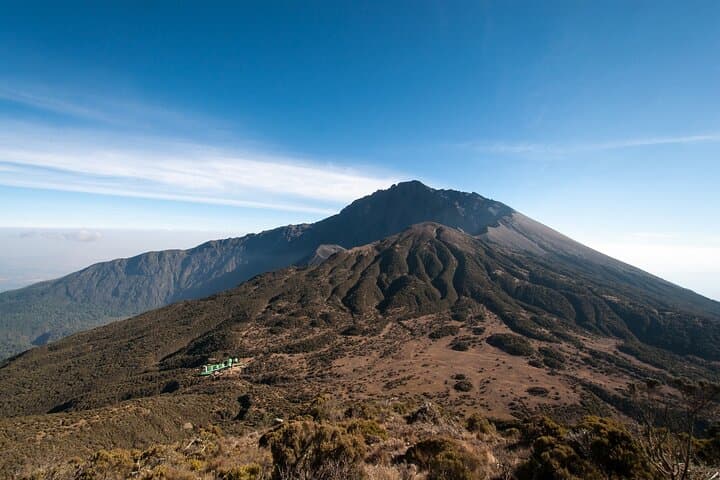
You step out of the vehicle at Momella Gate while the air still tastes of coffee and eucalyptus; ahead, Mount Meru rises in broken layers — forested lower slopes, a sheer crater rim and the ash cone like a second summit within its belly. The trail begins as a walking safari: giraffes lift their heads across grasslands, buffalo wallow in muddy pools and the path follows a river that dares you to slow down long enough to look for the next herd.
You step out of the vehicle at Momella Gate while the air still tastes of coffee and eucalyptus; ahead, Mount Meru rises in broken layers — forested lower slopes, a sheer crater rim and the ash cone like a second summit within its belly. The trail begins as a walking safari: giraffes lift their heads across grasslands, buffalo wallow in muddy pools and the path follows a river that dares you to slow down long enough to look for the next herd.
By the end of day one you’re at Miriakamba Hut (2,500 m), tents pitched on a shelf of moorland under a sky that grows cold and clear. The route to Saddle Hut climbs through moss-clad forest and heath, a legitimate acclimatization cathedral where the ridgeline exposes the crater and the inner cliffs — geology that reads like a recent chapter of fire and collapse. Many climbers treat Meru as a rehearsal for Kilimanjaro: less crowded, quicker to attempt, and with sharper volcanic features. Local guides will point out the Ash Cone — Meru’s younger vent — and tell stories of the mountain’s place in Chagga and Maasai cultural landscapes, where high places are both resource and reverence.
Summit night begins around 01:30. The trail from Rhino Point pushes hard to Cobra Point, then becomes a rocky scramble along a knife-edge that opens to sunrise views of Kilimanjaro across rolling plains. The descent back to Miriakamba is long but merciful: the legs remember slope more than stillness. Staff — cook, guide and porters — manage camp and food; an armed ranger from Arusha National Park accompanies the group because wildlife here does not read map lines.
Practical side: the itinerary is four days with 5–12 hour hiking days, maximum altitude ~4,566 m. Tents, meals and park fees are included in typical packages; you’ll need a sleeping bag rated to at least -5°C, sturdy boots, and a headlamp for the summit push. Train your legs with long uphill days and practice hiking on scree and rocky ridgelines. Altitude is the real variable: slow and steady, hydrate, and communicate any symptoms to guides immediately.
This climb balances technical but non-technical scrambling with real-wildlife moments and local hospitality — a compact highland mountaineering experience that leaves you with crater-shelf sunsets and a sunrise summit that feels earned rather than photographed.