THE ADVENTURE COLLECTIVE® · Independent discovery and booking for outdoor travel

A compact, four-day trek that climbs Mount Meru’s volcanic ridges to Socialist Peak for a pre-dawn summit and possible views of Kilimanjaro. Expect varied habitats, close wildlife encounters and a demanding summit day with basic hut accommodations.
A compact, four-day trek that climbs Mount Meru’s volcanic ridges to Socialist Peak for a pre-dawn summit and possible views of Kilimanjaro. Expect varied habitats, close wildlife encounters and a demanding summit day with basic hut accommodations.
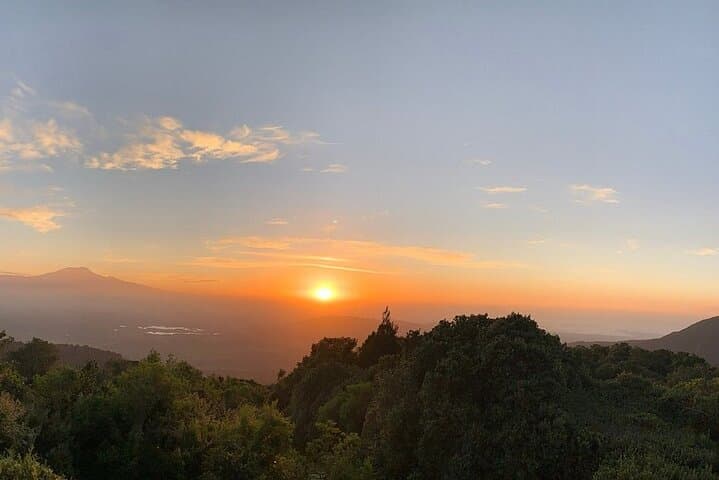
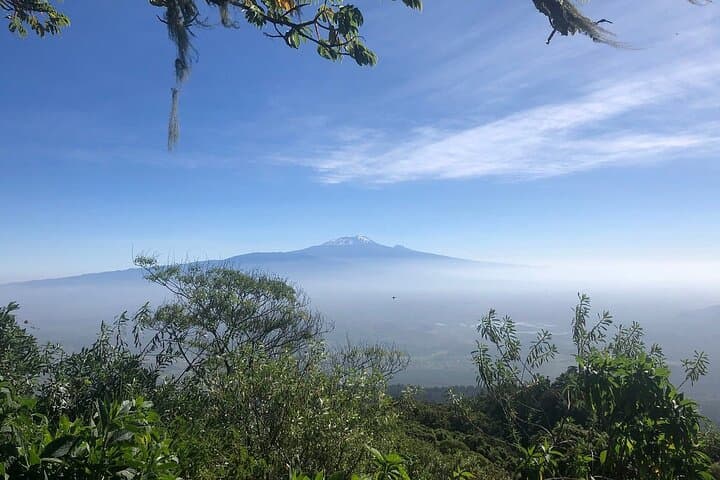
You set off from Arusha before dawn, the city lights slipping behind you as the Land Cruiser climbs toward Momella Gate. The road opens on to green—forest stretching up into clouds that cling to Meru’s flanks. Day one is a steady, absorbing climb through montane forest; birds and colobus monkeys flit through moss-draped branches while giraffe and buffalo appear like slow-moving questions on the savanna below. By evening the Miriakamba Hut feels unexpectedly remote: wood smoke, shared tents or simple hut bunks, and the sense that you’re standing at the edge of a crater carved into stone and wind.
Verified experiences and guided adventures in the surrounding area.
Operated by Afromasai Eastern Safaris · Arusha, Arusha
You set off from Arusha before dawn, the city lights slipping behind you as the Land Cruiser climbs toward Momella Gate. The road opens on to green—forest stretching up into clouds that cling to Meru’s flanks. Day one is a steady, absorbing climb through montane forest; birds and colobus monkeys flit through moss-draped branches while giraffe and buffalo appear like slow-moving questions on the savanna below. By evening the Miriakamba Hut feels unexpectedly remote: wood smoke, shared tents or simple hut bunks, and the sense that you’re standing at the edge of a crater carved into stone and wind.
Mount Meru is an active stratovolcano rising to 4,566 m (Socialist Peak). Geologically younger than Kilimanjaro, Meru’s profile reads like a layered narrative—lava flows, ash cones and the inner crater that defines its dramatic rim. The route climbs through distinct vegetation bands: dry lowland forest, dense mountain rainforest, moorland and finally alpine desert. The mountain sits inside Arusha National Park, an ecosystem fractional to the expanding agricultural plains around Arusha town and long used by local Maasai and Meru communities for grazing and rituals.
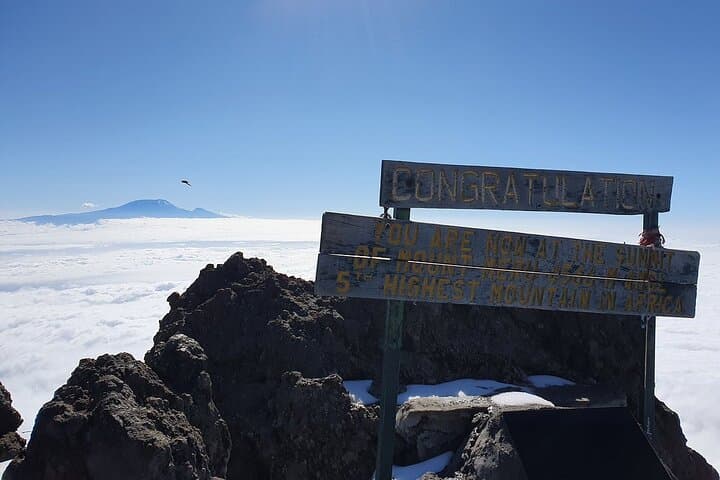
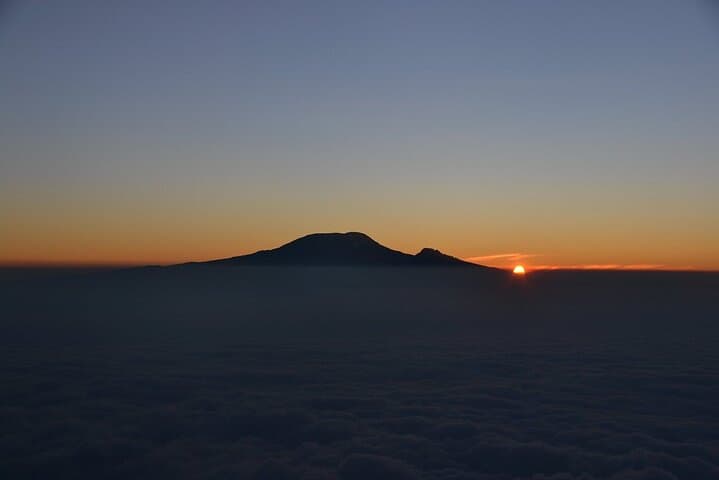
Trekking Meru is as much about wildlife and culture as altitude. Armed park rangers and porters are required; the ranger is a moving guarantee—both for safety from large game and for compliance with park rules that fund conservation. The trail is less busy than Kili, which means sunrise on the summit often comes with the rare, uncluttered sightline to Kilimanjaro floating above a sea of clouds.
Practical route: four days, roughly 10–13 km per day on approach and descent, with the summit push done as a pre-dawn start (around 01:30). Expect the longest day on Day 3: about 5 km up to the summit ridge and a 13 km descent back to Miriakamba Hut—10–12 hours total. Altitude gain is significant: 1,500 m to 4,566 m at the summit. Huts are basic; meals are provided and the operator includes park fees, food and ranger accompaniment.
Preparation: train with steep day hikes, practice walking with a loaded daypack, and plan for a cold summit. Hydration and sleep matter—acclimatize in Arusha if possible. Bring a headlamp for the summit start, warm layers for the ridge, and sturdy boots for loose scree on the descent. Respect wildlife: avoid sudden movements and never feed animals. Finally, factor in flexible scheduling—weather and ranger assessments can shift summit timing.
Meru rewards hikers who want a technical, high-altitude day without the crowds of Kilimanjaro: crater rims, the Ash Cone, and a real chance to watch Kilimanjaro appear over a cloud sea. Walk deliberately, listen to the forest, and let the mountain set the pace.
challenging.
4 days (approx. 10–12 hours summit day).
Good aerobic fitness with experience on long uphill days and carrying a daypack; ability to handle altitude gain is required.
Yes—treks take place inside Arusha National Park; park fees and ranger accompaniment are managed by the operator and included in many packages.
The summit day is the toughest: a 1:30 a.m. start, steep ascent to 4,566 m and a long descent—plan on 10–12 hours and steady pacing.
Huts are basic: simple bunks, shared facilities and BYO sleeping bag; meals are typically provided by the trekking operator.
Often—weather permitting you can see Kilimanjaro rising above clouds; visibility depends on clear skies at sunrise.
Rangers and porters manage wildlife encounters; maintain distance, follow ranger instructions and avoid hiking alone off-trail.
The dry season (June–October) offers the most reliable weather and clear summit views; avoid the long rains (March–May) for slipperier trails.
Mount Meru is an active stratovolcano within Arusha National Park; its trails and huts grew with early 20th-century conservation and park development tied to Tanzania’s national parks system.
Park fees contribute to Arusha National Park stewardship and ranger programs—stick to trails, pack out trash, and respect wildlife to minimize impact.
Afromasai Eastern Safaris operates guided outdoor trips and adventures with an emphasis on safety, stewardship, and memorable experiences.
You set off from Arusha before dawn, the city lights slipping behind you as the Land Cruiser climbs toward Momella Gate. The road opens on to green—forest stretching up into clouds that cling to Meru’s flanks. Day one is a steady, absorbing climb through montane forest; birds and colobus monkeys flit through moss-draped branches while giraffe and buffalo appear like slow-moving questions on the savanna below. By evening the Miriakamba Hut feels unexpectedly remote: wood smoke, shared tents or simple hut bunks, and the sense that you’re standing at the edge of a crater carved into stone and wind.
You set off from Arusha before dawn, the city lights slipping behind you as the Land Cruiser climbs toward Momella Gate. The road opens on to green—forest stretching up into clouds that cling to Meru’s flanks. Day one is a steady, absorbing climb through montane forest; birds and colobus monkeys flit through moss-draped branches while giraffe and buffalo appear like slow-moving questions on the savanna below. By evening the Miriakamba Hut feels unexpectedly remote: wood smoke, shared tents or simple hut bunks, and the sense that you’re standing at the edge of a crater carved into stone and wind.
Mount Meru is an active stratovolcano rising to 4,566 m (Socialist Peak). Geologically younger than Kilimanjaro, Meru’s profile reads like a layered narrative—lava flows, ash cones and the inner crater that defines its dramatic rim. The route climbs through distinct vegetation bands: dry lowland forest, dense mountain rainforest, moorland and finally alpine desert. The mountain sits inside Arusha National Park, an ecosystem fractional to the expanding agricultural plains around Arusha town and long used by local Maasai and Meru communities for grazing and rituals.
Trekking Meru is as much about wildlife and culture as altitude. Armed park rangers and porters are required; the ranger is a moving guarantee—both for safety from large game and for compliance with park rules that fund conservation. The trail is less busy than Kili, which means sunrise on the summit often comes with the rare, uncluttered sightline to Kilimanjaro floating above a sea of clouds.
Practical route: four days, roughly 10–13 km per day on approach and descent, with the summit push done as a pre-dawn start (around 01:30). Expect the longest day on Day 3: about 5 km up to the summit ridge and a 13 km descent back to Miriakamba Hut—10–12 hours total. Altitude gain is significant: 1,500 m to 4,566 m at the summit. Huts are basic; meals are provided and the operator includes park fees, food and ranger accompaniment.
Preparation: train with steep day hikes, practice walking with a loaded daypack, and plan for a cold summit. Hydration and sleep matter—acclimatize in Arusha if possible. Bring a headlamp for the summit start, warm layers for the ridge, and sturdy boots for loose scree on the descent. Respect wildlife: avoid sudden movements and never feed animals. Finally, factor in flexible scheduling—weather and ranger assessments can shift summit timing.
Meru rewards hikers who want a technical, high-altitude day without the crowds of Kilimanjaro: crater rims, the Ash Cone, and a real chance to watch Kilimanjaro appear over a cloud sea. Walk deliberately, listen to the forest, and let the mountain set the pace.