THE ADVENTURE COLLECTIVE® · Independent discovery and booking for outdoor travel

A four-day trek that moves from Momella Gate through rainforest and moorland to Socialist Peak (4,566 m). Expect wildlife sightings, changing ecosystems, and a pre-dawn summit push with panoramic views of Kilimanjaro.
A four-day trek that moves from Momella Gate through rainforest and moorland to Socialist Peak (4,566 m). Expect wildlife sightings, changing ecosystems, and a pre-dawn summit push with panoramic views of Kilimanjaro.
You wake before midnight in a mountain hut to the soft clink of headlamps and the hiss of tea kettles. Outside, Mount Meru’s ridgeline is a black tooth against a sky thick with stars. The first steps are quiet—breathing, sticky with anticipation—as the party files out into a thin, cold light and follows the crater rim toward Socialist Peak. By the time the sun clears the horizon you’re above the clouds, watching Kilimanjaro’s white dome float on a sea of blue; the crater of Meru yawns below, a horseshoe carved by an eruption some 250,000 years ago.
Verified experiences and guided adventures in the surrounding area.
Operated by Maua Adventures · Moshi, Kilimanjaro Region
You wake before midnight in a mountain hut to the soft clink of headlamps and the hiss of tea kettles. Outside, Mount Meru’s ridgeline is a black tooth against a sky thick with stars. The first steps are quiet—breathing, sticky with anticipation—as the party files out into a thin, cold light and follows the crater rim toward Socialist Peak. By the time the sun clears the horizon you’re above the clouds, watching Kilimanjaro’s white dome float on a sea of blue; the crater of Meru yawns below, a horseshoe carved by an eruption some 250,000 years ago.
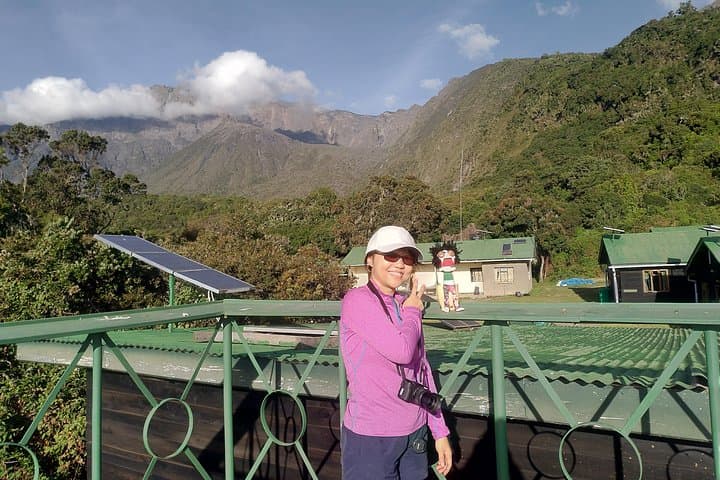
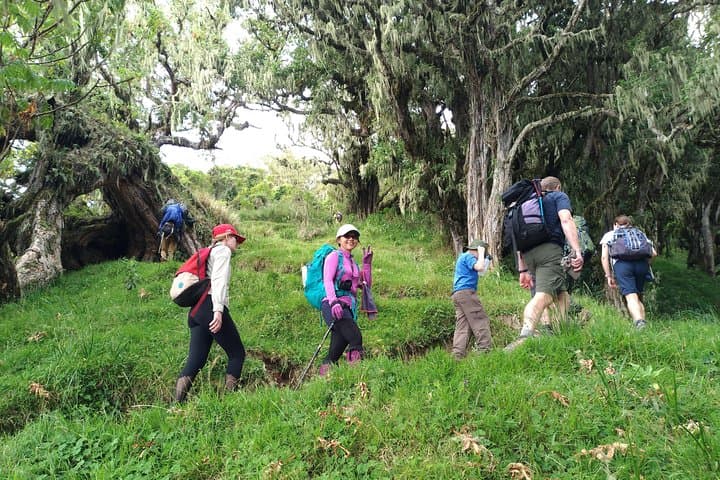
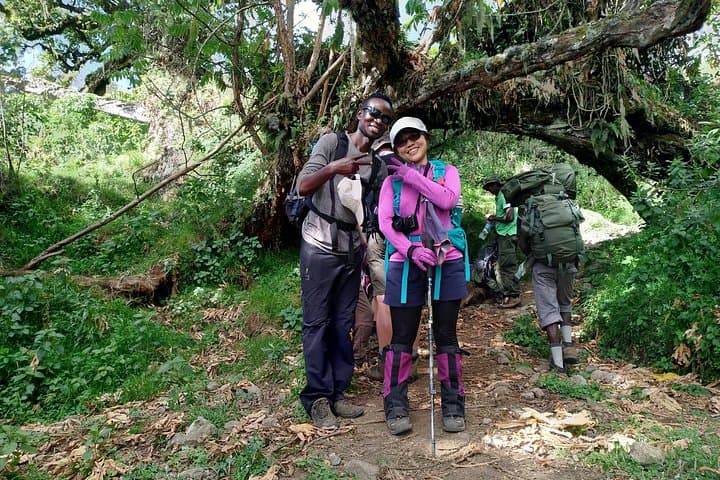
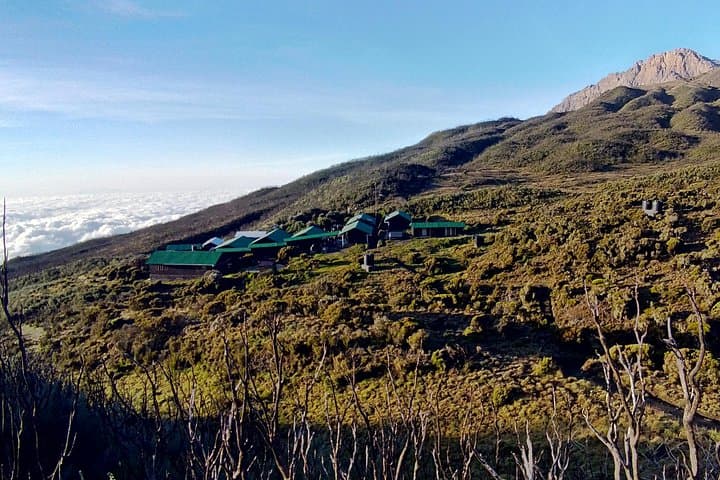
This four-day route climbs from Momella Gate (≈1,500 m) to Miriakamba Hut (2,500 m), on to Saddle Hut (3,550 m), and up to Socialist Peak (commonly listed at 4,566 m) before returning. The trail threads a rapid sequence of ecosystems: acacia and grasslands that open onto fig-draped rainforest, then heather and moorland, and finally an alpine desert of volcanic ash and jagged rock. Geology is at the core of the mountain’s character—a collapsed eastern flank created the crater you skirt on the summit push—and that landscape shapes the flora, fauna, and the feel of every day’s walk.
Wildlife is a running subplot. In the lower sections, giraffes and buffalo graze in the clearing; black-and-white colobus monkeys and troops of baboons move noisily through the canopy. Rangers—armed and experienced—accompany every trek, part of the park’s approach to both safety and conservation.
Expect each day to be purposeful and practical. Distances aren’t extreme, but altitude gain is: you climb roughly 3,000 vertical meters over four days. Day two’s ascent to Saddle Hut covers sustained uphill sections with wooden steps and loose rock; day three’s summit push starts after a midnight wake-up and can take 4–5 hours round-trip from Saddle Hut on a technical ridge where careful footing matters. Guide teams include cooks and porters, and huts supply basic shelter and meals—park fees, camping fees, and rescue fees are included in standard packages.
Plan your timeline around acclimatization and weather. The summit is exposed and cold even when lower slopes are warm. Hydration, steady pacing, and layers are the most reliable defenses against altitude and temperature swings. Bring a headlamp for the summit climb and expect the return to be long but joyful—the descent through the fig arches and grasslands feels like a slow unspooling of the mountain’s many moods.
Whether you’re after wildlife, volcanic geology, or a compact acclimatization climb before Kilimanjaro, Mount Meru is an efficient, rewarding four-day commitment. It asks for a moderate level of fitness, respect for altitude, and curiosity for the landscapes that formed this striking Tanzanian peak.
challenging.
4 days (approx. 8–10 hours active per longest days).
Good aerobic fitness and experience on steep trails; comfortable with full-day hikes and some scrambling.
You should have regular hiking experience and be comfortable with sustained uphill walking; aim for aerobic conditioning and at least one multi-hour hike before arrival.
No technical gear is required—trail sections may require hands for balance but ropes or harnesses aren’t needed.
Yes, park policy requires an armed ranger for safety and wildlife management; guides coordinate ranger presence.
The itinerary builds gradual altitude gain across four days; if you arrive from sea level consider extra days in Moshi or Arusha to reduce altitude risk.
Meals while on the mountain (breakfast, lunch, dinner) are included; nights are spent in mountain huts (Miriakamba, Saddle) and a final hotel night is provided.
June–October and late January–February are the most reliably dry windows; avoid the long rains of March–May if possible.
Mount Meru’s horseshoe-shaped crater dates to a massive Pleistocene eruption that removed the eastern flank, shaping the dramatic rim walkers follow today.
Arusha National Park manages visitor impact with ranger escorts and park fees that fund anti-poaching and rescue services—stick to trails and avoid feeding wildlife.
Maua Adventures operates guided outdoor trips and adventures with an emphasis on safety, stewardship, and memorable experiences.
You wake before midnight in a mountain hut to the soft clink of headlamps and the hiss of tea kettles. Outside, Mount Meru’s ridgeline is a black tooth against a sky thick with stars. The first steps are quiet—breathing, sticky with anticipation—as the party files out into a thin, cold light and follows the crater rim toward Socialist Peak. By the time the sun clears the horizon you’re above the clouds, watching Kilimanjaro’s white dome float on a sea of blue; the crater of Meru yawns below, a horseshoe carved by an eruption some 250,000 years ago.
You wake before midnight in a mountain hut to the soft clink of headlamps and the hiss of tea kettles. Outside, Mount Meru’s ridgeline is a black tooth against a sky thick with stars. The first steps are quiet—breathing, sticky with anticipation—as the party files out into a thin, cold light and follows the crater rim toward Socialist Peak. By the time the sun clears the horizon you’re above the clouds, watching Kilimanjaro’s white dome float on a sea of blue; the crater of Meru yawns below, a horseshoe carved by an eruption some 250,000 years ago.
This four-day route climbs from Momella Gate (≈1,500 m) to Miriakamba Hut (2,500 m), on to Saddle Hut (3,550 m), and up to Socialist Peak (commonly listed at 4,566 m) before returning. The trail threads a rapid sequence of ecosystems: acacia and grasslands that open onto fig-draped rainforest, then heather and moorland, and finally an alpine desert of volcanic ash and jagged rock. Geology is at the core of the mountain’s character—a collapsed eastern flank created the crater you skirt on the summit push—and that landscape shapes the flora, fauna, and the feel of every day’s walk.
Wildlife is a running subplot. In the lower sections, giraffes and buffalo graze in the clearing; black-and-white colobus monkeys and troops of baboons move noisily through the canopy. Rangers—armed and experienced—accompany every trek, part of the park’s approach to both safety and conservation.
Expect each day to be purposeful and practical. Distances aren’t extreme, but altitude gain is: you climb roughly 3,000 vertical meters over four days. Day two’s ascent to Saddle Hut covers sustained uphill sections with wooden steps and loose rock; day three’s summit push starts after a midnight wake-up and can take 4–5 hours round-trip from Saddle Hut on a technical ridge where careful footing matters. Guide teams include cooks and porters, and huts supply basic shelter and meals—park fees, camping fees, and rescue fees are included in standard packages.
Plan your timeline around acclimatization and weather. The summit is exposed and cold even when lower slopes are warm. Hydration, steady pacing, and layers are the most reliable defenses against altitude and temperature swings. Bring a headlamp for the summit climb and expect the return to be long but joyful—the descent through the fig arches and grasslands feels like a slow unspooling of the mountain’s many moods.
Whether you’re after wildlife, volcanic geology, or a compact acclimatization climb before Kilimanjaro, Mount Meru is an efficient, rewarding four-day commitment. It asks for a moderate level of fitness, respect for altitude, and curiosity for the landscapes that formed this striking Tanzanian peak.