THE ADVENTURE COLLECTIVE® · Independent discovery and booking for outdoor travel

Move from Baku's glass skyline into rock-carved prehistory, mud volcanoes and mountain forges on a four-day local immersion. This compact tour balances city culture, geology and village craft with easy walking and expert guides.
Move from Baku's glass skyline into rock-carved prehistory, mud volcanoes and mountain forges on a four-day local immersion. This compact tour balances city culture, geology and village craft with easy walking and expert guides.
You step out onto Baku's seafront and the city greets you with a mismatch of eras: glass-curved modernity glints on one side while flagstones and low wooden doors hold stories on the other. The first morning moves at a calm pace — two hours through the Old City where the Shirvanshahs Palace and Maiden Tower keep their watch, followed by a VIP boat glide on the Caspian that lets the water remind you this is a littoral capital shaped by oil and salt.
Verified experiences and guided adventures in the surrounding area.
Operated by Azerbaijanguide.az · Baku, Baku
You step out onto Baku's seafront and the city greets you with a mismatch of eras: glass-curved modernity glints on one side while flagstones and low wooden doors hold stories on the other. The first morning moves at a calm pace — two hours through the Old City where the Shirvanshahs Palace and Maiden Tower keep their watch, followed by a VIP boat glide on the Caspian that lets the water remind you this is a littoral capital shaped by oil and salt.
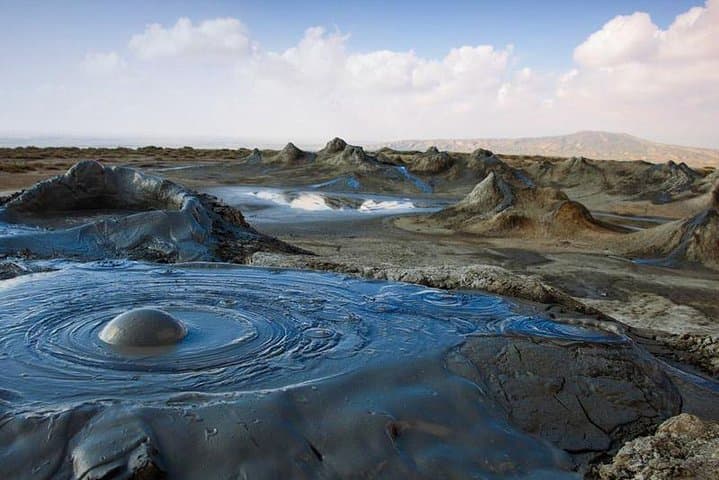
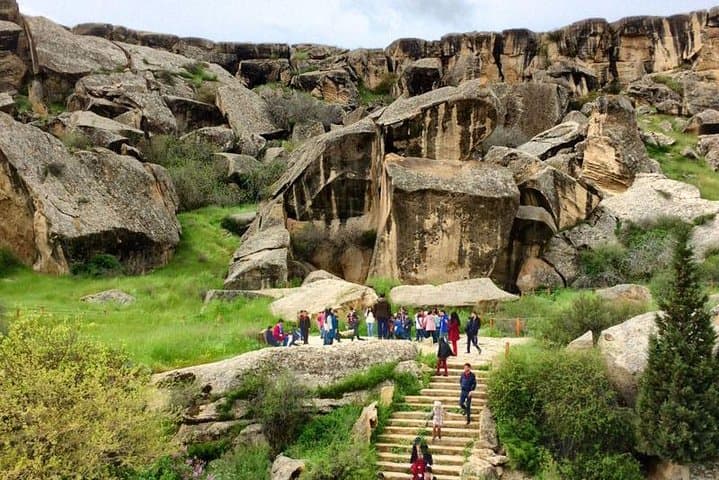
Across four days the itinerary stretches from urban balconies to wind-bitten plateaus. Gobustan's petroglyphs unfold a human record carved into volcanic tufa — figures and boats etched over 40,000 years, a tangible map of migration and ritual. Nearby, the mud volcanoes burp and steam; they are geological show-offs, ejecting clay and gas that reveal the tectonic restlessness below the Absheron peninsula. Later, in the Caucasus foothills, Lahij offers narrow alleys, copper forges and craftspeople whose techniques have crawled unchanged across centuries.
This tour threads history and modernity. Haydar Aliyev Center's contemporary sweep houses exhibitions about Azerbaijan's Soviet and post-Soviet transformations; Ateshgah Fire Temple and Yanar Dag (Fire Mountain) explain why fire worship persisted here, where natural gas seeps once fed eternal flames that drew Zoroastrian pilgrims and later oil prospectors.
Practical notes: the program is labelled physically easy — expect mostly flat city walks and short hikes around sites. Daily timings are generous: Day 1 packs Old City (120 minutes), a 60-minute Caspian boat tour, Highland Park viewpoints and a 60-minute museum visit. Day 2 devotes roughly three hours to Gobustan and an hour to the mud volcanoes; Day 3 focuses on Shamakhi and Lahij with short on-foot exploration; Day 4 visits Ateshgah and Yanar Dag before transfer to the airport.
Pack versatile footwear for cobbles and dusty trails, a wind layer for the Caspian shore, and sun protection. Cash in Azerbaijani manat is handy in village markets; tipping is appreciated for guides and artisans. Respect fragile sites: don't touch petroglyphs or step on preserved structures in Lahij. The tour includes accommodation (3–4 star or boutique within 15 km of central Baku), three breakfasts, two lunches and small souvenirs like fridge magnets.
Timing your visit: spring and autumn offer mild temperatures and fewer crowds; summers bring strong sun along the coast and warmer interior days. If you want quieter photographs, aim for sunrise skyline shots at Highland Park or late afternoon light at Gobustan. Above all, move with curiosity: this is less a checklist than a paced conversation with a country whose landscape and history keep nudging you to look closer.
easy.
4 days.
Light walking ability is sufficient; suitable for most fitness levels with short on-foot site visits.
The tour includes three breakfasts and two lunches; other meals are at your discretion and can be recommended by the guide.
Yes — pickup from hotels within Baku (and some airport options) is available; the operator will confirm your exact pickup point.
Many nationalities require an e-visa for Azerbaijan; check the official government portal well in advance and ensure your passport expiry meets requirements.
Yes — the itinerary is described as physically easy and stroller-accessible, but infants are required to sit on an adult's lap during transfers.
Guides typically speak English; operators may offer other language options on request — confirm at booking.
You can, but access and interpretation are easier with a guide who handles permits, provides context for the petroglyphs and navigates rural roads.
Azerbaijan sits at the crossroads of Persian, Turkic and Russian empires; fire cults and oil seeps shaped religious and economic life for millennia.
Sites like Gobustan and Lahij face pressure from tourism and industrial development — follow guide instructions, avoid touching rock art and support local crafts to help sustain traditional economies.
Azerbaijanguide.az operates guided outdoor trips and adventures with an emphasis on safety, stewardship, and memorable experiences.
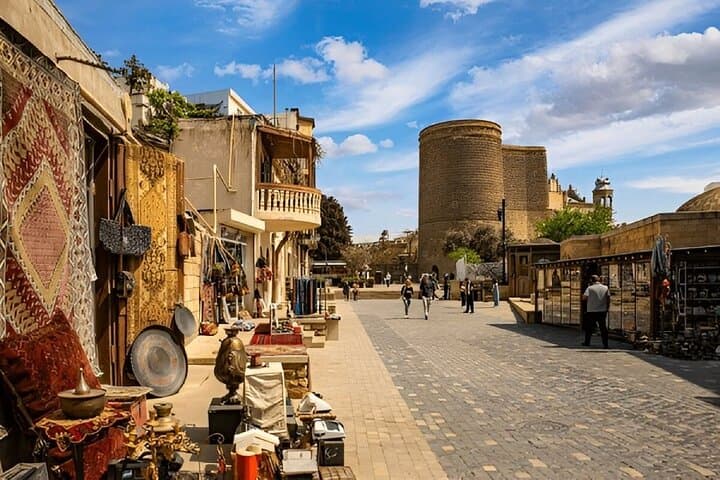
You step out onto Baku's seafront and the city greets you with a mismatch of eras: glass-curved modernity glints on one side while flagstones and low wooden doors hold stories on the other. The first morning moves at a calm pace — two hours through the Old City where the Shirvanshahs Palace and Maiden Tower keep their watch, followed by a VIP boat glide on the Caspian that lets the water remind you this is a littoral capital shaped by oil and salt.
You step out onto Baku's seafront and the city greets you with a mismatch of eras: glass-curved modernity glints on one side while flagstones and low wooden doors hold stories on the other. The first morning moves at a calm pace — two hours through the Old City where the Shirvanshahs Palace and Maiden Tower keep their watch, followed by a VIP boat glide on the Caspian that lets the water remind you this is a littoral capital shaped by oil and salt.
Across four days the itinerary stretches from urban balconies to wind-bitten plateaus. Gobustan's petroglyphs unfold a human record carved into volcanic tufa — figures and boats etched over 40,000 years, a tangible map of migration and ritual. Nearby, the mud volcanoes burp and steam; they are geological show-offs, ejecting clay and gas that reveal the tectonic restlessness below the Absheron peninsula. Later, in the Caucasus foothills, Lahij offers narrow alleys, copper forges and craftspeople whose techniques have crawled unchanged across centuries.
This tour threads history and modernity. Haydar Aliyev Center's contemporary sweep houses exhibitions about Azerbaijan's Soviet and post-Soviet transformations; Ateshgah Fire Temple and Yanar Dag (Fire Mountain) explain why fire worship persisted here, where natural gas seeps once fed eternal flames that drew Zoroastrian pilgrims and later oil prospectors.
Practical notes: the program is labelled physically easy — expect mostly flat city walks and short hikes around sites. Daily timings are generous: Day 1 packs Old City (120 minutes), a 60-minute Caspian boat tour, Highland Park viewpoints and a 60-minute museum visit. Day 2 devotes roughly three hours to Gobustan and an hour to the mud volcanoes; Day 3 focuses on Shamakhi and Lahij with short on-foot exploration; Day 4 visits Ateshgah and Yanar Dag before transfer to the airport.
Pack versatile footwear for cobbles and dusty trails, a wind layer for the Caspian shore, and sun protection. Cash in Azerbaijani manat is handy in village markets; tipping is appreciated for guides and artisans. Respect fragile sites: don't touch petroglyphs or step on preserved structures in Lahij. The tour includes accommodation (3–4 star or boutique within 15 km of central Baku), three breakfasts, two lunches and small souvenirs like fridge magnets.
Timing your visit: spring and autumn offer mild temperatures and fewer crowds; summers bring strong sun along the coast and warmer interior days. If you want quieter photographs, aim for sunrise skyline shots at Highland Park or late afternoon light at Gobustan. Above all, move with curiosity: this is less a checklist than a paced conversation with a country whose landscape and history keep nudging you to look closer.