THE ADVENTURE COLLECTIVE® · Independent discovery and booking for outdoor travel

A compact 4‑day private itinerary that pairs Cape Town’s iconic coastal drives, Table Mountain and Robben Island with an overnight Big 5 safari at Aquila. Expect dramatic scenery, close wildlife encounters, and practical guidance for every leg of the trip.
A compact 4‑day private itinerary that pairs Cape Town’s iconic coastal drives, Table Mountain and Robben Island with an overnight Big 5 safari at Aquila. Expect dramatic scenery, close wildlife encounters, and practical guidance for every leg of the trip.
You step out of your Cape Town hotel into a wind that smells of salt and hot asphalt, the mountain to your left rising like an old city wall. The first day unspools as a coastal stitch: a cable car to Table Mountain’s 1,086 m flat summit, a photo stop at Maiden’s Cove, and Chapman's Peak clinging to the ocean with a road that dares you to look down.
Verified experiences and guided adventures in the surrounding area.
Operated by Beyond Africa Safaris (Pty)Ltd · Cape Town, Western Cape
You step out of your Cape Town hotel into a wind that smells of salt and hot asphalt, the mountain to your left rising like an old city wall. The first day unspools as a coastal stitch: a cable car to Table Mountain’s 1,086 m flat summit, a photo stop at Maiden’s Cove, and Chapman's Peak clinging to the ocean with a road that dares you to look down.
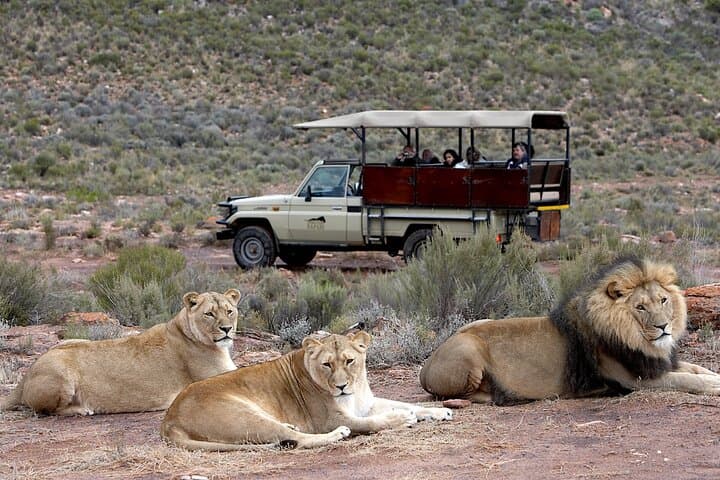
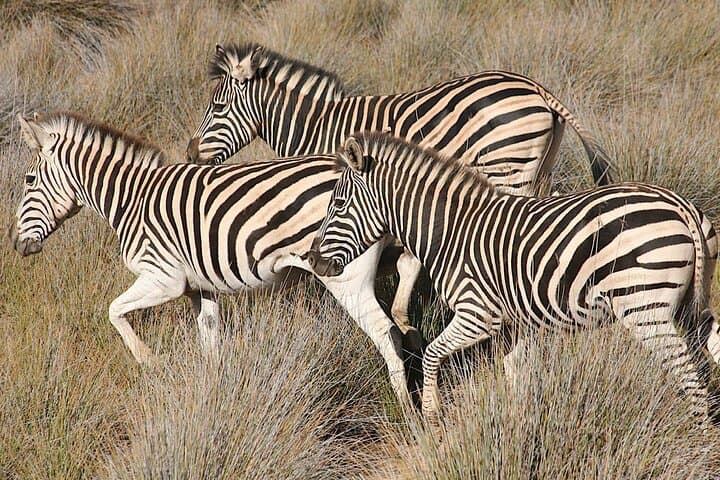
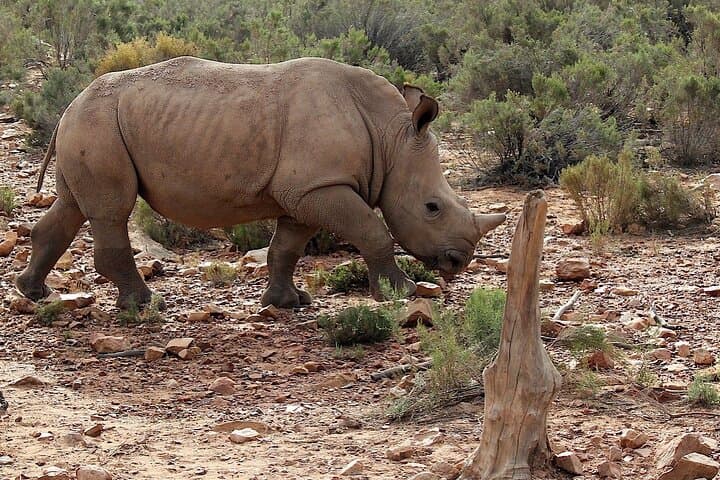
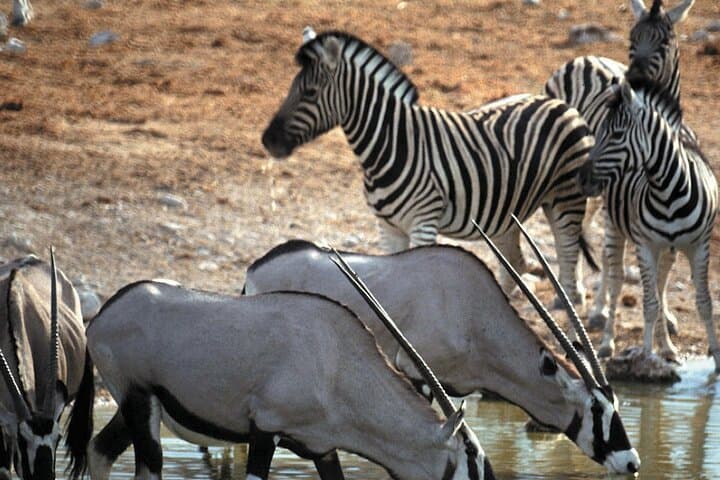
By late afternoon the scenery pivots — beaches and penguins at Boulders give way to a two‑hour drive inland to Aquila Private Game Reserve. The reserve sits on semi‑arid Karoo‑like plains where flat grasslands and low fynbos make wildlife visible at a distance; game drives here last roughly 2–3 hours and the reserve runs both twilight and early‑morning circuits for the best animal sightings.
This itinerary maps a collision of histories and geologies. Table Mountain is Cape Town’s ancient sandstone cap, carved by wind and weather. Cape Point marks the meeting of the cold Benguela and warm Agulhas currents — an oceanic handshake that has shaped local fisheries and climate for centuries. Robben Island, visited on day two, is a compact chapter of South African history: the former prison where Nelson Mandela and other activists were held, now narrated by former inmates. The Winelands around Stellenbosch recall Dutch colonial farms, but they’re also modern soil laboratories where Cape varietals and biltong pairings have their own cult following.
Practical beats: the tour is private, with hotel pickup and entrance fees for Table Mountain, Robben Island and Kirstenbosch included. Expect a full day on day one (coastal driving and walks) and a night’s stay at Aquila after afternoon and early‑morning drives. Walking at Cape Point and Kirstenbosch ranges from easy boardwalks to uneven rocky trails — bring proper shoes.
What makes this trip work is variety: close encounters with African penguins on a wooden boardwalk, then the patient sweep of a safari vehicle watching elephant and buffalo at dusk. Guides double as cultural interpreters — they’ll point out colonial-era monuments in the city and advise whether sea conditions allow a boat trip to Seal Island.
Gear and timing matter. Pack layers—the wind on Table Mountain and Cape Point can be raw even on a sunny day—plus sunscreen, binoculars, and a refillable bottle. Bring your passport for Robben Island and a small daypack for hikes. If you want better light for photos, aim for morning or late afternoon for softer shadows and active wildlife.
In four days you don’t just see Cape Town; you move through its ecosystems — ocean, mountain, and inland plains — and emerge with a sense of how geography, history, and conservation shape the modern city and its surrounds.
moderate.
4 days.
Suitable for travelers in average physical condition; includes short hikes, stairs, and some uneven terrain on Cape Point and game‑drive walking.
The reserve is approximately a 2‑hour drive from central Cape Town (roughly 150–170 km depending on route and traffic).
Ferry crossings are weather dependent; operators may cancel if seas are rough—your guide will advise and can rearrange timing if possible.
Yes — dinner and breakfast at Aquila are included, along with a buffet breakfast following the morning game drive.
Aquila manages populations of Big Five species, but wildlife sightings are not guaranteed; morning and afternoon drives maximize your chances.
Yes — it’s a private tour with a dedicated guide/driver; certain elements like hikes and optional Seal Island boat trips can be tailored on request.
If you plan to walk the summit plateaus or take longer trails, hiking shoes are recommended; the cableway requires only comfortable walking shoes for short exploration.
Robben Island’s prison history and Table Mountain’s role as a navigational landmark shaped Cape Town’s colonial and political storylines; Stellenbosch represents early Dutch settler agriculture and modern winemaking.
Local conservation focuses on protecting African penguin colonies and managing water use in gardens like Kirstenbosch; responsible safari practices at reserves limit off‑road driving and enforce viewing distances.
Beyond Africa Safaris (Pty)Ltd operates guided outdoor trips and adventures with an emphasis on safety, stewardship, and memorable experiences.
You step out of your Cape Town hotel into a wind that smells of salt and hot asphalt, the mountain to your left rising like an old city wall. The first day unspools as a coastal stitch: a cable car to Table Mountain’s 1,086 m flat summit, a photo stop at Maiden’s Cove, and Chapman's Peak clinging to the ocean with a road that dares you to look down.
You step out of your Cape Town hotel into a wind that smells of salt and hot asphalt, the mountain to your left rising like an old city wall. The first day unspools as a coastal stitch: a cable car to Table Mountain’s 1,086 m flat summit, a photo stop at Maiden’s Cove, and Chapman's Peak clinging to the ocean with a road that dares you to look down.
By late afternoon the scenery pivots — beaches and penguins at Boulders give way to a two‑hour drive inland to Aquila Private Game Reserve. The reserve sits on semi‑arid Karoo‑like plains where flat grasslands and low fynbos make wildlife visible at a distance; game drives here last roughly 2–3 hours and the reserve runs both twilight and early‑morning circuits for the best animal sightings.
This itinerary maps a collision of histories and geologies. Table Mountain is Cape Town’s ancient sandstone cap, carved by wind and weather. Cape Point marks the meeting of the cold Benguela and warm Agulhas currents — an oceanic handshake that has shaped local fisheries and climate for centuries. Robben Island, visited on day two, is a compact chapter of South African history: the former prison where Nelson Mandela and other activists were held, now narrated by former inmates. The Winelands around Stellenbosch recall Dutch colonial farms, but they’re also modern soil laboratories where Cape varietals and biltong pairings have their own cult following.
Practical beats: the tour is private, with hotel pickup and entrance fees for Table Mountain, Robben Island and Kirstenbosch included. Expect a full day on day one (coastal driving and walks) and a night’s stay at Aquila after afternoon and early‑morning drives. Walking at Cape Point and Kirstenbosch ranges from easy boardwalks to uneven rocky trails — bring proper shoes.
What makes this trip work is variety: close encounters with African penguins on a wooden boardwalk, then the patient sweep of a safari vehicle watching elephant and buffalo at dusk. Guides double as cultural interpreters — they’ll point out colonial-era monuments in the city and advise whether sea conditions allow a boat trip to Seal Island.
Gear and timing matter. Pack layers—the wind on Table Mountain and Cape Point can be raw even on a sunny day—plus sunscreen, binoculars, and a refillable bottle. Bring your passport for Robben Island and a small daypack for hikes. If you want better light for photos, aim for morning or late afternoon for softer shadows and active wildlife.
In four days you don’t just see Cape Town; you move through its ecosystems — ocean, mountain, and inland plains — and emerge with a sense of how geography, history, and conservation shape the modern city and its surrounds.