THE ADVENTURE COLLECTIVE® · Independent discovery and booking for outdoor travel

Cover Jordan’s signature sites in three days with a private driver: cross Roman colonnades in Jerash, float in the Dead Sea, walk through Petra’s Siq, and sleep under Wadi Rum’s stars. This private itinerary blends history, geology, and Bedouin hospitality with flexible pacing and comfort.
Cover Jordan’s signature sites in three days with a private driver: cross Roman colonnades in Jerash, float in the Dead Sea, walk through Petra’s Siq, and sleep under Wadi Rum’s stars. This private itinerary blends history, geology, and Bedouin hospitality with flexible pacing and comfort.
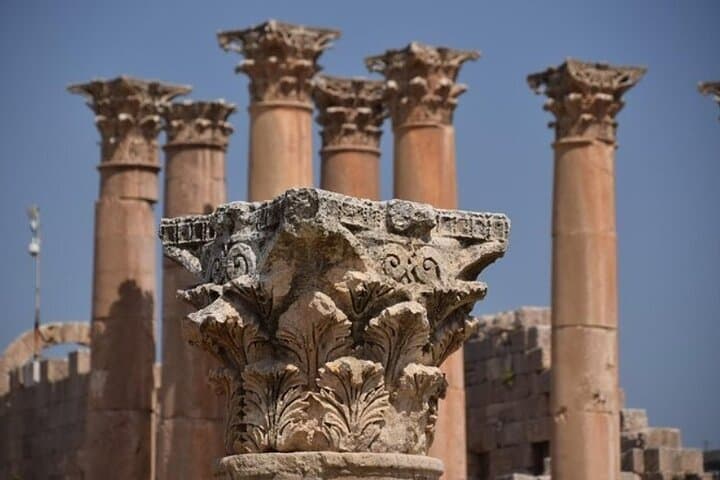
The road out of Amman opens like a film—olive groves slipping past, stony hills folding into wider plains, and the driver’s voice pointing out roadside signs in Arabic and English. On day one the tour eases into Jerash, where colonnaded avenues and a curved Roman theatre still hold their echoes. Walking the Oval Plaza, the stones seem to remember marching legions and local markets, and the city’s carved columns press gently against a cloudless sky.
Verified experiences and guided adventures in the surrounding area.
Operated by VIP Jordan Limo · Petra, Ma'an Governorate
The road out of Amman opens like a film—olive groves slipping past, stony hills folding into wider plains, and the driver’s voice pointing out roadside signs in Arabic and English. On day one the tour eases into Jerash, where colonnaded avenues and a curved Roman theatre still hold their echoes. Walking the Oval Plaza, the stones seem to remember marching legions and local markets, and the city’s carved columns press gently against a cloudless sky.
From there the route drops toward the Dead Sea. The water dares you—opaque, buoyant, mineral-heavy—so float, let the salt lift you, and scrub on the shore where the mud is said to be restorative. Night falls at a resort with modern comforts, the valley’s hush punctuated by the faint hum of distant highway lights.
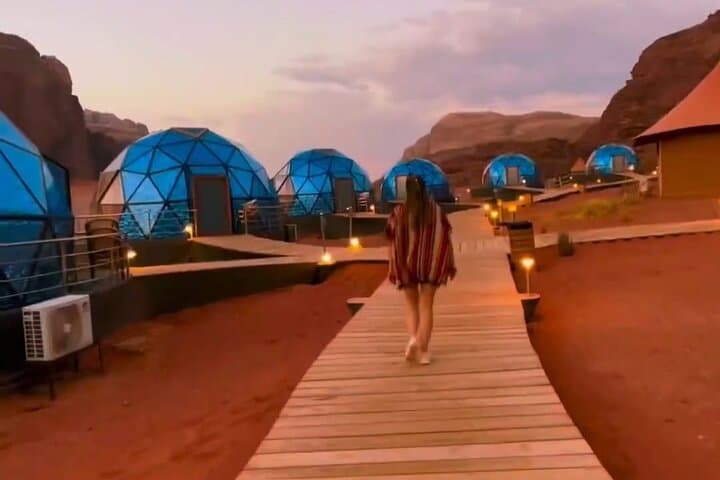
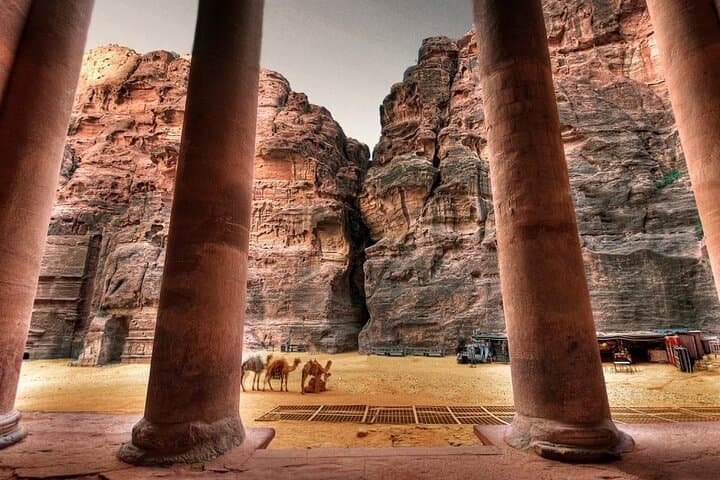
Petra arrives on day two with the Siq’s narrow slot canyon funneling you toward the Treasury’s carved façade. The Nabataeans dug urban life into sandstone: tombs, streets, water channels and facades that change color as the sun moves. Geology is visible in strata—red, ochre, and sculpted curves—that tell a slow history of wind and water. Later, Wadi Rum’s red dunes and rock arches offer a different chapter: fractured granite and sandstone shaped into alcoves and spires, where Bedouin hospitality still centers around tea, stories, and campfires beneath a sky that offers an astonishing density of stars.
Culturally, this private route threads centuries: Roman order in Jerash, Nabataean engineering in Petra, Ottoman and Bedouin traditions across the south. Practicalities matter: the Jordan Pass (buy before arrival) covers many entry fees and speeds checkpoint time. The tour’s private vehicle gives flexibility—short hikes, longer photo stops, or optional hot-air balloon rides when booking allows.
Plan for varied conditions. Expect sharp sun at the Dead Sea, cool desert nights in Wadi Rum, and dusty sandstone in Petra. Comfortable walking shoes, sun protection, and a small daypack will make moving between ruins and dunes far easier. Hydrate deliberately—the region is arid and distances between services can be long. Respect local customs; modest dress is appreciated in sites and villages.
For travelers who want a tightly curated three-day snapshot of Jordan, this private tour condenses major landscapes and layered histories into a manageable itinerary while offering room for personal pacing. It’s an efficient way to stand before the Treasury at dawn, float in a hypersaline sea, and sleep under a sky that refuses to hide its stars.
moderate.
3 days.
Light-to-moderate fitness; able to walk 2–5 miles a day with some uneven terrain and steps
Yes—buy the Jordan Pass before travel to cover Petra and many other entry fees and to streamline site access.
Yes; the private nature and vehicle transfers make it accessible, though some walking in Petra and uneven surfaces may be challenging for limited mobility.
Yes—this private tour offers customization, including optional hot-air balloon rides, camel rides, and hotel upgrades at extra cost.
Wear sun-protective clothing, comfortable closed shoes, and bring a layer for cool mornings and nights in the desert.
Floating is generally safe—avoid ingesting the water and don’t shave before entering; eyes and cuts can sting from high salinity.
Meals and accommodations depend on chosen hotels; most operators accommodate dietary requests if informed in advance.
Petra was the Nabataean capital and a trading hub that engineered water channels and carved monumental facades; Jerash preserves one of the best examples of Roman urban planning outside Italy.
Wadi Rum and Petra face visitor pressure and water scarcity; stick to marked paths, minimize plastic use, and support local guides and camps that follow sustainable practices.
VIP Jordan Limo operates guided outdoor trips and adventures with an emphasis on safety, stewardship, and memorable experiences.

The road out of Amman opens like a film—olive groves slipping past, stony hills folding into wider plains, and the driver’s voice pointing out roadside signs in Arabic and English. On day one the tour eases into Jerash, where colonnaded avenues and a curved Roman theatre still hold their echoes. Walking the Oval Plaza, the stones seem to remember marching legions and local markets, and the city’s carved columns press gently against a cloudless sky.
The road out of Amman opens like a film—olive groves slipping past, stony hills folding into wider plains, and the driver’s voice pointing out roadside signs in Arabic and English. On day one the tour eases into Jerash, where colonnaded avenues and a curved Roman theatre still hold their echoes. Walking the Oval Plaza, the stones seem to remember marching legions and local markets, and the city’s carved columns press gently against a cloudless sky.
From there the route drops toward the Dead Sea. The water dares you—opaque, buoyant, mineral-heavy—so float, let the salt lift you, and scrub on the shore where the mud is said to be restorative. Night falls at a resort with modern comforts, the valley’s hush punctuated by the faint hum of distant highway lights.
Petra arrives on day two with the Siq’s narrow slot canyon funneling you toward the Treasury’s carved façade. The Nabataeans dug urban life into sandstone: tombs, streets, water channels and facades that change color as the sun moves. Geology is visible in strata—red, ochre, and sculpted curves—that tell a slow history of wind and water. Later, Wadi Rum’s red dunes and rock arches offer a different chapter: fractured granite and sandstone shaped into alcoves and spires, where Bedouin hospitality still centers around tea, stories, and campfires beneath a sky that offers an astonishing density of stars.
Culturally, this private route threads centuries: Roman order in Jerash, Nabataean engineering in Petra, Ottoman and Bedouin traditions across the south. Practicalities matter: the Jordan Pass (buy before arrival) covers many entry fees and speeds checkpoint time. The tour’s private vehicle gives flexibility—short hikes, longer photo stops, or optional hot-air balloon rides when booking allows.
Plan for varied conditions. Expect sharp sun at the Dead Sea, cool desert nights in Wadi Rum, and dusty sandstone in Petra. Comfortable walking shoes, sun protection, and a small daypack will make moving between ruins and dunes far easier. Hydrate deliberately—the region is arid and distances between services can be long. Respect local customs; modest dress is appreciated in sites and villages.
For travelers who want a tightly curated three-day snapshot of Jordan, this private tour condenses major landscapes and layered histories into a manageable itinerary while offering room for personal pacing. It’s an efficient way to stand before the Treasury at dawn, float in a hypersaline sea, and sleep under a sky that refuses to hide its stars.