THE ADVENTURE COLLECTIVE® · Independent discovery and booking for outdoor travel

Compress Croatia’s best into three days: cascading pools at Plitvice, Roman streets of Split, the reconstructed Old Bridge in Mostar, and the fortified sweep of Dubrovnik. This private tour blends nature and history with private transfers and guided stops.
Compress Croatia’s best into three days: cascading pools at Plitvice, Roman streets of Split, the reconstructed Old Bridge in Mostar, and the fortified sweep of Dubrovnik. This private tour blends nature and history with private transfers and guided stops.
Morning fog lifts off Zagreb as the van eases out of the city and the cadence of the road changes from tram clack to country hum. Windows frame a patchwork of karst ridges and terraced pastures; the driver points toward a village church and the guide cues a brief Rastoke stop where tumbling millstreams cut through stone. This is a travel day designed to compress Croatia's highlights into three decisive chapters: the waterfalls and forest of Plitvice, the Roman bones and seaside life of Split and Trogir, and the headline sweep of Mostar's bridge and Dubrovnik's walls.
Verified experiences and guided adventures in the surrounding area.
Operated by Click2Shuttle - Croatia Private Transfers & Tours · Zagreb, Zagreb County
Morning fog lifts off Zagreb as the van eases out of the city and the cadence of the road changes from tram clack to country hum. Windows frame a patchwork of karst ridges and terraced pastures; the driver points toward a village church and the guide cues a brief Rastoke stop where tumbling millstreams cut through stone. This is a travel day designed to compress Croatia's highlights into three decisive chapters: the waterfalls and forest of Plitvice, the Roman bones and seaside life of Split and Trogir, and the headline sweep of Mostar's bridge and Dubrovnik's walls.
Plitvice Lakes interrupts the pace in the best way. The park's linked, turquoise basins spill into travertine cascades, wooden walkways clinging to the water's edge while the forest exhales moss and pine resin. Plitvice is a geological storybook — limestone sculpted by centuries of mineral deposition — and its UNESCO status is earned in the constant, audible movement of water daring you to stand still.
The next day moves from natural theater to human architecture. In Split the streets pivot around Diocletian's Palace, a living Roman ruin where cafes occupy ancient cellars and the Riva promenade opens to the Adriatic. Salona's ruined amphitheater and sarcophagi are quieter but no less revealing: this coastline has always been a crossroads. Trogir, a compact island of Venetian stone, rewards a patient gaze at door lintels, bell towers and narrow alleys.
On day three, the itinerary folds in Mostar across the border in Bosnia & Herzegovina. The Old Bridge (Stari Most) rises like a film still — its reconstruction after wartime destruction is both a cultural landmark and a reminder of the region's recent past. The tour concludes with a long drive to Dubrovnik, where the city walls circumscribe centuries of trade, salt, and maritime craft.
Practically, this is a private transfer with guided stops: you’ll spend roughly three hours walking Plitvice, 90 minutes in central Split, and about an hour touring Mostar with time to explore on your own. Prepare for cobbles, stairs and short hikes; comfortable walking shoes, layered clothing, and a passport for the Mostar border are non-negotiable. The operator provides bottled water, Wi‑Fi in Croatia, and English-speaking guides; note the tour is all-sales-final, so plan accordingly. Timing favors spring and fall for cooler temperatures and fewer crowds; summer delivers sunshine but also peak visitation.
This three-day thread through Croatia feels stitched from different tempos — the hush of forests, the cadence of coastal life, and the high drama of stone bridges — all experienced with a private vehicle and local guides who keep the logistics frictionless so you can focus on the view.
moderate.
3 days.
Suitable for travelers in average fitness—able to walk 2–3 hours across varied terrain and climb stairs repeatedly.
Expect about three hours of walking over boardwalks and trails with some uneven sections and short stair climbs; the pace is moderate with frequent viewpoints.
Plitvice entrance is not included by default in this listing—confirm at booking; Salona admission is listed as included in some itinerary items, but always verify before travel.
Yes — the itinerary includes a crossing into Bosnia & Herzegovina for Mostar; travelers need passports and should allow time for border formalities.
Meals are not generally included; the tour provides 0.5L bottled water per person per day and guides can recommend local restaurants en route.
Pick-up is available from any location in Zagreb or surrounding area; drop-off can be arranged in Dubrovnik or nearest accessible point if accommodation is in a pedestrian zone.
Yes—infant seats are available and the tour is described as suitable for all physical fitness levels, but consider long drives and walking demands for young children.
This route strings together eras: Illyrian and Roman relics near Split, Ottoman and Austro-Hungarian layers in Mostar, and maritime republic influences on the Dalmatian coast.
Plitvice is managed to protect its travertine formations and endemic life; visitors are asked to stay on boardwalks and avoid feeding wildlife to minimize impact.
Click2Shuttle - Croatia Private Transfers & Tours operates guided outdoor trips and adventures with an emphasis on safety, stewardship, and memorable experiences.



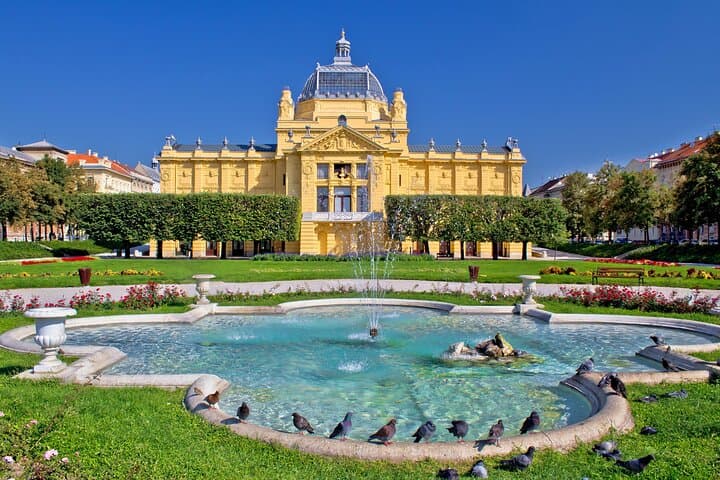
Morning fog lifts off Zagreb as the van eases out of the city and the cadence of the road changes from tram clack to country hum. Windows frame a patchwork of karst ridges and terraced pastures; the driver points toward a village church and the guide cues a brief Rastoke stop where tumbling millstreams cut through stone. This is a travel day designed to compress Croatia's highlights into three decisive chapters: the waterfalls and forest of Plitvice, the Roman bones and seaside life of Split and Trogir, and the headline sweep of Mostar's bridge and Dubrovnik's walls.
Morning fog lifts off Zagreb as the van eases out of the city and the cadence of the road changes from tram clack to country hum. Windows frame a patchwork of karst ridges and terraced pastures; the driver points toward a village church and the guide cues a brief Rastoke stop where tumbling millstreams cut through stone. This is a travel day designed to compress Croatia's highlights into three decisive chapters: the waterfalls and forest of Plitvice, the Roman bones and seaside life of Split and Trogir, and the headline sweep of Mostar's bridge and Dubrovnik's walls.
Plitvice Lakes interrupts the pace in the best way. The park's linked, turquoise basins spill into travertine cascades, wooden walkways clinging to the water's edge while the forest exhales moss and pine resin. Plitvice is a geological storybook — limestone sculpted by centuries of mineral deposition — and its UNESCO status is earned in the constant, audible movement of water daring you to stand still.
The next day moves from natural theater to human architecture. In Split the streets pivot around Diocletian's Palace, a living Roman ruin where cafes occupy ancient cellars and the Riva promenade opens to the Adriatic. Salona's ruined amphitheater and sarcophagi are quieter but no less revealing: this coastline has always been a crossroads. Trogir, a compact island of Venetian stone, rewards a patient gaze at door lintels, bell towers and narrow alleys.
On day three, the itinerary folds in Mostar across the border in Bosnia & Herzegovina. The Old Bridge (Stari Most) rises like a film still — its reconstruction after wartime destruction is both a cultural landmark and a reminder of the region's recent past. The tour concludes with a long drive to Dubrovnik, where the city walls circumscribe centuries of trade, salt, and maritime craft.
Practically, this is a private transfer with guided stops: you’ll spend roughly three hours walking Plitvice, 90 minutes in central Split, and about an hour touring Mostar with time to explore on your own. Prepare for cobbles, stairs and short hikes; comfortable walking shoes, layered clothing, and a passport for the Mostar border are non-negotiable. The operator provides bottled water, Wi‑Fi in Croatia, and English-speaking guides; note the tour is all-sales-final, so plan accordingly. Timing favors spring and fall for cooler temperatures and fewer crowds; summer delivers sunshine but also peak visitation.
This three-day thread through Croatia feels stitched from different tempos — the hush of forests, the cadence of coastal life, and the high drama of stone bridges — all experienced with a private vehicle and local guides who keep the logistics frictionless so you can focus on the view.