THE ADVENTURE COLLECTIVE® · Independent discovery and booking for outdoor travel

A compact three-day trek that starts with a walking safari and finishes with a high-alpine summit, the Mount Meru route combines wildlife, volcanic ridgelines and a sunrise summit with view of Kilimanjaro. Practical, steep and unforgettable, it’s ideal for acclimatizing or for a raw mountain day close to Arusha.
A compact three-day trek that starts with a walking safari and finishes with a high-alpine summit, the Mount Meru route combines wildlife, volcanic ridgelines and a sunrise summit with view of Kilimanjaro. Practical, steep and unforgettable, it’s ideal for acclimatizing or for a raw mountain day close to Arusha.
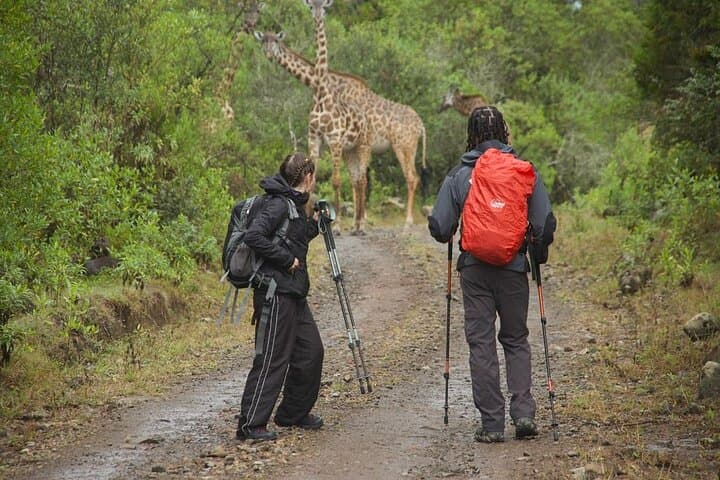
By the time the jeep slows at Momela Gate, dawn has not yet decided whether it will rise or hold back. The trail swallows sound and the guides check radios; a ranger steps forward, his silhouette steady against a forest that already smells of damp earth and coffee. You set off through broad-leaved montane forest where buffalo lounge in clearings and giraffes lift their long necks like sentinels testing the air. This is not just a hike — it begins as a walking safari and finishes with a thin, alpine summit that lets you peer at Kilimanjaro’s crown over a sea of clouds.
Verified experiences and guided adventures in the surrounding area.
Operated by safari soles tours · Arusha, Arusha Region
By the time the jeep slows at Momela Gate, dawn has not yet decided whether it will rise or hold back. The trail swallows sound and the guides check radios; a ranger steps forward, his silhouette steady against a forest that already smells of damp earth and coffee. You set off through broad-leaved montane forest where buffalo lounge in clearings and giraffes lift their long necks like sentinels testing the air. This is not just a hike — it begins as a walking safari and finishes with a thin, alpine summit that lets you peer at Kilimanjaro’s crown over a sea of clouds.
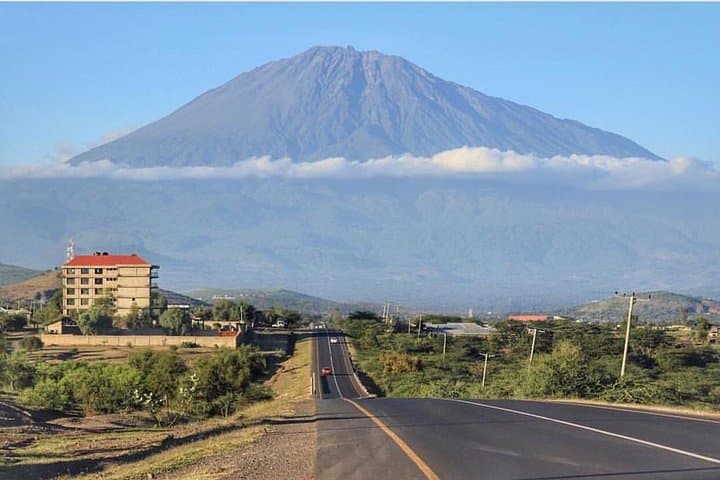
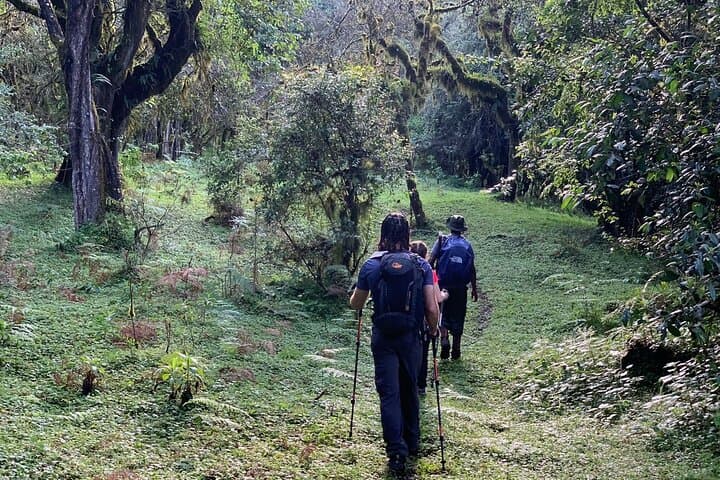
Mount Meru is a younger neighbor to Kilimanjaro, a volcano that shaped the plateau with eruptions and collapses. The route climbs from roughly 1,387 m at Momela Gate up to a summit of 4,566 m, running a compact gauntlet of montane forest, heather moorland, and wind-buffed alpine desert. Huts — Miriakamba and Saddle Hut — are functional waypoints passed down through Tanzanian park logistics; they are simple, shared accommodations that trade luxury for proximity to high ridgelines and early starts.
Culturally, Arusha is the staging ground: a trading crossroads that supplies the guides, porters and the slow-brewing tea that steadies your mornings. Park rangers escort groups not only for wildlife safety but as guardians of fragile trails and endemic flora. Geologically, the walk reveals lava flows, ash cone sculpting and the crater walls that make Mount Meru a compact classroom in volcanic anatomy.
Practically, this is a three-day loop built for acclimatization and spectacle. Day one walks 10 km to Miriakamba Hut through montane forest (1,387–1,500 m; 4–6 hrs). Day two is a steep 8 km ridge climb to Saddle Hut (2,514–3,570 m; 3–5 hrs) with optional Little Meru (3,820 m) at dusk. Summit day begins around 1:30 a.m.: a steep ascent to Rhino Point (3,800 m), on to Cobra Point (4,350 m) and the summit (4,566 m) at sunrise, followed by a long 13 km descent back to Momella Gate. Expect 12–14 hours on the final day.
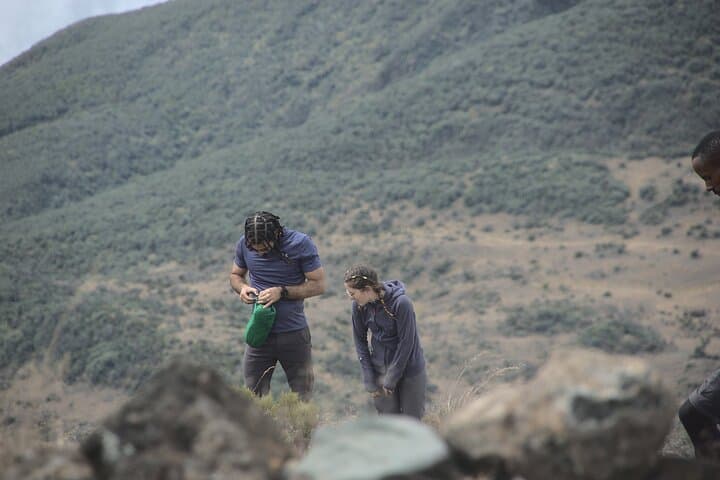
To prepare: bring layered insulation for pre-dawn starts, a sturdy pair of boots for muddy, root-strewn forest and scree on the upper slopes, and a headlamp for the summit push. Hydration matters more at altitude than pace; sip often and add electrolytes. Footing is variable — trekking poles will save knees on the long descent.
This route is as much about wildlife glimpses and volcanic topography as it is about the summit line. If you’re acclimatizing for Kilimanjaro or chasing a high, technical-feel day without glaciers, Mount Meru offers raw, compact alpine exposure, close encounters with East African fauna, and a sunrise above clouds that makes the early hours worth every step.
challenging.
3 days (total).
Good cardiovascular fitness and experience with sustained uphill hiking; able to handle a 12–14 hour summit day.
Summit day is the longest and toughest: expect 12–14 hours with steep sections and altitude gains from ~3,570 m to 4,566 m; proper pacing and acclimatization are essential.
Huts are basic shared accommodations with mattresses and blankets; they prioritize proximity to trailheads over luxury and can be cold—bring a warm sleeping liner.
Prior high-altitude experience helps but is not required; good fitness, slow pacing, and hydration improve success. Guides monitor for altitude sickness.
Expect buffalo, giraffe, zebra, baboons and various antelope in lower montane zones; sightings depend on season and time of day.
Yes — Arusha National Park requires an armed ranger escort for safety and to protect wildlife; guides coordinate this as part of the tour.
Yes — the elevation profile and overnight at Saddle Hut provide beneficial acclimatization for climbers planning Kilimanjaro later.
Mount Meru’s volcanic history shaped the Arusha plateau; the mountain’s ash cone and crater rim reveal eruptions that predate some surrounding settlements.
Arusha National Park manages foot traffic and ranger escorts to limit erosion and protect habitat; visitors should stick to trails and pack out waste.
safari soles tours operates guided outdoor trips and adventures with an emphasis on safety, stewardship, and memorable experiences.
By the time the jeep slows at Momela Gate, dawn has not yet decided whether it will rise or hold back. The trail swallows sound and the guides check radios; a ranger steps forward, his silhouette steady against a forest that already smells of damp earth and coffee. You set off through broad-leaved montane forest where buffalo lounge in clearings and giraffes lift their long necks like sentinels testing the air. This is not just a hike — it begins as a walking safari and finishes with a thin, alpine summit that lets you peer at Kilimanjaro’s crown over a sea of clouds.
By the time the jeep slows at Momela Gate, dawn has not yet decided whether it will rise or hold back. The trail swallows sound and the guides check radios; a ranger steps forward, his silhouette steady against a forest that already smells of damp earth and coffee. You set off through broad-leaved montane forest where buffalo lounge in clearings and giraffes lift their long necks like sentinels testing the air. This is not just a hike — it begins as a walking safari and finishes with a thin, alpine summit that lets you peer at Kilimanjaro’s crown over a sea of clouds.
Mount Meru is a younger neighbor to Kilimanjaro, a volcano that shaped the plateau with eruptions and collapses. The route climbs from roughly 1,387 m at Momela Gate up to a summit of 4,566 m, running a compact gauntlet of montane forest, heather moorland, and wind-buffed alpine desert. Huts — Miriakamba and Saddle Hut — are functional waypoints passed down through Tanzanian park logistics; they are simple, shared accommodations that trade luxury for proximity to high ridgelines and early starts.
Culturally, Arusha is the staging ground: a trading crossroads that supplies the guides, porters and the slow-brewing tea that steadies your mornings. Park rangers escort groups not only for wildlife safety but as guardians of fragile trails and endemic flora. Geologically, the walk reveals lava flows, ash cone sculpting and the crater walls that make Mount Meru a compact classroom in volcanic anatomy.
Practically, this is a three-day loop built for acclimatization and spectacle. Day one walks 10 km to Miriakamba Hut through montane forest (1,387–1,500 m; 4–6 hrs). Day two is a steep 8 km ridge climb to Saddle Hut (2,514–3,570 m; 3–5 hrs) with optional Little Meru (3,820 m) at dusk. Summit day begins around 1:30 a.m.: a steep ascent to Rhino Point (3,800 m), on to Cobra Point (4,350 m) and the summit (4,566 m) at sunrise, followed by a long 13 km descent back to Momella Gate. Expect 12–14 hours on the final day.
To prepare: bring layered insulation for pre-dawn starts, a sturdy pair of boots for muddy, root-strewn forest and scree on the upper slopes, and a headlamp for the summit push. Hydration matters more at altitude than pace; sip often and add electrolytes. Footing is variable — trekking poles will save knees on the long descent.
This route is as much about wildlife glimpses and volcanic topography as it is about the summit line. If you’re acclimatizing for Kilimanjaro or chasing a high, technical-feel day without glaciers, Mount Meru offers raw, compact alpine exposure, close encounters with East African fauna, and a sunrise above clouds that makes the early hours worth every step.