THE ADVENTURE COLLECTIVE® · Independent discovery and booking for outdoor travel

A private 3-day trek from Arusha to the summit of Mount Meru—climb through montane forest, cross alpine meadows, and time a pre-dawn push to Socialist Peak for sunrise views that include Kilimanjaro above the clouds.
A private 3-day trek from Arusha to the summit of Mount Meru—climb through montane forest, cross alpine meadows, and time a pre-dawn push to Socialist Peak for sunrise views that include Kilimanjaro above the clouds.
You begin before dawn in Arusha, engine humming as the road unspools toward the Momela Gate. The air is thick with roadside green—banana grooves and acacia—then thins as you climb into montane forest. Birdsong darts between mossed trunks; mist clings low and cold. By the time the ranger straps on a rifle and the local guide checks your pack, the mountain already feels alive, watching.
Verified experiences and guided adventures in the surrounding area.
Operated by Africa Exhibition Safari Agency · Arusha, Arusha Region
You begin before dawn in Arusha, engine humming as the road unspools toward the Momela Gate. The air is thick with roadside green—banana grooves and acacia—then thins as you climb into montane forest. Birdsong darts between mossed trunks; mist clings low and cold. By the time the ranger straps on a rifle and the local guide checks your pack, the mountain already feels alive, watching.
Mount Meru is a volcanic neighbor to Kilimanjaro, its broad crater and ash cone shaped by eruptions that left steep ridgelines and a distinctive central crater. This three-day private trek moves deliberately to help you adapt: an entrance day through the montane forest to Meriakamba Hut; a high ascent to Saddle Hut with optional ridge walk to Little Meru; and a summit push at night to reach Socialist Peak (about 4,566 m) for sunrise.
Culturally the route threads through Maasai grazing land and communities around Arusha; porters and guides are usually local, and their knowledge—of plants, trail shortcuts, and highland weather—keeps the climb human-sized. Wildlife makes frequent cameos: colobus monkeys in the canopy, buffalo in the lower glades, and the occasional elephant that uses the wide valleys as a corridor. Geologically, the ash cone and crater rim offer a compact lesson in stratified eruptions and erosion: scree slopes give way to heather moor and then a stark alpine desert near the summit.
Practical reality: expect roughly 25–35 km of walking spread over three days and an altitude gain to the summit of about 2,900–3,200 m depending on your starting gate. Trails alternate between well-packed forest tracks, steep stone steps on the ascent, and loose scree on the final slopes. Weather is changeable—clear mornings can flip to wind and spatter of hail by noon—so layers and a reliable rain shell are essential.
Timing matters. Night starts are cold but give you clear, wind-sliced light on the final ridge and a sunrise that can reveal Kilimanjaro like an island in a sea of clouds. Hydrate early, pace conservatively on the summit day, and watch for altitude symptoms; the guide will schedule acclimatization and a ranger escort for safety.
If you want views without technical climbing, this private itinerary balances ambition and support: private vehicle transfers, local porters, and a guide who reads the mountain. The payoff is a remote summit and the rare quiet when dawn stretches across Tanzania—sharp, expansive, and honest.
challenging.
3 days.
Good cardiovascular fitness and prior multi-day hiking experience; comfortable walking 6–10 hours with elevation gain.
The final day is steep and long with significant altitude gain; it’s challenging but non-technical—good fitness and slow pacing make it achievable.
Yes—at nearly 4,566 m the risk exists; guides include acclimatization and will monitor symptoms, but bring medication if prescribed and communicate any issues immediately.
No technical experience is required, but prior multi-day hiking and endurance training are recommended.
Entrance fees, park permits, and the guide/ranger escort are typically handled by the tour provider and included in the booking—confirm at booking time.
Local porters are usually available through the operator to carry tents and communal gear—confirm porter-to-client ratios and tipping expectations in advance.
Dry months outside the March–May long rains and October–December short rains are preferable—clearer trails and more reliable summit weather increase success odds.
Mount Meru is a young volcanic cone shaped by eruptions that also formed the surrounding crater and ash deposits; local Maasai communities have grazed the lower slopes for generations.
Arusha National Park manages visitor impact with guided-only sections and ranger escorts; stick to trails and minimize waste to protect fragile alpine flora.
Africa Exhibition Safari Agency operates guided outdoor trips and adventures with an emphasis on safety, stewardship, and memorable experiences.
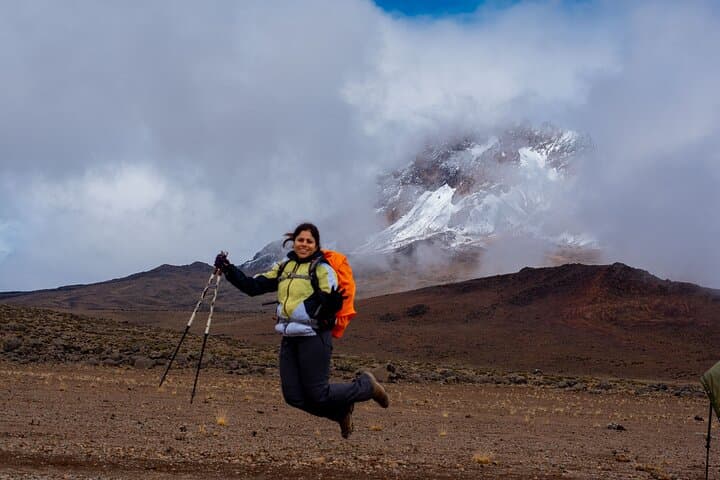
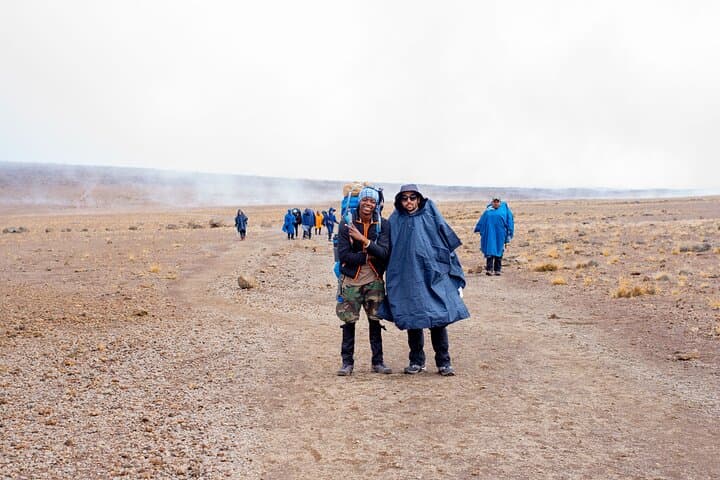
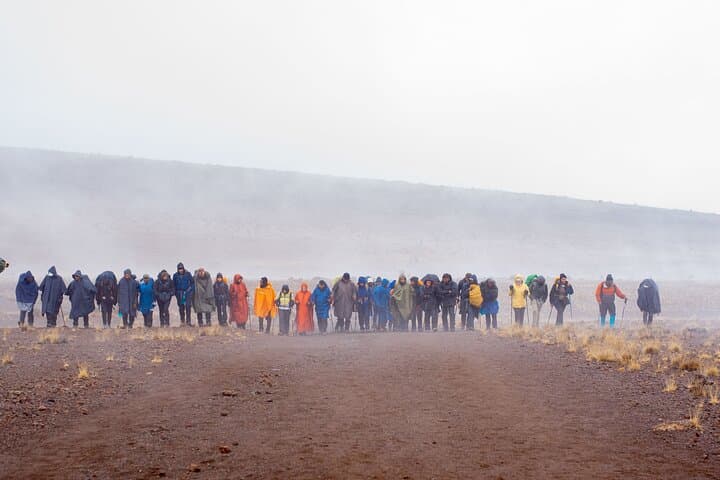
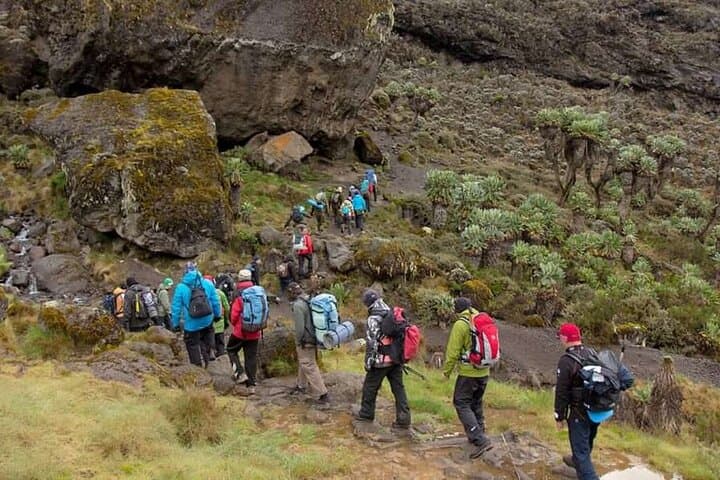
You begin before dawn in Arusha, engine humming as the road unspools toward the Momela Gate. The air is thick with roadside green—banana grooves and acacia—then thins as you climb into montane forest. Birdsong darts between mossed trunks; mist clings low and cold. By the time the ranger straps on a rifle and the local guide checks your pack, the mountain already feels alive, watching.
You begin before dawn in Arusha, engine humming as the road unspools toward the Momela Gate. The air is thick with roadside green—banana grooves and acacia—then thins as you climb into montane forest. Birdsong darts between mossed trunks; mist clings low and cold. By the time the ranger straps on a rifle and the local guide checks your pack, the mountain already feels alive, watching.
Mount Meru is a volcanic neighbor to Kilimanjaro, its broad crater and ash cone shaped by eruptions that left steep ridgelines and a distinctive central crater. This three-day private trek moves deliberately to help you adapt: an entrance day through the montane forest to Meriakamba Hut; a high ascent to Saddle Hut with optional ridge walk to Little Meru; and a summit push at night to reach Socialist Peak (about 4,566 m) for sunrise.
Culturally the route threads through Maasai grazing land and communities around Arusha; porters and guides are usually local, and their knowledge—of plants, trail shortcuts, and highland weather—keeps the climb human-sized. Wildlife makes frequent cameos: colobus monkeys in the canopy, buffalo in the lower glades, and the occasional elephant that uses the wide valleys as a corridor. Geologically, the ash cone and crater rim offer a compact lesson in stratified eruptions and erosion: scree slopes give way to heather moor and then a stark alpine desert near the summit.
Practical reality: expect roughly 25–35 km of walking spread over three days and an altitude gain to the summit of about 2,900–3,200 m depending on your starting gate. Trails alternate between well-packed forest tracks, steep stone steps on the ascent, and loose scree on the final slopes. Weather is changeable—clear mornings can flip to wind and spatter of hail by noon—so layers and a reliable rain shell are essential.
Timing matters. Night starts are cold but give you clear, wind-sliced light on the final ridge and a sunrise that can reveal Kilimanjaro like an island in a sea of clouds. Hydrate early, pace conservatively on the summit day, and watch for altitude symptoms; the guide will schedule acclimatization and a ranger escort for safety.
If you want views without technical climbing, this private itinerary balances ambition and support: private vehicle transfers, local porters, and a guide who reads the mountain. The payoff is a remote summit and the rare quiet when dawn stretches across Tanzania—sharp, expansive, and honest.