The road peels away from Fes before dawn, low mountains and cedar forests giving way to the honey-colored Ziz Valley and the first hints of Sahara heat.
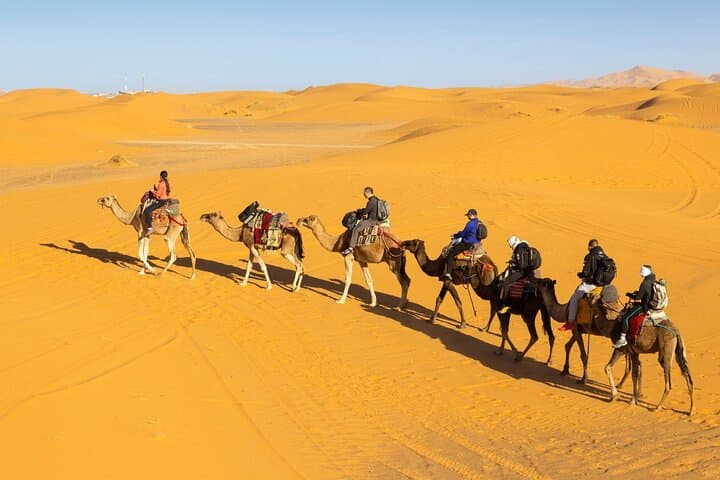
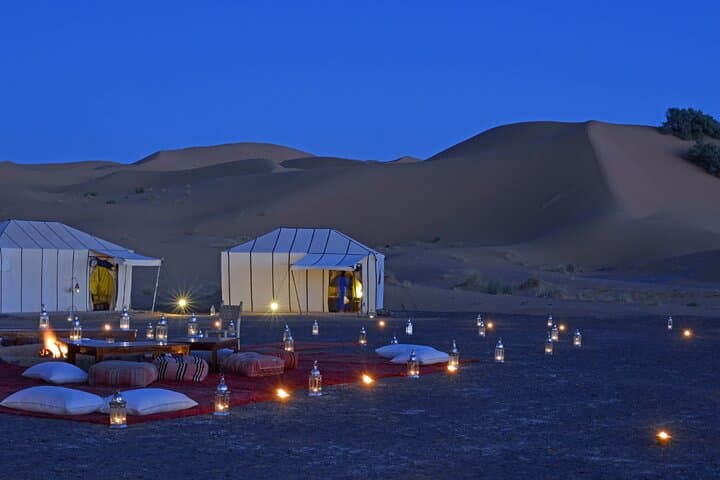
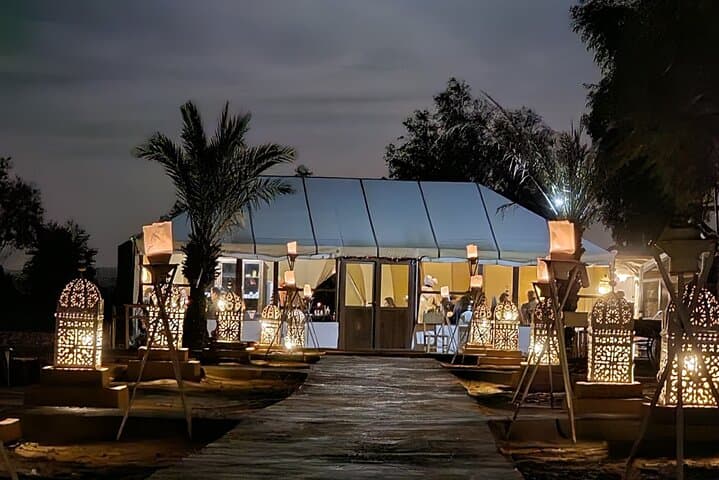
By midday the landscape has changed: scrub, wind-sculpted plateaus and then the rising orange ribs of Erg Chebbi, dunes that press at the horizon like a moving wall. At sunset the sand takes on copper and rose; at night the sky spills stars so bright the camp feels small and alive.
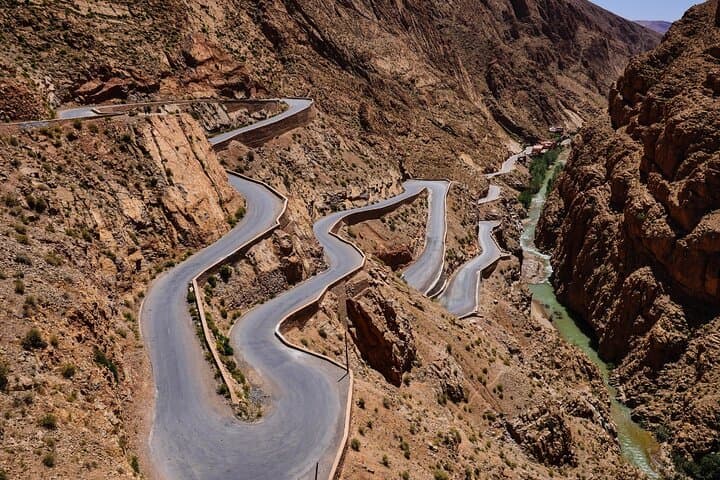
This route traces historic caravan corridors between the Middle Atlas and the High Atlas. Geologically, Erg Chebbi is a modern wind-formed dune field set above ancient alluvial fans from the Ziz River; the Dades Valley cuts through layered sedimentary rock and kasbah-built slopes that tell of water, erosion, and human settlement.
Culturally the trip passes Berber villages where mud-brick kasbahs and market towns like Merzouga and Ouarzazate mark long-standing trade routes and film-industry backdrops. You’ll meet Gnawa musicians in small villages and see dates being dried on rooftops.
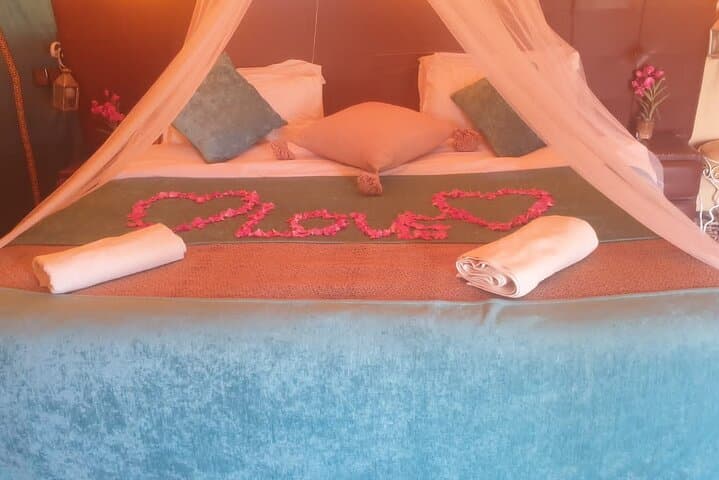
Practical guide: expect two long drives—Fes to Merzouga is roughly 8–9 hours (≈470 km) with stops; Merzouga to Marrakech ~9–10 hours via Ouarzazate and the Tizi n’Tichka pass (over 2,000 m). Bring layered clothing for 10–20°C swings between day and night, sun protection, reusable water, and sturdy shoes for sand and short canyon walks. Camp sleeps can be basic; confirm luggage limits and pickup points. Time key moments around sunrise and sunset at the dunes for the most dramatic light and cooler temperatures.
This three-day itinerary is a concentrated primer on Morocco’s desert geology, Berber culture and high-Atlas passes—practical, intense, and unmistakably scenic.