THE ADVENTURE COLLECTIVE® · Independent discovery and booking for outdoor travel

Spend two days moving from the ancient carved streets of Petra to the otherworldly dunes of Wadi Rum and the buoyant waters of the Dead Sea. This private loop pairs archaeology, Bedouin hospitality and a restorative float at the lowest point on earth.
Spend two days moving from the ancient carved streets of Petra to the otherworldly dunes of Wadi Rum and the buoyant waters of the Dead Sea. This private loop pairs archaeology, Bedouin hospitality and a restorative float at the lowest point on earth.
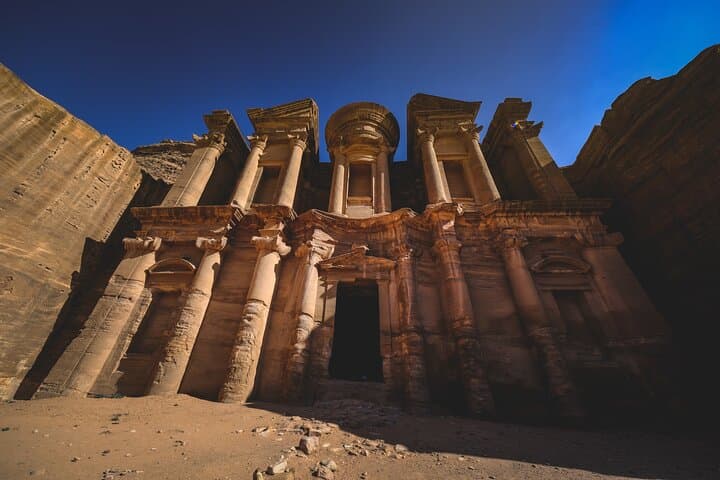
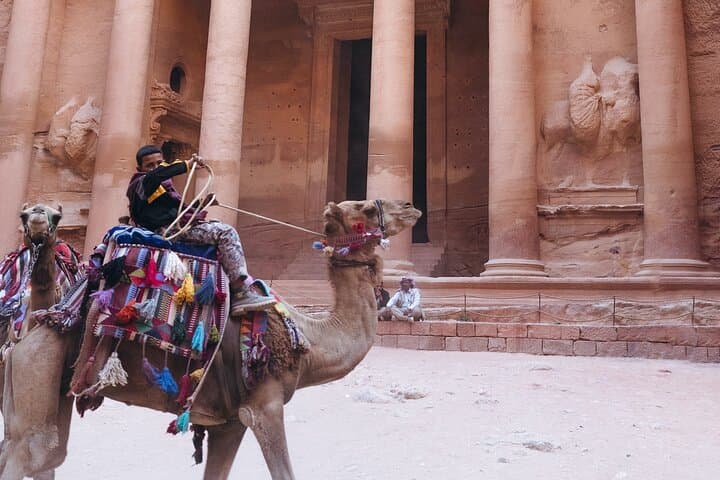
The morning light slices through the Siq — a narrow cleft of rose sandstone that tightens suddenly until the Treasury appears like a carved promise in the rock. You step from the cool shadow into heat and history: columns, reliefs and the slow, patient weathering of 2,000 years. This is Petra at first light, the high point of a two-day loop that moves from carved Nabatean facades to the broad silence of Wadi Rum’s dunes and, finally, to the buoyant, mineral-rich waters of the Dead Sea.
Verified experiences and guided adventures in the surrounding area.
Operated by Alamal Travel &Tourism · Wadi Musa, Ma'an Governorate
The morning light slices through the Siq — a narrow cleft of rose sandstone that tightens suddenly until the Treasury appears like a carved promise in the rock. You step from the cool shadow into heat and history: columns, reliefs and the slow, patient weathering of 2,000 years. This is Petra at first light, the high point of a two-day loop that moves from carved Nabatean facades to the broad silence of Wadi Rum’s dunes and, finally, to the buoyant, mineral-rich waters of the Dead Sea.
The route reads like Jordan condensed: a roughly 3-hour drive from Amman to Wadi Musa (Petra), then about 1.5 hours onward to Wadi Rum, and a longer run — three to four hours — toward the Dead Sea before returning to Amman. Petra sits at about 800–850 m elevation; the Dead Sea bottoms out at roughly –430 m, so the geography changes as dramatically as the light.
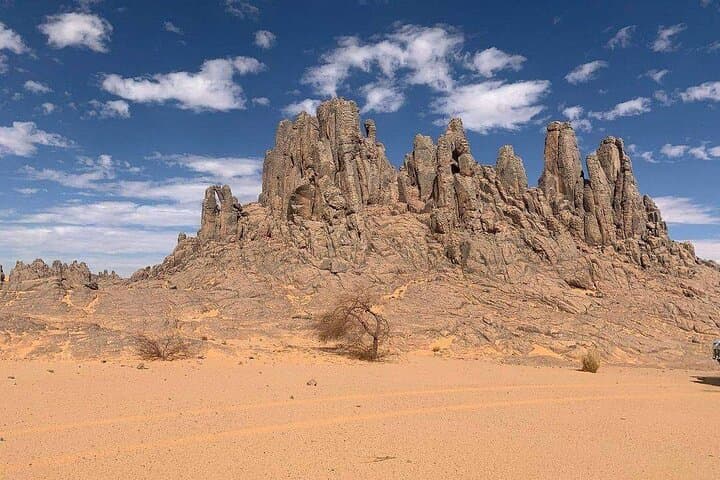
Petra’s carved facades are Nabatean engineering — gravity-fed water systems, rock-cut tombs and a city re-oriented to trade routes across the Arabian Peninsula. Wadi Rum’s landscape is younger geologically but older in human terms: sandstone and granite sculpted by wind and episodic water, where Bedouin camps continue a living culture of hospitality and song. The Dead Sea, a vestige of an ancient inland sea, delivers the region’s most literal contrast — an impossibly salty surface that makes lying on the water a quiet, disorienting pleasure.
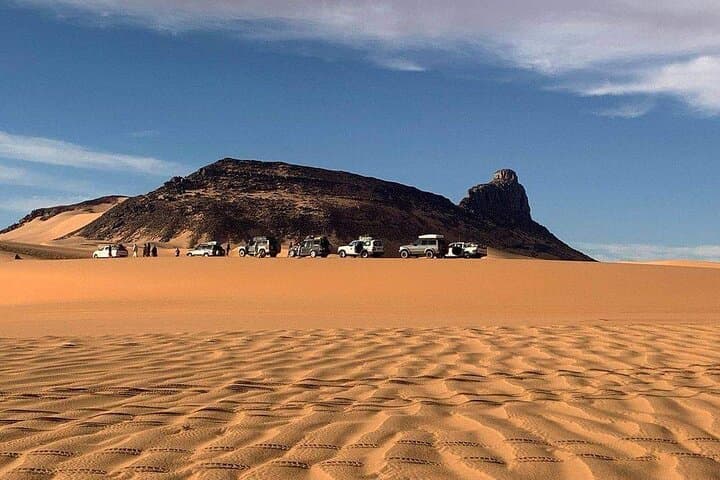
On the practical side, this is a paced, private itinerary: a full day in Petra with time through the Treasury, Royal Tombs and adaptable add-ons; an overnight in a desert camp with an optional deluxe tent; a morning Jeep safari (about 2 hours) through Wadi Rum’s arches and canyons; and an afternoon at a Dead Sea resort with swimming and mud treatments if the all-inclusive option is chosen.
What to prepare: bring sturdy walking shoes and a daypack for Petra’s uneven stone paths; layers for desert nights (temperatures drop sharply after sunset); sun protection and at least 2–3 liters of water per person for outdoor sections; and swimwear and a small towel for the Dead Sea — salt and minerals are therapeutic but harsh on cuts and contacts, so rinse off afterward.
Logistics are simple: private pickup in Amman or from the airport, an English-speaking driver, and optional add-ons like Jeep safaris or camping upgrades. Expect a mix of walking and vehicle time — moderate fitness keeps the days enjoyable. For photographers, aim for the early and late light in Petra, the warm tones of sunset in Wadi Rum, and the reflective stillness of the Dead Sea in the late afternoon. The trip moves quickly but leaves room to sit with the landscape and the long, layered history beneath your feet.
moderate.
2 days (approx. 48 hours).
Reasonable fitness for several hours of walking on uneven terrain and short climbs; not strenuous but expect a full itinerary.
Entry tickets are included only if you select the all‑inclusive option; otherwise you can purchase tickets on arrival—bring cash or card.
Expect about a 3-hour drive (roughly 230 km) depending on traffic; private pickup from Amman or the airport is provided.
Yes—options range from basic Bedouin tents to deluxe tents with beds and shared facilities; confirm your preference when booking.
Short jeep routes are accessible, but some stops require stepping on uneven ground; discuss mobility needs with the operator prior to booking.
Do not submerge your head, avoid splashing, and stay away from inflamed skin or open wounds; remove contact lenses before floating.
Basic water and some meals are included; traditional Bedouin dinner and Dead Sea resort lunch are provided if the selected package includes them—confirm inclusions at booking.
Petra was the capital of the Nabatean kingdom and a vital caravan hub between Arabia and the Mediterranean; Wadi Rum has been inhabited and traversed by nomadic groups for millennia.
Visitors are asked to respect fragile rock art and stick to marked paths; local guides and camps are increasingly adopting sustainable waste and water practices.
Alamal Travel &Tourism operates guided outdoor trips and adventures with an emphasis on safety, stewardship, and memorable experiences.
The morning light slices through the Siq — a narrow cleft of rose sandstone that tightens suddenly until the Treasury appears like a carved promise in the rock. You step from the cool shadow into heat and history: columns, reliefs and the slow, patient weathering of 2,000 years. This is Petra at first light, the high point of a two-day loop that moves from carved Nabatean facades to the broad silence of Wadi Rum’s dunes and, finally, to the buoyant, mineral-rich waters of the Dead Sea.
The morning light slices through the Siq — a narrow cleft of rose sandstone that tightens suddenly until the Treasury appears like a carved promise in the rock. You step from the cool shadow into heat and history: columns, reliefs and the slow, patient weathering of 2,000 years. This is Petra at first light, the high point of a two-day loop that moves from carved Nabatean facades to the broad silence of Wadi Rum’s dunes and, finally, to the buoyant, mineral-rich waters of the Dead Sea.
The route reads like Jordan condensed: a roughly 3-hour drive from Amman to Wadi Musa (Petra), then about 1.5 hours onward to Wadi Rum, and a longer run — three to four hours — toward the Dead Sea before returning to Amman. Petra sits at about 800–850 m elevation; the Dead Sea bottoms out at roughly –430 m, so the geography changes as dramatically as the light.
Petra’s carved facades are Nabatean engineering — gravity-fed water systems, rock-cut tombs and a city re-oriented to trade routes across the Arabian Peninsula. Wadi Rum’s landscape is younger geologically but older in human terms: sandstone and granite sculpted by wind and episodic water, where Bedouin camps continue a living culture of hospitality and song. The Dead Sea, a vestige of an ancient inland sea, delivers the region’s most literal contrast — an impossibly salty surface that makes lying on the water a quiet, disorienting pleasure.
On the practical side, this is a paced, private itinerary: a full day in Petra with time through the Treasury, Royal Tombs and adaptable add-ons; an overnight in a desert camp with an optional deluxe tent; a morning Jeep safari (about 2 hours) through Wadi Rum’s arches and canyons; and an afternoon at a Dead Sea resort with swimming and mud treatments if the all-inclusive option is chosen.
What to prepare: bring sturdy walking shoes and a daypack for Petra’s uneven stone paths; layers for desert nights (temperatures drop sharply after sunset); sun protection and at least 2–3 liters of water per person for outdoor sections; and swimwear and a small towel for the Dead Sea — salt and minerals are therapeutic but harsh on cuts and contacts, so rinse off afterward.
Logistics are simple: private pickup in Amman or from the airport, an English-speaking driver, and optional add-ons like Jeep safaris or camping upgrades. Expect a mix of walking and vehicle time — moderate fitness keeps the days enjoyable. For photographers, aim for the early and late light in Petra, the warm tones of sunset in Wadi Rum, and the reflective stillness of the Dead Sea in the late afternoon. The trip moves quickly but leaves room to sit with the landscape and the long, layered history beneath your feet.