THE ADVENTURE COLLECTIVE® · Independent discovery and booking for outdoor travel

A tight, two-day loop from Nairobi that pairs active exploration at Hell’s Gate with a boat ride on Lake Naivasha and a game drive at Lake Nakuru. Ideal for travelers who want raw Rift Valley geology, close birdlife and reliable wildlife sightings with minimal planning.
A tight, two-day loop from Nairobi that pairs active exploration at Hell’s Gate with a boat ride on Lake Naivasha and a game drive at Lake Nakuru. Ideal for travelers who want raw Rift Valley geology, close birdlife and reliable wildlife sightings with minimal planning.
You step out into the Nairobi morning and the city’s traffic thins quickly into open sky. Within an hour the car is coasting along the rim of the Great Rift Valley — the road a ribbon cut into volcanic slopes — and the air sharpens. On day one the landscape loosens its grip on the urban grid: red earth, gullied escarpments and the first suggestion of a lake shimmering below. At Hell’s Gate the trucks are left behind and cyclists mount sturdy mountain bikes for two hours of trail riding among cliffs and scrub. Rock faces, warmed by the sun, seem to lean in as you pass the narrow gorge mouths; the breeze off Lake Naivasha cools your neck and mornings are full of bird calls that dart like punctuation marks.
Verified experiences and guided adventures in the surrounding area.
Operated by Shagami Kenya Tours and Safaris · Nairobi, Nairobi County
You step out into the Nairobi morning and the city’s traffic thins quickly into open sky. Within an hour the car is coasting along the rim of the Great Rift Valley — the road a ribbon cut into volcanic slopes — and the air sharpens. On day one the landscape loosens its grip on the urban grid: red earth, gullied escarpments and the first suggestion of a lake shimmering below. At Hell’s Gate the trucks are left behind and cyclists mount sturdy mountain bikes for two hours of trail riding among cliffs and scrub. Rock faces, warmed by the sun, seem to lean in as you pass the narrow gorge mouths; the breeze off Lake Naivasha cools your neck and mornings are full of bird calls that dart like punctuation marks.
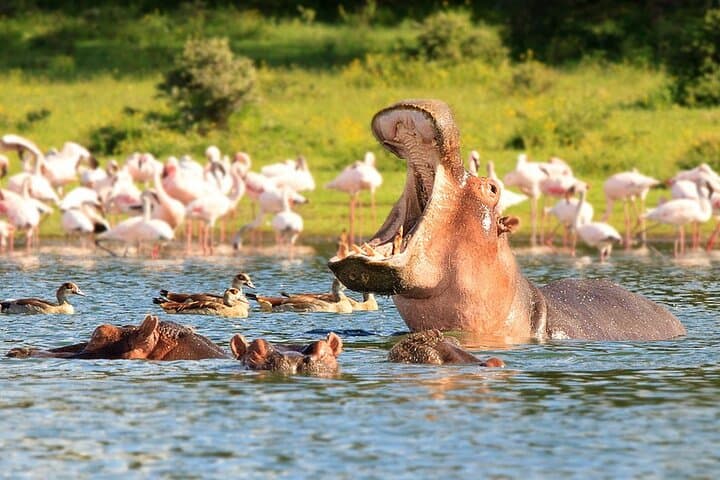
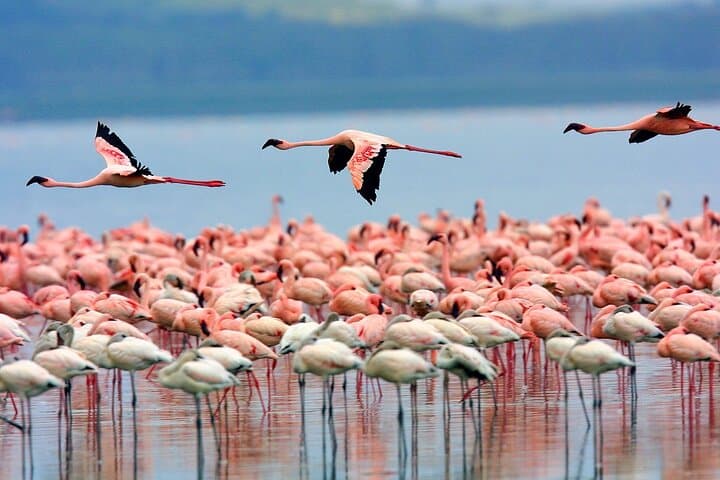
This shortcut escape threads together three distinct natural histories. Hell’s Gate is a living incision of the Rift — basalt cliffs, fumaroles and gorge walls carved by tectonics — while Lake Naivasha is a freshwater hub that supports hippos and fish eagles. Lake Nakuru, a little farther north, sits in a shallow caldera and is famously—and unpredictably—fringed by flamingos when algal blooms thrive. Maasai communities farm and graze nearby, and the roads between parks cut through land shaped by volcanic upheaval and colonial-era settlement patterns that established the early lodges.
Culturally the area balances wildlife tourism and local livelihoods: Maasai bomas can be visited along the route; small-scale fishing and flower farms define Naivasha’s economy. Conservation here is pragmatic — water levels, pollution and invasive species affect flamingo numbers and hippo habitat, so operators prioritize buffer zones and responsible boating to avoid disturbing animals.
Practically speaking, the itinerary is compact but well-paced: two hours cycling at Hell’s Gate, a one-hour gorge walk and a one-hour boat trip on Lake Naivasha on day one, overnight at a lodge near Nakuru, then a half-day game drive in Lake Nakuru National Park on day two. Terrain alternates between paved and uneven dirt roads; expect light climbs on cycling sections and short, rocky walks through the gorges. Elevation around Naivasha and Nakuru is ~1,800–1,900 m, so the air feels brisk in the morning.
For comfort and safety pack closed-toe shoes for cycling and game drives, sun protection and a small daypack with water. Bring binoculars and a tele lens if you want crisp shots of birds and distant rhino. Hydrate often — the Kenyan sun works steadily — and carry local cash for small purchases and tips. If you prefer not to cycle, vehicle transfers are available on the same schedule.
This two-day loop gives the broad strokes of the Rift: sharp geology, intimate wildlife encounters and the steady human rhythm of small towns and lodges. It’s a concise safari that rewards early mornings, patience at the water’s edge and a willingness to swap the city skyline for big African skylines.
moderate.
2 days.
Suitable for reasonably fit travelers comfortable with short cycling segments and game-drive vehicle time; minimal hiking required.
Yes—most routes are on wide paths and guided rides accommodate beginners; you can opt to be driven if you prefer not to cycle.
Admission and the listed activities are included in this package as described in the itinerary, but optional extras and some meals may be at additional cost.
Children are allowed but infants must sit on an adult’s lap during transport; confirm age policies with the operator when booking.
Day one commonly features birds, hippos and small ungulates around Naivasha and scattered wildlife in Hell’s Gate; day two’s game drive at Lake Nakuru can produce rhino, giraffe, buffalo and, seasonally, large flocks of flamingos.
Layered clothing works best: mornings are cool, afternoons warm; closed-toe shoes are required for cycling and walks, plus a hat and sunscreen.
Expect roughly 1.5–2 hours each way depending on traffic and road conditions—pickups are timed accordingly and you’ll return to Nairobi by about 5pm on day two.
The Rift Valley corridor has been shaped by volcanic activity and human settlement for millennia; colonial-era ranching and later conservation efforts established many of the lodges and park boundaries you visit today.
Flamingo numbers at Lake Nakuru fluctuate with water chemistry and algal blooms; operators encourage low-impact boating and strict waste controls to protect lake ecosystems.
Shagami Kenya Tours and Safaris operates guided outdoor trips and adventures with an emphasis on safety, stewardship, and memorable experiences.


You step out into the Nairobi morning and the city’s traffic thins quickly into open sky. Within an hour the car is coasting along the rim of the Great Rift Valley — the road a ribbon cut into volcanic slopes — and the air sharpens. On day one the landscape loosens its grip on the urban grid: red earth, gullied escarpments and the first suggestion of a lake shimmering below. At Hell’s Gate the trucks are left behind and cyclists mount sturdy mountain bikes for two hours of trail riding among cliffs and scrub. Rock faces, warmed by the sun, seem to lean in as you pass the narrow gorge mouths; the breeze off Lake Naivasha cools your neck and mornings are full of bird calls that dart like punctuation marks.
You step out into the Nairobi morning and the city’s traffic thins quickly into open sky. Within an hour the car is coasting along the rim of the Great Rift Valley — the road a ribbon cut into volcanic slopes — and the air sharpens. On day one the landscape loosens its grip on the urban grid: red earth, gullied escarpments and the first suggestion of a lake shimmering below. At Hell’s Gate the trucks are left behind and cyclists mount sturdy mountain bikes for two hours of trail riding among cliffs and scrub. Rock faces, warmed by the sun, seem to lean in as you pass the narrow gorge mouths; the breeze off Lake Naivasha cools your neck and mornings are full of bird calls that dart like punctuation marks.
This shortcut escape threads together three distinct natural histories. Hell’s Gate is a living incision of the Rift — basalt cliffs, fumaroles and gorge walls carved by tectonics — while Lake Naivasha is a freshwater hub that supports hippos and fish eagles. Lake Nakuru, a little farther north, sits in a shallow caldera and is famously—and unpredictably—fringed by flamingos when algal blooms thrive. Maasai communities farm and graze nearby, and the roads between parks cut through land shaped by volcanic upheaval and colonial-era settlement patterns that established the early lodges.
Culturally the area balances wildlife tourism and local livelihoods: Maasai bomas can be visited along the route; small-scale fishing and flower farms define Naivasha’s economy. Conservation here is pragmatic — water levels, pollution and invasive species affect flamingo numbers and hippo habitat, so operators prioritize buffer zones and responsible boating to avoid disturbing animals.
Practically speaking, the itinerary is compact but well-paced: two hours cycling at Hell’s Gate, a one-hour gorge walk and a one-hour boat trip on Lake Naivasha on day one, overnight at a lodge near Nakuru, then a half-day game drive in Lake Nakuru National Park on day two. Terrain alternates between paved and uneven dirt roads; expect light climbs on cycling sections and short, rocky walks through the gorges. Elevation around Naivasha and Nakuru is ~1,800–1,900 m, so the air feels brisk in the morning.
For comfort and safety pack closed-toe shoes for cycling and game drives, sun protection and a small daypack with water. Bring binoculars and a tele lens if you want crisp shots of birds and distant rhino. Hydrate often — the Kenyan sun works steadily — and carry local cash for small purchases and tips. If you prefer not to cycle, vehicle transfers are available on the same schedule.
This two-day loop gives the broad strokes of the Rift: sharp geology, intimate wildlife encounters and the steady human rhythm of small towns and lodges. It’s a concise safari that rewards early mornings, patience at the water’s edge and a willingness to swap the city skyline for big African skylines.