THE ADVENTURE COLLECTIVE® · Independent discovery and booking for outdoor travel

Two days of high-alpine hiking from Marrakech to the summit of North Africa’s highest peak. Expect long days, steep scree, Berber villages, and expansive views across the Atlas and toward the Sahara.
Two days of high-alpine hiking from Marrakech to the summit of North Africa’s highest peak. Expect long days, steep scree, Berber villages, and expansive views across the Atlas and toward the Sahara.
Dawn arrives cold and clear on the trail to Jbel Toubkal. You leave Marrakech's ochre sprawl and climb into the Aït Mizane valley, where mule tracks rise through terraced fields, gullies of stone, and whitewashed Berber houses. The first day climbs steadily to the Toubkal Refuge at 3,207 m — a place of steaming tea, heavy boots, and the smell of wood smoke. The second day begins before sunrise: a staccato rhythm of boots on scree, crossing seasonally swollen streams, then a final rocky ridge to 4,167 m and views that push south to the Sahara and north to the Rif.
Verified experiences and guided adventures in the surrounding area.
Operated by MARRAKECH BEST TRIPS · Imlil, Marrakesh-Safi
Dawn arrives cold and clear on the trail to Jbel Toubkal. You leave Marrakech's ochre sprawl and climb into the Aït Mizane valley, where mule tracks rise through terraced fields, gullies of stone, and whitewashed Berber houses. The first day climbs steadily to the Toubkal Refuge at 3,207 m — a place of steaming tea, heavy boots, and the smell of wood smoke. The second day begins before sunrise: a staccato rhythm of boots on scree, crossing seasonally swollen streams, then a final rocky ridge to 4,167 m and views that push south to the Sahara and north to the Rif.
Geology here is volcanic and metamorphic, folded and scoured by glaciation; the cirques and sharp ridgelines explain why the High Atlas feels alpine despite its latitude. Culturally, the area is Berber country — small villages, seasonal herding, and communal shelters that have long hosted travelers. Local guides and muleteers are part of that tradition, and their knowledge is central to safety and to understanding local land use.
Practical guidance: pace conservatively for altitude, drink often, and wear stiff-sole boots for rocky, sometimes icy ground. Expect long walking hours on day two (10–12 hours round trip from the refuge) and plan for large temperature swings. The refuge provides a bed and meals; you should bring layered clothing, sun protection, and a small first-aid kit. Start early on summit day to avoid afternoon wind and to catch the clearest views. Respect grazing routes and carry out all waste — the mountain is fragile and in need of minimal-impact travel.
challenging.
2 days (summit day 10–12 hours).
Good cardiovascular fitness and comfort with sustained uphill hiking at altitude; previous multi-day trekking experience recommended.
You should be comfortable hiking 6–8 hours with a daypack; summit day is longer (10–12 hours) and requires sustained uphill stamina.
No technical climbing gear is needed for the normal route—good boots, layers, poles, and a headlamp are sufficient.
The summit is 4,167 m; altitude sickness can occur—ascend slowly, hydrate, and inform guides of any symptoms.
The Toubkal Refuge offers basic beds, meals, and shelter; expect communal sleeping and simple hot meals provided by the team.
The High Atlas has been home to Berber communities for millennia; Toubkal routes have long connected seasonal pastures and trade paths.
Stick to marked trails, pack out waste, and use local guides—visiting responsibly helps limit erosion and supports community stewardship.
MARRAKECH BEST TRIPS operates guided outdoor trips and adventures with an emphasis on safety, stewardship, and memorable experiences.
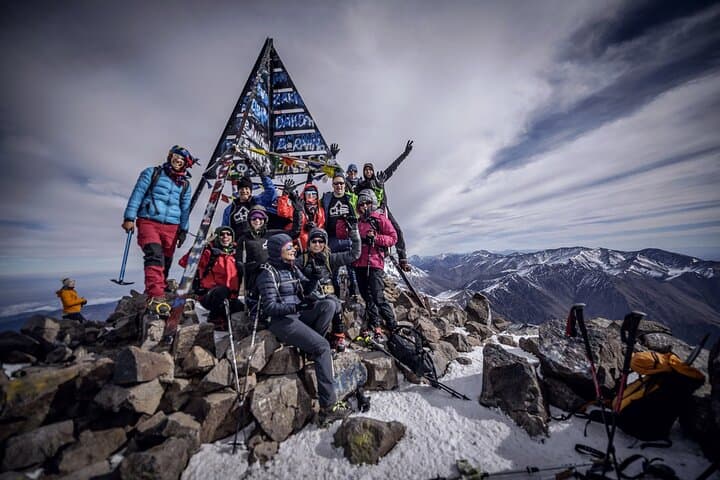
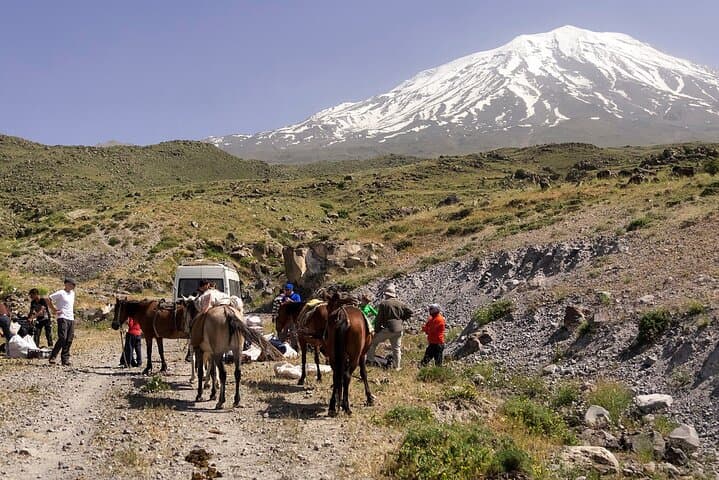
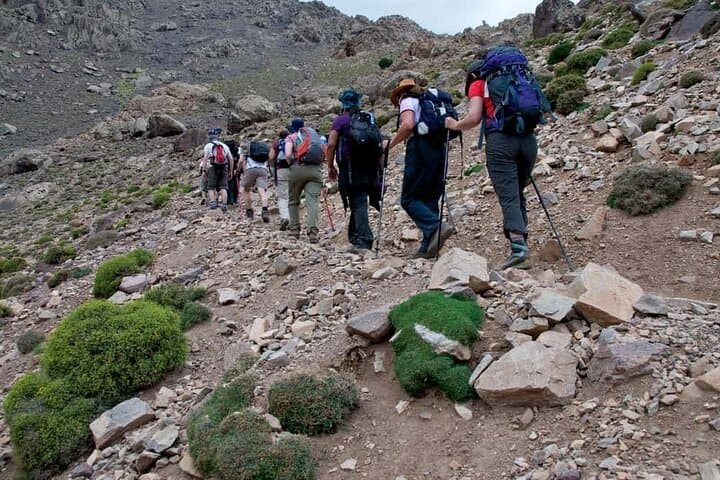
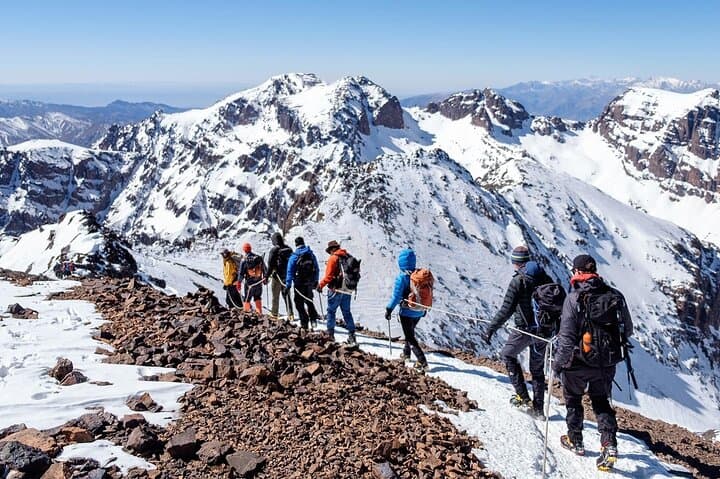
Dawn arrives cold and clear on the trail to Jbel Toubkal. You leave Marrakech's ochre sprawl and climb into the Aït Mizane valley, where mule tracks rise through terraced fields, gullies of stone, and whitewashed Berber houses. The first day climbs steadily to the Toubkal Refuge at 3,207 m — a place of steaming tea, heavy boots, and the smell of wood smoke. The second day begins before sunrise: a staccato rhythm of boots on scree, crossing seasonally swollen streams, then a final rocky ridge to 4,167 m and views that push south to the Sahara and north to the Rif.
Dawn arrives cold and clear on the trail to Jbel Toubkal. You leave Marrakech's ochre sprawl and climb into the Aït Mizane valley, where mule tracks rise through terraced fields, gullies of stone, and whitewashed Berber houses. The first day climbs steadily to the Toubkal Refuge at 3,207 m — a place of steaming tea, heavy boots, and the smell of wood smoke. The second day begins before sunrise: a staccato rhythm of boots on scree, crossing seasonally swollen streams, then a final rocky ridge to 4,167 m and views that push south to the Sahara and north to the Rif.
Geology here is volcanic and metamorphic, folded and scoured by glaciation; the cirques and sharp ridgelines explain why the High Atlas feels alpine despite its latitude. Culturally, the area is Berber country — small villages, seasonal herding, and communal shelters that have long hosted travelers. Local guides and muleteers are part of that tradition, and their knowledge is central to safety and to understanding local land use.
Practical guidance: pace conservatively for altitude, drink often, and wear stiff-sole boots for rocky, sometimes icy ground. Expect long walking hours on day two (10–12 hours round trip from the refuge) and plan for large temperature swings. The refuge provides a bed and meals; you should bring layered clothing, sun protection, and a small first-aid kit. Start early on summit day to avoid afternoon wind and to catch the clearest views. Respect grazing routes and carry out all waste — the mountain is fragile and in need of minimal-impact travel.