THE ADVENTURE COLLECTIVE® · Independent discovery and booking for outdoor travel

An efficient, two-day climb on Kilimanjaro’s classic Marangu Route: rainforest tracts, Mandara Huts overnight, and moorland views of Kibo and Mawenzi. Ideal for travelers short on time who want a real mountain experience with experienced local guides.
An efficient, two-day climb on Kilimanjaro’s classic Marangu Route: rainforest tracts, Mandara Huts overnight, and moorland views of Kibo and Mawenzi. Ideal for travelers short on time who want a real mountain experience with experienced local guides.
You shoulder your pack beneath a sky that feels impossibly close. The road from Moshi unwinds through banana plantations and shifting light until the rainforest edge, and the mountain—broad, cloud-brushed—begins to assert itself. By the time you sign in at Marangu Gate the guide has already chalked the plan in steady, practical strokes: a march through moss-wet forest to Mandara Huts, a night at 2,720 meters, then a rise into moorland before descending back to the gate and the slow hum of town.
Verified experiences and guided adventures in the surrounding area.
Operated by Africa Exhibition Safari Agency · Moshi, Kilimanjaro Region
You shoulder your pack beneath a sky that feels impossibly close. The road from Moshi unwinds through banana plantations and shifting light until the rainforest edge, and the mountain—broad, cloud-brushed—begins to assert itself. By the time you sign in at Marangu Gate the guide has already chalked the plan in steady, practical strokes: a march through moss-wet forest to Mandara Huts, a night at 2,720 meters, then a rise into moorland before descending back to the gate and the slow hum of town.
The Marangu Route, nicknamed the “Coca-Cola” path for its relative accessibility, is the oldest established trail up Kilimanjaro and carries echoes of early explorers and colonial-era hut systems. Geologically, Kilimanjaro is a stratovolcano with three volcanic cones—Kibo, Mawenzi and Shira—whose ancient lava flows shaped the broad alpine slopes you’ll see unfolding above the tree line. Culturally, the route crosses Chagga farmlands and forest that local communities have long managed for water and firewood; guides are often from those villages and translate both mountain lore and practical etiquette for visitors.
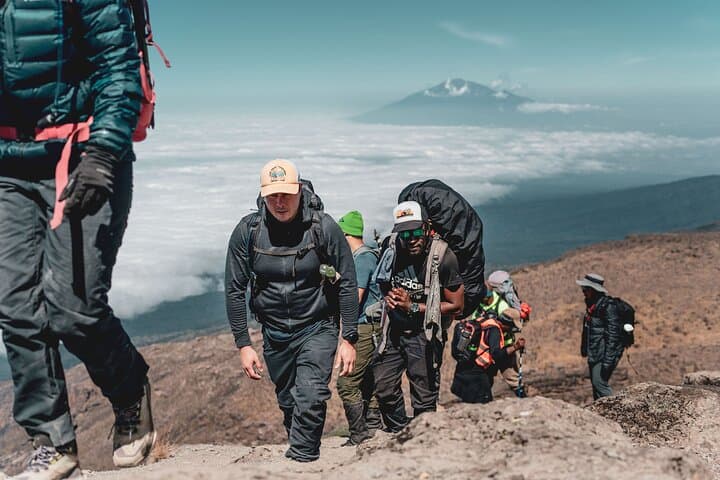
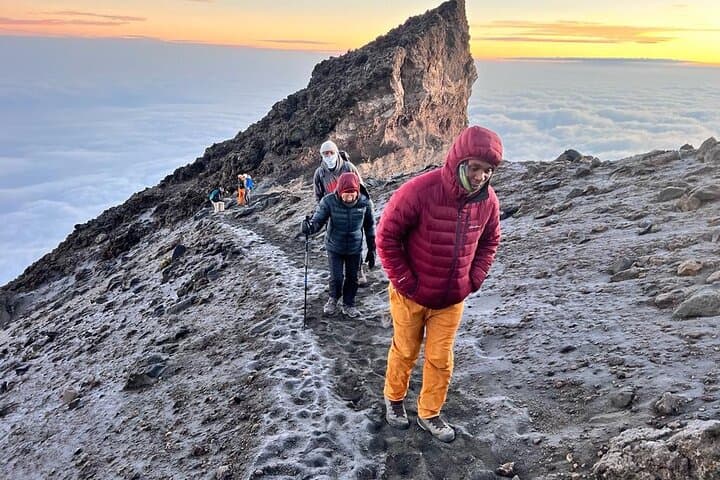
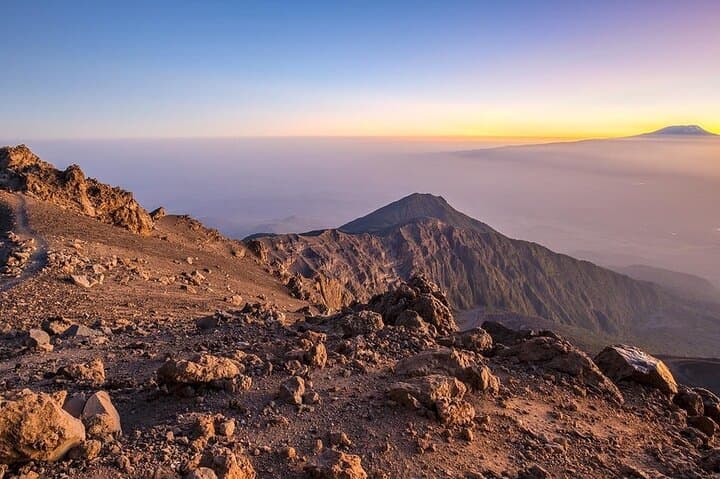
Day one is compact and concentrated: about 7 km of uphill through montane forest (elevation 1,970m to 2,720m), roughly 3–4 hours to Mandara Hut. Keep an eye open for black-and-white colobus monkeys moving like punctuation through branches and for sunbirds at flowering heathers. Day two pushes over heath and moorland, past towering lobelia and giant groundsels, offering intermittent panoramas of Kibo’s snow-capped cone and Mawenzi’s serrated ridge. Expect roughly 5 km of ascent and a longer 12 km descent back to Marangu Gate—plan on 3–4 hours up and 5–6 hours down.
Practically: the route’s reward is efficient altitude gain with established huts and a single overnight, but altitude still matters—headache, nausea or fatigue can arrive even on an express itinerary. Weather shifts quickly; mist can thicken in minutes, sun can be fierce at high elevation. Hydrate, layer, and walk steadily. The guides provided are licensed Kilimanjaro guides who manage pace, porters, and hut logistics; tipping and clear communication about any medical conditions are expected.
This two-day round trip is ideal for travelers short on time who still want a meaningful mountain experience: the rainforest’s hush, the moorland’s winds that seem to push you forward, and the compact, practical rhythm of climbing with experienced local guides. Leave no trace, respect the park rules, and plan to sleep well in Moshi after—your legs and lungs will thank you.
moderate.
2 days.
Moderate fitness; regular walkers who can handle long days and stairs will be comfortable, but anyone sensitive to altitude should consult a physician.
It’s a compact, moderate itinerary with one overnight at Mandara Hut; the short schedule increases altitude-related risk compared with longer itineraries, so steady pace and hydration matter.
No technical experience is required, but previous multi-hour hikes will help; if you have heart or respiratory conditions consult your doctor first.
Meals listed include breakfast, lunch and dinner with an overnight at Mandara Hut (budget lodge-style hut shared dormitory facilities).
From Arusha expect about a 3-hour drive to Marangu Gate; from Moshi it’s typically shorter—around 1–1.5 hours depending on traffic and road conditions.
This tour lists fees and taxes as included, but confirm at booking for details and any optional extras like porter tips or personal gear rental.
Families with older, fit children may manage the route, but because of altitude and long hiking days it’s not recommended for very young kids.
The Marangu Route is Kilimanjaro’s oldest established trail and has long been used by local Chagga communities; the mountain’s first recorded summit was in the late 19th century, tying the route to early exploration history.
Kilimanjaro National Park protects distinct vegetation belts from montane forest to alpine desert—stay on trails, avoid disturbing flora like lobelia, and pack out all waste to minimize impact.
Africa Exhibition Safari Agency operates guided outdoor trips and adventures with an emphasis on safety, stewardship, and memorable experiences.
You shoulder your pack beneath a sky that feels impossibly close. The road from Moshi unwinds through banana plantations and shifting light until the rainforest edge, and the mountain—broad, cloud-brushed—begins to assert itself. By the time you sign in at Marangu Gate the guide has already chalked the plan in steady, practical strokes: a march through moss-wet forest to Mandara Huts, a night at 2,720 meters, then a rise into moorland before descending back to the gate and the slow hum of town.
You shoulder your pack beneath a sky that feels impossibly close. The road from Moshi unwinds through banana plantations and shifting light until the rainforest edge, and the mountain—broad, cloud-brushed—begins to assert itself. By the time you sign in at Marangu Gate the guide has already chalked the plan in steady, practical strokes: a march through moss-wet forest to Mandara Huts, a night at 2,720 meters, then a rise into moorland before descending back to the gate and the slow hum of town.
The Marangu Route, nicknamed the “Coca-Cola” path for its relative accessibility, is the oldest established trail up Kilimanjaro and carries echoes of early explorers and colonial-era hut systems. Geologically, Kilimanjaro is a stratovolcano with three volcanic cones—Kibo, Mawenzi and Shira—whose ancient lava flows shaped the broad alpine slopes you’ll see unfolding above the tree line. Culturally, the route crosses Chagga farmlands and forest that local communities have long managed for water and firewood; guides are often from those villages and translate both mountain lore and practical etiquette for visitors.
Day one is compact and concentrated: about 7 km of uphill through montane forest (elevation 1,970m to 2,720m), roughly 3–4 hours to Mandara Hut. Keep an eye open for black-and-white colobus monkeys moving like punctuation through branches and for sunbirds at flowering heathers. Day two pushes over heath and moorland, past towering lobelia and giant groundsels, offering intermittent panoramas of Kibo’s snow-capped cone and Mawenzi’s serrated ridge. Expect roughly 5 km of ascent and a longer 12 km descent back to Marangu Gate—plan on 3–4 hours up and 5–6 hours down.
Practically: the route’s reward is efficient altitude gain with established huts and a single overnight, but altitude still matters—headache, nausea or fatigue can arrive even on an express itinerary. Weather shifts quickly; mist can thicken in minutes, sun can be fierce at high elevation. Hydrate, layer, and walk steadily. The guides provided are licensed Kilimanjaro guides who manage pace, porters, and hut logistics; tipping and clear communication about any medical conditions are expected.
This two-day round trip is ideal for travelers short on time who still want a meaningful mountain experience: the rainforest’s hush, the moorland’s winds that seem to push you forward, and the compact, practical rhythm of climbing with experienced local guides. Leave no trace, respect the park rules, and plan to sleep well in Moshi after—your legs and lungs will thank you.