THE ADVENTURE COLLECTIVE® · Independent discovery and booking for outdoor travel

Drift 13 miles down the Snake River beneath snowcapped Tetons on a three‑hour guided float. Watch for eagles, otters and moose while guides explain the valley’s geology and ecology.
Drift 13 miles down the Snake River beneath snowcapped Tetons on a three‑hour guided float. Watch for eagles, otters and moose while guides explain the valley’s geology and ecology.
The river opens before you: broad, cold water threading through sage and cottonwood, the Tetons rising like a folded wall to the west. On a three‑hour, 13‑mile float you move almost imperceptibly downstream — the current nudging the boat while guides point out an osprey stooping, beavers reworking a bank, and the occasional moose hesitating at a back eddy.
Verified experiences and guided adventures in the surrounding area.
Operated by Snake River Park Float Trips · Jackson, Wyoming
The river opens before you: broad, cold water threading through sage and cottonwood, the Tetons rising like a folded wall to the west. On a three‑hour, 13‑mile float you move almost imperceptibly downstream — the current nudging the boat while guides point out an osprey stooping, beavers reworking a bank, and the occasional moose hesitating at a back eddy.
This stretch of the Snake River sits between Grand Teton National Park and Bridger‑Teton National Forest. Geologically, the Tetons are a young fault‑block range uplifted against an ancient valley carved by glaciers; the river has reworked those glacial deposits into braided channels and willow flats that concentrate wildlife. Human history here includes Shoshone use of the valley, later European fur trappers, and the ranching communities that shaped modern Jackson Hole.
Guides mix ecology and local lore — why cutthroat trout favor certain riffles, how river otters fish in winter, and how seasonal flows change the river’s personality. For travelers the experience is low‑impact but high‑reward: comfortably seated in a stable raft, you get prolonged wildlife viewing without long hikes or road noise.
Practical notes: expect cool mornings, especially in spring and fall; PFDs and blankets are provided and minimum age is 4. Bring layered, water‑resistant clothing, binoculars, and a zoom lens. Book early — trips fill fast in summer — and arrive ready to listen, stay still, and let the river show you a quieter side of the Tetons.
easy.
3 hours.
Suitable for most fitness levels; primarily sitting with occasional light stepping in/out of craft
The trip covers about 13 miles and lasts roughly three hours; it’s an easy, seated float suitable for most ages (minimum age 4).
Yes—personal flotation devices are provided and required for all participants.
Guides know high‑probability areas and sightings are common (eagles, otters, beaver), but wildlife is not guaranteed—animals move with seasons and weather.
Trips can be canceled for unsafe conditions; check cancellation policy and dress for cold, wet conditions especially in spring and fall.
The Snake River corridor was used by Shoshone people and later by fur trappers and ranchers; the modern tourism economy grew with early 20th‑century conservation and park development.
Stay on guided trips, avoid feeding wildlife, and carry out all trash; the riparian willows and trout populations are sensitive to disturbance and changing water flows.
Snake River Park Float Trips operates guided outdoor trips and adventures with an emphasis on safety, stewardship, and memorable experiences.
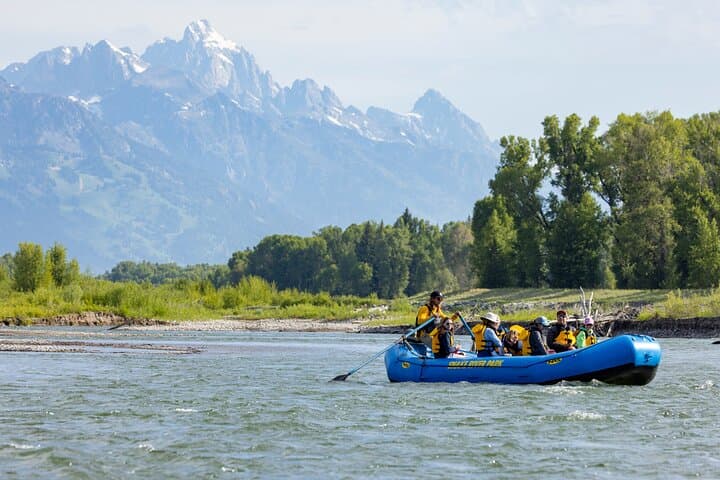
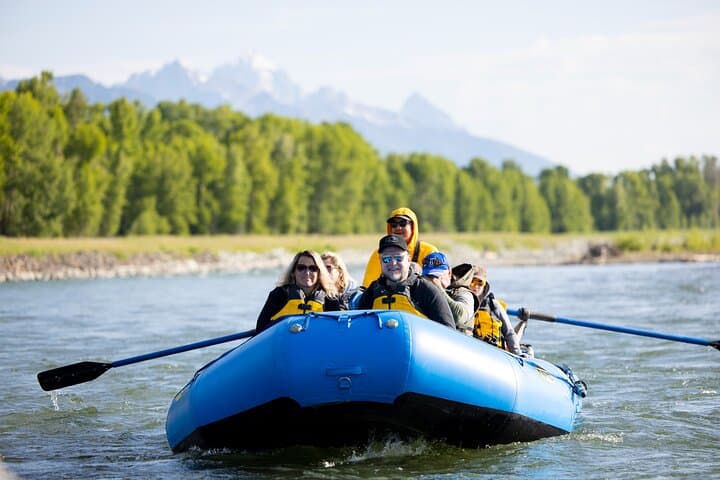
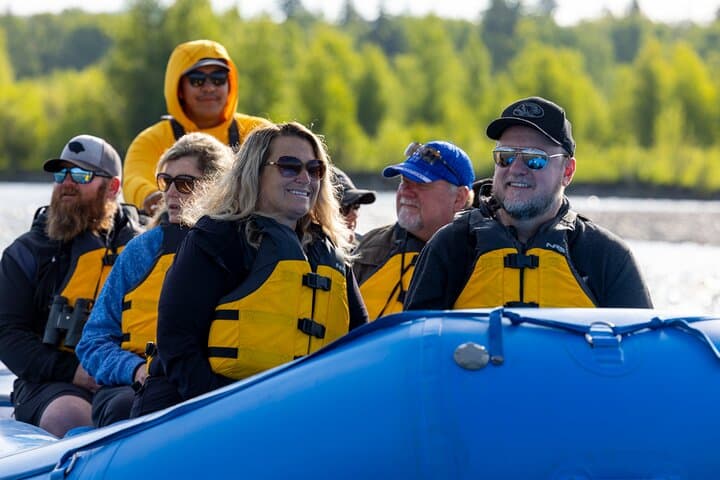
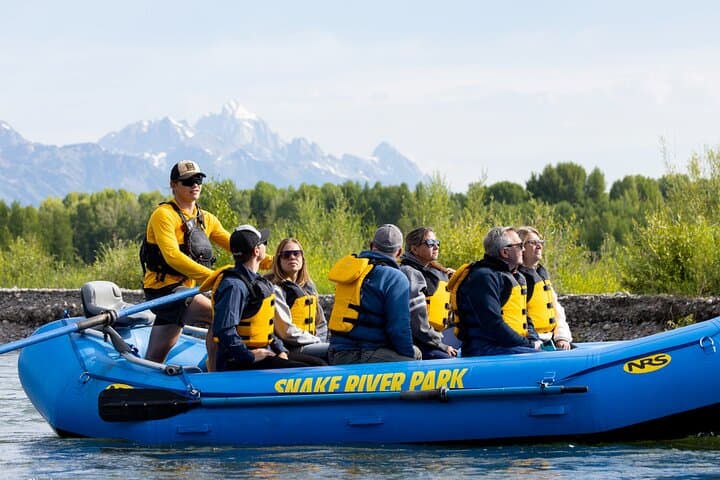
The river opens before you: broad, cold water threading through sage and cottonwood, the Tetons rising like a folded wall to the west. On a three‑hour, 13‑mile float you move almost imperceptibly downstream — the current nudging the boat while guides point out an osprey stooping, beavers reworking a bank, and the occasional moose hesitating at a back eddy.
The river opens before you: broad, cold water threading through sage and cottonwood, the Tetons rising like a folded wall to the west. On a three‑hour, 13‑mile float you move almost imperceptibly downstream — the current nudging the boat while guides point out an osprey stooping, beavers reworking a bank, and the occasional moose hesitating at a back eddy.
This stretch of the Snake River sits between Grand Teton National Park and Bridger‑Teton National Forest. Geologically, the Tetons are a young fault‑block range uplifted against an ancient valley carved by glaciers; the river has reworked those glacial deposits into braided channels and willow flats that concentrate wildlife. Human history here includes Shoshone use of the valley, later European fur trappers, and the ranching communities that shaped modern Jackson Hole.
Guides mix ecology and local lore — why cutthroat trout favor certain riffles, how river otters fish in winter, and how seasonal flows change the river’s personality. For travelers the experience is low‑impact but high‑reward: comfortably seated in a stable raft, you get prolonged wildlife viewing without long hikes or road noise.
Practical notes: expect cool mornings, especially in spring and fall; PFDs and blankets are provided and minimum age is 4. Bring layered, water‑resistant clothing, binoculars, and a zoom lens. Book early — trips fill fast in summer — and arrive ready to listen, stay still, and let the river show you a quieter side of the Tetons.