THE ADVENTURE COLLECTIVE® · Independent discovery and booking for outdoor travel

Drive from Ulaanbaatar into a country of open grasslands, wild takhi horses and dunes that sing. This 12-day private family tour pairs accessible hikes and ger-camp nights with cultural sites from Karakorum to the Flaming Cliffs.
Drive from Ulaanbaatar into a country of open grasslands, wild takhi horses and dunes that sing. This 12-day private family tour pairs accessible hikes and ger-camp nights with cultural sites from Karakorum to the Flaming Cliffs.
The engine hums as the city fall away and the steppe opens—an ocean of waist-high grass that seems to push at the windows and insist you slow down. On day two, a herd of takhi, the Przewalski’s wild horses, lifts their heads from grazing and regards you like a distant curiosity before melting back into the plain. You feel the rhythm of the road more than the miles: hours of quiet vistas punctuated by sudden cliffs, temple ruins and wind-carved ridgelines.
Verified experiences and guided adventures in the surrounding area.
Operated by Travel China Guide · Ulaanbaatar, Ulaanbaatar
The engine hums as the city fall away and the steppe opens—an ocean of waist-high grass that seems to push at the windows and insist you slow down. On day two, a herd of takhi, the Przewalski’s wild horses, lifts their heads from grazing and regards you like a distant curiosity before melting back into the plain. You feel the rhythm of the road more than the miles: hours of quiet vistas punctuated by sudden cliffs, temple ruins and wind-carved ridgelines.
This itinerary threads Mongolia’s sweep—from the modern grid of Ulaanbaatar to the UNESCO-protected Orkhon Valley, the flaming red of Bayanzag, and the singing sands of Khongoryn. Karakorum (Kharkhorin) sits as a flattened echo of Genghis Khan’s imperial capital; stone fragments and the reconstructed Erdene Zuu Monastery tell a story of conquest, religion and reinvention. Geology does its own narrating: limestone at Tsagaan Suvarga carved into white columns, granite tors at Baga Gazriin Chuluu, and wind-sculpted dunes that rise 100–300 meters and hum when the wind gathers—hence “Singing Sand.”
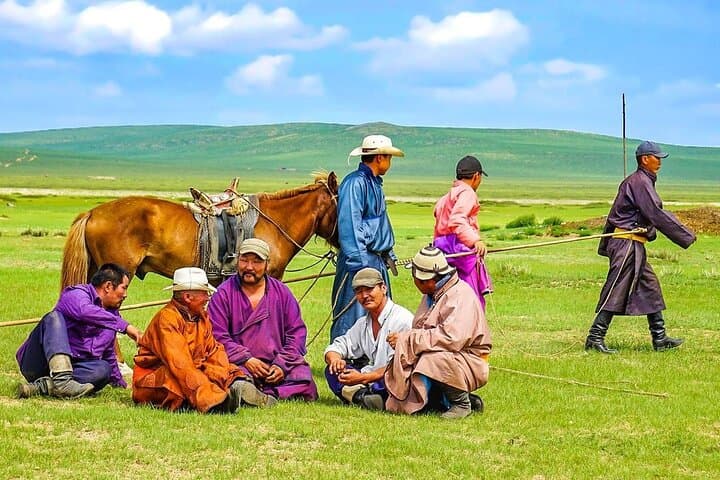
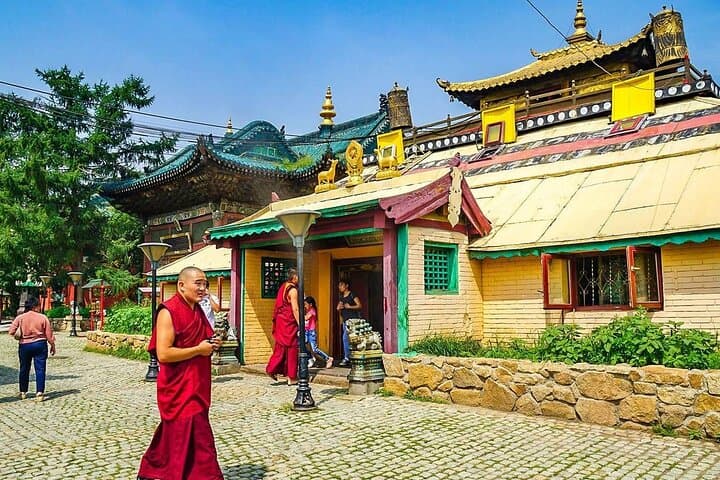
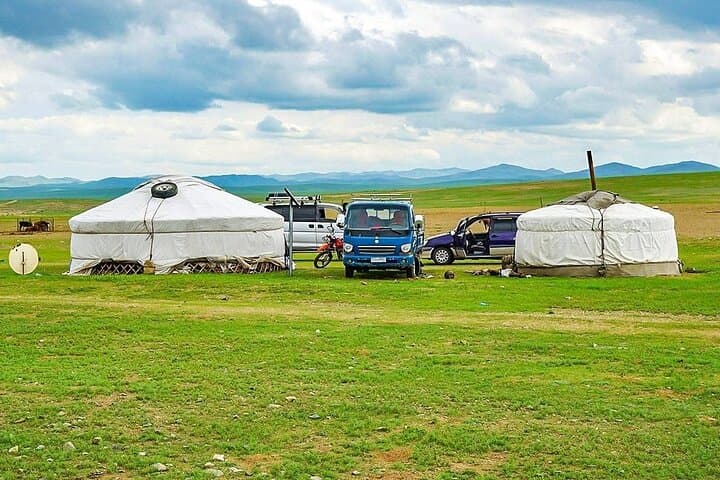
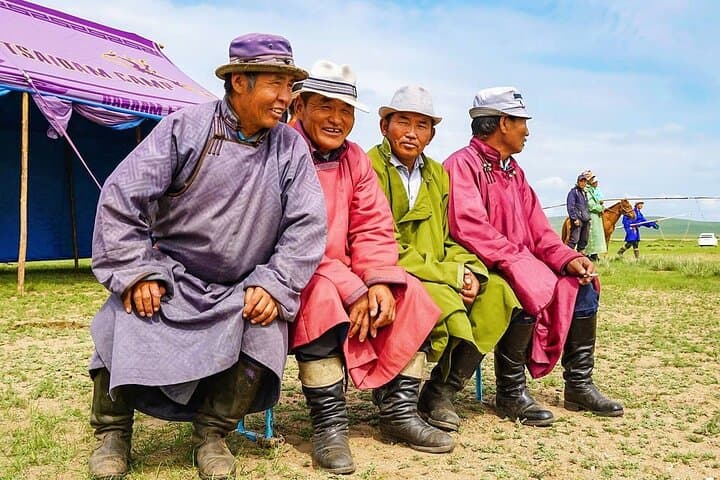
Culture is lived here on a human scale. Nightfall brings ger camps—round felt homes that feel simple until you notice the layered craft in the lattice and the slow, precise way tea is poured. Monasteries speak to centuries of Tibetan-influenced Buddhism interrupted during the 20th-century purges; what remains are rebuilt temples, prayer flags, and local custodians who keep ritual alive.
Practically speaking, this is a road-based, family-friendly expedition best taken with patience for long drives and a curiosity for off-grid living. Daily drives vary—some five-hour transfers, some short hops between sights—but each day includes guided walks: a one-hour hike up to Tuvkhun Monastery, short hikes in Yolyn Am’s ice field, and dune ascents at Khongoryn. Accommodation alternates between 4-star nights in Ulaanbaatar and ger camps in the countryside; expect basic hot-water facilities at camps and hearty Mongolian meals.
Pack for shifting conditions: warm layers for early mornings, windproof outerwear for the dunes and sandals for evenings by the ger. Hydrate on the road—bottled water is provided, but bring a refillable bottle with a filter if you prefer. Respect wildlife distances in Hustai National Park and follow your guide’s lead near archaeological sites.
For families, the tour balances activity and downtime: horse encounters, hot springs at Tsenkher, dinosaur cliffs at sunset, and nights under a sky that makes constellations feel close enough to touch. It’s a trip that moves steadily across space and time—landscapes that demand small, deliberate gestures: a slow climb, a respectful silence, a camera held ready for the rare, spontaneous moment.
moderate.
12 days.
Suitable for families in good general health; expect light-to-moderate walks, occasional short hikes and long vehicle days.
Yes; the itinerary is family-focused with moderate activity and ger-camp accommodations, but families should be comfortable with long vehicle transfers.
Visa requirements depend on your nationality—confirm and obtain any necessary visa before travel; the tour operator will not handle visas.
Nights alternate between a 4-star hotel in Ulaanbaatar and traditional ger camps with basic facilities across the countryside.
Breakfasts, lunches and dinners are included as listed in the itinerary; expect local Mongolian cuisine with options for common dietary needs if requested.
Yes—this private tour is designed to be personalized; speak with your guide about pacing, activity swaps and stops along the way.
Some days require 3–5 hours of driving between sites; longer drives are scenic and include stops for photos and short walks.
Karakorum was Genghis Khan’s 13th-century capital; later centuries converted the region into a major center of Tibetan Buddhism, visible in Erdene Zuu Monastery.
Hustai National Park protects the last pure population of takhi; visitors should follow park rules to reduce disturbance and support ongoing conservation efforts.
Travel China Guide operates guided outdoor trips and adventures with an emphasis on safety, stewardship, and memorable experiences.
The engine hums as the city fall away and the steppe opens—an ocean of waist-high grass that seems to push at the windows and insist you slow down. On day two, a herd of takhi, the Przewalski’s wild horses, lifts their heads from grazing and regards you like a distant curiosity before melting back into the plain. You feel the rhythm of the road more than the miles: hours of quiet vistas punctuated by sudden cliffs, temple ruins and wind-carved ridgelines.
The engine hums as the city fall away and the steppe opens—an ocean of waist-high grass that seems to push at the windows and insist you slow down. On day two, a herd of takhi, the Przewalski’s wild horses, lifts their heads from grazing and regards you like a distant curiosity before melting back into the plain. You feel the rhythm of the road more than the miles: hours of quiet vistas punctuated by sudden cliffs, temple ruins and wind-carved ridgelines.
This itinerary threads Mongolia’s sweep—from the modern grid of Ulaanbaatar to the UNESCO-protected Orkhon Valley, the flaming red of Bayanzag, and the singing sands of Khongoryn. Karakorum (Kharkhorin) sits as a flattened echo of Genghis Khan’s imperial capital; stone fragments and the reconstructed Erdene Zuu Monastery tell a story of conquest, religion and reinvention. Geology does its own narrating: limestone at Tsagaan Suvarga carved into white columns, granite tors at Baga Gazriin Chuluu, and wind-sculpted dunes that rise 100–300 meters and hum when the wind gathers—hence “Singing Sand.”
Culture is lived here on a human scale. Nightfall brings ger camps—round felt homes that feel simple until you notice the layered craft in the lattice and the slow, precise way tea is poured. Monasteries speak to centuries of Tibetan-influenced Buddhism interrupted during the 20th-century purges; what remains are rebuilt temples, prayer flags, and local custodians who keep ritual alive.
Practically speaking, this is a road-based, family-friendly expedition best taken with patience for long drives and a curiosity for off-grid living. Daily drives vary—some five-hour transfers, some short hops between sights—but each day includes guided walks: a one-hour hike up to Tuvkhun Monastery, short hikes in Yolyn Am’s ice field, and dune ascents at Khongoryn. Accommodation alternates between 4-star nights in Ulaanbaatar and ger camps in the countryside; expect basic hot-water facilities at camps and hearty Mongolian meals.
Pack for shifting conditions: warm layers for early mornings, windproof outerwear for the dunes and sandals for evenings by the ger. Hydrate on the road—bottled water is provided, but bring a refillable bottle with a filter if you prefer. Respect wildlife distances in Hustai National Park and follow your guide’s lead near archaeological sites.
For families, the tour balances activity and downtime: horse encounters, hot springs at Tsenkher, dinosaur cliffs at sunset, and nights under a sky that makes constellations feel close enough to touch. It’s a trip that moves steadily across space and time—landscapes that demand small, deliberate gestures: a slow climb, a respectful silence, a camera held ready for the rare, spontaneous moment.