THE ADVENTURE COLLECTIVE® · Independent discovery and booking for outdoor travel

Combine a five-day ascent of Kilimanjaro’s Marangu Route—sleeping in huts and tackling the summit push—with a private mid-range safari through Tarangire, Serengeti and Ngorongoro. This 11-day package pairs high-altitude trekking logistics with close wildlife encounters and lodge comfort.
Combine a five-day ascent of Kilimanjaro’s Marangu Route—sleeping in huts and tackling the summit push—with a private mid-range safari through Tarangire, Serengeti and Ngorongoro. This 11-day package pairs high-altitude trekking logistics with close wildlife encounters and lodge comfort.
It is just past midnight when a headlamp beam breaks the silence on Kibo’s scree slope and the air feels thin enough to taste. Climbers move in a slow, patient rhythm—one step, another—while the crater rim yaws into view like a hard-won horizon. This is the closing scene of a tightly paced 11-day package that pairs five days of hiking Kilimanjaro on the Marangu (Coca-Cola) Route with a private mid-range safari through Tarangire, the Serengeti and Ngorongoro Crater.
Verified experiences and guided adventures in the surrounding area.
Operated by Taste Of Afrika Safaris · Moshi, Kilimanjaro Region
It is just past midnight when a headlamp beam breaks the silence on Kibo’s scree slope and the air feels thin enough to taste. Climbers move in a slow, patient rhythm—one step, another—while the crater rim yaws into view like a hard-won horizon. This is the closing scene of a tightly paced 11-day package that pairs five days of hiking Kilimanjaro on the Marangu (Coca-Cola) Route with a private mid-range safari through Tarangire, the Serengeti and Ngorongoro Crater.
The Marangu Route begins at the park gate (~1,860 m) and threads uphill through three clear vegetation bands: wet montane forest with waterfalls and blue monkeys, the heather and giant lobelia--a moorland that feels wind-scoured, then an alpine desert that gives way to the icy crater rim. Over five walking days the route carries climbers roughly 4,000 meters of elevation gain to Uhuru Peak (5,895 m). Daily hikes range from a few hours of steady ascent to the gruelling pre-dawn summit push of 6–8 hours round trip from Kibo Hut, where thin air and cold demand respect.
The climb is practical in design: sleeping in wooden huts with bunk beds, hot meals at established huts, and spring water at lower camps. Guides and porters are local professionals who move with efficient familiarity across the mountain: they brief you, check gear, and manage pacing for acclimatization. After the descent and a day to recover at a lodge, the itinerary pivots to game country—Tarangire’s baobabs and elephant herds, the open plains and predator theater of the Serengeti, and the dense wildlife concentrations in Ngorongoro’s caldera.
Travelers should know this is both an adventure and logistics. Weather changes rapidly with elevation; terrain shifts from soft rainforest soil to jagged volcanic scree; and altitude, not distance, is the true challenge. The Marangu route is often chosen for its hut system and direct line to the summit, but the tight schedule gives limited extra acclimatization time. Expect firm guidance on gear, pre-climb briefings, and porter and guide tipping customs.
Practical strategy: train on hills with weighted packs, practice night hiking, and plan your hydration and layers for a wide temperature range. After summiting, the safari portion rewards tired legs with close wildlife viewing and comfortable mid-range lodges—an ideal contrast to the mountain’s austerity. For travelers who want a classic African combo—summit ambition followed by game drives—this itinerary is structured, efficient and deeply rooted in local guiding expertise.
challenging.
11 days.
Good cardiovascular base with experience on day hikes and stair/hill climbing; prepare with 6–10 weeks of training including long hikes with weight.
You should have good aerobic fitness and mountain hiking experience; training on hills with a loaded pack and a couple of long back-to-back hike days will greatly improve your chances.
Huts have communal bunk rooms and platform toilets; some sites offer basic hot water for washing but there is no private heating—layers and a warm sleeping bag are required.
Dry seasons—January–March and June–October—offer the most stable summit weather and excellent safari viewing; short rains in November and April–May make trails muddier and some roads slow.
Yes; symptoms can appear above 3,000 m. Guides monitor climbers and enforce pacing; descend immediately if severe symptoms occur and seek medical attention.
Yes—operators typically store your main luggage in Moshi or Arusha lodges while you carry a small daypack; verify storage with your provider.
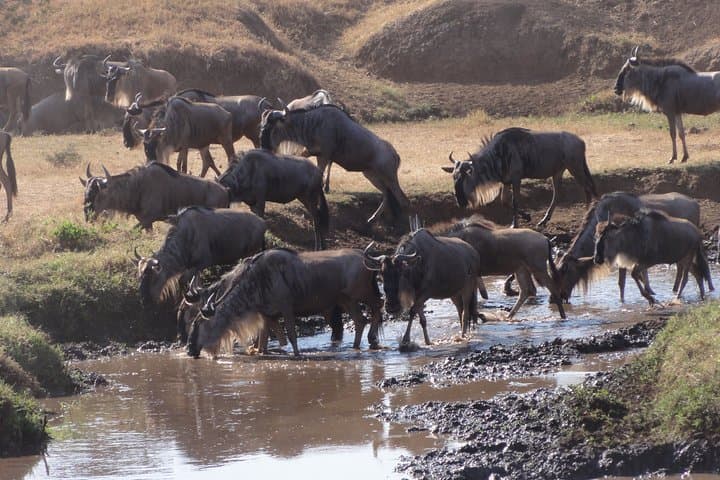
On safari expect elephants, lions, wildebeest and diverse birdlife; on Kilimanjaro you may spot blue monkeys and colobus in the lower forest zones.
Kilimanjaro is a volcanic massif made of three cones—Kibo, Mawenzi and Shira—and its first recorded European summit was in 1889; the Marangu route has long been the island-like gateway used by early climbers.
The mountain sits within Kilimanjaro National Park, a UNESCO site; stick to trails, avoid polythene, and use local guides who contribute to community-based conservation.
Taste Of Afrika Safaris operates guided outdoor trips and adventures with an emphasis on safety, stewardship, and memorable experiences.
It is just past midnight when a headlamp beam breaks the silence on Kibo’s scree slope and the air feels thin enough to taste. Climbers move in a slow, patient rhythm—one step, another—while the crater rim yaws into view like a hard-won horizon. This is the closing scene of a tightly paced 11-day package that pairs five days of hiking Kilimanjaro on the Marangu (Coca-Cola) Route with a private mid-range safari through Tarangire, the Serengeti and Ngorongoro Crater.
It is just past midnight when a headlamp beam breaks the silence on Kibo’s scree slope and the air feels thin enough to taste. Climbers move in a slow, patient rhythm—one step, another—while the crater rim yaws into view like a hard-won horizon. This is the closing scene of a tightly paced 11-day package that pairs five days of hiking Kilimanjaro on the Marangu (Coca-Cola) Route with a private mid-range safari through Tarangire, the Serengeti and Ngorongoro Crater.
The Marangu Route begins at the park gate (~1,860 m) and threads uphill through three clear vegetation bands: wet montane forest with waterfalls and blue monkeys, the heather and giant lobelia--a moorland that feels wind-scoured, then an alpine desert that gives way to the icy crater rim. Over five walking days the route carries climbers roughly 4,000 meters of elevation gain to Uhuru Peak (5,895 m). Daily hikes range from a few hours of steady ascent to the gruelling pre-dawn summit push of 6–8 hours round trip from Kibo Hut, where thin air and cold demand respect.
The climb is practical in design: sleeping in wooden huts with bunk beds, hot meals at established huts, and spring water at lower camps. Guides and porters are local professionals who move with efficient familiarity across the mountain: they brief you, check gear, and manage pacing for acclimatization. After the descent and a day to recover at a lodge, the itinerary pivots to game country—Tarangire’s baobabs and elephant herds, the open plains and predator theater of the Serengeti, and the dense wildlife concentrations in Ngorongoro’s caldera.
Travelers should know this is both an adventure and logistics. Weather changes rapidly with elevation; terrain shifts from soft rainforest soil to jagged volcanic scree; and altitude, not distance, is the true challenge. The Marangu route is often chosen for its hut system and direct line to the summit, but the tight schedule gives limited extra acclimatization time. Expect firm guidance on gear, pre-climb briefings, and porter and guide tipping customs.
Practical strategy: train on hills with weighted packs, practice night hiking, and plan your hydration and layers for a wide temperature range. After summiting, the safari portion rewards tired legs with close wildlife viewing and comfortable mid-range lodges—an ideal contrast to the mountain’s austerity. For travelers who want a classic African combo—summit ambition followed by game drives—this itinerary is structured, efficient and deeply rooted in local guiding expertise.