THE ADVENTURE COLLECTIVE® · Independent discovery and booking for outdoor travel

From Casablanca’s Atlantic edge to the wind-sculpted dunes of Merzouga, this private 10-day tour stitches Morocco’s imperial cities with desert nights, cedar forests, Roman ruins and oasis valleys. Expect long drives, intimate medina walks, and a luxury camp under the stars.
From Casablanca’s Atlantic edge to the wind-sculpted dunes of Merzouga, this private 10-day tour stitches Morocco’s imperial cities with desert nights, cedar forests, Roman ruins and oasis valleys. Expect long drives, intimate medina walks, and a luxury camp under the stars.
You arrive in Casablanca beneath a low, late-afternoon light; the Hassan II Mosque throws a lattice of shadows across the Atlantic and your guide slides open the car window to let seawind carry the smell of frying fish and mint. Over the next ten days the landscape will change like chapters — coastal boulevards, blue alleys clinging to the Rif, Roman stones dressed in morning dust, cedar forests where macaques argue from the branches, and finally the dunes of Merzouga rising like an ocean of sand.
Verified experiences and guided adventures in the surrounding area.
Operated by abdou tours · Merzouga, Drâa-Tafilalet
You arrive in Casablanca beneath a low, late-afternoon light; the Hassan II Mosque throws a lattice of shadows across the Atlantic and your guide slides open the car window to let seawind carry the smell of frying fish and mint. Over the next ten days the landscape will change like chapters — coastal boulevards, blue alleys clinging to the Rif, Roman stones dressed in morning dust, cedar forests where macaques argue from the branches, and finally the dunes of Merzouga rising like an ocean of sand.
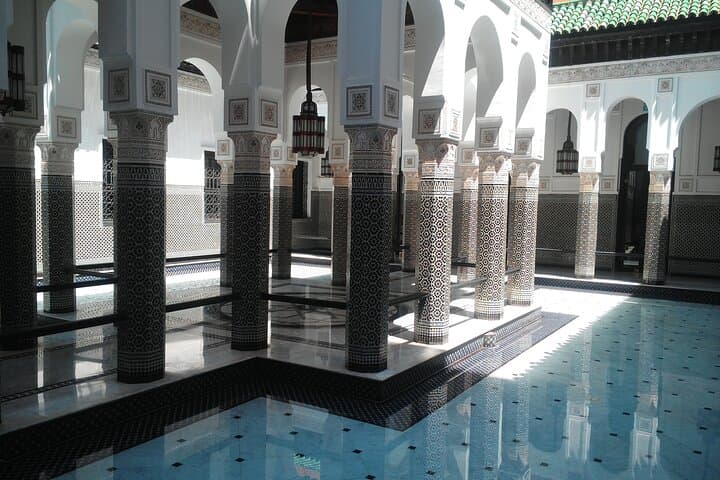
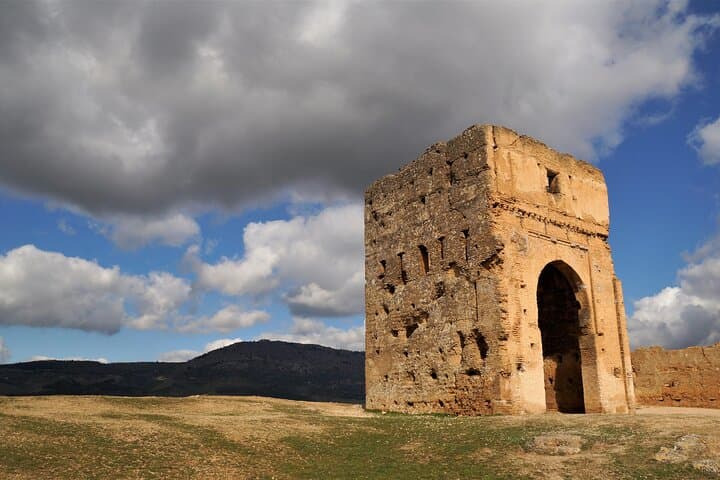
This itinerary threads Morocco’s defining eras. The imperial cities — Rabat, Meknes, Fez, Marrakech — map the country’s political and religious history: Almohad minarets, Marinid madrasas, Saadian tombs. Between them lie older tracks: Volubilis, a sprawling Roman ruin whose columns still hold the geometry of an empire, and the ksour and kasbahs that once controlled trans-Saharan trade. Geologically, the route is a study in contrasts: Atlantic plains give way to the folded Middle Atlas, where cedar-clad slopes funnel spring water into the Ziz valleys that nourish oases; then, after a high pass near 1,800–1,900 m, the land falls away toward the Sahara’s sands.
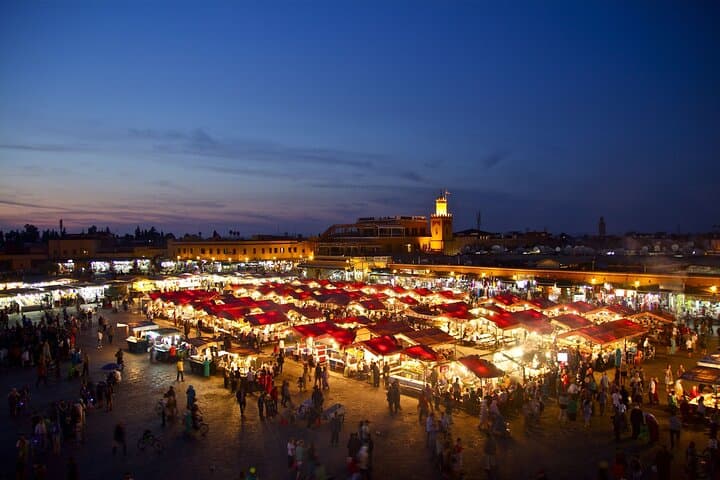
Culture presses close in the medinas. In Fez, tanners still stamp leathers with the same techniques used for centuries; in Ouarzazate, movie sets sit shadowed by living villages; in the Dades Valley, roses are distilled each spring into scented water. Local guides will introduce you to household crafts, invite you for mint tea with nomadic families, and point out the small everyday systems that keep communities operating in a dry country.
Practical guide: this is a road-based private tour with long driving days balanced by walking tours and one overnight in a luxury desert camp. Expect at least one 8-hour driving day (Fez to Merzouga) and several 4–6 hour transfers between cities. Footwear should be good walking shoes for cobbled medinas and flexible soles for dune walking; layers are essential because mornings in the desert can be cool while afternoons warm quickly. Hydrate on drives, carry cash for small purchases in souks, and allow time to acclimate to narrow alleys — medina streets are best explored without luggage.
Timing and seasons: spring and fall offer the most comfortable temperatures for long days; summer can be hot in the south but excellent for clear skies; winter nights in the desert can be quite cold. For photographers, sunrise and sunset on Erg Chebbi provide the most dramatic light. Finally, respect private spaces and local customs — modest dress in religious sites, and always ask before photographing people. This is a tour that trades hurry for context: stay curious, move deliberately, and the country’s layers will reveal themselves.
moderate.
10 days.
Suitable for travelers with average fitness who can manage multiple short walks, uneven ground in medinas, and a camel ride or dune hike.
Yes — the tour is fully private and can be adjusted to your arrival/departure city and personal interests.
The itinerary includes well-rated hotels and riads in cities, and a luxury camp with private tents in Merzouga.
Visa requirements depend on your nationality — check Morocco’s government website before travel and ensure your passport has six months’ validity.
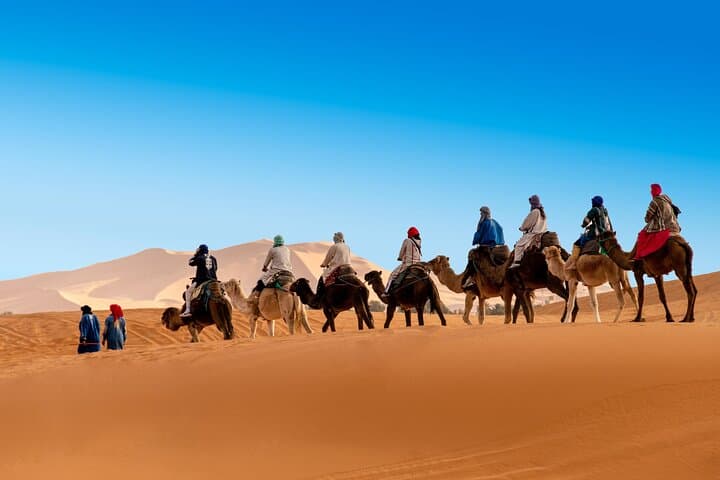
Camel rides are short and suitable for most travelers; desert nights involve sleeping in tents with basic comforts provided in the luxury camp.
Multiple breakfasts and two dinners are included as specified; day-to-day lunches and certain meals in cities may be at your own expense.
Pickup is offered across Casablanca and can be arranged from most hotels; the tour can start and end in different cities on request.
The route links Morocco’s medieval and imperial eras — Roman Volubilis and the Marinid foundations of Fez connect to caravan-era ksour that shaped Saharan trade.
Water is scarce across southern Morocco; support local economies by buying regional products and follow guides’ directions to avoid disturbing fragile dune systems and oases.
abdou tours operates guided outdoor trips and adventures with an emphasis on safety, stewardship, and memorable experiences.
You arrive in Casablanca beneath a low, late-afternoon light; the Hassan II Mosque throws a lattice of shadows across the Atlantic and your guide slides open the car window to let seawind carry the smell of frying fish and mint. Over the next ten days the landscape will change like chapters — coastal boulevards, blue alleys clinging to the Rif, Roman stones dressed in morning dust, cedar forests where macaques argue from the branches, and finally the dunes of Merzouga rising like an ocean of sand.
You arrive in Casablanca beneath a low, late-afternoon light; the Hassan II Mosque throws a lattice of shadows across the Atlantic and your guide slides open the car window to let seawind carry the smell of frying fish and mint. Over the next ten days the landscape will change like chapters — coastal boulevards, blue alleys clinging to the Rif, Roman stones dressed in morning dust, cedar forests where macaques argue from the branches, and finally the dunes of Merzouga rising like an ocean of sand.
This itinerary threads Morocco’s defining eras. The imperial cities — Rabat, Meknes, Fez, Marrakech — map the country’s political and religious history: Almohad minarets, Marinid madrasas, Saadian tombs. Between them lie older tracks: Volubilis, a sprawling Roman ruin whose columns still hold the geometry of an empire, and the ksour and kasbahs that once controlled trans-Saharan trade. Geologically, the route is a study in contrasts: Atlantic plains give way to the folded Middle Atlas, where cedar-clad slopes funnel spring water into the Ziz valleys that nourish oases; then, after a high pass near 1,800–1,900 m, the land falls away toward the Sahara’s sands.
Culture presses close in the medinas. In Fez, tanners still stamp leathers with the same techniques used for centuries; in Ouarzazate, movie sets sit shadowed by living villages; in the Dades Valley, roses are distilled each spring into scented water. Local guides will introduce you to household crafts, invite you for mint tea with nomadic families, and point out the small everyday systems that keep communities operating in a dry country.
Practical guide: this is a road-based private tour with long driving days balanced by walking tours and one overnight in a luxury desert camp. Expect at least one 8-hour driving day (Fez to Merzouga) and several 4–6 hour transfers between cities. Footwear should be good walking shoes for cobbled medinas and flexible soles for dune walking; layers are essential because mornings in the desert can be cool while afternoons warm quickly. Hydrate on drives, carry cash for small purchases in souks, and allow time to acclimate to narrow alleys — medina streets are best explored without luggage.
Timing and seasons: spring and fall offer the most comfortable temperatures for long days; summer can be hot in the south but excellent for clear skies; winter nights in the desert can be quite cold. For photographers, sunrise and sunset on Erg Chebbi provide the most dramatic light. Finally, respect private spaces and local customs — modest dress in religious sites, and always ask before photographing people. This is a tour that trades hurry for context: stay curious, move deliberately, and the country’s layers will reveal themselves.