

What the day feels like
Morning slips into the canyon like a quiet promise. At Skradinski Buk, the Krka River throws itself into motion, combing over tier upon tier of travertine steps until the entire valley seems to exhale. The boardwalk flexes gently underfoot as you trace the river’s edges, and the water—never content to stand still—hurries you along with its persistent whisper. Here, in the heart of Dalmatia, the river doesn’t just carve rock; it builds it. Calcium-rich waters deposit stone as they flow, crafting living waterfalls that grow, shift, and recompose the landscape year by year.
Most visitors start in one of two places: Lozovac, where shuttle buses sweep you down into the action, or Skradin, a stone town sealed with terracotta and salt air, where a leisurely 4-kilometer riverside path leads into the park. Either way, the first shock is scale. Skradinski Buk is a stacked amphitheater of water: cascades flashing white and green, pools folding into pools, boardwalks threading through thickets of willow, ash, and fig. The park keeps human impact in check—swimming at Skradinski Buk is now prohibited—so the experience is visual and aural: the roar of water, the damp cool that clings to rock, the shimmer of sunlight caught in mist.
Krka’s beauty is backed by a story written in limestone. The river’s seven principal waterfalls are built from travertine, a natural stone formed when dissolved calcium carbonate precipitates from fast-moving, oxygen-rich water. The result is a delicate, ever-forming architecture of dams and curtains, fragile as coral and just as alive. Boardwalks keep feet off the tufa, and rangers keep the flow of people from overwhelming the flow of water. This is a place that rewards patience: pause at the overlooks, watch the eddies braid and unbraid, notice the moss streaming like hair in the current.
Beyond the waterfalls, Krka folds cultural history into its river bends. Downstream from Roški Slap lies Visovac Island, a thumbnail of green afloat in a jade-blue reach of water. A Franciscan monastery has anchored here since the 15th century, and the boat ride across is the park’s most serene detour—cypresses standing in dark ranks, bells a faint echo over the ripples. Up the valley, hidden in the karst, is the Krka Monastery—Serbian Orthodox, centuries old, with catacombs carved into bedrock. If time permits, venture farther north toward Burnum, where the ruins of a Roman amphitheater still watch over the river flats. The park holds layers: Illyrian trails, Roman roads, medieval faith, and modern conservation woven together by the same tensile thread of water.
It’s easy to do Krka in half a day—many do—but the park rewards longer. Stitch together an 8–10 kilometer circuit by pairing the main Skradinski Buk boardwalk with a side hike from the Skradin entrance and a boat out to Visovac. Roški Slap, a short drive upriver, adds limestone stairs and sweeping views, with a quieter feel than the headline falls. Terrain ranges from polished wooden causeways to stone steps and short, steep intervals; sturdy shoes matter even if the total elevation gain is modest.
Crowds are part of the river’s reality in peak months. The trick is timing. Arrive at opening from Lozovac and you’ll hear the falls before you see them, a better way to meet the place. Or approach from Skradin just after sunrise on foot or bike, when the reed beds still hold the morning’s cool. By late afternoon, light angles low through the canyon, painting the water with brass highlights and emptying the boardwalks just enough for a second lap.
Logistics are straightforward with a few caveats. Park tickets are date-specific in high season and include the shuttle from Lozovac; boats to Visovac and Roški Slap are extra and operate on published timetables that change by season. Cell service is fair near Skradinski Buk and spottier upriver. Summer heat rises fast—shade helps, water helps more. There are taps, kiosks, and cafes near the main viewpoints, but refilling a bottle is cheaper and greener. If you’re driving, parking is ample at Lozovac; Skradin’s lots fill early.
Krka’s wildlife keeps to the edges yet occasionally steps into the frame: grey herons fishing the slicks, kingfishers needling over a pool, turtles sunning on a drowned log. Eurasian otters live in the river, though you’re more likely to read their presence in ripples than see them outright. The park’s quiet corners—particularly upriver from Roški Slap—are where you sense the river’s rhythm most clearly, each bend another line in a long poem.
By the time you leave, you understand the park’s central paradox: water that builds stone, stone that guides water. Everything here is movement with memory. The boardwalk leads you back to the entrance as the falls continue their slow work, writing tomorrow’s map even as you pocket today’s. And that’s the real pull—not just what you saw, but how the place keeps changing after you’ve gone.
Planning at a glance: Krka National Park is a 20–30 minute drive from Šibenik, about an hour from Split or Zadar. Most first-time visitors combine Skradinski Buk with a boat to Visovac; allow 3–5 hours minimum, 6–8 if you add Roški Slap. Wear grippy shoes, carry at least a liter of water, and book tickets in advance from April through October. Stay in Šibenik for an easy base and spend the evening in the old town, where stone steps lead to sea air and great seafood—another rhythm, another kind of flow.
Trail wisdom
Small choices, better day.
Start Early at Lozovac
Be at the Lozovac entrance when gates open to enjoy cooler temperatures, thinner crowds, and softer light at Skradinski Buk.
Choose Your Approach
Walk or bike the 4 km riverside path from Skradin for a quiet arrival; use Lozovac for fast shuttle access to the boardwalk loop.
Mind the Boardwalk Flow
Stay on marked paths and follow one-way sections to protect fragile travertine and keep traffic moving.
Hydrate and Shade Up
Summer heat can spike; carry at least 1–2 liters of water, a hat, and sun protection even on shaded segments.
Local knowledge
Read the place, not just the route.
Watch for native species including Grey heron, Eurasian otter.
Keep an eye out for wildlife during the transition between areas and habitats. Respect distance guidelines.
Krka’s travertine barriers are living formations—stay on boardwalks, avoid touching tufa, and pack out all litter to protect delicate growth.
Follow the guide's instructions on size limits, ethical handling, and leave-no-trace practices.
Oziđana Pećina Cave above Roški Slap, with interpretive displays on prehistoric life. Burnum Roman amphitheater remains near Kistanje for a quiet, time-travel detour
Locally recommended viewpoints and quiet spots known best to local operators.
Visovac Island’s Franciscan monastery has stood since the 15th century; upriver, the Orthodox Krka Monastery preserves medieval heritage in karst country.
Maritime roots and regional tradition shape the waterways and working coasts.
Seasonal guide
Four versions of the same landscape.
Spring
Best forWater volume at its peak · Wildflowers and birdlife
ChallengesVariable weather · Occasional slippery sections
Lush, cool, and vibrant—spring shows Krka at full flow with fewer crowds and ideal hiking temperatures.
Summer
Best forLong daylight hours · Boat trips to Visovac and Roški Slap
ChallengesHeat and strong sun · Peak-season crowds and timed entries
Expect hot midday conditions; plan early or late visits, reserve tickets, and pace the day around shade and water breaks.
Fall
Best forMild temperatures · Calmer boardwalks
ChallengesShortening days · Reduced boat schedules
Golden light and comfortable walking return; waterfalls still run strong and crowds taper off after September.
Winter
Best forQuiet trails · Moody, misty photography
ChallengesLimited services and boats · Cool, damp weather
A tranquil, contemplative time to explore, with fewer amenities—check openings and plan for chill and rain.
Pack with intention
What to bring.
Good to know
Common questions.
Lozovac is the fastest way to reach the Skradinski Buk boardwalk via shuttle; Skradin offers a scenic 4 km riverside walk or boat (in season) into the park.
Plan the edges
The details that make the day easier.
The 72.5-kilometer Krka River forms seven major travertine waterfalls, including Skradinski Buk and Roški Slap, built by calcium carbonate deposits that continue to grow today.
Base in Šibenik and toast the day with a glass of local Babić or Debit. For a splurge, book Peligrini near the cathedral; for rustic Dalmatian fare, seek out peka (slow-roasted under the bell) around Drniš. Gelato on the Riva hits different after a river day.
- Closest airports
- Split (SPU, ~1 hour) and Zadar (ZAD, ~1 hour). Main entrances: Lozovac (shuttle to Skradinski Buk) and Skradin (4 km riverside path
- seasonal boat). Drive time from Šibenik
- 20–30 minutes. Cell service: fair near Skradinski Buk, weaker upriver. Permits: National park ticket required; boat trips ticketed separately; summer entry is often timed.
This karst river is part of protected Natura 2000 habitats—stay on marked paths, refill bottles at taps to cut single-use plastic, and never climb or touch tufa barriers.
Explore by topic
Follow the threads.
Keep exploring
Make the story part of the trip.
In four hours you can move from shaded canyon ferns to wind-scoured coastal ridgelines, guided by someone who knows where the light—and the hidden views—live. This private half-day hike on the Monterey Peninsula or Big Sur is compact, curated, and perfect for travelers who want depth without a multiday commitment.
 Related story
Beneath a sky of shifting light, Skaftafell’s ice reads like a map of time. This three-hour guided glacier hike mixes technical instruction with geology and culture: compact, safe, and unforgettable.
 Related story
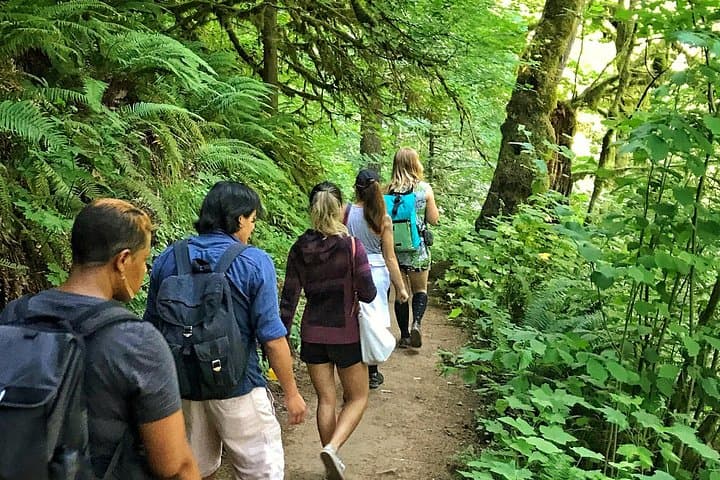
Lose the city for a few hours without leaving it: this 5-mile, 900-foot-gain Forest Park loop threads old-growth pockets, city viewpoints, and cultural landmarks for a compact taste of Portland’s wild side. Expect moss, roots, and stories.